Astronomy

For sets of amazing astronomical photographs see

The Guardian’s Month in Space for September 2014

And this from NASA

And the BBC’s Selection for 2014

I have found some beautiful photographs and interesting facts about the Universe. If Video Black Holes interest you, see this Hubble telescope video.

These photos should start your interest going: Astronomy Photographer of the Year, 2012, Pictures. Or this sequence of (mostly) Hubble photographs and some artists’ impressions.


General Guide to the Astronomy Pages

Just a taste of things to come...
...here’s the instantly recognizable planet Saturn...
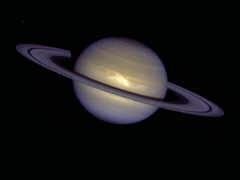
 
Saturn
 
...and the instantly recognizable galaxy M31 in Andromeda...
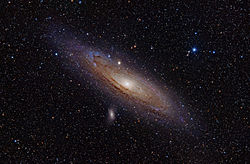
 
Andromeda Galaxy

Think Big! Start with the Universe

Where better to begin your guided tour of the galaxies, nebulae, stars, planets, etc.?
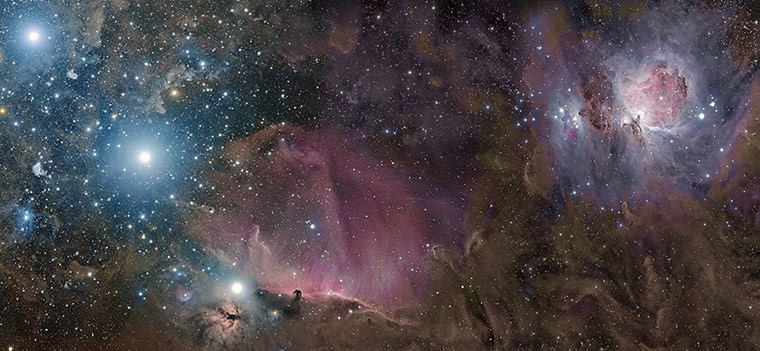
Part of the Constellation Orion

Orion Deep Wide Field, photographed from Earth with a Takahashi telescope. The three bright stars on the left in this image are those of Orion’s Belt. Although part of a familiar constellation, a view such as this can never be seen with the naked eye. Only with long exposure time and a sensitive camera can we see the dramatic landscape of glowing gas and dust clouds that lie between the stars.


Supernova
170,000 light-years away
and its Planetary Nebula

Check out these Wikipedia Portals and Projects:


For more see The Guardian’s Insight Astronomy Photographer of the Year 2015 winners – in pictures, 31 beautiful and extraordinary photographs of the night sky.


There are charts of all the Constellations, showing the brightest stars, nebulae and galaxies.
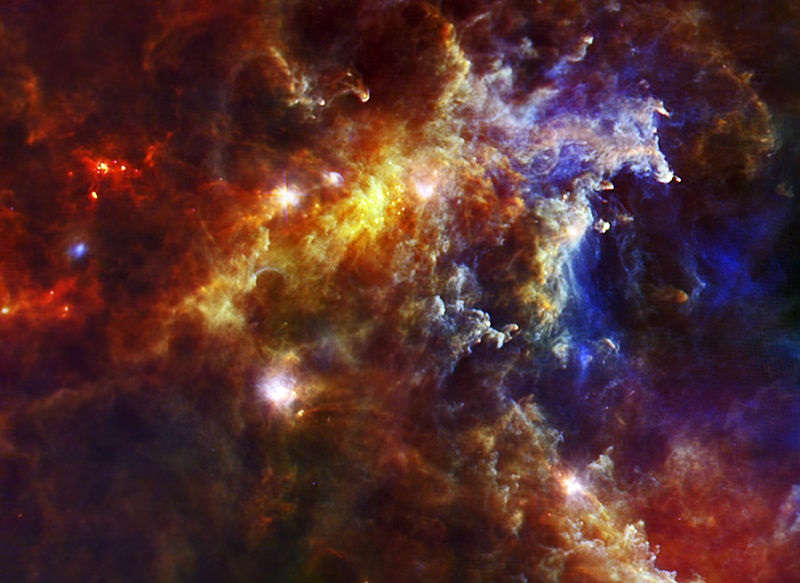
Embryonic Stars in the Rosette Nebula

Embryonic Stars in the Rosette Nebula (Caldwell 49) in Monoceros, some 5,200 light-years from Earth and measuring roughly 130 light years in diameter. The radiation from the young stars excite the atoms in the nebula, causing them to emit radiation themselves producing the emission nebula we see. The mass of the nebula is estimated to be around 10,000 solar masses.

Some of the pages related to cosmology and associated topics are...

The Universe started, we believe, with a Big Bang.

The Universe’s Cosmic Microwave Background Radiation is its last remnant.

In case real planets, moons and rings aren’t enough for you, here are some Hypothetical Solar System Objects, like planets and moons claimed to have been observed, but never confirmed.
There are good (and a few bad) Theories about how the solar system came into being (like the Nice Model, the Late Heavy Bombardment – something that is believed to have taken place in the early development of the Solar System, and the Giant Impact Hypothesis).

What are Dark Matter and Dark Energy, the latest mysteries of cosmology?

Another web page explains some General Features and properties of astronomy, and some astronomical terms, like planet, dwarf planet, minor planet, quasi-satellite, asteroid, Lagrange point, Trojan and Greek, Hilda, natural moon and ring, a Hill sphere, orbital resonance; some astronomical bureaucracy: the International Astronomical Union (IAU) and other bodies and methods of naming newly-discovered objects and some common abbreviations.

See also the guide to
Space research

with an
index and a timeline
of all space probes. And advice on
How to fly a spacecraft

JPL News: The Latest from Space

I’ve referred to various NASA web-sites in specific cases, but if you are interested in Space Research, try subscribing to this weekly newsletter:

JPL logo
WEEK IN REVIEW

There’s a “Get the Newsletter” field near the bottom of this page, where you can enter your e-mail.

The Universe Never Fails to Surprise Us

I learnt that 2013’s surprise asteroid 2012 DA14 is now named “Duende”, that a stellar system (named Kepler-35b) has been discovered with four stars, one of which has a planet (named PH1), and that one of our nearest stellar relatives, Alpha Centauri B, has an Earth-sized planet – see the artist’s impression. And Kepler has found a mega-Earth.

Goodbye Voyager 2


2015 saw Voyager 2 follow its sibling out past the edge of our solar system sometime during this year. On the left is an artist’s impression of Voyager departing our solar system and entering deep space. [NASA/JPL]

Both Voyager spacecraft were launched in 1977 and, with Pioneer 10, are now the most distant man-made objects in the solar system. While Pioneer 10, launched in 1972, has not been contactable since 2003, both Voyager probes continue to send information.

Exoplanets

Exoplanets are the most likely environments to find life away from the Earth. And those depicted here are the likeliest candidates.

Explore the NASA Exoplanet Archive, NASA’s Kepler satellite page or my brief notes about Kepler.


Evidence for an Earth-like Exoplanet

Kepler-452b: Earth-like Exoplanet;
from NASA

Earth 2.0: What we know about Kepler 452b, the most Earth-like planet ever discovered including a Video 1-minute video, and another Video ¾-minute video “NASA: Top Five Discoveries”.


Exoplanet formation


Exoplanetary System

[Right] A new image from ALMA, the Atacama Large Millimeter/submillimeter Array, reveals extraordinarily fine detail that has never been seen before in the planet-forming disc around a young star. These are the first observations that have used ALMA in its near-final configuration and the sharpest pictures ever made at submillimetre wavelengths. The new results are an enormous step forward in the observation of how protoplanetary discs develop and how planets form. [Image: ALMA (ESO/NAOJ/NRAO)] More from Astronomy Now

The sharpest image ever taken by ALMA shows the protoplanetary disc surrounding the young star HL Tauri. These new ALMA observations reveal substructures within the disc that have never been seen before and even show the possible positions of planets forming in the dark patches within the system.

For ALMA’s first observations in its new and most powerful mode, researchers pointed the antennas at HL Tauri – a young star, about 450 light-years away, which is surrounded by a dusty disc. The resulting image exceeds all expectations and reveals unexpectedly fine detail in the disc of material left over from star birth. It shows a series of concentric bright rings, separated by gaps.

“These features are almost certainly the result of young planet-like bodies that are being formed in the disc. This is surprising since such young stars are not expected to have large planetary bodies capable of producing the structures we see in this image,” said Stuartt Corder, ALMA Deputy Director.

“When we first saw this image we were astounded at the spectacular level of detail. HL Tauri is no more than a million years old, yet already its disc appears to be full of forming planets. This one image alone will revolutionise theories of planet formation,” explained Catherine Vlahakis, ALMA Deputy Program Scientist and Lead Program Scientist for the ALMA Long Baseline Campaign.

HL Tauri’s disc appears much more developed than would be expected from the age of the system. Thus, the ALMA image also suggests that the planet-formation process may be faster than previously thought.

See also Zodiacal Light (including that in other solar systems), and Exocomets.

Earth-based Telescopes

Gemini South telescope

The Gemini South telescope in Chile fires a laser into the sky. The optical telescope uses lasers and deformable mirrors to compensate for atmospheric distortions, giving sharper images than is possible with conventional ground-based telescopes. In effect, as the laser light detects the shimmering of the air, the telescope compensates.


Parkes telescope

The Parkes telescope in Australia, part of the Commonwealth Scientific and Industrial Research Organization was used to detect the first population of radio bursts known to originate from beyond our galaxy.


Telescopes in the Mountains of Hawaii

Optical telescopes high on the volcano Mauna Kea on the Pacific island of Hawaii. UKIRT is also part of Mauna Kea Observatory.

[Right] The 3.8 metre United Kingdom Infra-Red Telescope (UKIRT), the second largest dedicated infrared (1 to 30 micrometres) telescope in the world.

Gigantic Ring System around J1407b – much Larger and Heavier than Saturn’s


Rings round J1407b

An artist’s conception of the extrasolar ring system circling the young giant planet or brown dwarf J1407b. The rings are shown eclipsing the young sun-like star J1407, as they would have appeared in early 2007. [Credit: Ron Miller]. Astronomer Eric Mamajek at the University of Rochester and his co-author from the Leiden Observatory in the Netherlands, have discovered that the ring system that they see eclipsing J1407 is of enormous proportions, much larger and heavier than the ring system of Saturn. The ring system – the first of its kind to be found outside our solar system – was discovered in 2012. A new analysis of the data, led by Leiden’s Matthew Kenworthy, shows that the ring system consists of over 30 rings, each of them tens of millions of kilometres in diameter. Furthermore, they found gaps in the rings, which indicate that satellites (“exomoons”) may have formed. The result has been accepted for publication in the Astrophysical Journal.

“The details that we see in the light curve are incredible. The eclipse lasted for several weeks, but you see rapid changes on time scales of tens of minutes as a result of fine structures in the rings”, says Kenworthy. “The star is much too far away to observe the rings directly, but we could make a detailed model based on the rapid brightness variations in the star light passing through the ring system. If we could replace Saturn’s rings with the rings around J1407b, they would be easily visible at night and be many times larger than the full moon”. “This planet is much larger than Jupiter or Saturn, and its ring system is roughly 200 times larger than Saturn’s rings are today”, said co-author Mamajek, professor of physics and astronomy at the University of Rochester. “You could think of it as kind of a super Saturn”.

The astronomers analysed data from the SuperWASP project – a survey that is designed to detect gas giants that move in front of their parent star. In 2012, Mamajek and colleagues at the University of Rochester reported the discovery of the young star J1407 and the unusual eclipses, and proposed that they were caused by a moon-forming disk around a young giant planet or brown dwarf.

In a third, more recent study also led by Kenworthy, adaptive optics and Doppler spectroscopy were used to estimate the mass of the ringed object. Their conclusions based on these and previous papers on the intriguing system J1407 is that the companion is likely to be a giant planet – not yet seen – with a gigantic ring system responsible for the repeated dimming of J1407’s light. The light curve tells astronomers that the diameter of the ring system is nearly 120 million kilometres, more than two hundred times as large as the rings of Saturn. The ring system likely contains roughly an Earth’s worth of mass in light-obscuring dust particles. Mamajek puts into context how much material is contained in these disks and rings. “If you were to grind up the four large Galilean moons of Jupiter into dust and ice and spread out the material over their orbits in a ring around Jupiter, the ring would be so opaque to light that a distant observer that saw the ring pass in front of the sun would see a very deep, multi-day eclipse”, Mamajek says. “In the case of J1407, we see the rings blocking as much as 95% of the light of this young Sun-like star for days, so there is a lot of material there that could then form satellites”.

In the data the astronomers found at least one clean gap in the ring structure, which is more clearly defined in the new model. “One obvious explanation is that a satellite formed and carved out this gap”, says Kenworthy. “The mass of the satellite could be between that of Earth and Mars. The satellite would have an orbital period of approximately two years around J1407b”.

Astronomers expect that the rings will become thinner in the next several million years and eventually disappear as satellites form from the material in the disks. “The planetary science community has theorized for decades that planets like Jupiter and Saturn would have had, at an early stage, disks around them that then led to the formation of satellites”, Mamajek explains. “However, until we discovered this object in 2012, no-one had seen such a ring system. This is the first snapshot of satellite formation on million-kilometre scales around a substellar object”.

Astronomers estimate that the ringed companion J1407b has an orbital period roughly a decade in length. The mass of J1407b has been difficult to constrain, but it is most likely in the range of about 10 to 40 Jupiter masses. The researchers encourage amateur astronomers to help monitor J1407, which would help detect the next eclipse of the rings, and constrain the period and mass of the ringed companion. Observations of J1407 can be reported to the American Association of Variable Star Observers (AAVSO). In the meantime the astronomers are searching other photometric surveys looking for eclipses by yet undiscovered ring systems.

Kenworthy adds that finding eclipses from more objects like J1407’s companion “is the only feasible way we have of observing the early conditions of satellite formation for the near future. J1407’s eclipses will allow us to study the physical and chemical properties of satellite-spawning circumplanetary disks”.

Observing the Sky

For observing the sky, you’ll need a current sky map. Try this one; the snag is that you have to enter your location; that’s fine if you live in a big city (there’s a list of them but, for example, the only one in mainland Spain is Madrid); otherwise you’ll need to know your latitude and longitude.

Alternatives are this online planetarium program or you could try this useful portal or the Wikipedia Astronomy or Space portals. Another excellent web site is The Sky Live Planetarium.

Interactive Model Showing the Scale of the Universe

NASA’s Astronomy Picture of the Day (“APOD”) for 12th March 2012 is an interactive model showing the scale of the universe, from the Planck length (the size of Quantum Foam or a String) which is 10-35 metre via Russell’s Teapot to the estimated size of the observable Universe (10+27 metres). I found that APOD quite interesting. (Look up any of the odd terms like “string” on Wikipedia or some other source of information on quantum mechanics or cosmology.) It takes quite a while to load (several minutes on my laptop, but well worth the wait) and then to start, and the scroll bar to use is at the bottom, not the one in the middle of the screen.

Books and Web Sites on Astronomy and Cosmology

To set you going, take a look at these stunning photographs (as reported in the International Business Times) European Space Agency releases stunning photographs of the Earth and Space, 2015.


Stars by Hubble

Milky Way

Solar System Sketch