
Loading...
Loading...
If you follow the progression of astronomical objects outwards from the Sun, via each of the planets, asteroids and other objects of the inner and outer Solar System, to the stars and the nebulae, you will find the Large Magellanic Cloud and the Small Magellanic Cloud. These are small galaxies close to the Milky Way, though a “small” galaxy like the LMC could contain some ten billion stars. It is, however, only a tenth of the size of our own Milky Way, with its hundred billion stars. The nearest “proper” galaxy to ours is the M31 in Andromeda, though these are only part of the story, as galaxies cluster together, like the Laniakea and other Superclusters.
And the Milky Way is believed to be just one of a hundred billion galaxies in the observable universe. Under perfect conditions – no clouds or fog, no street lights or other light polution (including that from nearby towns), no moon in the sky, and with a good pair of eyes, you should be able to see about 6,000 of the Milky Way’s stars. But conditions are rarely that good. Remember that most of the photographs you see are of a long exposure. Some detailed photographs are made by adding together dozens or even hundreds of individual photos; and it’s now possible for amateurs with small digital cameras to help in this process.
(That’s some 10,000,000,000,000,000,000,000 stars like the Sun in all – almost as many Zimbabwean Dollars as you’d get for a Euro.)
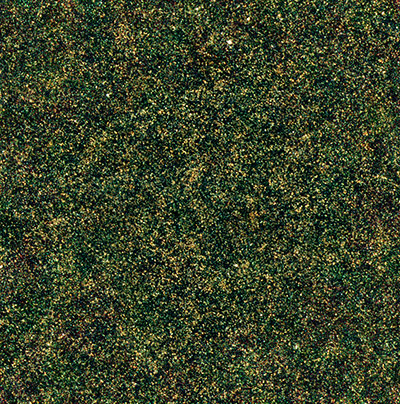
To underline what I have said about there being billions of galaxies, each speck in this image is a galaxy billions of light years away. It’s a patch of sky about 40 times the area of the full moon recorded in sub-millimetre wavelengths by the Herschel telescope. The galaxies are invisible in optical images because they are shrouded by dust, which blocks out most of the starlight. However, this dust glows in the sub-millimetre wavelengths detected by Herschel. Most of the galaxies are so far away that they are seen as they were between 3 and 10 billion years ago.
Click on any of the small images to see a larger picture
The two prominent stars in the foreground are well within the Milky Way. Their spiky appearance is due to diffraction in the telescope. But the two eye-catching galaxies lie far beyond the Milky Way, at a distance of about 200 million light-years. Their distorted appearance is due to gravitational tides as the pair engage in close encounters. From our perspective, the bright cores of the galaxies are separated by about 80,000 light-years. Catalogued as Arp 273 (also as UGC 1810), the galaxies look peculiar, but interacting galaxies are now believed to be common in the universe. In fact, the nearby large spiral galaxy in Andromeda is some two million light-years away and approaching the Milky Way.
The NASA/ESA Hubble Team produced this vivid image of a pair of interacting galaxies known as ARP 142 that bears a striking resemblance to a penguin guarding its egg. The telescope has been watching this pair of galaxies tear each other apart. The “egg” is officially NGC 2937, and the “penguin”, once a spiral galaxy, is NGC 2936. They are 326 million light years from Earth in Hydra (at RA 9h37m, Dec +2°45' near the star ι).
By looking at nearby galaxies such as the Sombrero (M 104 in Virgo), pictured here, astronomers have surmised what happened to the universe during its so-called dark ages 13 billion years ago, when it was shrouded by a fog of hydrogen that absorbed the light of the first stars. Like most galaxies, the heart of the Sombrero conceals a dark secret: a supermassive black hole containing as much matter as a billion Suns.
The Sombrero galaxy is an unbarred spiral galaxy located 28 million light-years from Earth. It has a bright nucleus, an unusually large central bulge, and a prominent dust lane in its inclined disk. The dark dust lane and the bulge give this galaxy the appearance of a sombrero. Astronomers initially thought that the halo was small and light, indicative of a spiral galaxy, but Spitzer found that the halo around the Sombrero Galaxy is larger and more massive than previously thought, indicative of a giant elliptical galaxy. The galaxy has an apparent magnitude of +9.0, making it easily visible with amateur telescopes, and it’s considered by some authors to be the brightest galaxy within a radius of 10 megaparsecs of the Milky Way. The large bulge, the central supermassive black hole, and the dust lane all attract the attention of professional astronomers.
The dust lane that crosses in front of the bulge of the galaxy is actually a symmetrical ring that encloses the bulge of the galaxy. Most of the cold atomic hydrogen gas and the dust lies within this ring. The ring might also contain most of the Sombrero Galaxy’s cold molecular gas, although this is an inference based on observations with low resolution and weak detections. Additional observations are needed to confirm that the Sombrero galaxy’s molecular gas is constrained to the ring. Based on infrared spectroscopy, the dust ring is the primary site of star formation within this galaxy.
The nucleus of the Sombrero galaxy is classified as a low ionization nuclear emission region (LINER). These are nuclear regions where ionized gas is present, but the ions are only weakly ionized (i.e. the atoms are missing relatively few electrons). The source of energy for ionizing the gas in LINERs has been debated extensively. Some LINER nuclei may be powered by hot, young stars found in star formation regions, whereas other LINER nuclei may be powered by active galactic nuclei (highly energetic regions that contain supermassive black holes). Infrared spectroscopy observations have demonstrated that the nucleus of the Sombrero is probably devoid of any significant star formation activity. However, a supermassive black hole has been identified in the nucleus (as noted below), so this active galactic nucleus is probably the energy source that weakly ionizes the gas in the galaxy.
In the 1990s, a research group led by John Kormendy demonstrated that a supermassive black hole is present within the Sombrero Galaxy. Using spectroscopy data from both the Canada–France–Hawaii Telescope (the CFHT, located near the summit of Mauna Kea) and the Hubble Space Telescope, the group showed that the speed of revolution of the stars within the centre of the galaxy could not be maintained unless a mass 1 billion times the mass of the Sun is present in the centre. This is among the most massive black holes measured in any nearby galaxies.
At radio and X-ray wavelengths, the nucleus is a strong source of synchrotron emission. This is produced when high velocity electrons oscillate as they pass through regions with strong magnetic fields. This emission is quite common for active galactic nuclei. Although radio synchrotron emission may vary over time for some active galactic nuclei, the luminosity of the radio emission from the Sombrero Galaxy only varies 10–20%.
The Sombrero Galaxy has a relatively large number of globular clusters. Observational studies have produced estimates of the population in the range of 1,200 to 2,000. The ratio of the number of globular clusters to the total luminosity of the galaxy is high compared to the Milky Way and similar galaxies with small bulges, but the ratio is comparable to other galaxies with large bulges. These results indicate that the number of globular clusters in galaxies is believed to be related to the size of the galaxies’ bulges. The surface density of the globular clusters generally follows the light profile of the bulge except near the centre of the galaxy.
At least two methods have been used to measure the distance to the Sombrero Galaxy.
The first method relies on comparing the measured fluxes from planetary nebulae in the galaxy to the known luminosities of planetary nebulae in the Milky Way. This method gave the distance as 29 ± 2 Mly (8,890 ± 610 kpc).
The other method uses surface brightness fluctuations whereby the grainy appearance of the galaxy’s bulge gives an estimate the distance to it. Nearby galaxy bulges will appear very grainy, while more distant bulges will appear smooth. Early measurements using this technique gave distances of 30.6 ± 1.3 Mly (9,380 ± 400 kpc). Later, after some refinement of the technique, a distance of 32 ± 3 Mly (9,810 ± 920 kpc) was measured. This was even further refined in 2003 to be 29.6 ± 2.5 Mly (9,080 ± 770 kpc).
The average distance measured through these two techniques is 29.3 ± 1.6 Mly (8,980 ± 490 kpc).
The dwarf irregular galaxy Holmberg II (in the M 81 group in Ursa Major) as seen by the Hubble Space Telescope. The galaxy is dominated by bubbles of glowing gas — sites of star formation. As high-mass stars form in dense regions of gas and dust, stellar winds blow away glowing shells of the surrounding material.
Holmberg II is 11 million light years away from the Earth. The galaxy is dominated by huge glowing gas bubbles, which are regions of star formation.
Holmberg II also hosts an ultraluminous X-ray source. One hypothesis suggests that this caused by an intermediate mass black hole, that is pulling in surrounding material.
This photo released by the European Southern Observatory shows the unusual galaxy Centaurus A (NGC 5128) on an image taken by a telescope at the La Silla Observatory in Chile. With a total exposure time of more than 50 hours this is probably the deepest view of this spectacular object ever created.
Centaurus A, also known as NGC 5128, is a peculiar galaxy in the constellation of Centaurus. It is gravitationally bound into a group of galaxies which also contains Messier 83. Its common name derives from the early days of radio astronomy (1940s and 1950s), when astronomers named radio sources by letter (A,B,C), with ‘A’ designating the strongest source in a given constellation.
The bright stellar content of the galaxy resembles an elliptical galaxy, a spherical configuration of hundreds of millions of stars. An obscuring band of dust, however, is more often associated with spiral galaxies. This dust band encircling Centaurus A is heavily warped, suggesting that something strange has taken place here. There is also a region where young and hot blue stars have recently formed. This phenomena is usually seen along the dusty arms of spiral galaxies.
Astronomers believe that Centaurus A is the remnant of an intergalactic collision, in which a dusty spiral galaxy and a bright elliptical galaxy merged hundreds of millions of years ago. A black hole is presumed to lie at the centre of the resulting peculiar galaxy. The near-infrared camera aboard HST has provided evidence of this black hole. Galaxies with a central black hole and/or massive episodes of star formation are known as “active galaxies”.
The Hubble Space Telescope produced an exquisitely detailed image of a pair of overlapping spiral galaxies called NGC 3314 (near NGC 3242 in Hydra) which appear to be colliding. The two galaxies are in reality between 117 and 140 million light-years away and simply happen to be aligned in our line of sight. This unique alignment gives astronomers the opportunity to measure the properties of interstellar dust in the face-on foreground galaxy (NGC3314a), which appear dark against the background galaxy (NGC 3314b). Unlike interacting galaxies, the two components of NGC3314 are physically unrelated.
While searching for overlapping galaxies in April 1999, two astronomers from the University of Alabama were the first to image the deep sky object in enough detail to tell that it was in fact two galaxies. In a March 2000 observation of the galaxies, a prominent green star-like object was seen in one of the arms. Astronomers theorized that it could have been a supernova, but the unique filtering properties of the foreground galaxy made it difficult to decide definitively.
[Top] This Hubble image released by NASA presents astronomers with a puzzle. What appears to be a clump of dark matter has been left behind after a ‘smash-up’ between a collection of galaxy clusters known as Abell 520 (near π5 Orionis) some 2.4 billion light years away. The result could challenge current theories about dark matter because these predict that galaxies should remain anchored to the invisible substance even during the shock of a collision.
[Bottom] Galaxy cluster Abell 2744 also known as Pandora’s Cluster. The blue glow is from some 200 billion stars spilled into the cosmos as four galaxies were ripped apart by gravitational forces 12 billion light-years away. Estimates suggest the cluster’s mass is roughly 400 trillion times that of our own Sun – or 1,000 times that of our galaxy.
The doomed galaxies in the picture currently being pulled apart like soft toffee would have been around the size of our own Milky Way galaxy, and presumably got too close to the centre of the cluster where the gravitational tidal forces are strongest.
The vague haze is from the newly-orphaned stars with the image (which was analysed in a study from the Astrofísica de Canarias in Spain and published in the October issue of The Astrophysical Journal) and confirms theories about ‘disassembled’ galaxies [published in The Independent].
A section of the widest deep view of the sky ever taken using infrared light. It was created by combining more than 6,000 images from the VISTA survey telescope at the Paranal Observatory in Chile. Above is a region of the sky known as the COSMOS field in the constellation of Sextans (The Sextant), where more than 200,000 galaxies have been identified.
NASA released a mosaic image of the entire sky in infrared showing more than half a billion stars, galaxies and other objects captured by the Wide-field Infrared Survey Explorer (Wise).
Astronomers using NASA’s Hubble Space Telescope have found that Markarian 231, the nearest galaxy to Earth that hosts a quasar, is powered by two central black holes whirling about each other.
Markarian 231 (Mrk 231, UGC 8058) is a Type-1 Seyfert galaxy that was discovered in 1969 as part of a search of galaxies with strong ultraviolet radiation. It contains the nearest known quasar, and in 2015 it was shown that the powerful active galactic nucleus present in the centre of the galaxy is in fact a supermassive binary black hole. It is located about 600 million light years away from Earth.
The galaxy is now undergoing an energetic starburst. A nuclear ring of active star formation has been found in the centre with a rate of formation greater than 100 solar masses per year. It is one of the most ultraluminous infrared galaxies, with power derived from an accreting black hole in the centre, and the closest known quasar. A 2015 study has found that the central black hole, estimated to be 150 million times the mass of our Sun, has a black hole companion weighing 4 million solar masses, and the duo completes an orbit around each other every 1.2 years.
A region of the spiral galaxy Messier 83 (M 83 in Hydra), where a black hole increased its x-ray output by a factor of at least 3,000 times. NASA’s Chandra X-ray Observatory detected the extraordinary outburst. Data from Chandra in the image is shown in pink, Hubble data in blue and yellow.
This swirl of gas is the centre of galaxy NGC 524. Located in the constellation of Pisces some 90m light-years from Earth, it is a lenticular galaxy – believed to be an intermediate state between elliptical and spiral galaxies. Spirals have vast, pinwheel arms that contain millions of stars. Accompanying these are clouds of gas and dust where new stars are born. When most of the gas has dispersed, the arms fade and the spiral shape weakens. What remains is a lenticular galaxy: a bright disc full of old, red stars surrounded by what little gas and dust the galaxy has managed to cling on to.
A photo from the Nasa/ESA Hubble Space Telescope released in December 2012 shows NGC 6388, a middle-aged globular cluster in the Milky Way near to θ Scorpii. While the cluster formed in the distant past – like all globular clusters, it is more than 10 billion years old – a study of the distribution of bright blue stars within it shows that it has aged at a moderate speed, and its heaviest stars are in the process of migrating to the centre.
The spiral galaxy NGC 6503 is seen in this view of combined images taken by the Hubble Space Telescope. The galaxy is 18 million light-years from Earth in the “Local Void”, a region in the constellation Draco so sparsely populated by stars and galaxies that scientists joked that NGC 6503 was “lost in space”.
[Credit: NASA, ESA, D. Calzetti (University of Massachusetts), H. Ford (Johns Hopkins University), and the Hubble Heritage (STScI/AURA)-ESA/Hubble Collaboration]
The galaxy takes centre stage in a new image from the Hubble Space Telescope, which shows NGC 6503 shining in visible and ultraviolet light, with different colours denoting zones of gas and star birth. NASA and the European Space Agency unveiled the image on 10th June 2015.
In the image, galaxy NGC 6503 appears to stand alone beside the “Local Void”, a cosmic dead zone that is at least 150 million light-years across. [Latest Photos from the Hubble Space Telescope]
The galaxy’s odd location on the edge of this never-land led stargazer Stephen James O’Meara to call it the ‘Lost-In-Space galaxy’ in his 2007 book, Hidden Treasures, NASA wrote in an image description that labelled NGC 6503 “lost in space”.
Hubble’s image shows a variety of zones within the image, which is about 30,000 light-years across or a third of the size of the Milky Way. Red patches in the image denote gas, blue contains new stars, and dust lanes (in dark brown) stretch across the lighter arms and centre of the galaxy.
The images are based on two sets of observations collected by Hubble, first in 2003 (by the Hubble Advanced Camera for Surveys) and then in 2013 (by the Wide Field Camera 3.)
A Horseshoe Einstein Ring from Hubble (Image: ESA, Hubble and NASA).
A gravitational lens mirage. The gravity of a luminous red galaxy (LRG) has gravitationally distorted the light from a much more distant blue galaxy. More typically, such light bending results in two discernible images of the distant galaxy, but here the lens alignment is so precise that the background galaxy is distorted into a horseshoe – a nearly complete ring.
Since such a lensing effect was generally predicted in some detail by Albert Einstein over 70 years ago, rings like this are now known as Einstein Rings.
Although LRG 3-757 was discovered in 2007 in data from the Sloan Digital Sky Survey (SDSS), the image shown is a follow-up observation taken with the Hubble Space Telescope’s Wide Field Camera 3. The field of view is approximately 2.6 arcminutes wide.
Strong gravitational lenses like LRG 3-757 are more than oddities – their multiple properties allow astronomers to determine the mass and dark matter content of the foreground galaxy lenses.
This LRG has an unusually large mass, containing about ten times the mass of the Milky Way. However, it’s actually the blue horseshoe shape that circumscribes the red galaxy that is the real prize in this image. This blue horseshoe is a distant galaxy that has been magnified and warped into a nearly complete ring by the strong gravitational pull of the massive foreground Luminous Red Galaxy. To see such an Einstein Ring required the fortunate alignment of the foreground and background galaxies, making this object’s nickname the Cosmic Horseshoe particularly apt. The Cosmic Horseshoe is one of the best examples of an Einstein Ring. It also gives us a tantalising view of the early Universe: the blue galaxy’s redshift – a measure of how the wavelength of its light has been stretched by the expansion of the cosmos – is approximately 2.4. This means we see it as it was about 3 billion years after the Big Bang. The Universe is now 13.7 billion years old.
Gravitational lensing as photographed by the Hubble Space Telescope. A massive cluster of yellowish galaxies, seemingly caught in a red and blue spider web of eerily distorted background galaxies, makes for a spellbinding picture. To make this unprecedented image of the cosmos, Hubble peered straight through the centre of one of the most massive galaxy clusters known. The gravity of the cluster’s trillion stars – plus dark matter – acts as a 2-million-light-year-wide lens in space. This gravitational lens bends and magnifies the light of the galaxies located far behind it. This new image shows the phenomenon of gravitational lensing with unprecedented clarity. This cluster acts like a cosmic lens, magnifying the light from objects lying behind it and making it possible for astronomers to explore incredibly distant regions of space. As well as being packed with galaxies, Abell 1689 has been found to host a huge population of globular clusters. Some of the faintest objects in the picture are probably over 13 billion light-years away (redshift value 6).
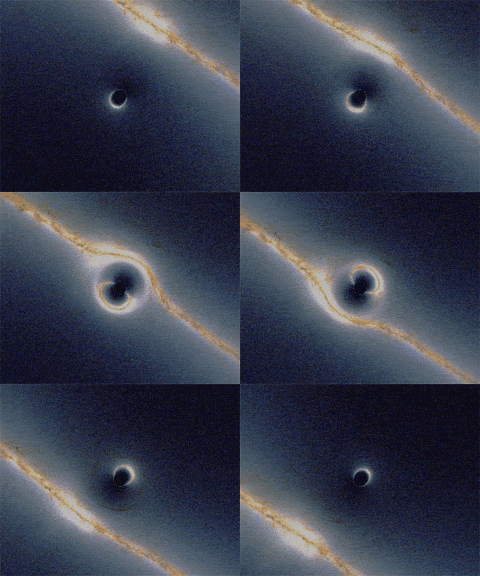
Simulation of gravitational lensing by a black hole, which distorts the image of a galaxy in the background. Einstein’s relativity theory predicts that light should be bent as it passes a massive object; this illustrates the theory.
Gravitational lensing occurs when a heavy object (a galaxy or a black hole, for example) is between us and a distant galaxy; it bends the light from the further one and gives us multiple views of it. The streaks forming arcs around the centre of the picture on the left are these multiple images; they are nothing to do with the circles in the images in the section on Time-lapse Images, which are produced by the rotation of the earth over some time, typically hours. This is Galaxy Cluster Abell 1689 in Virgo.
Hubble previously observed this cluster back in 2002. However, this new image combines visible and infrared data from Hubble’s Advanced Camera for Surveys (ACS) to reveal this patch of sky in greater detail than ever before, with a combined total exposure time of over 34 hours.
These new, deeper, observations were taken in order to explore the globular clusters within Abell 1689 (Globular clusters are dense collections of hundreds of thousands of stars – some of the oldest surviving stars in the Universe). This new study has shown that Abell 1689 hosts the largest population of globular clusters ever found. While our galaxy, the Milky Way, is only home to around 150 of these old clumps of stars, Hubble has spied some 10 000 globular clusters within Abell 1689. From this, the astronomers estimate that this galaxy cluster could possibly contain over 160 000 globulars overall – an unprecedented number.
This image is peppered with glowing golden clumps, bright stars, and distant, ethereal spiral galaxies. Material from some of these galaxies is being stripped away, giving the impression that the galaxy is dripping into the surrounding space. Also visible are a number of electric blue streaks, circling and arcing around the fuzzy galaxies in the centre (These streaks appear to be blue because the galaxies that form them are furiously forming very hot new stars. The emission from these hot young stars causes the blue hue.).
These streaks are the tell-tale signs of a cosmic phenomenon known as gravitational lensing. Abell 1689 is so massive that it actually bends and warps the space around it, affecting how light from objects behind the cluster travels through space. These streaks are actually the distorted forms of galaxies that lie behind Abell 1689.
Astronomers have released an extraordinary new image captured by the Hubble Space Telescope that shows “the most comprehensive picture ever assembled of the evolving universe.”
The image is a composite of several different wavelengths showing 10,000 galaxies and billions of stars
The spectacular view is the result of the Hubble Ultra Deep Field (HUDF) survey, a project that points the Hubble telescope at a relatively empty corner of space and stares into it for a long period of time, collecting light from stars and galaxies billions of light-years away.
What’s new about this particular image is that it not only captures infrared and visible light, but also near-ultraviolet – a part of the spectrum issued from the hottest, largest and youngest stars that has not previously been included in HUDF captures.
“The lack of information from ultraviolet light made studying galaxies in the HUDF like trying to understand the history of families without knowing about the grade-school children,” said principal investigator Harry Teplitz. “The addition of the ultraviolet fills in this missing range.”
From The Independent, by James Vincent, 4th June 2014
The patch of sky in the image has previously been studied in both visible and near-infrared images from 2004 to 2009. Now, with the addition of ultraviolet light, astronomers can also look at galaxies between 5 and 10 billion light-years away – a crucial time period when most of the stars in the Universe were being born.
The image shows around 10,000 galaxies in various forms and stages of life. For example, the bright, white-and-rainbow coloured star in the bottom right section of the image is an ‘active galaxy’ – one with a colossal black hole at its centre pulling in matter and heating it to an incredible degree to create the bright “diffraction spikes” that look to us like a cartoon star.
Elsewhere towards the left edge of the image we can see a spiral galaxy similar to our own Milky Way (although ours is a bar spiral with a central beam of stars) while in the busy quadrant above and to the right of this we can see galaxies in mid-collision. It’s worth remembering that each of these galaxies contains billions upon billions of stars – and there are 10,000 of galaxies in this image alone, which itself represents only a small portion of our Universe.
This little-known galaxy, officially named J04542829–6625280, but most often referred to as LEDA 89996, is a classic example of a spiral galaxy. The galaxy is much like our own galaxy, the Milky Way. The disk-shaped galaxy is seen face on, revealing the winding structure of the spiral arms. Dark patches in these spiral arms are in fact dust and gas – the raw materials for new stars. The many young stars that form in these regions make the spiral arms appear bright and bluish.
The galaxy sits in a vibrant area of the night sky within the constellation of Dorado (The Swordfish), and appears very close to the Large Magellanic Cloud – one of the satellite galaxies of the Milky Way.
The observations were carried out with the high resolution channel of Hubble’s Advanced Camera for Surveys. [ESA/Hubble & NASA]
At the centre of galaxy NGC 4889 is one of the most massive black holes ever discovered. Astronomers think this giant has stopped feeding and is now resting.
The first photograph, by the NASA/ESA Hubble Space Telescope, shows elliptical galaxy NGC 4889 in front of hundreds of background galaxies, and deeply embedded within the Coma galaxy cluster. Well-hidden at the centre of the galaxy is a gigantic supermassive black hole. The second image shows a ground-based wide-field view of the region around NGC 4889 from the Digitized Sky Survey 2. [Images: NASA, ESA, DSS2]
NGC 4889, the brightest and largest galaxy in the first image, is about 300 million light-years away in the Coma Cluster of galaxies. The giant elliptical galaxy is home to a record-breaking supermassive black hole, twenty-one billion times the mass of the Sun. This black hole has an event horizon – the surface at which even light cannot escape its gravitational grasp – with a diameter of approximately 130 billion km. This is about 15 times the diameter of Neptune’s orbit around the Sun. By comparison, the supermassive black hole at the centre of our Milky Way galaxy is believed to have a mass about four million times that of the Sun and an event horizon just one fifth the orbit of planet Mercury.
But the time when NGC 4889’s black hole was swallowing stars and devouring dust is past. Astronomers believe that the gigantic black hole has stopped feeding and is currently resting. The environment within the galaxy is now so peaceful that stars are forming from its remaining gas and orbiting undisturbed around the black hole.
When it was active, NGC 4889’s supermassive black hole was fuelled by a process called hot accretion. When galactic material – gas, dust and other debris – slowly fell inwards towards the black hole, it accumulated and formed an accretion disc. Orbiting the black hole, this spinning disc of material was accelerated by the black hole’s immense gravitational pull and heated to millions of degrees. This heated material also expelled gigantic and very energetic jets. During its active period, astronomers would have classified NGC 4889 as a quasar and the disc around the supermassive black hole would have emitted up to a thousand times the energy output of the Milky Way.
The accretion disc sustained the supermassive black hole’s appetite until the nearby supply of galactic material was exhausted. Now the black hole is dormant. However its existence allows astronomers to further their knowledge of how and where quasars, these still mysterious and elusive objects, formed in the early days of the universe.
Although it is impossible to directly observe a black hole – as light cannot escape its gravitational pull – its mass can be indirectly determined. Using instruments on the Keck II Observatory and Gemini North Telescope, astronomers measured the velocity of the stars moving around NGC 4889’s centre. These velocities – which depend on the mass of the object they orbit – revealed the immense mass of this black hole.
[From EarthSky Science Wire, 13th February 2016]