
Loading...
Loading...
Hypothetical Planets
– Fifth planet & Bode’s Law
– Phaeton
– Planet V
– Planet X (X=unknown, not 10)
– Theia
– Vulcan
– Tyche
– Fifth Gas Giant [and see also Evidence for a Ninth Planet in the Solar System]
A hypothetical Solar System object is a planet, natural satellite or similar body in our Solar System whose existence is not known, but has been inferred from observational scientific evidence. Over the years a number of hypothetical planets have been proposed, and many have been disproved. However, even today there is scientific speculation about the possibility of planets yet unknown that may exist beyond the range of our current knowledge. This page does not address exo-planets, that is, planets of other stars.
This page includes various hypothetical objects – Planets, Moons and a Star.
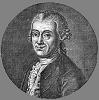
Johann Elert Bode (1747 – 1826) was a German astronomer known for his reformulation and popularization of the Titius–Bode law which postulated a planet between Mars and Jupiter. Bode determined the orbit of Uranus and suggested the planet’s name.
(The Titius-Bode Law, or simply Bode’s Law is the observation that orbits of planets in the solar system follow a simple arithmetic rule quite closely. It was discovered in 1766 by Johann Daniel Titius (1729 – 1796), a German astronomer, and “published” without attribution in 1772 by Johann Elert Bode, thus the name.)
Historical speculation about a “fifth” planet between the orbits of Mars and Jupiter; Mercury, Venus, Earth and Mars are the first four.
There are three main theories:
Phaeton (or Phaëton, less often Phaethon) is a hypothetical planet situated between the orbits of Mars and Jupiter whose destruction supposedly led to the formation of the asteroid belt. Nowadays this hypothesis is considered unlikely, since the asteroid belt has far too little mass to have resulted from the disintegration of a large planet. (The hypothetical planet was named after Phaëton, the son of the sun god Helios in Greek mythology, who attempted to drive his father’s solar chariot for a day with disastrous results and was ultimately destroyed by Zeus.)
The asteroid 3200 Phaethon, sometimes incorrectly spelled Phaeton, shares Phaeton’s name. 3200 Phaethon is a Mercury-, Venus-, Earth-, and Mars- orbit-crossing Apollo asteroid (a Near-Earth Asteroid) with unusual properties.
According to the now-discredited Titius-Bode law, a planet was believed to exist between Mars and Jupiter. Johann Elert Bode himself urged a search for the fifth planet. When Ceres, the largest of the asteroids in the asteroid belt (now considered a dwarf planet), was found in 1801 at the predicted position of the fifth planet, many believed it was the missing planet. However, in 1802 astronomer Heinrich Wilhelm Matthäus Olbers discovered and named another object in the same general orbit as Ceres, the asteroid Pallas.
Olbers proposed that these new discoveries were the fragments of a disrupted planet “Phaeton” that had formerly revolved around the sun. He also predicted that more of these pieces would be found. The discovery of the asteroid Juno by Karl Ludwig Harding and Vesta by Olbers buttressed the Olbers hypothesis.
Theories regarding the formation of the asteroid belt from the destruction of a hypothetical fifth planet are today collectively referred to as the disruption theory. This theory states that there was once a major planetary member of the solar system circulating in the present gap between Mars and Jupiter, which was variously destroyed when:
In the twentieth century, Russian meteoriticist Yevgeny Leonidovich Krinov (involved in the investigation of the Tunguska event), suggested that the exploded planet in the Olbers theory be named “Phaeton” after the story in Greek mythology about the son of Helios, the Sun god.
Today, the Phaeton hypothesis has been superseded by the accretion model. Most astronomers today believe that the asteroids in the main belt are remnants of the protoplanetary disk, and in this region the incorporation of protoplanetary remnants into the planets was prevented by large gravitational perturbations induced by Jupiter during the formative period of the solar system.
Planet V is a planet thought by NASA scientists John Chambers and Jack Lissauer to have once existed between Mars and the asteroid belt, based on computer simulations. Chambers and Lissauer presented this idea during the 33rd Lunar and Planetary Science Conference, held in March 2002.
Chambers and Lissauer proposed that a previously unknown terrestrial planet once existed in an eccentric and unstable orbit around the Sun, at least four billion years ago. They connect this planet, which they name Planet V, and its disappearance with the Late Heavy Bombardment episode of the Hadean era.
The Hadean is the first geologic eon of Earth and lies before the Archean. It began with the formation of the Earth about 4,600 million years ago and ended as defined by the International Commission on Stratigraphy (ICS) 4,000 million years ago. The name “Hadean” derives from Hades, the Greek name for the god of the underworld. The name is in reference to the “hellish” conditions on Earth at the time: the planet had just formed and was still very hot due to high volcanism, a partially molten surface and frequent collisions with other Solar System bodies. The geologist Preston Cloud coined the term in 1972, originally to label the period before the earliest-known rocks on Earth. W Brian Harland later coined an almost synonymous term: the “Priscoan period”. Other, older texts simply refer to the eon as the Pre-Archean.
“The extra planet formed on a low-eccentricity orbit that was long-lived, but unstable”, Chambers reported. About 3.9 billion years ago, Planet V was perturbed by gravitational interactions with the other inner planets. It was tossed onto a highly eccentric orbit that crossed the inner asteroid belt, a reservoir of material much larger than it is today. It spun through the inner belt of asteroids, causing them to fly into Mars-crossing orbits. This temporarily enhanced the population of bodies on Earth-crossing orbits, and also increased the lunar impact rate.
According to Chambers, Planet V is thought to have perished when it plunged into the Sun.
The ‘X’ represents something unknown, not a Roman Ten.
Planet X is a hypothetical planet beyond Neptune; the hypothesis was originated by Percival Lowell. Initially employed to account for supposed perturbations (systematic deviations) in the orbits of Uranus and Neptune, it has been disproved to cause any such perturbations, while the belief in them inspired the search for the object we now name Pluto (now classified as a Dwarf Planet). The concept has been re-applied to account for subsequent observations of Kuiper Belt objects, however.
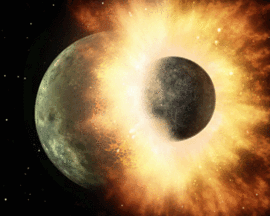
Artist’s depiction of a collision between two planetary bodies. A Mars-sized impactor believed to have collided with the Earth roughly 4.5 billion years ago which quite possibly created the Moon
According to modern theories of planet formation, Theia was part of a population of Mars-sized bodies that existed in the Solar System 4.5 billion years ago. Indeed, one of the attractive features of the giant impact hypothesis is that the formation of the Moon fits into the context of the formation of the Earth: during the course of its formation, the Earth is thought to have experienced dozens of collisions with such planet-sized bodies. The Moon-forming collision would have been only one such “giant impact” and, perhaps, the last.
(The name of the hypothesized protoplanet is derived from the mythical Greek titan Theia, who gave birth to the Moon goddess, Selene. This designation was proposed initially by the English geochemist Alex N Halliday in 2000 and has become accepted in the scientific community.)
Astronomers think the collision between Earth and Theia happened approximately 4.53 billion years ago; about 30 to 50 million years after the Solar System began to form. In astronomical terms, the impact would have been of moderate velocity. Theia is thought to have struck the Earth at an oblique angle when the latter was nearly fully formed. Computer simulations of this “late-impact” scenario suggest an impact angle of about 45° and an initial impact velocity below 4 km/s. Theia’s iron core would have sunk into the young Earth’s core, and most of Theia’s mantle accreted onto the Earth’s mantle, however, a significant portion of the mantle material from both Theia and the Earth would have been ejected into orbit around the Earth. This material quickly coalesced into the Moon (possibly within less than a month, but in no more than a century). Estimates based on computer simulations of such an event suggest that some twenty percent of the original mass of Theia would have ended up as an orbiting ring of debris, and about half of this matter coalesced into the Moon.
The Earth would have gained significant amounts of angular momentum and mass from such a collision. Regardless of the speed and tilt of the Earth’s rotation before the impact, it would have experienced a day some five hours long after the impact, and the Earth’s equator and the Moon’s orbit would have become coplanar in the aftermath of the giant impact.
Not all of the ring material would have necessarily been swept up right away; the thickened crust of the Far Side of the Moon suggests that a second moon about 1,000 km in diameter formed in a Lagrange point of the Moon; after tens of millions of years, as the two moons migrated outward from the Earth, solar tidal effects would have made the Lagrange orbit unstable, resulting in a low-velocity collision that would have ‘pancaked’ the smaller moon onto what is now the far side of the Moon.
In 2004, Princeton University mathematician Edward Belbruno and astrophysicist J Richard Gott III proposed that Theia coalesced at the L4 or L5 Lagrangian point relative to Earth (in about the same orbit and about 60° ahead or behind), similar to a trojan asteroid. Two-dimensional computer models suggest that the stability of Theia’s proposed trojan orbit would have been affected when its growing mass exceeded a threshold of approximately 10% of the Earth’s mass. In this scenario, gravitational perturbations by planetesimals caused Theia to depart from its stable Lagrangian location, and subsequent interactions with proto-Earth led to a collision between the two bodies.
In 2008, evidence was presented that suggests that the collision may have occurred later than the accepted value of 4.53 billion years ago, at approximately 4.48 billion years.
It has been suggested that other significant objects may have been created by the impact, which could have remained in orbit between the Earth and Moon, stuck in Lagrangian points. Such objects may have stayed within the Earth–Moon system for as long as 100 million years, until the gravitational tugs of other planets destabilized the system enough to free the objects. A study published in 2011 suggested that a subsequent collision between the Moon and one of these smaller bodies caused the notable differences in physical characteristics between the two hemispheres of the Moon. This collision, simulations have supported, would have been at a low enough velocity so as not to form a crater; instead, the material from the smaller body would have spread out across the Moon (in what would become its far side), adding a thick layer of highlands crust. The resulting mass irregularities would subsequently produce a gravity gradient that resulted in tidal locking of the Moon so that today, only the near side remains visible from Earth.
Celestial bodies interior to the orbit of Mercury have been hypothesized, and searched for, for centuries. The German astronomer Christoph Scheiner believed he had seen small bodies passing in front of the Sun in 1611, but these were later shown to be sunspots.
Vulcan is a hypothetical planet once believed to exist inside the orbit of Mercury. In the 1850s, Urbain Le Verrier made detailed calculations of Mercury’s orbit and found a small discrepancy in the planet’s perihelion precession from predicted values. He postulated that the gravitational influence of a small planet or ring of asteroids within the orbit of Mercury would explain the deviation. Shortly afterward, an amateur astronomer named Edmond Lescarbault claimed to have seen Le Verrier’s proposed planet transit the Sun. The new planet was quickly named Vulcan but was never seen again, and the anomalous behaviour of Mercury’s orbit was explained by Einstein’s General theory of relativity in 1915. The vulcanoids take their name from this hypothetical planet. What Lescarbault saw was probably another sunspot.
Tyche is the nickname given to a hypothetical gas giant planet located in the Solar System’s Oort cloud, first proposed in 1999 by astronomer John Matese of the University of Louisiana at Lafayette. Matese and his colleague Daniel Whitmire argue that evidence of Tyche’s existence can be seen in a supposed statistical excess in the points of origin for long period comets. They noted that Tyche, if it exists, should be detectable in the archive of data that was collected by NASA’s Wide-field Infrared Survey Explorer (WISE) telescope. Most astronomers agree that long-period comets (those with orbits of thousands of years) have an isotropic distribution; that is, they arrive at random from every point in the sky. Because comets are volatile and dissipate over time, astronomers suspect that they must be held in a spherical cloud tens of thousands of Astronomical Units (AUs) distant (known as the Oort cloud) for most of their existence. However, Matese claimed that rather than arriving from random points across the sky as is commonly thought, comet orbits were in fact clustered in a band inclined to the orbital plane of the planets. Such clustering could be explained if they were disturbed by an unseen object at least as large as Jupiter, possibly a brown dwarf star, located in the outer part of the Oort cloud. He also suggested that such an object might also explain the trans-Neptunian object Sedna’s peculiar orbit. However, his sample size was small and the results were inconclusive and several astronomers have voiced skepticism of this object’s existence. Analysis over the next couple of years will be needed to determine if WISE has actually detected such a world or not.
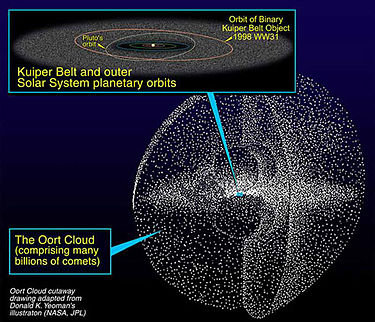
An artist’s rendering of the Oort cloud and the Kuiper belt (inset)

General size comparison between a low-mass star, a brown dwarf, and the planets Jupiter and Earth
Whitmire and Matese speculate that Tyche’s orbit would lie at approximately 500 times Neptune’s distance; equivalent to 15,000 AU (2.2×10¹² km) from the Sun, a little less than one quarter of a light year. This is still well within the Oort cloud, whose boundary is estimated to be beyond 50,000 AU. It would have an orbital period of roughly 1.8 million years. A failed search of older Infrared Astronomical Satellite (IRAS) data suggests that an object of five times the mass of Jupiter would need to have a distance greater than 10,000 AU. Such a planet would orbit in a different plane in orientation to our current planet orbits, and probably formed in a wide-binary orbit. Wide binaries may form through capture during the dissolution of a star’s birth cluster.
Whitmire and Matese speculate that the hypothesized planet could be up to four times the mass of Jupiter and have a relatively high temperature of approximately 200 K (-73°C), due to residual heat from its formation and Kelvin–Helmholtz heating. It would be insufficiently massive to undergo nuclear fusion reactions in its interior, a process which occurs in objects above roughly 13 Jupiter masses. Although more massive than Jupiter, Tyche would be about Jupiter’s size since degenerate pressure causes massive gas giants to increase only in density, not in size, relative to their mass.
The Kelvin–Helmholtz mechanism is an astronomical process that occurs when the surface of a star or a planet cools. The cooling causes the pressure to drop and the star or planet shrinks as a result. This compression, in turn, heats up the core of the star or planet. This mechanism is evident on Jupiter and Saturn and on brown dwarfs whose central temperatures are not high enough to undergo nuclear fusion. It is estimated that Jupiter radiates more energy through this mechanism than it receives from the Sun, but Saturn might not.
One such has been mooted in an orbit between Saturn and Uranus, which was subsequently flung out of the Solar System into interstellar space after a close encounter with Jupiter, resulting in transferred angular momentum which caused Jupiter to recede from the Sun and may have insured the orbital stability of the inner terrestrial planets. It may have also precipitated the Late Heavy Bombardment of the inner Solar System.
The fifth gas giant hypothesis is an attempt to explain apparent inconsistencies in the formation of the Solar System. Apart from Jupiter, Saturn, Uranus and Neptune, theorists argue that there was once a fifth gas giant, which was expelled from the Solar System in its formative period.
Current theories of planetary formation do not allow for the coalescence and development of Uranus and Neptune in their present positions; it is contended that the gaseous primordial disc of dust and gas that formed the early Solar System would have been too diffuse and unable to account for the bulk of these ice giant planets. It is therefore theorized that the early Solar System was more compact than at present, and that they migrated to their current positions as free interstellar gas and dust involved in their formation was incorporated into them.
However, computer simulations indicate that the process of migration should have displaced either Uranus or Neptune. According to David Nesvorny of the Southwest Research Institute in Boulder, Colorado, there was originally a third ice giant between the orbits of Saturn and Uranus that was expelled from the Solar System after a close encounter with Jupiter slung it into interstellar space. The hypothesis is explored in Nesvorney’s paper for Astrophysical Journal Letters.
In 2007, Eric B Ford (Harvard-Smithsonian Center for Astrophysics) and Eustace Chiang (Center for Integrative Planetary Science, University of California, Berkeley) presented a similar paper within the journal, arguing for the presence of such a hypothetical object as an explanatory mechanism for prior difficulties in existing theories of planetary formation.
There may have been more than one ice giant involved in the process described above, although Nesvorny’s reconstruction of a fifth ice giant presence seems to offer the best prospects for the ultimate emergence of a Solar System configured much like our own.
Fifth gas giant and formation of terrestrial planets: Nesvorny argues that his hypothesis also accounts for the survival of the inner terrestrial planets of the Solar System: Mercury, Venus, Earth and Mars, as well as possible additional protoplanets that were lost in the early period of planetary formation due to collisions or accretion with other bodies. In this framework, Jupiter lost angular momentum when it flung the fifth gas giant out of the Solar System, leading Jupiter to recede from the Sun’s vicinity, ensuring the stability and survival of the inner planets and causing turbulence within the Kuiper belt and Oort cloud en route out of the Solar System. This may have led to intensive and numerous cometary and asteroid impacts in the inner Solar System, resulting in intensive cratering. This period is known as the Late Heavy Bombardment and occurred 3.9 billion years ago.
The whereabouts of the hypothetical fifth gas giant are currently unknown, although according to Takahiro Sumi of Osaka University, other observable rogue planets exist in interstellar space away from other stars.
According to Nesvorny, colleagues have suggested several names for the hypothetical fifth ice giant: Hades, after the Greek god of the underworld: Liber, the Roman god of wine and a cognate of Dionysus and Bacchus: and Mephitis, the Roman goddess of toxic gases. Another suggestion is “Thing 1” from Dr Seuss’ Cat in the Hat children’s book.
A ninth moon of Saturn supposedly sighted by Hermann Goldschmidt in April 1861 but never observed by anyone else. He said it orbited between Titan and Hyperion. Goldschmidt’s discovery was never confirmed, and Chiron was never seen again.
In 1898 William Henry Pickering discovered Phoebe, which is now considered the ninth moon of Saturn. Strangely, in 1905, Pickering believed that he had discovered another moon of Saturn, which, he reported, orbited the planet between Titan and Hyperion. He called this new moon Themis. Themis, like Chiron, was never sighted again.
An object, now classified as a centaur, which was discovered in 1977, is named 2060 Chiron.
See here for a description of the subject.
A moon orbiting Mercury was, for a short time, believed to exist. On 27th March 1974, two days before Mariner 10 made its flyby of Mercury, instruments began registering large amounts of ultraviolet radiation in the vicinity of Mercury which, according to one astronomer, “had no right to be there”. By the next day, the radiation had disappeared; it reappeared three days later, appearing to originate from an object which was, seemingly, detached from Mercury. Some astronomers speculated that they had detected a star, but others argued that the object must be a moon, citing the two different directions the radiation had emanated from and the belief that such high-energy radiation could not penetrate very far through the interstellar medium. Adding to their arguments, the object’s speed was calculated to be 4 kilometres per second (2.4 miles per second), which matched the expected speed of a moon.
Soon, however, the “moon” was detected moving away from Mercury, and was, eventually, identified as a star, 31 Crateris. The origin of the radiation detected on 27th March is still unknown. 31 Crateris happens to be a spectroscopic eclipsing binary with a period of 2.9 days, and this may be the source of the ultraviolet radiation.
The moon of Mercury, although non-existent, did spark an important discovery in astronomy – it was found that ultraviolet radiation was not as completely absorbed by the interstellar medium as was formerly thought.
NASA jokingly proposed the name Caduceus, after the staff carried by the Roman god Mercury, during an April Fools’ Day joke in which the Messenger spacecraft supposedly discovered a moon from Mercurial orbit. Messenger did not observe any moon during multiple passes of Mercury, nor in its terminal orbit around the planet.
A purported moon of Venus, falsely detected by a number of telescopic observers in the 17th and 18th centuries. Now known not to exist, the object has been explained as a series of misidentified stars and internal reflections inside the optics of particular telescope designs.
Neith is the name given to an object first sighted by Giovanni Cassini, which he believed to be a moon of Venus. It has since been determined that no such moon exists. In 1672, Cassini found a small object close to Venus. He did not take great note of his observation, but when he saw it again in 1686, he made a formal announcement of a possible moon of Venus. The object was seen by many other astronomers over a large period of time: by James Short in 1740, by Andreas Mayer in 1759, by Joseph Louis Lagrange in 1761, another eighteen observations in 1761, including one in which a small spot was seen following Venus while the planet was in transit across the Sun, eight observations in 1764, and by Christian Horrebow in 1768.
Many astronomers, however, failed to find any moon during their observations of Venus, including William Herschel in 1768. Cassini originally observed Neith to be one-fourth the diameter of Venus. In 1761, Lagrange announced that Neith’s orbital plane was perpendicular to the ecliptic. In 1766, the director of the Vienna Observatory speculated that the observations of the moon were optical illusions. He said: “the bright image of Venus was reflected in the eye and back into the telescope, creating a smaller secondary image”. In 1777, J H Lambert estimated its orbital period as eleven days and three hours.
In 1884, Jean-Charles Houzeau, the former director of the Royal Observatory of Brussels suggested that the “moon” was actually a planet which orbited the Sun every 283 days. Such a planet would be in conjunction with Venus every 1080 days, which fit with the recorded observations. Houzeau was also the first to give the object the name “Neith”, after an Egyptian goddess.
The Belgian Academy of Sciences published a paper in 1887 which studied each reported sighting of Neith. Ultimately, they determined that most of the sightings could be explained by stars which had been in the vicinity of Venus, including Chi Orionis, M Tauri, 71 Orionis, Nu Geminorum and Theta Librae.
Themis was a moon of Saturn which astronomer William Pickering claimed to have discovered in 1905, but which was never seen again. On 28th April 1905, William H Pickering, who had seven years earlier discovered Phoebe, announced the discovery of a tenth satellite of Saturn, which he promptly named Themis. The photographic plates on which it supposedly appeared, thirteen in all, spanned a period between 17th April and 8th July 1904. However, no other astronomer has ever confirmed Pickering’s claim.

Two possible orbits for Themis as calculated by W. H. Pickering
Pickering attempted to compute an orbit, which showed a fairly high inclination (39.1° to the ecliptic), fairly large eccentricity (0.23) and a semi-major axis (1,457,000 km) slightly less than that of Hyperion. The period was supposedly 20.85 days, with prograde motion.
Pickering estimated the diameter at 38 miles (61 km), but since he also gave 42 miles (68 km) as the diameter of Phoebe, he was clearly overestimating the albedo; using the modern figure for Phoebe gives Themis a diameter of 200 km.
Oddly, in April 1861, Hermann Goldschmidt had also believed that he had discovered a new satellite of Saturn between Titan and Hyperion, which he called Chiron. Chiron also does not exist (however, the name was used much later for the comet/asteroid 2060 Chiron).
Pickering was awarded the Lalande Prize of the French Academy of Sciences in 1906 for his “discovery of the ninth and tenth satellites of Saturn”.
The actual tenth satellite of Saturn (in order of discovery) was Janus, which was discovered in 1966 and confirmed in 1980. Its orbit is far from the supposed orbit of Themis.
There is also an asteroid named 24 Themis.
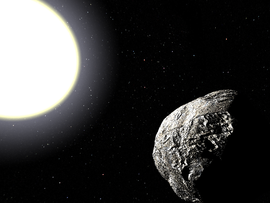
Artist’s impression of a vulcanoid asteroid
The vulcanoids are a hypothetical population of asteroids which may exist within a gravitationally stable region inside Mercury’s orbit. They are named after the hypothetical planet Vulcan, whose existence was disproven in 1915. No vulcanoids have yet been discovered, and it is not clear if any exist.
If they do exist, the vulcanoids could easily evade detection because they would be very small and drowned out by the bright glare of the nearby Sun. Due to their proximity to the Sun, searches from the ground can only be carried out during twilight or solar eclipses. Any vulcanoids must be between about 100 metres (330 feet) and 60 kilometres (37 miles) in diameter and are probably located in nearly circular orbits near the outer edge of the gravitationally stable zone.
The vulcanoids, should they be found, may provide scientists with material from the first period of planet formation, as well as insights into the conditions prevalent in the early Solar System. Although every other gravitationally stable region in the Solar System has been found to contain objects, non-gravitational forces, such as the Yarkovsky effect, or the influence of a migrating planet in the early stages of the Solar System’s development, may have depleted this area of any asteroids that may have been there.
Vulcanoids, being an entirely new class of celestial bodies, would be interesting in their own right, but discovering whether or not they exist would yield insights into the formation and evolution of the Solar System. If they exist they might contain material left over from the earliest period of planet formation, and help determine the conditions under which the terrestrial planets, particularly Mercury, formed. In particular, if vulcanoids exist or did exist in the past, they would represent an additional population of impactors that have affected no other planet but Mercury, making that planet’s surface appear older than it actually is. If vulcanoids are found not to exist, this would place different constraints on planet formation and suggest that other processes have been at work in the inner Solar System, such as planetary migration clearing out the area.
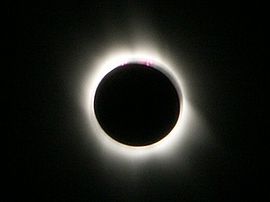
A total solar eclipse. These events provide an opportunity to search for vulcanoids from the ground
Several searches during eclipses were conducted in the early 1900s, which did not reveal any vulcanoids, and observations during eclipses remain a common search method. Conventional telescopes cannot be used to search for them because the nearby Sun could damage their optics.
In 1998, astronomers analysed data from the SOHO spacecraft’s LASCO instrument, which is a set of three coronagraphs. The data taken between January and May of that year did not show any vulcanoids brighter than magnitude 7. This corresponds to a diameter of about 60 kilometres (37 miles), assuming the asteroids have an albedo similar to that of Mercury. In particular a large planetoid at a distance of 0.18 AU, predicted by the theory of Scale relativity, was ruled out.
Later attempts to detect the vulcanoids involved taking astronomical equipment above the interference of Earth’s atmosphere, to heights where the twilight sky is darker and clearer than on the ground. In 2000, planetary scientist Alan Stern performed surveys of the vulcanoid zone using a Lockheed U-2 spy plane. The flights were conducted at a height of 21,300 metres (69,900 feet) during twilight. In 2002, he and Dan Durda performed similar observations on an F-18 fighter jet. They made three flights over the Mojave desert at an altitude of 15,000 metres (49,000 feet) and made observations with the Southwest Universal Imaging System–Airborne (SWUIS-A).
Even at these heights the atmosphere is still present and able to interfere with vulcanoid searches. In 2004, a sub-orbital spaceflight was attempted in order to get a camera above Earth’s atmosphere. A Black Brant rocket was launched from White Sands, New Mexico, on 16th January, carrying a powerful camera named VulCam, on a ten-minute flight. This flight reached an altitude of 274,000 metres (899,000 feet) and took over 50,000 images. Due to technical problems, none of the images were able to reveal any vulcanoids.
The Messenger space probe may provide evidence regarding vulcanoids. Its opportunities will be limited because its instruments need to be pointed away from the Sun at all times to avoid damage. The spacecraft has already taken a few of a planned series of images of the outer regions of the vulcanoid zone.
A vulcanoid is an asteroid in a stable orbit with a semi-major axis less than that of Mercury (i.e. 0.387 AU). This does not include objects like sungrazing comets which, although they have a perihelion inside the orbit of Mercury, have a far greater semi-major axis.

The zone, represented by the green region, in which vulcanoids may exist, compared with the orbits of Mercury, Venus and Earth
The vulcanoids are thought to exist in a gravitationally stable band inside the orbit of Mercury, at distances of 0.06 to 0.21 AU from the Sun. All other similarly stable regions in the Solar System have been found to contain objects, although non-gravitational forces such as radiation pressure, Poynting–Robertson drag and the Yarkovsky effect may have depleted the vulcanoid area of its original contents. There may be no more than 300 to 900 vulcanoids larger than 1 kilometre (0.62 mile) in radius remaining, if any. The gravitational stability of the vulcanoid zone is due in part to the fact that there is only one neighbouring planet. In that respect it can be compared to the Kuiper belt.
The outer edge of the vulcanoid zone is approximately 0.21 AU from the Sun; more distant objects are unstable due to the gravitational influence of Mercury and would be perturbed into Mercury-crossing orbits on timescales of the order of 100 million years. The inner edge is not sharply defined: objects closer than 0.06 AU are highly susceptible to Poynting–Robertson drag and the Yarkovsky effect, and even out to 0.09 AU vulcanoids would have temperatures of 1,000 K or more, which is hot enough for evaporation of rocks to be the limiting factor in their lifetime.
The volume of the vulcanoid zone is very small compared to that of the asteroid belt. Collisions between objects in the vulcanoid zone would be frequent and highly energetic, tending to lead to the destruction of the objects. The most favourable location for vulcanoids is probably in circular orbits near the outer edge of the vulcanoid zone. Vulcanoids are unlikely to have inclinations of more than about 10° to the ecliptic. Mercury trojans, asteroids trapped in Mercury’s Lagrange points, are also possible.
Any vulcanoids that exist must be relatively small. Previous searches, particularly from the SOHO spacecraft, rule out asteroids larger than 60 kilometres (37 miles) in diameter. The minimum size is about 100 metres (330 feet); particles smaller than 0.2 μm are strongly repulsed by radiation pressure, and objects smaller than 70 m would be drawn into the Sun by Poynting–Robertson drag. Between these upper and lower limits, a population of asteroids between 1 kilometre (0.62 miles) and 25 kilometres (16 miles) in diameter is thought to be possible. They would be almost hot enough to glow red hot.
It is believed that the vulcanoids would be very rich in elements with a high melting point, such as iron and nickel. They are unlikely to possess a regolith (a layer of loose, heterogeneous material covering solid rock, including dust, broken rock, and other related materials) because such fragmented material heats and cools more rapidly, and is affected more strongly by the Yarkovsky effect, than solid rock. Vulcanoids are probably similar to Mercury in colour and albedo, and may contain material left over from the earliest stages of the Solar System’s formation.
There is evidence that Mercury was struck by a large object relatively late in its development, a collision which stripped away much of Mercury’s crust and mantle, and explaining the thinness of Mercury’s mantle compared to the mantles of the other terrestrial planets. If such an impact occurred, much of the resulting debris might still be orbiting the Sun in the vulcanoid zone.
The existence of a brown dwarf/red dwarf was suggested in 1984 by physicist Richard A. Muller, based on purported periodicities in mass extinctions within Earth’s fossil record. Its regular passage through the Solar System’s Oort cloud would send large numbers of comets towards Earth, massively increasing the chances of an impact. Nemesis is postulated to be orbiting the Sun at a distance of about 95,000 AU (1.5 light-years), somewhat beyond the Oort Cloud, to explain a perceived cycle of mass extinctions in the geological record, which seem to occur more often at intervals of 26 million years. As of 2011, over 1,300 brown dwarfs have been identified and none of them are inside the Solar System.
More recent theories suggest that other forces, like close passings of other stars, or the angular effect of the galactic gravity plane working against the outer solar orbital plane, may be the cause of orbital perturbations of some outer Solar System objects. In 2011, Coryn Bailer-Jones did an analysis of craters on the surface of the Earth and reached the conclusion that the earlier findings of simple periodic patterns (implying periodic comet showers dislodged by a hypothetical Nemesis star) to be statistical artifacts, and found that the crater record shows no evidence for Nemesis. However, in 2010, Melott and Bambach found strong evidence in the fossil record confirming the extinction event periodicity originally claimed by Raup and Sepkoski in 1984 (see below), but at a higher confidence level and over a time period nearly twice as long. The Infrared Astronomical Satellite (IRAS) failed to discover Nemesis in the 1980s. The 2MASS astronomical survey, which ran from 1997 to 2001, failed to detect an additional star or brown dwarf, in the Solar System.
Using newer and more powerful infrared telescope technology, able to detect brown dwarfs as cool as 150 kelvins out to a distance of 10 light-years from the Sun, results from the Wide-field Infrared Survey Explorer (WISE survey) have not detected Nemesis. In 2011, David Morrison, a senior scientist at NASA known for his work in risk assessment of near Earth objects, has written that there is no confidence in the existence of an object like Nemesis, since it should have been detected in infrared sky surveys.
In 1984, paleontologists David Raup and Jack Sepkoski published a paper claiming that they had identified a statistical periodicity in extinction rates over the last 250 million years using various forms of time series analysis. They focused on the extinction intensity of fossil families of marine vertebrates, invertebrates, and protozoans, identifying 12 extinction events over the time period in question. The average time interval between extinction events was determined as 26 million years. At the time, two of the identified extinction events (Cretaceous-Paleogene and Late Eocene) could be shown to coincide with large impact events. Although Raup and Sepkoski could not identify the cause of their supposed periodicity, they suggested a possible non-terrestrial connection. The challenge to propose a mechanism was quickly addressed by several teams of astronomers.
In 2010, Melott and Bambach re-examined the fossil data, including the now-improved dating, and using a second independent database in addition to that Raup and Sepkoski had used. They found evidence for a signal showing an excess extinction rate with a 27-million-year periodicity, now going back 500 million years, and at a much higher statistical significance than in the older work. The change from 26 to 27 million years is expected based on a 3% “stretch” in the geological timescale since the 1980s.
Two teams of astronomers, Daniel P Whitmire and Albert A Jackson IV, and Marc Davis, Piet Hut, and Richard A Muller, independently published similar hypotheses to explain Raup and Sepkoski’s extinction periodicity in the same issue of the journal Nature. This hypothesis proposes that the Sun may have an undetected companion star in a highly elliptical orbit that periodically disturbs comets in the Oort cloud, causing a large increase of the number of comets visiting the inner Solar System with a consequential increase of impact events on Earth. This became known as the “Nemesis” or “Death Star” hypothesis.
If it does exist, the exact nature of Nemesis is uncertain. Muller suggests that the most likely object is a red dwarf with an apparent magnitude between 7 and 12, while Daniel P Whitmire and Albert A Jackson argue for a brown dwarf. If a red dwarf, it would exist in star catalogs, but it would only be confirmed by measuring its parallax; due to orbiting the Sun it would have a low proper motion and would escape detection by older proper motion surveys that have found stars like the 9th-magnitude Barnard’s star. (The proper motion of Barnard’s star was detected in 1916.) Muller expects Nemesis to be discovered by the time parallax surveys reach the 10th magnitude.
Muller, referring to the date of a recent extinction at 11 million years before the present day, posits that Nemesis has a semi-major axis of about 1.5 light-years (95,000 AU) and suggests it is located (supported by Yarris, 1987) near Hydra, based on a hypothetical orbit derived from original apogees of a number of atypical long-period comets that describe an orbital arc meeting the specifications of Muller’s hypothesis. Richard Muller’s most recent paper relevant to the Nemesis theory was published in 2002. In 2002, Muller speculated that Nemesis was perturbed 400 million years ago by a passing star from a circular orbit into an orbit with an eccentricity of 0.7.
The trans-Neptunian object Sedna has an extra-long and unusual elliptical orbit around the Sun, ranging between 76 and 975 AU. Sedna’s orbit is estimated to last between 10.5 and 12 thousand years. Its discoverer, Michael Brown of Caltech, noted in a Discover magazine article that Sedna’s location seemed to defy reasoning: “Sedna shouldn’t be there,” said Brown. “There’s no way to put Sedna where it is. It never comes close enough to be affected by the Sun, but it never goes far enough away from the Sun to be affected by other stars”. Brown therefore postulated that a massive unseen object may be responsible for Sedna’s anomalous orbit. Brown has stated that it is more likely that one or more non-companion stars, passing near the Sun billions of years ago, could have pulled Sedna out into its current orbit. In 2004, Kenyon forwarded this explanation after analysis of Sedna’s orbital data and computer modeling of possible ancient non-companion star passes.
Searches for Nemesis in the infrared are important because cooler stars shine in infrared light. The University of California’s Leuschner Observatory failed to discover Nemesis by 1986. The Infrared Astronomical Satellite (IRAS) failed to discover Nemesis in the 1980s. The 2MASS astronomical survey, which ran from 1997 to 2001, failed to detect a star, or brown dwarf, in the Solar System. If Nemesis exists, it may be detected by Pan-STARRS or the planned LSST astronomical surveys. In particular, if Nemesis is a red dwarf star or a brown dwarf, the WISE mission (an infrared sky survey that covered most of our solar neighborhood in movement-verifying parallax measurements) was expected to be able to find it. WISE can detect 150 kelvin brown dwarfs out to 10 light-years. But the closer a brown dwarf is the easier it is to detect. Preliminary results of the WISE survey were released on 14th April 2011. On 14th March 2012, the entire catalog of the WISE mission was released.
Calculations in the 1980s suggested that a Nemesis object would have an irregular orbit due to perturbations from the galaxy and passing stars. The Melott and Bambach work shows an extremely regular signal, inconsistent with the expected irregularities in such an orbit. Thus, while supporting the extinction periodicity, it appears to be inconsistent with the Nemesis hypothesis, though of course not inconsistent with other kinds of dark stellar companions. According to NASA, “recent scientific analysis no longer supports the idea that extinctions on Earth happen at regular, repeating intervals, and thus, the Nemesis hypothesis is no longer needed”.
Have you read my story The Green Flash?