
Loading...
Loading...
Note to Mr Clarkson: I don’t like cars!
The painting of Clapham Junction by Terence Cuneo, who is renowned for his railway paintings. He almost always included a small mouse somewhere, even in his portraits of famous people, though I defy anyone to find it in this miniature reproduction [National Railway Museum; oil on canvas, 105.6 × 120.7 cm; enlargement at the BBC Arts web site]
Click on any of the thumbnail images to see the pictures full-size; or the blue text leads to more detail about the subject further down this page – and there’s much more on other pages. Click on the Big Blue Links below to get to the main subject article.
This page has introductions to:
Clapham Junction, 1961
Artist: Terence Cuneo
Clapham Junction, 2009
Compare this with the painting by Terence Cuneo – no steam just class 377, 455 and 450 EMUs.
The London Buses page really does cover a lot of ground that interests me and other anorakies (if that’s how it’s spelt). My interests are concentrated on London.
The page is a general [sic] overview of the history of the horse bus and the motor bus. There’s also a long list of all the different types of motor bus used in London, some recommended books and webs, and something about numbering schemes for routes (and also British roads). It includes:
There’s more specific information and photographs about:
More at
London Buses
In 1961 it would have seemed very odd to find a motor bus on a route numbered 609, as numbers in the 500s and 600s were reserved for trolleybuses. This, however, was an exception, and the 609 bus route lasted only from 30th April until 5th November 1961; London was losing its trolleybuses.
Trolleybus service 609 was operated by Finchley (FY) and Highgate (HT) depôts and ran from Barnet Church via Finchley, Highgate, Holloway Road and City Road to Finsbury Square, Moorgate. Highgate was converted to a bus garage in April 1961 but it retained its Sunday allocation on the 609; so this number was retained but the route used Routemasters until Finchley was converted in November 1961. At that time the route was renumbered 104 and was operated entirely by buses from FY and HT.
See also the article about Bus Rallies below.
Bus destination blinds in the London Transport Museum
This photo shows how other countries manage their ‘transport problems’. The British rail system is frequently shut down given a small amount of snow. And then there’s the havoc on the roads at the same time! But so many of our problems are caused by ignorance; see the evidence here...
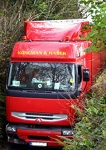
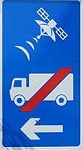
Some Satellite Navigation problems
This section includes:
A Lodekka bus, formerly owned by Hants & Dorset Motor Services (or “Pants and Corset” as I remember it). This bus from the early 1950s went to the U.S. in 1976 and was in this sorry state in 2009. (I was once told that ‘Lodekka’s was Polish, but they were in fact manufactured in Bristol with bodywork by Eastern Coach Works of Lowestoft.)
Green Line was originally set up by the London General Omnibus Company (the predecessor of London Transport), to operate a comfortable journey into London from the leafy suburbs. Once established, it operated a mass of routes into the city and in many cases right across. After privatisation, it was reduced to a rag-bag of routes mostly serving Heathrow and Gatwick airports, and linking Hemel Hempstead with Central London.
This page covers photographs and descriptions of Green Line Coach Services, including:
More at
Green Line
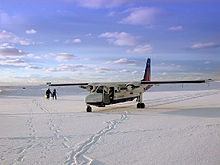
A Loganair Britten-Norman Islander plane
I sometimes dream of owning my own plane, so that I wouldn’t have to endure the torture associated with commercial airlines and, in particular, the airports they haunt. But I am concerned about the environment and so I will not indulge myself – not that I could afford it!
This section includes:
 Video showing an aeroplane coming to land in high winds at Birmingham airport before being forced to retreat back into the sky. The aircraft tilts precariously as it comes metres from the runway, before the pilot opts to abandon the landing.
This section is a set of photographs with detailed descriptions of models of London buses, trams and trolleybuses through the years. Also included are two diesel locomotives and one or two other road vehicles. The vehicles are all to 1:76-scale and are displayed in a street scene. (There are so many now that the whole thing looks like an enormous traffic jam!)
The picture below isn’t a road sign but I couldn’t omit John Cleese from the Ministry of Silly Walks; well, walking is but one means of locomotion!
A new government in one of Britain’s former colonies decided that there was one more change to be made to rid the country of the last vestiges of colonial rule. The Laws on Transport were to be changed and traffic was henceforth to drive on the right-hand side of the road instead of the left.
However, to ease the change in, all vehicles with even numbered registrations were to make the transfer on the first Sunday in April, while those with odd numbers were to change on the second Sunday in April.
The Trams and Trolleybuses page has lots more about them, mostly the good old London ones, but there’s a picture of a Blackpool tram in amongst them all.
Trams on Blackfriars Bridge...
Most tram routes from south London that terminated at Embankment worked in pairs, for example the 36 headed north over Blackfriars Bridge, along the Victoria Embankment and south across Westminster Bridge; the 38 ran the other way, the remaining part of the two routes being the same; the Abbey Wood routes (among them the 36 and 38) were the last to survive the abolition of London’s trams, before those horrible beasts in Croydon came into being decades later.
More at
Trams and Trolleybuses
The “Big Blue Headings” for this topic are below, for British Railways, the London Underground, Foreign Railways and Disasters.
Raildate weekly news magazine
Many notes pointing you to interesting railway web-sites (and others relating to other modes of transport), upcoming events, what’s coming on British TV, and lots more; highly recommended
If railway DVDs are your interest, try subscribing to British Railways TV.
Plenty of cab rides, video clips and films are recommended on my Railways pages; see an example at
Oh, Mr Porter!.
Just what is needed for a bus rally – blue skies, a warm day and plenty of buses and coaches. The only ones that I can reasonably identify as coming from London are the three red buses together in the distance. The first, with a yellow destination display looks like a Routemaster; then just visible next to it is an RT; and then another RT.
Another rally...
...a collection of Routemasters on parade.
The third photograph in this section is rather easier to deal with, while revealing the complicated existences they had. The vehicles are all RT-types on AEC chassis (hence my use of the logo).
LYF 21 in Country route livery for the 370 is RT 2083; however, according to Ian’s Bus Stop, this bus started life as RT 2084 (LYF 22); it first entered service in April 1951 at Thornton Heath garage (TH) in the Central (red bus) area. It remained red until it was put into store in autumn 1971. (The original “real” RT 2083 [LYF 21] had a very similar London Transport life from 1951 to 1971.) Eventually RT 2084 was preserved as “RT 2083”, painted green and appeared at several rallies from 1997 until 2014.
Service 370 served Tilbury, Romford, Upminster and Hornchurch, and was part of a transfer of routes in the Grays and Tilbury area from Eastern National that took place on 30th September 1951.

There’s a photo entitled “RT 2083” – Splendidly restored RT 2083 basks in the sun in the bus park, Amersham running day, 6 October 2013 on Flickr.
Here is RT 2083’s blow-by-blow history with London Transport:
Compare RT 2084’s LT history:
The red Central area bus on route 177 could be one of many that ran on that service.
The 177 came into existence in July 1952 as a tram-replacement service, when the 36 and 38 trams from Abbey Wood to the Embankment were withdrawn. A mixture of RTLs from Abbey Wood (AW) and RTs from New Cross (NX) operated the route, though the latter’s were temporarily housed at Peckham (PM) while NX was being converted from a tram depôt.
RTs took over the whole route in May 1955 using both these garages, and required 59 RTs on Mondays to Fridays, 46 on Saturdays and 16 on Sundays. Over the years the central London route varied and was eventually cut back to Peckham. Other changes occurred at the country end of the route, with parts of Thamesmead being served and Abbey Wood railway station being the terminus. The last RTs ran on the 177 in January 1972; Abbey Wood garage closed in October 1981.
The Green Line route 721 service was RT 3254, registration number LLU 613. The history of this coach/bus is a bit more complicated.
Here the story of RT 3254 takes a new line.
The next bus is barely visible, but is in green livery and the route number appears to be 403, though the middle digit may be wrong. The 403 operated between Tonbridge and West Croydon, via Sevenoaks and Chelsham.
Finally, the vehicle operating on route 133 is RT 2043 (registration number LUC 291). It was new in December 1950 and carried a Park Royal body, number 5584. It operated from several Central area garages, including Streatham (AK) where it ran on the 133. It was eventually sold by London Transport in April 1977, and after several owners and liveries it was repainted into its early form with cream upper window surrounds. It still attends many Open Days.