|
home /
misc /
angles
(navigation links)
|
We have a conviction that human existence is significant,
that life essentially makes sense in spite of our confusions,
that human beings are not here on earth by accident
but for a purpose ...
|
Català - Anglès
go 2 top
- read English aloud for 3 to 5 minutes per day to improve pronunciation.
BBC is a good place -
learning english, gracies Chris
- listen to 5 minutes of English (or "watch" 5 minutes of English) to improve comprehension.
- read for pleasure for 10 minutes (magazines, novels, newspapers, websites, etc.) to develop vocabulary and awareness of new structures.
Notice that none of these activities
requires more than 5 or 10 minutes per day
(which even the busiest of people have),
they don't require a teacher and they don't cost anything.
Furthermore...they can actually be quite enjoyable.
No one can teach you English, you have to learn it.
Now we meet at ... ZOOM
|
Parts del cos
|
| Cap | Cabeza | Head | голова
|
| Calavera | Calavera | Skull | череп
|
| Diafragma | Diafragma | Midriff | диафрагма
|
| Ull | Ojo | Eye | глаз
|
| Cella | Ceja | Eyebrow | бровь
|
| Parpella | Parpado | Lid, eyelid | веко
|
| Pestanya | Pestaña | Lashes | ресница
|
| Boca | Boca | Mouth | рот
|
| Barbeta | Barbilla | Chin | подбородок
|
| Llavis | Labios | Lips | губы
|
| Dents | Dientes | Teeth | зубы
|
| Llengua | Lengua | Tongue | язык
|
| Nas | Nariz | Nose | нос
|
| Orella | Oreja | Ear | ухо
|
| Cabell | Cabello | Hair | волосы
|
| Coll | Cuello | Neck | шея
|
| Gola | Garganta | . | горло
|
| Clatell | Nuca | Nape | .
|
| Espatlla | Hombro | Shoulder | .
|
| Braç | Brazo | Arm | .
|
| Pit | Pecho | Chest | .
|
| Colze | Codo | Elbow | .
|
| Canell | Muñeca | Wrist | .
|
| Ma | Mano | Hand | .
|
| Ungla | Uña | Nail | .
|
| Esquena | Espalda | Back | .
|
| Pit | Pecho | Chest | .
|
| Abdomen | Abdomen | Abdomen | .
|
| Melic | Ombligo | Navel | .
|
| Cul | Culo | Ass | .
|
| Maluc | Cadera | Hip | .
|
| Llom | Lomo | Loin | .
|
| Cama | Pierna | Leg | .
|
| Cuixa | Muslo | Thigh | .
|
| Genoll | Rodilla | Knee | .
|
| Tormell | Tobillo | Ankle | .
|
| Peu | Pie | Foot | .
|
| Dit (ma) | Dedo | Finger | .
|
| Dit (peu) | Dedo | Toe | .
|
| Aixella | Sobaco, axila | Axilla, armpit | .
|
| Engonal | Ingle | Groin | .
|
| Mussol | Orzuelo | Stye | .
|
| Berruga | Verruga | Wart | .
|
|
Anatomia interna
|
| Melsa | Bazo | spleen
|
| Bufeta biliar | Vesícula biliar | gallbladder
|
| | Vejiga | bladder
|
| Fetge | Higado | liver
|
| Ronyó | Riñon | kidney
|
| Pulmó | Pulmón | lung
|
| Intesti | | bowel
|
| Coàgul | Coágulo | clot
|
| Aturada cardiaca | paro cardiaco | cardiac arrest
|
Ah, that's a beautiful name for a beautiful woman. Married?
Listen, Manny. You want me to go to Phoenix with you? You pay me way, you buy my meals.
I'll keep your dick hard for 4 straight days.
While you're at the convention, I'll do a little business myself. Plenty of guys there, right?
I show some tit, milk a little cow. Quick and clean. 50 bucks a pop. I'll let you keep half of the profit. How about it?
I gotta go.
Asshole!
Perdita Durango
|
Dies de la setmana
|
| Lunes (Luna) | Monday |
| Martes (Marte) | Tuesday |
| Miércoles (Mercurio) | Wednesday |
| Jueves (Júpiter, Jovis) | Thursday |
| Viernes (Venus, Veneris) | Friday |
| Sábado (Saturno) | Saturday |
| Domingo (Sol) | Sunday |
He draweth out
the thread of his verbosity
finer than
the staple of his argument.
W. S. - Love's Labour Lost, Holofernes
| Pecats capitals
| 7 virtudes
|
| Soberbia | Pride | Humility | Humildad
|
| Envidia | Envy | Love | Caridad
|
| Lujuria | Lust | Self control | Castidad
|
| Ira | Wrath, Anger | Kindness | Paciencia
|
| Gula | Gluttony | Faith and Temperance | Templanza
|
| Codicia, Avaricia | Avarice, Greed | Generosity | Generosidad
|
| Pereza | Sloth | Zeal | Diligencia
|
Wikipedia :
Pecados Capitales -
Seven Deadly Sins.
7 virtudes
(Aguirre, Wrath of God = la cólera de dios)
vs
(The Grapes of Wrath = las uvas de la ira)
Cólera versus Ira (anger, rabia extremada y agresiva) :
la cólera es un enfado o una enfermedad y la ira es la forma de pasar a la acción ese enfado vengándose.
And still I dream he treads the lawn,
walking ghostly in the dew,
pierced by my glad singing through.
|
The Song of the Happy Shepherd
from Crossways
by William Butler Yeats
(1865-1939)
url
|
|
Preguntes a fer-se
|
| What ? | Qué ? | |
| Where ? | Donde ? | |
| When ? | Cuando ? | |
| Who ? | Quién ? | |
| Why ? | Por qué ? | Per què ? |
| How ? | Cómo ? | |
My pleasure ...
It could be, if you play your cards right !
| Verdures / Vegetables
|
| Albahaca | Basil |
|
| Alcachofa | Artichoke |
|
| Berenjena | Aubergine | Melanzana
|
| Calabacin | |
|
| Garbanzo | Chickpea | Cigró
|
| Guisante | Pea | Pèsol
|
| Judia | (green) Bean |
|
| Judia | (seca) Haricot | Fesol
|
| Lentejas | Lentils |
|
| Perejil | Parsley | Prezzemolo
|
| Pimiento | Pepper |
|
| Tomate | | Pomodoro
|
| Zanahoria | Carrot |
|
| Salvia | Sage |
|
| Romero | Rosemary |
|
| Tomillo | Thyme |
|
| Carns
|
| Bou | beef |
|
| Xai | lamb or mutton |
|
| Fruites / Fruits
|
| Aubercoc | Apricot |
|
| Cirera | Cherry |
|
| Datil | Date |
|
| Figa | Fig | higo
|
| Maduixa | Strawberries |
|
| Magrana | Pomegranate | granada
|
| Mandarina | Mandarin |
|
| Melo | Melon |
|
| Nespre | Loquat |
|
| Pera | Pear |
|
| Platan | Banana |
|
| Poma | Apple |
|
| Pressec | Peach |
|
| Pruna | Plum / Gage |
|
| Raim | Grape |
|
| Taronja | Orange |
|
| Xindria | Watermelon |
|
Pinyols d'oliva : olive stone, olive nut, olive pit
Parsley, sage, rosemary and thyme : perejil, salvia, romero y tomillo. S&G
"You gave me a forever within the numbered days, and I'm grateful."
Menjars
| Albondigas | Meatballs
|
| Callos | Tripe
|
Ou :
white,
yolk.
She's got an ass like an onion ....
Makes you wanna cry !
| Metalls
|
| Acero | Steel
|
| Bronce | Bronze
|
| Cobre | Copper
|
| Estaño | Tin
|
| Hierro | Iron
|
| Latón | Brass
|
| Mercurio | Mercury
|
| Plata | Silver
|
| Plomo | Lead
|
| Zinc | Zinc
|
Good relationships keep us happier and healthier.
... this time around it is not the finance austerity measures that have me 'grounded' inside the (home) office!
Ever experienced a 'leaking' chimney?
Or sitting at the wrong side of a camp fire where the smoke blows over you?
Welcome to Singapore!!!
The sad thing is the so-called forest fires that burn off entire islands worth of native / rain forest
to make way for plantations of palm trees for industrial oil production ... destroying the soil (can only sustain 8 years)
and taking away local jobs.
Don't get me started on the remaining Orang Gutan population in Sumatra, or that little horn-billed yellow frog we saw last year ....
In any case - on the light side, you can picture me with a face mask trying to dial into phone calls,
and convincing myself that carbon monoxide gets filtered away by a piece of cloth in front of my nose ... yeaaah!
Aside from that - doing GREAT :-) and sending you best greetings from the smoke
die Gina (20062013)
| Botigues / Shops
|
| Llibreria | bookshop
|
| Quiosc | newsagent
|
| Farmacia | chemist
|
| Botiga de discos | record shop
|
| Botiga de roba | clothes shop
|
| Botiga de esports | sports shop
|
| Grans magatzems | departament store
|
| Supermercat | supermarket
|
| Carnisseria | butcher shop
|
| Merceria | haberdashery
|
| Panaderia | bakery
|
| Sabateria | ?
|
| bufet de carne a precio fijo | carvery
|
"We work 25 hours a day."
"But there's only 24 hours in a day!"
"We just wake up an hour earlier."
| Adjectius
|
| Torpe | clumsy
|
| Baboso | sloppy
|
Why is it people who can't take advice always insist on giving it ? {JB @ CR, 2006}
Coses de armes
- gunbarrel = canó
- holster = pistolera, cartuchera
- pull the trigger = apretar el gatillo
- "Take aim!" = "apunta"
A hypocrite is the person who refuses to apply to himself the standards he applies to others.
Coses de la mar anglesa
- barlovento - upwind, windward
- cast off - partir un vaixell
- dockyard = astillero
- forecastle = castillo / camarotes de proa
- foresail
- portside = babor, lado izquierdo del barco
- sotavento - downwind, leeward
- starboard = right side of the boat, estribor
- steerage = ship's cheapest accommodation
- tide - marea
In the United States, when a person’s real name is unknown, documents usually use:
👉 John Doe (for a man)
👉 Jane Doe (for a woman) - flim
"If you want a happy ending, that depends, of course, on where you stop your story." Orson Welles
Car related words
| Parts de un cotxe
|
| volante | steering weel
|
| embragament | clutch
|
| frè | brake
|
| guardabarros | fender
|
Vocabulary,
dictionary
In American English and American Spanish, the term sedan is used (accented as "sedán" in Spanish).
The engine compartment, at the front, is covered by the hood;
the cargo compartment at the rear is called the trunk.
In British English, a car of this configuration is called a saloon.
The engine compartment cover is the bonnet, the cargo-compartment boot is at the rear.
Hatchback sedans are known simply as hatchbacks (not hatchback saloons);
long-wheelbase luxury saloons may be referred to as limousines.
At Oxford, 200 people were participating in men’s only English language competition.
The challenge was to express peacefulness, happiness and calmness in a single sentence.
The person who won wrote: my wife is sleeping.
War related words
- shrapnel = metralla
- sniper = francotirador
Parts de una pistola
.
A very nicely dresed gentleman came forward and said:
"I couldn't help noticing what you had done for that young man"
"And I wonder if it was at all possible whether you would do the same for me ?"
Miriam Margolyes
I remeber so distinctly that I started to cream in my knickers
Money related words
- your account payment is soverdue
| Sons de la vida
|
| bell | toll
|
| dog | bark
|
| thunder | rumble
|
Is that what you consider to be of importance in the world ?
Looking handsome ?
e-reading
Errors clàssics - false friends
|
La expresió ...
|
Et penses que és ...
| Però en realitat és ...
| Hauriem de posar ...
| Exemple
|
| Abstract | Abstracto | Resumen | | |
| Abuse | Abuso | Insultos | Imposition | |
| Actually | Actualment | De fet, ... | Nowadays | Actually he never went to Spain |
| Carpet | Carpeta | Alfombra | File | |
| Eventually | Casualmente | Con el tiempo | | |
| Library | Libreria | Bibioteca | | |
| Parents | Parientes | Padres | | |
| Pretend | Pretender | Aparentar | | |
| Realize | Realizar | Darse cuenta | To achieve | |
| Sensible | Sensible | Assenyat/Sensato | Sensitive | |
Spanish --> Estreñido ;
English --> Constipated
Spanish --> Constipado ;
English --> Congested (Stuffed-up nose)
False friends
or
false friends
Molt complert :
common errors
Wiki
Keep your thoughts positive because your thoughts become your words.
Keep your words positive because your words become your behavior.
Keep your behavior positive because your behavior becomes your habits.
Keep your habits positive because your habits become your values.
Keep your values positive because your values become your destiny.
Mohandas Karamchand Gandhi
Paraules amb 2 sentits
- fit
- fit (a) = en forma
- fit (v) = quedar bé (una peça de roba)
- free
- libre
- gratis
- light
- light (a) = clar
- light (n) = la llum
- look
- look (v) = semblar, aparentar
- look (n) = aspecte extern
- match
- match (n) = llumí
- match (v) = combinar amb
- suit
- suit (v) = afavorir (un estil)
- suit (n) = vestit (esp. traje)
Un sentit amb dues paraules
furlough vs layoff :
- a layoff is basically when your job is terminated. Your job, your benefits, you're not going to return to that employer again.
- a furlough is a leave of absence, your job remains.
Alice went on.
"Would you tell me, please, which way I ought to go from here?"
"That depends a good deal on where you want to get to" said the Cat.
"I don't much care where ---" said Alice.
"Then it doesn't matter which way you go," said the Cat.
Preposicions diferents
- dream a dream of me
- they are terrified of you
- that's so sweet of you
- walk in fear
- tell lies on me
- think of me
- I swear to god
- we were attending the contest on a whim
- she is waiting on you
edenwort - chinese-leaf lettuce and three pounds of a very peculiar thing called an edenwort,
which looked like a beetroot going through a severe identity crisis.
Nigel Williams, The WImbledon poisoner
Diccionari anglès - català
| Anglès | Català
|
| abide | acatar, tolerar, soportar
|
| actually | en realidad, realmente
|
| acumen | perspicacia, "The ability to make good judgements and take quick decisions"
|
| adamant | porfiado, duro, firme
|
| aghast | pasmado, aterrorizado, atónito, estupefacto
|
| albeit | aunque, no obstante
|
| alms | limosna
|
| amazing | asombroso, increíble
|
| anger | enfado
|
| anthem | himno nacional
|
| apparent | sucesor, primogenito
|
| arson | incendio provocado
|
| avatar | change, transformation
|
| awesome | impresionante, maravilloso, increíble. [Alby, 15/2/7]
|
| awkward | torpe, poco elegante
|
| bail | fianza, rescatar
|
| bait | esquer, cebo
|
| ballot | papeleta, votacion
|
| banshee | female spirit in Irish folklore who heralds the death of a family member
|
| barf (to -) | vomitar
|
| balaclava | prenda de roba pel cap "verdugo"
|
| bead | mira (rifle)
|
| beehive (hairstyle) |
|
| believe | to accept that something is true or exists
|
| bender |
|
| bequest | legado, herencia
|
| berg | iceberg
|
| berserk | perder los estribos
|
| bigoted | intolerante
|
| blazer | chaqueta (coat) deportiva
|
| blender, hand blender | (mini) "pimer"
|
| bliss | dicha, felicidad, éxtasis
|
| blossom | (sust) flores, (verb) florecer, plenitud
|
| blunder | meter la pata, equivocarse
|
| blunt |
|
| blush | sonrojo
|
| (eating) bogies | (menjant els) mocs
url
|
| boink |
|
| bonk(ing)
| screw, widely acceptable for "having sex" - not as rude as shag and *far* less rude than the offensive fuck.
A British slang term for sexual intercourse.
Used by people who think the term "making love" is too innocent and "fuck" is too coarse.
|
| borough | distrito
New York City is composed of five boroughs: The Bronx, Brooklyn, Manhattan, Queens, and Staten Island.
|
| bother | incomodar, preocuparse
|
| bounder | patán
|
| bounty | recompensa, prima
|
| bowel | intestino
|
| Boxing Day | 26 de Desembre - a holiday traditionally celebrated the day following Christmas Day (Nadal, 25 de Desembre), when servants and tradesmen would receive gifts, known as a "Christmas box", from their bosses or employers
|
| bra | sostén
|
| brawl | reyenta, pelearse
|
| brazzer | Irish slang word or a vulgar word for a female prostitute
|
| breech birth | parto de nalgas
|
| brethren | colega, correligionario
|
| brim | ala, visera
|
| bruise | morado, un "blau"
|
| budget | presupuesto
|
| buff-color | color beige
|
| bunk | catre, litera
|
| burp(s) | eructo
|
| busboy, busgirl, busser or bus person
| a person who works in the restaurant and catering industry clearing tables, taking dirty dishes to the dishwasher,
setting tables, and otherwise assisting the waiting staff
|
| busk | tocar musica en la calle
|
| buster | used to address a man or a boy you do not like
|
| bustle | ajetreo, trajín, bullicio
|
| buttocks | nalgas
|
| canned heat | sterno
|
| canvas | lienzo
|
| caper | a food with a strong flavour that consists of a small green flower bud preserved in salt or vinegar
How did you get involved in that caper? - berenjenal
|
| carpet | moqueta
|
| carvery | meat restaurant (fixed price)
|
| carving | talla (escultura, cut (cooked meat) into slices for eating
|
| caveat | advertencia
|
| champers | champagne
|
| changeback | devolucion (?)
|
|
charwoman, scrubwoman
| cleaning woman who worked for hourly wages
|
|
chaser
| Something you drink right after taking a shot or swig of hard alcohol.
Usually juice, pop, or beer.
|
| chasm | sima, abismo
|
| chimney-sweeper | deshollinador
|
| choke | ahogarse (falta de aire) {in water - drawn}
|
| chubby | rollizo
|
| chuckle | reírse entre dientes, soltar una risita, reírse por lo bajo
|
| chum | amigote, camarada ; cebo, carnada
|
| (the) clap | gonorrea
|
| claw | garra, uña
|
| clay | arcilla
|
| cleat | zapato deportivo con tacos
|
| cleavage | escote {lucir su escote = display cleavage}
|
| cleft | grieta, hendidura
|
| clot | coagulo
|
| coax | convencer, persuadir, engatusar
|
| cobber | (Aus) friend, mate
|
| cog | engranaje
|
| comb | peine
|
| compulsory | obligatorio
|
| conceal | ocultar, disimular
|
| concrete | hormigon
|
| conscription | alistamiento, reclutamiento
|
| constable | police officer
|
| constipation | abnormally delayed or infrequent passage of dry hardened feces, estreñimiento
|
| conundrum | enigma, acertijo
|
| copper (house -) | madero, poli
|
| cot | cuna
|
| counterfeit |
|
| courtship | cortejo, noviazgo
|
| crab | cangrejo
|
| crafty | astuto, habil
|
| craigslist
| a classified advertisements website with sections devoted to jobs, housing,
personals, for sale, items wanted, services, community, gigs, résumés, and discussion forums
|
| cram | empollar
|
| crap | mierda (craps=joc de daus)
|
| crayfish | cangrejo de rio
|
| cripes | caramba, vaya
|
| crippled | tullido
|
| crumbs | engrunes
|
| cuckold
| cornudo
the wife of an adulterous husband is a cuckquean
|
| curmudgeon | cascarrabias
|
| cyst | quiste
|
| dalliance | frivolidad, a casual romantic or sexual relationship
|
| dairy | vaqueria, lecheria
|
| damp | humedo
|
| dawn | amanecer
|
| dead reckoning | navegación por estima
|
| debris | escombros, rocalla
|
| deceive | engañar
|
| deed {do the deed} | hecho (físico), escritura
{a phrase someone says when feeling guilty and not wanting to talk about the actual act, usually pertaining to murder}
|
| deed of trust | fideicomiso
|
| demise | fallecimiento, muerte
|
| den | guarida, cau (cat), cuchitril
|
| demise | deceso
|
| depict | representar, pintar
|
| deserve | merecer
|
| dimple | hoyuelo
|
| disappoint | decepcionar, defraudar
|
| dismal | tétrico, afligido, tenebroso, lúgubre, sombrío, deprimente, miserable
|
| dire (straits) | serious, urgent, calamitós (pasarlas canutas)
|
| doodle | garabato
A doodle is a type of sketch, an unfocused drawing made while a person's attention is otherwise occupied.
|
| dork | imbecil -
Someone who has odd interests, and is often silly at times.
|
| dozing | explanació
|
| dreadful | terrible
penny dreadful
novela barata
|
| dude | slang term usually referring to young men -
dude
|
| duly | debidamente, según era de esperar
|
| dusk | anochecer
|
| dwell | morar, habitar
|
| dwindle | menguar, disminuir
|
| dye | teñir
|
| eve of, on the | en vísperas de
|
| eyesore | desagradable a la vista
|
| facilities | comoditats (aigua, llum, gas, telefon, tv, correus)
|
| fag(s)
| british slang for cigarettes
disrespecting term for homosexual short for
faggots
|
| family name | apellido (also surname or last name)
|
| fang | colmillo
|
| fate | destino, sino, suerte
|
| fedora | sombrero tirolés
|
| feint | maniobra de distracción
|
| fender | guardabarros
|
| flashmob | .
|
| flawless | impecable
|
| flinch | retrocedir
|
| Flip-Flop | espardenya [Toni]
|
| flirt | coquetear
|
| flotsam / jetsam | types of wreckage
|
| flour | farina
|
| fluffer | a person in the adult entertainment industry whose job it is to give male porno stars blowjobs in order to get them ready to perform - (sx)
|
| foe | enemic
|
| footage |
|
| forger | falsificador
|
| forlorn | triste, desesperado
|
| fricken | used as a more socially acceptable word in place of the word "fucking" as a way to express intensity
|
| frisk | cachear
|
| frock | vestido
|
| frothy (drinks) | espumoso
|
| frown | fruncido
|
| furnishing | amueblar
|
| gab
{you're endowed with the gift of gab}
| xerrada
|
| gag | mordaza
|
| gait | andares
|
| garter | liga
|
| gat | revolver
|
| gawky | torpe
|
| gecko | (sx)
|
| giggle | risilla, risa nerviosa, risa tonta
|
| gill | branquia, agalla
|
| gimlet | a small tool with a screw point, grooved shank, and cross handle for boring (taladrar) holes
|
| gown | bata, vestido
|
| graft | injerto
|
| grating | rejilla
|
| grief | aflicción
|
| Grim Reaper | death
|
| grin | mueca, sonrisa (diferencia amb "smile" ?)
|
|
grit
| coraje, agallas, determinación, valor
|
| grommet | a metal or plastic ring that surrounds a hole in cloth to prevent it from tearing
|
| growl | gruñir
|
| grumble | gruñir
|
| grumpy | malhumorado
|
| gorgeous | magnífic, esplèndid
|
| gossip | chismorreo
|
| gutter | desague (?)
|
| haggard | demacrado
|
| handsome
|
 ['h+ans~@m]
     adj (beautiful) hermoso, bello, elegante, guapísimo
     man : guapo, bien parecido, distinguido.
     gesture, salary, treatment etc : generoso.
     fortune, profit : considerable.
     victory : fácil, agobiador.
|
| harbour (US harbor) | puerto, esconder, abrigar
|
| haste | prisa, apuro
|
| hasty | apresurado, percipitado
|
| hatred | aborrecimiento, odio
|
| haunt | guarida
|
| havoc | estragos, destrucción
|
| headstone | lápida
|
| hectic | ajetreado, agitado, frenético, febril
|
| heiress | heredera
|
| heirloom | herencia, recuerdo de familia
|
| hips | caderas
|
| hitchhike | hacer auto-stop
|
| hotherto | hasta ahora
|
| hive | enjambre, eixam
|
| hoax | broma pesada
|
| hoe | azada
|
| hollow | hueco, demacrado
| honky tonk | type of bar that provides country music for entertainment to its patrons
| |
hoodie | sudadera (con capucha)
| | huge | enorme
| | hush puppy | (reg.) torta de maíz frita.
| | in spite of | a pesar de
| | ivy | hiedra
| | jack | a piece of equipment that can be opened slowly under a heavy object
such as a car in order to raise it off the ground {gato para coche}
| | janitor | conserje, portero
| | jeopardize | to expose to danger. Arriesgar, poner en peligro, comprometer.
| | jester | bufon
| | joss | good fortune
| | keener |
| | keepsake |
| | kilt | falda escocesa
| | knickers (pg 67, otter) | bragas
| |
krampus
|
| | lair | madriguera
| | lame | cojo, pobre, defectuoso
| | layover | tiempo de conexión entre 2 vuelos
| | leafy | (place) arbolado
| | lean | apoyarse, delgado
| | leap | saltar
| | ledger | libro mayor
| | leer | mirada lasciva
| | leeway | margen, flexibilidad
| | legacy | legado, herencia
| | leisure |
| | licorice | regalessia
| | limey | marinero inglés, bebedor de lima - para el escorbuto.
| | lisp (a lisper)
| cecear
A speech defect or mannerism characterized by mispronunciation of the sounds (s) and (z) as (th) and (th), as Biggus Dickus in "Life Of Brian"
- url
| | limb | extremidad, mano o pie de una persona o un animal
| | loan | préstamo
| | loot | botín
| | louse / lice | piojo(s)
| | lox | salmon ahumado
| | lukewarm (review) | (revision) tibia
| | lure | atraer
| | lust | lujuria, lascivia, codicia
| | lye | lejia
| | maiden (name) | apellido de casada
| | mall | paseo, centro comercial
| | maverick | inconformista, disidente
| | mayhem | caos
| | midget | enano
| | midriff | In fashion, it is a term for the human abdomen
| | mint | casa de la moneda
| | mishap | contratiempo
| | moat | fosar
| | moist | humedo, mojado
| | mofo | mother-fucker
| | mojo | the word originally means a charm or a spell
But now its more commonly said meaning sex appeal or talent
| | mole | lunar, topo, espia
| | mooning
| enseñar el trasero
| | moot | irrelevante
| | moron | idiota
| moth polilla
| motley | variado, heterogéneo - made up of many different people or things
| | muddle | desorden, follón, revoltijo, lío, jaleo
| | murk
| to physically beat someone so severely, they end up dying from their injuries
| | murked | to be badly defeated at something
| | murky | dark or dim
| | musings | pensamientos
| | naive | ingenuo, candido, inocente
| | naughty | atrevido, travieso
| | navel {tummy button} | ombligo
| | noob | new, inexperienced person - know little and have
no will to learn any more
| | oath (under -) | (bajo) juramento
| | oblivion | olvido
| | off-hand | de botepronto, de improviso
| | ointment | pomada
| | on bail | bajo fianza
| | otter | nutria
| | outage, blackout | apagón
| | oxbow | meandro
| | palsy | paralisi
| | pant | jadear
| | parcel | paquete, sobre, entrega
| | parkour | the "art of movement," is a physical discipline and training method focused on overcoming obstacles in your path
by moving efficiently and rapidly through running, jumping, climbing, and vaulting.
| | parsonical person | member of the clergy
| | pass out | desmayarse
| | parents | padres
| | parish | parroquia
| | pawnbroker | prestamista
| | peasant | campesino
| | pecker |
| |
perky
| animado, alegre
| | pew | banco (de madera, de iglesia)
| | piles | almorranas
| | plaid | (gaelic) blanket - long piece of tartan fabric; usually matches the tartan of the kilt
| | poker | a metal rod with a handle, used for prodding and stirring an open fire
| | pond | estany
| | portmanteau | a single morph which represents two or more morphemes - smog, motel,
kibibyte
| | poultice | cataplasma
| | potluck, to take | tomar lo que venga, conformarse con lo que hay
| | praise | elogios, alabanzas
| | prank | play a trick or practical joke on (someone)
| | prankster | bromista
| | prognosis | pronostico
| | prohibition | ley seca
| | puddle | charco, toll, bassal
| | pumps | high-heels, FMPs
| | quarrel | pelea, disputa
| | quell | aplastar, acabar con, disipar
| |
queer
| odd, strange, unusual, funny, peculiar, curious, bizarre, weird, outlandish, eccentric
| | quid | one pound sterling
| | rascal | bribón, pillo, canalla
Adjective used to describe something of low quality or dubious taste
| | ratchet screwdriver | destornillador de trinquete
| | rattle | traquetear
| | rave about | deshacerse en elogios
| | reckon | juzgar probable, "calculate", "consider", evaluar
| | reed | junco
| | reek | hedor
| | rehearsal | ensayo
| | relatives | familia
| | rhotacism | inability to pronounce or difficulty in pronouncing r sounds, as Pontius Pilate in "Life Of Brian"
wiki
| | riddle
|
a type of question which describes something in a difficult and confusing way,
and which has a clever or amusing answer, often asked as a game
| | rimming, rimjob |
(sx)
(sx)
| | rip | estripar
| | ripple | a small wave on the surface of water
| | robe | batin
| | rod | vara
| | rollercoaster | montanya russa
| | rough | áspero, basto
| | rowdy | alborotador, pendenciero
| | rube | palurdo
| | rue | arrepentirse, lamentar
| | rug | alfombra, catifa
| | rugged | accidentado, áspero, duro, fuerte
url
| | rump | trasero, anca, nalgas
| | rumpus | revuelo, alboroto
| | rusty | oxidado, falto de práctica
| | sash window | finestra de guillotina
| | scarecrow | espantaocells
| | scarf | bufanda
| | scholarly | erudito
| | scrawl | garabato
| | scorch | chamuscar
| |
scrub
| newbie or bad at a video game / med clothes
| | seal | foca
| | seamstress | costurera
| | seasoned | experimentados
| | seize | asir, apresar, sujetar
| | seizure | convulsiones, ataque, acceso
| | seldom | raramente
| | serendipity | .
| |
sesquipedalianism
| linguistic style that involves the use of long words
| | sewage | aguas residuales
| | shaft | mango, hueco
| | shallow | poco profundo, superficial, trivial
| | shag
|
alternative to "fuck", but with a slight, important difference of effect.
To some ears, "fuck" (like "bang") can sound like an aggressive act, and/or violent conquest,
whereas "shag" (a softer sound) sounds more like an enjoyable fun activity
| | shed | perder hojas - In autumn the oak trees will shed
| | sheath | preservativo
| | shill | cómplice, socio, señuelo
| | shillelagh | cachiporra
| | shooting star | estrella fugaz
| | shrug
|
to raise your shoulders and then lower them in order to express a lack of knowledge or interest
| | skanky | extremely unpleasant, especially because of being dirty
| | sibling | hermano
| | sideboards (uk), sideburns (us) | patillas
| | sickle | hoz
| | sill | alfeizar (bellow window)
| | sitch | -
| | skip | contenedor abierto
| | skyscraper | gratacels
| | slay | asesinar, dar muerte, matar
| | sleazy | (sitio) sórdido. (persona) de mala pinta.
| | sleuth | detectiu
| | slim | delgado
| | slumber party | fiesta de pijamas
| |
slump
| to fall or sink heavily; collapse
| | slurp | sorber (ruido que se hace al sorber)
| | slush | fango, lodo
| | snag | imprevisto, obstáculo
| | sneakers | zapatillas de deporte
| | snip | retallada, ganga
| | snitch | soplón
| | snogg | besarse
| | snoop, snooper | fisgonear, fisgon
| | splinter | astilla, espina
| | spree | juerga, borrachera, parranda
| | spunk | agallas, arrojo, coraje
| | soar | planear, elevarse, remontarse, dispararse
| | solicitors | (bufete de) abogados
| | sorcerer | hechicero, brujo
| | sore | dolorido, irritado
| | sour | amargo
| | southpaw | zurdo
| | spat | discusión
| | spinster | solterona
| | splurge | derroche
spending a lot of money on something that is usually considered a luxury, indulgence, or something you don't necessarily need
| | squeer | mariposón
| | stab | puñalada, cuchillada
| | stain | mancha
| | stallion | semental
| | startle | asustar
| | starvation | morir de hambre
| | stash | alijo, almacen oculto
| | stave | bastón
| | stealth | sigilo
| | steed | corcel
| | steep | empinado; remojar
| | steer | conducir, manejar
| | steeple | torre, campanario, aguja
| | stern | severo
| | stillbirth | parto en el que nace muerto el niño
| | stir | mezclar, revolver, moverse
| | stout | corpulento, robusto. Cerveza negra.
| | strife | conflicto, lucha, disputa, contienda
| | stroll | walk in a slow relaxed way
| | struggling | luchador, agobiante
| | stubborn | tenaz, inflexible
| | sulking, sullen | hosco, malhumorado
| | summon | convocar
| | swagger | to walk in a proud and confident way
| | switchblade | navaja de muele
| | swell | hincharse
| | switchboard | centralita telefónica
| | tamper | estropear, descomponer
| | tartan | a pattern consisting of criss-crossed horizontal and vertical bands in multiple colours
| | tattletale | chiusmoso
| | tease | molestar
| | teaser | a person who makes fun of or provokes others in a playful or unkind way
| | tender | tierno
| | tenet | principio, dogma, doctrina
| | thee | archaic or dialect form of you, as the singular object of a verb or preposition
| | thigh | muslo
| | thimble | dedal
| | thinking of you | pensando en ti
| | thread | hilo
| | threat | amenaza
| | thorough | esmerado, concienzudo, cuidadoso, completo
| | thud | sordo, caer, chocar con un ruido sordo
| | tickle, tickling | cosquillas
| | tide(s) | marea(s) - "high tide" and "low tide"
| | tier | grada, piso, escalon, nivel
| | tile | baldosa, embaldosar
| | tinderbox | a thing that is readily ignited
| | tipple | empinar el codo
| | tipsy | achispado
| | thong
| minimal underwear
| | thrall | esclavo, esclavitud
| | thug | matón, rufián
| | tithing | diezmo
| | tomboy | marimacho
| | tomcat | gato callejero
| | tough | resistente, fuerte, duro, correoso
| | tramp | vagabundo; caminata
| |
tramp stamp
| A tattoo above a woman's ass crack
| | trellis | celosia
| | trice | tres i no res
| | trifle | pequeñez, nimiedad
| | tycoon | magnate
| | twat | gilipollas, soplagaitas
| | umpire | person charged with officiating the game
| | undertaker | enterrador
a person whose business is preparing dead bodies for burial or cremation and making arrangements for funerals
| | varmint | a troublesome and mischievous person (especially a child) or animal
| | vermin | plaga
| | verbatim | al pie de la letra
| |
wack job
| lunático
| | walrus | morsa
| | wanker | british slang for an idiot or fool
| | weird | extraño
| | wet / damp | mojado / húmedo
| | wicked | malvado
| | wicker chair | silla de mimbre
| | wimp | endeble
| | whir | zumbar
| | wipe | servilleta
| | woo | cortejar, atraer
| | (morning) wood | trempera matinera
| | worship | adoración
| | wuss | cobarde
| | wreath | guirnalda, corona
| | yarmulke | kipá
|
Bride
Groom
betrothed
|
Novia
Novio
prometidos
|
|
rigmarole
|
follón, lío
|
gape
intr.v. gaped, gapúing, gapes
|
1. To open the mouth wide; yawn.
2. To stare wonderingly or stupidly, often with the mouth open
| | |
Heaven Hell
. ---------- ------------
English Policemen Cooks
French Cooks Engineers
Germans Engineers Policemen
Italians Lovers Organizers
Swiss Engineers Lovers
Frases fetes, expressions
- character determines fate
- I'm a doer, not a thinker, me
- you stood me up
- tickle your fancy - hazle cosquillas a tu imaginación
- butt out
- what's up ?
- let's see what fate has in store for you
- I will refrain from commenting
- water under the bridge - used to say that something happened in the past and is no longer important or worth arguing about
- it's time to pull up your socks
- ... after a season during which he encountered a motley crew of injuries
- we'll pretend it's a morning wood
- last but not least -
an expression to start the last item of a list, emphasising that while it is listed last, it is just as important as the rest of the items
- by the skin of your teeth = por los pelos
- fair
enough = d'acord, ho entenc, em sembla be, entesos
- barbed wire - alambre de espino
- carne de cañon = cannon fodder
- mazel tov - a Jewish phrase expressing congratulations or wishing someone good luck
- day late, dollar short, love -
- ass you could bounce a quarter off of ...
- I look forward to your call
- don't pretend like you have a choice
- your approval means everything to me
- It's a shit world out there. You count on no one but yourself. You either sink or you swim.
- he's even more of a twink than in the photo
- is that a hickey on your neck ?
- when are you due ? cuándo das a luz ?
- after (bla bla), Amelia is at a loss ; to be at a loss = not to know what to do or say
- ... she took her own life at the age of just 25
- “to be on the rag” is a slang term for menstruation
- to bear witness
- "the two of you get on ?" {BM-S7E5}
Links
Pardonne mes lèvres.
Elles trouvent la joie dans les endrois les plus inhabituels.
Subtileses - similiar meanings
Quina es la diferencia entre ...
- delete / erase
- realize / notice
- mobile / landline
- enhance / improve
- client / customer
- jail / prison - think short-term and long-term
- cry / weep
'weep' is related to reasons of grief and sadness, it is more intense than 'cry'.
'weep' is used more to describe a state rather than a momentary burst of tears, where it is more appropriate to use 'cry' then.
- mirror / "looking glass"
- cradle (old) / crib (usa) / cot (uk)
- lawyer / attorney
- interred / buried
No man has ever put his hand up a woman's dress looking for a library card - Joan Rivers
Actes corporals
| Bostezar | yawn
|
| Calambre, tener "rampa" | cramp
|
| Defecar | have a number two, do a number two
|
| Eructar | to burp
|
| Escupir | spit
|
| Estirarse | stretch
|
| Estornudar | sneeze, sneezing
|
| Eyacular | to come
|
| Guiñar el ojo / clucar l'ull | to wink
|
| Hipo | to hiccup
|
| Orinar | to pee
|
| Respirar | to breathe
|
| Ruborizarse, sonrojarse | to blush
|
| Sudar | to sweat
|
| Suspirar | sigh
|
| Tener agujetas | we are sore, stiff or aching
|
| ticar-se | fapping
|
| Tirarse un pedo | to fart
|
| Toser | to cough
|
| Tragar | swallow
|
| Vomitar | puke, belch | блевать
|
How I stopped hicking up
Un hombre entra en un bar y pide un vaso de agua.
El camarero saca una pistola y le apunta.
El hombre dice "gracias" y sale.
Animals
| Caballo, semental | Stallion
|
| Yegua | Mare
|
| Cerdo | Hog, pig
|
| Aves de corral | Poultry
|
| Ganado vacuno | Cattle
|
| Gallina | Hen
|
| Toro | bull
|
| Vaca | Cow, beef
|
| Buey | Ox
|
| Ciervo | Deer
|
| Lagartija | Gecko
|
| Llop | Wolf
|
| Liebre | Hare
|
Sonidos
es
en.
Voces animales.
| Animal | Castellà | Català | Anglès
|
| Burro | Rebuzno | Bram |
|
| Caballo | Relincho | Renill |
|
| Cuervo | Graznido | | Croak
|
| Elefante | Barrito | | Trumpeting
|
| Gallina | Cacareo | Escataineig |
|
| Gato | Maullar | Miol | Meow
|
| Lobo | Aullido | Udolar | Howl or bay
|
| Pato | | Nyec |
|
| Pavo | Gluglutear | |
|
| Perdiz | Ajear | |
|
| Perro | Ladrido | | Bark, yap (yelp)
|
Onomatopeies (cat)
+
Traductor.
Last line of an Irish drinking toast.
May your glass be ever full.
May the roof over your head be always strong.
And may you be in heaven half an hour before the devil knows you're dead.
Grups de animals
| Abeja | Enjambre, eixam
|
| Aves | Parvada o bandada
|
| Burro | Manada
|
| Cerdos | Piara
|
| Perros | Jauría
|
Sustantivo colectivo,
colectius
Ocells
| Aguila | Eagle
|
| Cuervo | Raven
|
| Gaviota | Seagull
|
| Golondrina | Swallow
|
| Gorrión | Sparrow
|
| Paloma | Pigeon, dove
|
| Pavo | Turkey, peacock
|
| Perdiz | Partridge
|
| Pinguino | Penguin
|
| Urraca (garsa) | Magpie
|
Peixos
| Abadejo | haddock
|
| Arenque | herring
|
| Atun | tuna
|
| Bacalao | cod
|
| Dorada |
|
| Espada | sword
|
| Halibut | halibut
|
| Lenguado | sole, flounder
|
| Lubina | (sea) bass
|
| Merluza | hake
|
| Mero | grouper
|
| Pescadilla |
|
| Rape | monkfish, angler-fish
|
| Rodaballo | turbot
|
| Salmonete |
|
| Sardina |
|
| Siluro | catfish
|
| | toothfish
|
| reloj anaranjado | orange roughy
|
| Palometa roja | alfonsino
|
| Caranx ignobilis | trevally
|
Marisc
| Escamarla | scampi
|
| Gambas | prawn, shrimp
|
| Langosta | lobster
|
Cereals
| Trigo | Wheat (*) (#)
|
| Arroz | Rice
|
| Maíz | Corn, Maize (*)
|
| Centeno | Rye (*) (#)
|
| Cebada | Barley (*)
|
| Avena | Oats
|
| Mijo | Millets
|
(*) used to produce
Whiskey
(#) used to produce
Vodka
“Cheese crumbs spread in front of a copulating pair of rats may distract the female, but not the male”
Mirar i similars
| To gaze at | Escudriñar, mirada larga y fija
|
| To glance | Atisbar
|
| To glare | Mirar ferozmente
|
| To look | Mirar
|
| To peep | Otear
|
| To peer | Mirar detenidamente
|
| To see | Ver
|
| To stare | Mirar fijamente
|
| To watch | Observar
|
| To have a look at | Ojear
|
Persones
| sordo | deaf
|
| mudo | dumb
|
| sordo-mudo | deaf and dumb
|
| ciego | blind
|
| bizco | cross-eyed, cock-eyed
|
| |
|
| cojo/cojear | lame/limp
|
| manco | one-armed
|
| jorobado | hunchback
|
| tartamudo | stutterer, stammerer
|
| cecear | to lisp
|
| tuerto | one-eyed
|
Poden tenir:
| calambres | cramp
|
| escalofrio | shiver
|
| sofoco | hot flush
|
| diarrea | diarrhea
|
| estreñimiento | constipated
|
You will stop being heroes when people are not afraid.
You'll stop being heroes when politicians are interested. Now you are cannon fodder, that's why they call you heroes.
Els autentics londinencs son ...
cockneys ...
Wiki :
A common belief is that in order to be a Cockney,
one must have been born within earshot of the Bow Bells, of the church of St. Mary-le-Bow.
(...)
Thus while all East Enders are Cockneys, not all Cockneys are East Enders.
The traditional core neighbourhoods of the East End are
Bethnal Green, Whitechapel, Spitalfields, Stepney, Wapping, Limehouse, Poplar, Millwall,
Hackney, Hoxton, Shoreditch, Bow and Mile End.
The area gradually expanded to include
East Ham, Stratford, West Ham and Plaistow as more land was built upon.
Agua
- natural (de temperatura) - could you bring it at room temperature please ?
- fresca - cold water
- del grifo - tap water
- embotellada - bottled water
- sin gas - still water
- sparkling water - con burbujas, con gas
Per la salinitat pot ser :
fresh,
brackish or briny,
"saline" and
brine.
The 7 stages of grief
- Shock and denial - This is a state of disbelief and numbed feelings
- Pain and guilt ...
- Anger and bargaining ...
- Depression ...
- The upward turn ...
- Reconstruction and working through ...
- Acceptance and hope
I may have had too much to drink
Mesures
- 1 inch = 2,54 cm
- 12 inches equals 1 foot (30,48 cm)
- there are 3 feet in a yard (91,44 cm)
- one chain is 22 yards - the distance between the two wickets on a cricket pitch (20 m)
- a furlog is 10 chains (201 m)
- one mile is 8 furlongs; there are 1760 yards in a mile (1609 m)
Material de oficina
| grapadora | stapler
|
| bolígrafo | (ballpoint) pen
|
Ferreteria, eines
- clavo - nail
- martillo - hammer
- llave inglesa - wrench
"I spent a lot of money on booze, birds (women) and fast cars – the rest I just squandered" (malbaratar)
G. Best
Good films
Body Heat
"Matty : Ned ... no matter what you think, I do love you."
wikipedia ,
script,
url
- You're not too smart, are you? I like that in a man.
- my condolences
- chimes = campanilla
- joint = antro, barucho
- gazebo = glorieta, quiosco
Life of Brian
wikipedia
"The temptation to give up (resign) will be particularly strong shortly before victory"
Detectius i temes relacionats amb el crim
Detective's (crime's) vocabulary
- spanish
- allanamiento de morada = burglary (?)
- cómplice
- cuerpo del delito = body of proof, body of evidence
- esbirro
- ganivetada =
- ley seca = prohibition
- maltrato
- secuaz
- segrest = to kidnap
- toque de queda =
- english
- abducted - secuestrado
- acquited - absuelto
- affidavit - declaracion jurada
- alibi - coartada - what gave Simon his alibi ? The shot fired by Jacqueline
- alimony - pensión alimenticia
- attorney - abogado - lawyer (An attorney is a lawyer, but a lawyer may not necessarily be an attorney)
- bail - fianza
- battery - a criminal offense
involving the unlawful physical acting upon a threat, distinct from assault which is the act of creating apprehension of such contact.
- blackmail - chantaje - The next day she came to you and blackmailed you
- bootlegging - contrabando de licor
- bribe - soborno
- burglary - asalto
- chum - amigote, compinche, cebo, camarada
- cold case -
- coroner - forense
- crony - amigote, compinche
- crook - lladre
- curfew - toque de queda
- curlpit - culpable
- defendant - acusado
- demeanor - comportamiento
- went to jail for DUI - driving under the influence
- evidence - prueba
- felony - delito
felony murder = homicidi en el transcurs d'un delicte
- flash rob - .
- forgery - falsificació
- fraud - misrepresentation of information or identity to deceive others
- frisk - cachear
- Glasgow smile
- grifter - estafador
- gun-running - .
- hearsay - testimony from an under-oath witness who is reciting an out-of-court statement,
the content of which is being offered to prove the truth of the matter asserted.
- heist - a crime in which valuable things are taken illegally and often violently from a place or person
- hitman - sicario
- hitter - .
- holster - funda de la pistola
- kidnapping - secuestro
- larceny - stealing, the crime of taking something that does not belong to you, without illegally entering a building to do so (hurto)
- leads - pistas
- leniency -
- misdemeanor - fechoria, delito menor
- mistrial - a trial rendered invalid through an error in the proceedings
- mumblety-peg - old outdoor game played using pocketknives
- murder - asesinato - intentionally causing the death of another person without extreme provocation or legal justification
- mugshot - foto policial
- notice of eviction - aviso de desahucio, de desalojo
- pimp - proxeneta
- fired at point blank range - disparó a quemarropa
- poacher - cazador furtivo
- probation - libertad condicional
- pursuit - persecucion
- ransom - rescate
- rape - violación
- restraining order - orden de alejamiento - Court order issued to prohibit an individual from carrying out a particular action
- robbery - completed or attempted theft, directly from a person, of property or cash by force
- scalp - arrancar la piel a tiras
- shill - señuelo
- slain - to kill by violence
- slander - calumnia
- skammer - talego
- sleuth - detective, sabueso
- snitch - soplón
- solicitation - proposicion de prostitucion, etc
- stab - apuñalar - stabbed to the heart - the maid had been stabbed with a surgical knife
- stitches - puntos
- stray bullet - bala perdida
- subpoena - citación
- swindle - defraudar, estafar - Linnet was being swindled
- trustee - fideicomisario / fideicomiso
- undertaker - enterrador
- witness - testigo
Algunes frases
- No body, no crime
- I am here at the behest of a client
- You have a regurgitive reaction to mistruthin
- Physical evidence can tell a clear story with a forked tongue
crim, judici, etc
Presons famoses
Ethnicity - proporció d'empresonament per races
- white : 64% of US population, 39% of incarcerated population
- hispanic : 16% of US population, 19% of incarcerated population
- black : 13% of US population, 40% of incarcerated population
incarceration in the USA
Today, people of color make up 37% of the U.S. population but 67% of the prison population.
Overall, African Americans are more likely than white Americans to be arrested;
once arrested, they are more likely to be convicted;
and once convicted, they are more likely to face stiff sentences
url
Black people in USA
Percentages racials als EUA (316 M) :
- blancs - 73 % (233 M)
- negres - 13 % (40 M)
- asian - 5 % (16 M)
- other - 5 % (15 M)
Percentatges penitenciaris als EUA :
In 2014, African Americans constituted 2,3 million, or 34%, of the total 6.8 million correctional population.
Kline also shared other life lessons he’d learned with Dove.
Here’s a longer excerpt from A Walk on the Wild Side in which he tells Dove about several others:
“But blow wise to this, buddy, blow wise to this: Never play cards with a man called Doc.
Never eat at a place called Mom’s. Never sleep with a woman whose troubles are worse than your own.
Never let nobody talk you into shaking another man’s jolt.
And never you cop another man’s plea. I've tried 'em all and I know. They don’t work.
Life is hard by the yard, son. But you don’t have to do it by the yard. By the inch it’s a cinch.
And money can’t buy everything. For example: poverty.
|
F**k
Perhaps one of the most interesting and colorful words in the English language today is th"e word "fuck".
It is the one magical word which, just by its sound, can describe pain, pleasure, love, and hate.
In language, "fuck" falls into many grammatical categories.
It can be used as a verb, both transitive (John fucked Mary) and intransitive (Mary was fucked by John).
It can be an action verb (John really gives a fuck), a passive verb (Mary really doesn't give a fuck), an adverb (Mary is fucking interested in John), or as a noun (Mary is a terrific fuck).
It can also be used as an adjective (Mary is fucking beautiful) or an interjection (Fuck! I'm late for my date with Mary).
It can even be used as a conjunction (Mary is easy, fuck she's also stupid).
As you can see, there are very few words with the overall versatility of the word "fuck".
Aside from its sexual connotations,
this incredible word can be used to describe many situations...
- Greetings "How the fuck are ya?"
- Fraud "I got fucked by the car dealer."
- Resignation "Oh, fuck it!"
- Trouble "I guess I'm fucked now."
- Aggression "FUCK YOU!"
- Disgust "Fuck me."
- Confusion "What the fuck.......?"
- Difficulty "I don't understand this fucking business!"
- Despair "Fucked again..."
- Pleasure "I fucking couldn't be happier."
- Displeasure "What the fuck is going on here?"
- Lost "Where the fuck are we."
- Disbelief "UNFUCKING BELIEVABLE!"
- Retaliation "Up your fucking ass!"
- Denial "I didn't fucking do it."
- Perplexity "I know fuck all about it."
- Apathy "Who really gives a fuck, anyhow?"
- Greetings "How the fuck are ya?"
- Suspicion "Who the fuck are you?"
- Panic "Let's get the fuck out of here."
- Directions "Fuck off."
- Disbelief "How the fuck did you do that?"
- It can be used in an anatomical description- "He's a fucking asshole."
- It can be used to tell time- "It's five fucking thirty."
- It can be used in business- "How did I wind up with this fucking job?"
- It can be maternal- "Mother fucker."
- It can be political- "Fuck Dan Quayle!"
It has also been used by many notable people throughout history...
- "What the fuck was that?"
- Mayor of Hiroshima
- "Where the fuck is all this water coming from?"
- Captain of the Titanic
- "That's not a real fucking gun."
- John Lennon
- "Who's gonna fucking find out?"
- Richard Nixon
- "Heads are going to fucking roll."
- Anne Boleyn
- "Let the fucking woman drive."
- Commander of Space Shuttle
- "What fucking map?"
- "Challenger," Mark Thatcher
- "Any fucking idiot could understand that."
- Albert Einstein
- "It does so fucking look like her!"
- Picasso
- "How the fuck did you work that out?"
- Pythagoras
- "You want what on the fucking ceiling?"
- Michaelangelo
- "Fuck a duck."
- Walt Disney
- "Why?- Because its fucking there!"
- Edmund Hilary
- "I don't suppose its gonna fucking rain?"
- Joan of Arc
- "Scattered fucking showers my ass."
- Noah
- "I need this parade like I need a fucking hole in my head."
- John F. Kennedy
|
|
ебать, трахаться, трахать, поиметь, выебать, ебаться
|
|
Quan els Sex Pistols van ser entrevistats per la BBC,
els llinguistes anglo-saxons se'n van adonar de la riquesa de la seva llengua.
Van preguntar en Johnny Rotten sobre com es trobava en Sid Vicious, i la resposta va ser
"The fuckin' fucker is fucking fucked"
Que es pot traduir com "El jodido jodedor esta jodidamente jodido"
Així, la mateixa paraula podia ser
- adjetivo - jodido
- adjetivo sustantivado - jodedor
- adverbio - jodidamente
- participio - jodido
|
J. Bond :
sacudido, no agitado.
Sacsejat, no remenat.
Shaken, not stirred.
British english versus American
| Brit | American
|
| bank note | bill
|
| Centre | Center
|
| Colour | Color
|
| Defence | Defense
|
| Encyclopaedia | Encyclopedia
|
| petrol | gas (url)
|
| post box | mail box
|
| to sack | to fire
|
| uni | college
|
The
Britannica
generally prefers British spelling over American
General Hooker would throw parties like the world was going to end and kept the parties going with him wherever he went.
Familia
Jose - Dusia Angel - Rosa
Sebas Carme + Montse + Josep
Sebas - Carme Cesar - Montse
Nicolau + Irina Oriol + Ester
Relaciones directas :
- Sebas es el marido de Carmen [husband]
- Carmen es la esposa de Sebas [wife]
- Angel es el padre de Carmen [father]
- Dusia es la madre de Sebas [mother]
- Nicolau es el hijo de Carmen [son]
- Ester es la hija de Cesar [daughter]
- Nicolau es el hermano de Irina [brother]
- Irina es la hermana de Nicolau [sister]
Relaciones indirectas :
- Angel es el abuelo de Nicolau [grandfather]
- Dusia es la abuela de Nicolau [grandmother]
- Irina es la nieta de Dusia [granddaughter]
- Nicolau es el nieto de Dusia [grandson]
- Cesar es el tio de Nicolau [uncle]
- Montse es la tia de Nicolau [aunt]
- Nicolau es el sobrino de Montse [nephew]
- Irina es la sobrina de Montse [niece]
- Oriol es el primo de Nicolau [cousin]
- Cesar es el cuñado de Sebas [brother-in-law]
- Montse es la cuñada de Sebas [sister-in-law]
- Angel es el suegro de Sebas [father-in-law]
- Dusia es la suegra de Carmen [mother-in-law, madre política]
- Cesar es el yerno de Angel [son-in-law]
- stepmother - madrastra
- neboda - sobrina
A few light taps upon the pane made him turn to the window.
It had begun to snow again.
He watched sleepily the flakes, silver and dark, falling obliquely against the lamplight.
The time had come for him to set out on his journey westward.
Yes, the newspapers were right: snow was general all over Ireland.
It was falling on every part of the dark central plain, on the treeless hills,
falling softly upon the Bog of Allen and, farther westward,
softly falling into the dark mutinous Shannon waves.
It was falling, too, upon every part of the lonely churchyard on the hill where Michael Furey lay buried.
It lay thickly drifted on the crooked crosses and headstones, on the spears of the little gate, on the barren thorns.
His soul swooned slowly as he heard the snow falling faintly through the universe and faintly falling,
like the descent of their last end, upon all the living and the dead.
The is the last line of James Joyce's "The Dead",
often considered by literati to be the most beautiful line ever written in the English language.
url
Pits
Baby pillows, bazongas, boobs, boobies, bosoms, breasts, bubbies,
butter bags, cats and kitties, che-chees, cream jugs, dugs,
dumplings, feedbags, flip-flaps, grapefruits, globes, hand warmers,
headlights, hooters, jugs, knockers, melons, mountains,
muffins, paps, peaches, pumps, ta-tas, tits, titties,
Altres expressions
- To go down on,
at Closer
- Tushy - nice firm buttocks of a girl
- boca orella : word of mouth
- box-office bomb or box-office flop : is a film that is considered highly unsuccessful or unprofitable
From dusk till dawn
Chet Pussy: All right, pussy, pussy, pussy! Come on in pussy lovers!
Here at the Titty Twister we're slashing pussy in half!
Give us an offer on our vast selection of pussy, this is a pussy blow out!
All right, we got white pussy, black pussy, Spanish pussy, yellow pussy,
we got hot pussy, cold pussy, we got wet pussy, we got
[sniffs]
smelly pussy, we got hairy pussy, bloody pussy, we got snappin' pussy,
we got silk pussy, velvet pussy, nalga high pussy,
we even got horse pussy, dog pussy, chicken pussy!
Come on, you want pussy, come on in, pussy lovers!
If we don't got it, you don't want it!
Come on in, pussy lovers!
To open a new book is to be stranded, blinking at a new territory, new language and new people,
waiting for the author to guide you in.
I'll take a rain check
Our book list
| | Data de retorn | Author | Title |
|
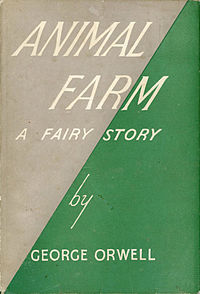
| 1 | 26/10/2012 | Orwell, George | Animal Farm
|


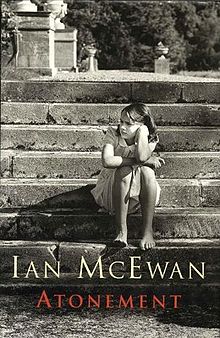

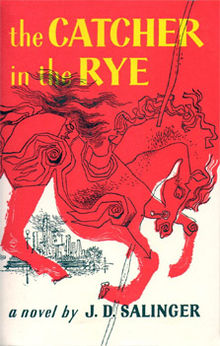
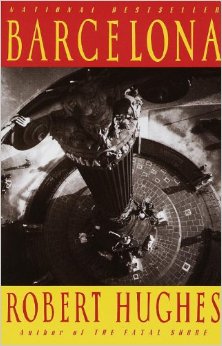
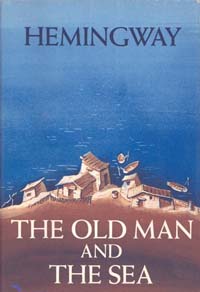
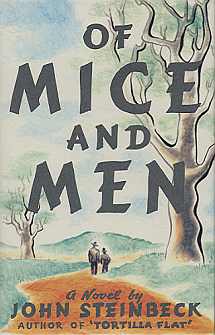

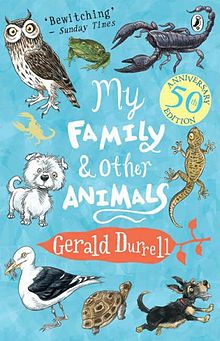

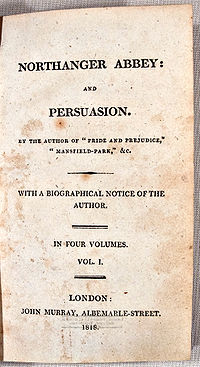

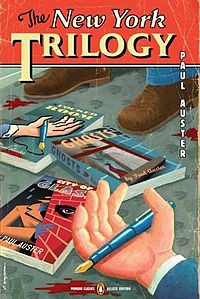







































|
| 2 | 23/11/2012 | Boyne, John | The Boy in the Striped Pyjamas
|
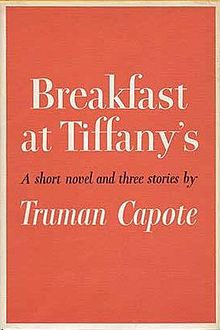
| 3 | 21/12/2012 | Capote, Truman | Breakfast at Tiffany's
|
| 4 | 18/01/2013 | Hornby, Nick | High Fidelity
|
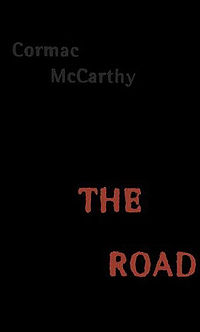
| 5 | 22/02/2013 | McCarthy, Cormac | The Road
|
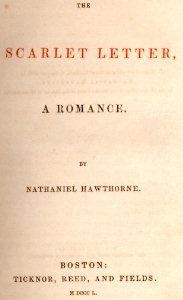
| 6 | 22/03/2013 | Hawthorne, Nathaniel | The Scarlet Letter
|
| 7 | 26/04/2013 | McEwan, Ian | Atonement
|
| 8 | 31/05/2013 | Huxley, Aldous | Brave New World
|
| 9 | 28/06/2013 | Salinger, J. D. | The Catcher in the Rye
|
| 10 | 27/09/2013 | Hughes, Robert | Barcelona
|
| 11 | 25/10/2013 | Hemingway, Ernest | The Old Man and the Sea
|
| 12 | 29/11/2013 | Steinbeck, J | Of Mice and Men
|
| 13 | 20/12/2013 | Greene, Graham | Our Man in Havana
|
| 14 | 31/01/2014 | Durrell, Gerald | My Family and Other Animals
|
| 15 | 28/02/2014 | McCullers, Carson | The Heart Is a Lonely Hunter
|
| 16 | 28/03/2014 | Austen, Jane | Persuasion
|
| 17 | 24/04/2014 | Murakami, Haruki | Norwegian Wood (Tokyo blues)
|
| 18 | 30/05/2014 | Auster, Paul | The New York Trilogy
|
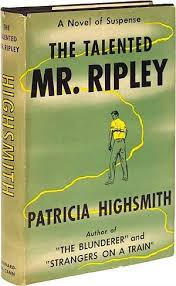
| 19 | 27/06/2014 | Highsmith, P. | The Talented Mr Ripley
|
| 20 | 26/09/2014 | Hosseini, Khaled | A Thousand Splendid Suns
|
| 21 | 31/10/2014 | Clarke, Arthur C | A Space Odyssey
|
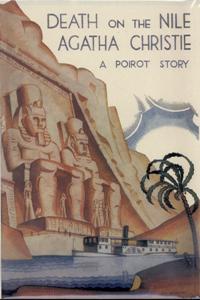
| 22 | 28/11/2014 | Christie, Agatha | Death On The Nile
|
| 23 | 19/12/2014 | Mayle, Peter | A Year in Provence
|
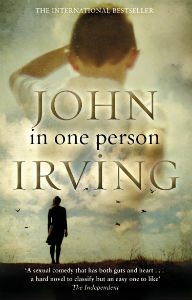
| 24 | 30/01/2015 | Irving, John | In One Person
|
| 25 | 27/02/2015 | Franzen, Jonathan | Freedom
|
| 26 | 27/03/2015 | Edgar Allan Poe | The Murders in the rue Morgue
|
| 27 | 24/04/2015 | Fleming, Ian | Quantum of Solace
|
| 28 | 29/05/2015 | Smith, Alexander McCall | The No.1 Ladies' Detective Agency
|
| 29 | 26/06/2015 | Mary Shelley | Frankenstein
|
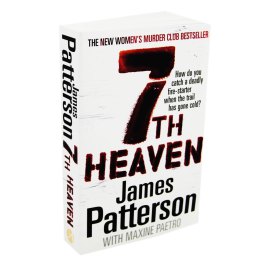
| 30 | 25/09/2015 | Patterson, James | 7th Heaven
|
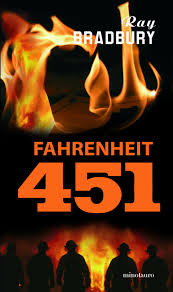
| 31 | 30/10/2015 | Ray Bradbury | Fahrenheit 451
|
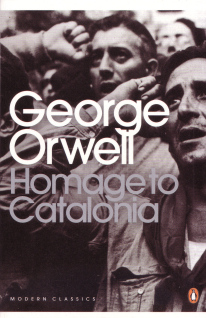
| 32 | 27/11/2015 | George Orwell | Homage at Catalomia
|
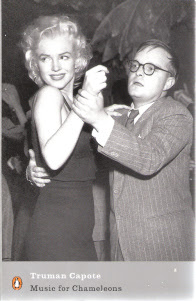
| 33 | 18/12/2015 | Truman Capote | Music for Chameleons
|
| 34 | 29/01/2016 | Hanif Kureishi | The Body
|
| 35 | 28/02/2016 | Jerome K. Jerome | Three Men in a Boat
|
| 36 | 18/03/2016 | Joseph Conrad | Heart Of Darkness
|
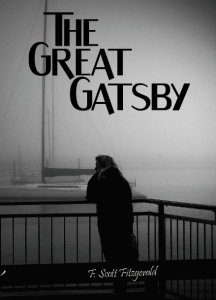
| 37 | 29/04/2016 | Scott Fitzgerald | The Great Gatsby
|
| 38 | 27/05/2016 | Alice Munro | Hateship, Friendship, Courtship, Loveship, Marriage
|
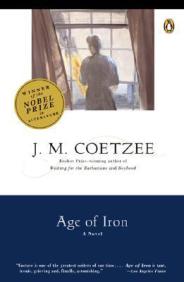
| 39 | 17/06/2016 | J. M. Coetzee | Age Of Iron
|
| 40 | 29/07/2016 | Chinua Achebe | Things Fall Apart
|
| 41 | 29/09/2016 | Oscar Wilde | The Picture Of Dorian Gray
|
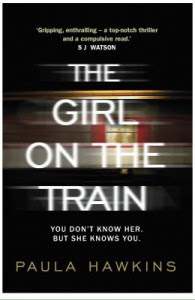
| 42 | 28/10/2016 | Paula Hawkins | The Girl on the Train
|
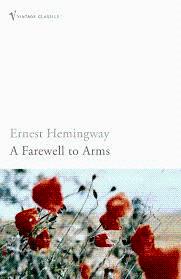
| 43 | 25/11/2016 | Ernest Hemingway | Farewell to Arms
|
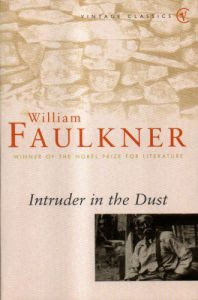
| 44 | 27/01/2017 | William Faulkner | Intruder in the Dust
|
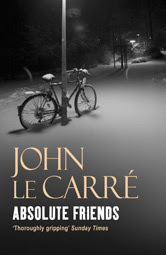
| 45 | 24/02/2017 | John Le Carre | Absolute Friends
|
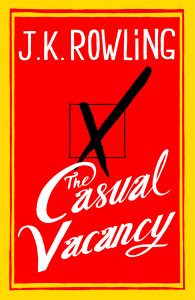
| 46 | 31/03/2017 | J K Rowling | The Casual Vacancy
|
| 47 | 28/04/2017 | Siri Hustvedt | The Blindfold
|
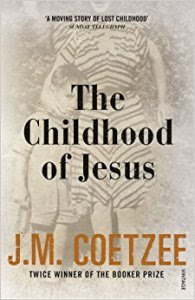
| 48 | 26/05/2017 | J. M. Coetzee | The Childhood of Jesus
|
| 49 | 30/06/2017 | Virginia Woolf | Mrs Dalloway
|
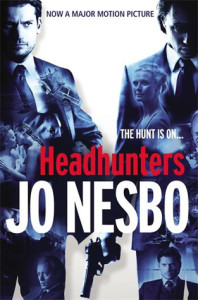
| 50 | 28/07/2017 | Jo Nesbo | Headhunters
|
| 51 | 28/09/2017 | Siri Hustvedt | The Summer Without Men
|
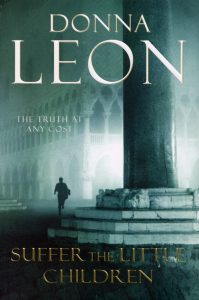
| 52 | 28/10/2017 | Donna Leon | Suffer the Little Children
|
| 53 | 24/11/2017 | Alan Bennett | The Uncommon Reader
|
| 54 | 26/01/2018 | Amy Tan | The Joy Luck Club
|
| 55 | 23/02/2018 | Smith, Alexander McCall | Tears of the Giraffe
|
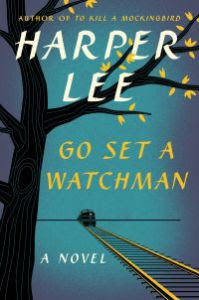
| 56 | 23/03/2018 | Lee, Harper | Go Set a Watchman
|
| 57 | 27/04/2018 | Hammett | Red Harvest
|
| 58 | 29/06/2018 | Orwell | 1984
|
| 59 | 27/07/2018 | Smith, Alexander McCall | Morality for Beautiful Girls
|
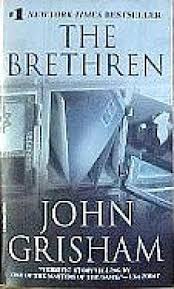
| 60 | 26/09/2018 | Grisham, John | The Brethen
|
| 61 | 26/10/2018 | DeLillo, Don | The Angel Esmeralda
|
| 62 | 30/11/2018 | John Steinbeck | The Pearl
|
| 63 | 18/01/2019 | E. M. Foster | A Room With a View
|
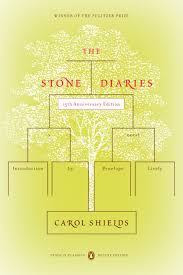
| 64 | 22/02/2019 | Carol Shields | The Stone Diaries
|
| 65 | 29/03/2019 | Vladimir Nabokov | Lolita
|
| 66 | 26/04/2019 | Jay Asher | Thirteen Reasons Why
|
| 67 | 31/05/2019 | Angela Carter | The Bloody Chamber
|
| 68 | 28/06/2019 | Aravind Adiga | White Tiger
|
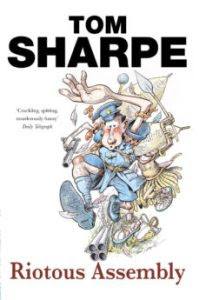
| 69 | 19/07/2019 | Tom Sharpe | Riotous Assembly
|
| 70 | 19/09/2019 | Isaac Asimov | The Gods Themselves
|
| 71 | 19/10/2019 | Jo Nesbo | Blood On Snow
|
| 72 | 29/11/2019 | Deborah Levy | Hot Milk
|
| 73 | 31/01/2020 | Gail Honeyman | Eleanor Oliphant is completely fine
|
| 74 | 27/03/2020 | McEwan, Ian | Nutshell
|
| 75 | 01/05/2020 | Philip Kerr | If The Dead Rise Not
|
| 76 | 26/06/2020 | Margaret Atwood | Alias Grace
|
| 77 | 30/10/2020 | Tracy Letts | August: Osage Country
|
| 78 | 27/11/2020 | Alice Walker | The color purple
|
| 79 | 28/01/2021 | Roald Dahl | Someone like you
|
| 80 | 26/02/2021 | Willy Russell | Educating Rita
|
| 81 | 26/03/2021 | T. Morrison | Beloved
|
| 82 | 30/04/2021 | Patricia Highsmith | Strangers on a train
|
| 83 | 27/05/2021 | John Grisham | The Guardians
|
| 84 | 24/09/2021 | Arundhati Roy | The God of Small Things
|
| 85 | 29/10/2021 | Margaret Atwood | The Handmaid's Tale
|
| 86 | 26/11/2021 | Paul Torday | The Girl On The Landing
|
| 87 | 28/01/2022 | Matt Haig | The Midnight Library
|
| 88 | 25/02/2022 | Nita Prose | The Maid
|
| 89 | 25/03/2022 | Iris Murdoch | Under the net
|
| 90 | 29/04/2022 | Waugh Evelyn | The Loved One
|
| 91 | 27/05/2022 | James Baldwin | I am not your negro
|
| 92 | 17/06/2022 | Sally Rooney | Normal People
|
| 93 | 26/09/2022 | Smith, Alexander McCall | The Kalahari Typing School for Men
|
| 94 | 28/10/2022 | Michael Ondaatje | The English Patient
|
| 95 | 25/11/2022 | Patricia Highsmith | Small G : A Summer Idyll
|
| 96 | 30/12/2022 | Virginia Woolf | Mrs Dalloway
|
| 97 | 03/02/2023 | Joyce Carol Oates | A Fair Maiden
|
| 98 | 24/02/2023 | Margaret Atwood | Moral Disorder
|
| 99 | 31/03/2023 | Mitch Albom | For one more day
|
| 100 | 28/04/2023 | Mark Haddon | The curious incident of the dog in the night-time
|
| 101 | 26/05/2023 | Kazuo Ishiguro | The remains of the day
|
| 102 | 30/06/2023 | Julian Barnes | The Only Story
|
| 103 | 28/07/2023 | Helen Fielding | Bridget Jones's diary
|
| 104 | 29/09/2023 | Paula Hawkins | A slow fire burning
|
| 105 | 27/10/2023 | Andre Aciman | Call me by your name
|
| 106 | 24/11/2023 | Sherman Alexie | The absolutely true diary of a part-time indian
|
| 107 | 26/01/2024 | Martin Amis | House of Meetings
|
| 108 | 23/02/2024 | Robin Cook | Shock
|
| 109 | 22/03/2024 | Nicholas Shark | Dear John
|
| 110 | 26/04/2024 | Amy Tan | The Bonesetter's daughter
|
| 111 | 31/05/2024 | Terry Pratchett | Night Watch
|
| 112 | 05/07/2024 | Chimamanda Ngozi Adichie | Americanah
|
| 113 | 26/07/2024 | Cecelia Ahern | In a thousand different ways
|
| 114 | 27/09/2024 | Jane Austen | Emma
|
| 115 | 25/10/2024 | Paul Auster | Hand to mouth : a chronicle of early failure
|
| 116 | 28/11/2024 | Christie, Agatha | The harlequin tea set
|
| 117 | 20/12/2024 | Tom Sharpe | The Midden
|
| 118 | 31/01/2025 | Diane Setterfield | The Thirteenth tale
|
| 119 | 28/02/2025 | Steinbeck, J | The Grapes of Wrath
|
| 120 | 28/03/2025 | Hosseini, Khaled | The Kite Rider
|
| 121 | 25/04/2025 | Mary Ann Shaffer | The guernsey literary and potato peel pie society
|
| 122 | 30/05/2025 | Graham Greene | "The third man" and "The fallen idol"
|
| 123 | 27/06/2025 | Philip Roth | Exit Ghost
|
| 124 | 25/07/2025 | Joseph Heller | Catch 22
|
| 125 | 31/09/2025 | Don Winslow | El cártel
|
| 126 | 31/10/2025 | Andre Aciman | Find me
|
| 127 | 28/11/2025 | Becky Albertalli | Simon vs The Homo Sapiems agenda
|
| 128 | 30/01/2026 | Louisa May Alcott | Little Women
|
| 129 | 26/02/2026 | Smith, Alexander McCall | The Full Cupboard of Life
|
| 130 | 03/07/2026 | S E Hinton | The outsiders
|
| 131 | 02/10/2026 | Laura Imai Messina | The Phone Booth at the Edge of the World
|
Eric Arthur Blair / George Orwell
At first, I was a bit surprised about a person who wants to change his name and his reasons for doing it.
Britannica
says :
"the change in name corresponded to a profound shift in Orwell’s life-style,
in which he changed from a pillar of the British imperial establishment into a literary and political rebel."
And then, a second question came on its own : why did he choose "Orwell", where does it come from ?
Same Britannica article spots : "derived from the beautiful river Orwell in East Anglia".
Do you know any other person who did so ?
- Vladimir Ilitx Ulianov - Lenin
- Iossif Vissarionovitx Djugasvili - Stalin
- Liev Davídovich Bronstein - Trotski
- Nicolas Kim Coppola - Nicolas Cage - inspired in Luke Cage
- Marion Robert Morrison - John Wayne
- Margarita Carmen Cansino - Rita Hayworth
- Garry Kimovich Weinstein - Garry Kasparov
- Francisco Gustavo Sánchez Gómez - Paco de Lucía
- Reginald Kenneth Dwight - Elton John
- Farrokh Bulsara - Freddie Mercury
- David Robert Jones - David Bowie
- Allen Konigsberg - Woody Allen
- Robert Zimmerman - Bob Dylan
- Jo Tejada - Raquel Welch
- Norma Jeane Mortenson - Marilyn Monroe
- Samuel Langhorne Clemens - Mark Twain
buzzfeed
Animal Farn
wiki
Personatges de la novela
Personatges i
simbols :
- Old Major (boar) = Lenin
- Snowball (pig) = Leon Trotski
- Napoleon (pig) = Joseph Stalin
- Squealer : pravda
- Moses (raven) : espia, capellà, organized religion
- Minimus = political poet - represents the takeover of art by propaganda in a totalitarian state that aims to control what its citizens think
- Boxer, Clover : working class
- Jessie, Bluebell, Pincher (+9) (dogs) : secret police
- Mollie (mare, euga) - symbolizes the selfish and materialistic middle-class
- Benjamin (donkey) - represents those who were aware of Stalin’s unjust and oppressive policies but did nothing to try to stop them
Words I did not know
aloof = distante
ambush = emboscada
astray = extraviado
awe = temor
bare = pelado
barley = cebada
barn = granero, establo [1]
baying = aullar
bin = arcón
bit = freno
bleated = balar (sheep)
blithely = alegremente
boar = verraco
boil = cocer
bore = producir
boulder = roca, pedrusco
bound = limitar
bounding back = dar un salto
brass-studded = tachuela de latón
breeches = calzones
brood = camada
bushel = fanega (8 galons)
butted = cabezado, topetazo
cabbage = col, repollo
calf, calves = ternero(s)
canvassing = solicitud de votos
capered = correr y brincar
cheeping = piar
clamps = abrazadera ?
clover = trebol (?)
cockerels = gallito
cogwheels = engranaje
cranks = manivela
crept = arrastrarse
crop = cosecha
crusts = costra
cud = bolo alimenticio
cunning = astucia
|
daintily = delicado
dashed = a toda mecha (col)
dean = decano
dew = rocío
din = estruendo
doled = limosna
drawing-room = salón
dread = terror, pavor
dung = estiercol
dwell = morar
elm = olm
enmity = enemistad
ensconced = instalado
falter = titubear, balbucear
fate = destino
feebly = débil
flogging = azotar [4]
fluttering = revoloteo
foal = parir (4/6), potranca (6/14) [3]
foxhounds = perro (?) (6/29)
gaiters = polaina
gale = temporal, tormenta
gambolled = brinco
grazing = pastar
grudge = rencor, resentimiento
gruff = áspero, brusco
grumble = queja
harrows = rastrillo
hatched = nidada
hay = heno
hayfield = henar
hearken = escuchar (poetic)
heels = talón
hind = posterior, patas traseras
hoarse = ronco (voz)
hoisting = alzamiento, enarbolar
hoof = casco, pezuña
horn = cuerno
hurled = lanzar
indefatigable = infatigable
|
jack = "gato" de coche
knacker = matarife de caballos
knoll = loma, montículo
knuckles = nudillo
lashing = azotar [4]
linseed = linaza
lowed = mugir (cow)
lump = terrón
lurch - tambalearse
mane = melena
mangel-wurzels = remolacha
manger = pesebre, comedero
mare = yegua
marshal = poner en orden
mincing = picar
mingle = mezclar
nimble = ágil, activo
oats = avena
orchard = huerto
out of spite = por despecho
paddock = prado, cercado
pail = cubo, balde
panting = jadeo
paw = pata
pellets = bolita, bodoque
plaited = trenzar
plough = arado
ploughland = tierra de labranza
pond = estanque
pool = charca, estanque
pop-hole = trampilla
prance = encabritarse
purred = ronronear
quacked = graznar (ducks)
quarreling = riña, disputa
|
rafter = traviesa
raging = furioso, atroz
reapers = cosechadora
reared = criar
restive = nervioso, impacienta
retch = a movement or sound of vomiting
ripening = madurar
rollers = rodillo
rungs = escalón
rust = oxidarse
scorn = desprecio, desdén
scullery = fregadero
shatter = hacerse pedazos
shed = cobertizo
shirked = eludir
shrewd = astuto
shrill = agudo, penetrante
silage = forraje
slag = escoria
sleet = aguanieve
slipped = resbalar
sly = astuto, ladino, taimado
snowdrifts = mass of windblown snow
sows = sembrar / cerda (8/9)
spinney = bosquecillo, soto
sprang = saltar
spur = espuela
spurt = acelerar
squeal = betrail, chillar
stall = pesebre, establo [1]
starving = hambriento, famélico
stir up = provocar, fomentar
stirring = emocionante
stove = estufa
stout = robusto [2]
straw = paja
stray = extraviarse
strolled = pasearse
struggle = lucha
stump = palo
sturdy = robusto [2]
sty = pocilga
|
tale-bearer = soplón
tame = domesticado
thresing-machine = trilladora
tidings = noticias (archaic)
tills = cultivar
tip-toe = de puntillas
toil = afanarse, trabajo duro
toiled = fatiga
tread = pisar
trod, trodden = pisar (tread)
trotter = trotón
tushes = culo
twig = ramita
twinkling = centellear
udders = ubres
uproar = alboroto
uttering = lanzar (un grito)
weaned = destetar
weeding = deshierbar
well = pozo
wheat = trigo
whelped = cachorro, parir [3]
whimpers = quejido
whined = gimotear (dogs)
whinnied = relinchar (horses)
whisked = sacudir, agitar
windfalls = fruta caída
window-sill = alféizar
wits = inteligencia, luces (fig)
|
Expresions interessants :
- (3/21) his tushes had never been cut
- (28/30) useless for anything except roots
- "foal" pot ser "parir" i "potranca" :
- after her fourth foal
- the four foals you bore
- [1] "barn" i "stall" son "establo"
- [2] "stout" (persona = corpulento) i "sturdy" (edificio = macizo) son "robusto"
- [3] "parir" pot ser "whelp" o "foal"
- [4] "azotar" pot ser "flogging" o "lashing"
- "emocionante" aqui es "stirring", pero usualmente es "exciting"
- mangel-wurzel is a beet (remolacha) with a large yellowish root, grown chiefly as cattle (ganado) feed
Few big phrases:
- All the same, there were days when they felt that they would sooner have had less figures and more food.
- These were large sheets of paper which had to be closely covered with writing, and as soon as they were so covered,
they were burnt in the furnace.
- The creatures outside looked from pig to man, and from man to pig, and from pig to man again;
but already it was impossible to say which was which.
Few Anthems.
Audio Book : Animal Farm;
1984
Dystopian novel published in 1949
He who controls the past controls the future. He who controls the present controls the past.
wiki,
pdf
Entorn
Three totalitarian super-states – Oceania, Eastasia, and Eurasia – emerged from a global war
Conceptes
- 2 minutes hate
- ingsoc - political party of the totalitarian government of Oceania
- newspeak - the language of Oceania
- doublethink - act of simultaneously accepting two mutually contradictory beliefs as correct
- thoughtcrime - an illegal thought
- memory hole - mechanism for the alteration or disappearance of inconvenient or embarrassing documents
- prolefeed - deliberately superficial entertainment including literature, movies and music
- Goldstein's book - The Theory and Practice of Oligarchical Collectivism
Ministeris
- The Ministry of Truth, which concerned itself with news, entertainment, education, and the fine arts.
- The Ministry of Peace, which concerned itself with war.
- The Ministry of Love, which maintained law and order.
- And the Ministry of Plenty, which was responsible for economic affairs.
Their names, in Newspeak: Minitrue, Minipax, Miniluv, and Miniplenty.
Bones frases
És un autor magnífic, sobre tot en descripcions de personatges :
- Victory Mansions were old flats, built in 1930 or thereabouts, and were falling to pieces.
The plaster flaked constantly from ceilings and walls, the pipes burst in every hard frost,
the roof leaked whenever there was snow,
the heating system was usually running at half steam when it was not closed down altogether from motives of economy.
Repairs, except what you could do for yourself,
had to be sanctioned by remote committees which were liable to hold up even the mending of a window-pane for two years.
- He was a fattish but active man of paralysing stupidity,
a mass of imbecile enthusiasms—one of those completely unquestioning,
devoted drudges on whom, more even than on the Thought Police, the stability of the Party depended.
- He was alone. The past was dead, the future was unimaginable.
- His face remained completely inscrutable. Never show dismay! Never show resentment! A single flicker of the eyes could give you away.
- That’s better, comrade, that’s MUCH better,’ she added encouragingly as Winston, with a violent lunge,
succeeded in touching his toes with knees unbent, for the first time in several years.
- Syme ... was a tiny creature, smaller than Winston, with dark hair and large, protuberant eyes, at once mournful and derisive,
which seemed to search your face closely while he was speaking to you.
- ‘I know what you expect me to say,’ he said.
‘You expect me to say as I’d sooner be young again.
Most people’d say they’d sooner be young, if you arst’ ‘em.
You got your ‘ealth and strength when you’re young.
When you get to my time of life you ain’t never well.
I suffer something wicked from my feet, and my bladder’s jest terrible.
Six and seven times a night it ‘as me out of bed.
On the other ‘and, there’s great advantages in being a old man.
You ain’t got the same worries.
No truck with women, and that’s a great thing.
I ain’t ‘ad a woman for near on thirty year, if you’d credit it.
Nor wanted to, what’s more.’
- At the sight of the words I LOVE YOU the desire to stay alive had welled up in him, and the taking of minor risks suddenly seemed stupid.
- Winston, at normal times the kind of person who gravitates to the outer edge of any kind of scrimmage,
shoved, butted, squirmed his way forward into the heart of the crowd.
- It was almost time for Winston and the girl to part.
But at the last moment, while the crowd still hemmed them in, her hand felt for his and gave it a fleeting squeeze.
It could not have been ten seconds, and yet it seemed a long time that their hands were clasped together.
He had time to learn every detail of her hand.
He explored the long fingers, the shapely nails, the work-hardened palm with its row of callouses, the smooth flesh under the wrist.
Merely from feeling it he would have known it by sight.
- He stopped thinking and merely felt.
The girl’s waist in the bend of his arm was soft and warm.
He pulled her round so that they were breast to breast; her body seemed to melt into his.
Wherever his hands moved it was all as yielding as water.
Their mouths clung together; it was quite different from the hard kisses they had exchanged earlier.
When they moved their faces apart again both of them sighed deeply.
- In the old days, he thought, a man looked at a girl’s body and saw that it was desirable, and that was the end of the story.
But you could not have pure love or pure lust nowadays. No emotion was pure, because everything was mixed up with fear and hatred.
Their embrace had been a battle, the climax a victory. It was a blow struck against the Party. It was a political act.
- All this marching up and down and cheering and waving flags is simply sex gone sour.
If you’re happy inside yourself,
why should you get excited about Big Brother and the Three-Year Plans and the Two Minutes Hate and all the rest of their bloody rot?
- Their first love-making had been simply an act of the will.
But after the second time it was different.
The smell of her hair, the taste of her mouth, the feeling of her skin seemed to have got inside him, or into the air all round him.
- She gave the tips of his fingers a quick squeeze that seemed to invite not desire but affection.
Distopian novels - Brave New World, Farenheit 451, 1984
2 + 2 = 5
Truman Streckfus Persons / Truman Capote
"Breakfast at Tiffany's: A Short Novel and Three Stories" (1958) brought together the title novella and three shorter tales:
"House of Flowers", "A Diamond Guitar" and "A Christmas Memory"
{read "Capote, Truman-The Complete Stories of Truman Capote.epub"}
“House of Flowers” is one of three pieces of short fiction included at the end of Breakfast at Tiffany’s.
It’s the story of Ottilie, a young woman from Haiti,
whose only power is in deciding which life of submission she will lead,
one as a prostitute or one as the wife of Royal Bonaparte, a native from the mountains.
What makes this story remarkable, I think, is the double side of Ottilie’s situation.
She is strong-minded and feels the power of being able to choose,
but the reader sees just how dismal (deprimente, deplorable) her options are.
Comentari
Ottilie should have been the happiest girl in Port-au-Prince.
"A Christmas Memory", a largely autobiographical story taking place in the 1930s,
was published in Mademoiselle magazine in 1956.
It was issued as a hard-cover stand alone edition in 1966
and has since been published in many editions and anthologies.
bio,
novel,
pdf,
glossary,
A Xmas Memory {sagpdf}
Palamós
El escritor Truman Capote (1924-1984) estaba en Palamós (Girona) cuando se enteró de la muerte de Marilyn Monroe.
Esa mujer a la que describió cruelmente en una Adorable criatura había aparecido inconsciente sobre su cama el 4 de agosto de 1962.
Capote supo del suicidio unos días después por la prensa internacional que llegaba al pueblo mediterráneo.
Compró el periódico, una botella de ginebra y regresó consternado al hotel Trias.
"¡Mi amiga ha muerto! ¡Mi amiga ha muerto!", repetía desolado al dueño, Josep Colomer.
Ese fue el último verano que Capote pasó en Palamós.
Capote pasó tres temporadas en la Costa Brava, que entonces era otra costa, menos construida, más virgen, más oculta.
Primero se alojó en el hotel Trias, luego escogió una casa en el centro del pueblo y cuando ya conocía los rincones mágicos y secretos,
Capote alquiló una mansión en un pequeño montículo en una cala, frente al mar.
Lejos de las jaranas de la corte de intelectuales, actores y ricachones que le rodeaba,
Capote escribió las últimas páginas de la novela "A sangre fría",
la historia del asesinato de una familia en Kansas; la historia que le destruyó.
En Palamós no despertó grandes pasiones. Capote, ensimismado y atormentado,
se paseaba en bata por el pueblo (daba igual si hacía frío o calor), junto a Charlie, su inseparable bulldog,
para comprar la prensa, la ginebra y los comestibles. La primera casa en la que vivió luce una placa con sus impresiones:
"Esto es un pueblo de pescadores, el agua es tan clara y azul como el ojo de una sirena.
Me levanto temprano porque los pescadores zarpan a las cinco de la mañana y arman tanto ruido
que ni Rip Van Winkle podría dormir [el protagonista de un cuento de Washington Irving que se quedó dormido 20 años bajo la sombra de un árbol]".
Palamós@El País
Escritor abiertamente homosexual en cuyo historial amoroso no faltaron historias amarillas
como su atracción por uno de los asesinos de "A sangre fría", su mayor obra y piedra angular de la literatura de no-ficción
Paraules que no coneixia i frases interessants
- I am always drawn back to places where I have lived, the houses and their neighborhoods
- during the war a private telephone was hard to come by
- can you rattle right over here ?
- and there was a croak of excitement in his froggy voice
- I took a taxi in a downpour of October rain
- sure as I'am a man fit to wear britches
- "You like me". "I worship you, mr Arbuck"
- she was never without dark glasses, she was always well groomed, there was a consequential good taste in the plainness of her clothes,
the blues and grays and lack of luster that made her, herself, shine so
- and her expression, an unrealized yawn, put, by example, a dampener on the excitement I felt over dining at so swanky a place
- she received V-letters by the bale
- after the sun had gone and there were lighted windows in the dusk
- I hate
snoops
- at any rate she no longer rang my bell. I missed that; and as the days merged I began to feel toward her certain far-fetched resentments,
as if I were being neglected by my closest friend
- his bald freckled head was dwarf-big; attached to it were a pair of pointed, truly elfin ears.
He had Pekingese eyes, unpitying and slightly bulged.
Tufts of hair sprouted from his ears, from his nose; his jowls were gray with afternoon beard, and his handshake almost flurry.
- but the kid don't know how to live even when she's got the dough
- you're wrong - she is a phony
- I don't mean you, O.J. You're such a slob. You always nigger-lip.
- Well, don't blush, Fred : you didn't say you were a genius
- another thing: if I holler, come zipper me up
- You know those days when you've got the mean reds ? (...) You're affraid and you smell like hell, but you don't know what you're affraid of.
Except something bad is going to happen, only you don't know what it is.
- (do you love me ?) Tend to your chores, Rusty.
- It was a young womna, and she entered like a wind-rush, a squall of scarves and jangling gold.
"H-H-Holly", she said, wagging a finger as she advanced, "you miserable h-h-hoarder. Hogging all these simply r-r-riveting m-m-men!"
- even the stutter, certainly genuine but still a bit laid on, had been turned to advantage
- The Air Force colonel decamped while her back was turned, and this was the straw too much: he'd asked her to dinner.
- That's the right spirit. I like a man who sees the humor;
most of them, they're all pant and puff
- I have a memory of spending many hither and yonning days with Holly
- But I still do it every now and then, sort of to keep my hand in (to steal)
- He brought out a wallet. It was as worn as his lethery hands, almost falling to pieces;
and so was the brittle, cracked, blurred snapshot he handed me
- You're rockin' the boat kinda early
- I'm still stealing turkey eggs and running through a brier patch
- Beu, after all, he knows I'm preggers
- and I said: "Do shut up", for I felt infuriatingly left out -a tugboat in drydock while she, glittery voyager of secure destinations,
steamed down the harbor with whistles and confetti in the air
- don't think I'm out to lose the heir (heredero)
- mention that to a living soul, darling. I'll hang you by your toes and dress you for a hog
- back at his bar he propped me in the telephone boot with a triple martini and a brandy tumbler full of coins (vaso)
- he shut the suitcase and produced a letter.
"My cousin, she ask me leave that for his chum, You will oblige?"
perles llinguistiques
Ara, línies escollides de "House of Flowers", "A Diamond Guitar" i "A Christmas Memory"
- But, Baby, she sighed, and could not express her discontent
- Her mother was dead, her father was a planter who had gone back to France, and she had been brought up
in the mountains by a rough peasant family, the sons of whom had each at a young age lain with her in some green and shadowy place
- Ah, said Rosita with swooning eyes, you feel as though pepper has been sprinkled on your heart, as though tiny fish are swimming in your veins.
- Black bees festooned the honeysuckle
- Ottilie, will you have a dip of snuff?
- Royal's house was like a house of flowers; wisteria sheltered the roof, a curtain of vines shaded the windows, lilies bloomed at the door.
From the windows one could see far, faint winkings of the sea, as the house was high up a hill; here the sun burden hot but the shadows were cold.
Inside, the house was always dark and cool, and the walls rustled with pasted pink and green newspapers.
There was oly one room; it ocntained a stove, a teetering mirror on top a marble table, and a brass bed big enough for three fat men.
- She did not mind that on these visits he was gruff with her: she knew that he was showing off before the other men who worked in the fields,
and who grinned at her like split watermelons.
- She was underfoot the whole day, and her red, remorseless eyes were seldom shut;
but the worst of it, the thing that finally made Ottilie threatento kill her, was the old woman's habit of sneaking up from nowhere
and pinching her so hard you could see the fingernail marks.
- Dear, said Rosita when Ottilie had finished dressing up, there's no man alive that wouldn't buy you a whole keg of beer;
to think of it, a gorgeous piece like you suffering far away from those who love you.
- Here, dear, let me see your glass again.
A toast to old times, and those to be!
Tonight Mr. Jamison is going to buy champagne for everybody;
Madame is letting him have it at half-price.
- Chewing eucalyptus leaves to sweeten her breath, she felt the chill of twilight twith the air.
Yellow deepened the daytime moon, and roosting birds sailed into the darkness of the tree.
Suddenly, hearing Royal on the path, she threw her legs akimbo, let her neck go limp, lolled her eyes far back into their sockets.
Seen from a distance, it would look as though she had come to some violent, pitiful end;
and, listening to Royal's footsteps quicken to a run, she happily thought: This will give him a good scare.
- they tap for turpentine
- you will find it there at the end of a red rutted road, barbed wire spranwling like a vine over its walls
- Mr Schaeffer - for that is what he is called, a mark of special respect - is a lanky, pulled-out man.
- Mr Schaeffer himself does not receive mail, not even at Christmas; he seems to have no friends beyond the prison,
and actually he has none there- that is, no particular friend.
- he has a fun-loving face, nimble, clever; and, looking at him, Mr Schaeffer thought of holidays and good times
- Now, recognizing his loneliness, he felt alive. He had not wanted to be alive.
To be alive was to remember brown rivers where the fish run, and sunlight on a lady's hair
- sitting cross-leged on a cot, Tico Feo was picking at his guitar with long swaying fingers and singing a song that sounded as jolly as jingling coins
- at daybreak when the guard came to rouse the men,
which he did by banging a hammer on the stove, Tico Feo would whimper like a child
- the guard had always to be shouting at Tico Feo, for he spent most of the time trying to lean on things
- sleep jumped beyond them like a jack rabbit, and their eyes lingered ponderingly on the firelight that creaked behind the grating of the stove
- of the seasons, spring is the most shattering: stalks thrusting through the earth's winter-stiffened crust,
young leaves cracking out on old left-to-die branches, the falling-asleep wind cruising through all the newborn green
- the guard scowled at him, then blew a whistle
- Tico Feo's blue eyes seemed to swell like bubbles, and when in a voice quieter than the wind sounds in the pine-tops he said, "Tomorrow",
these eyes were all that Mr Schaeffer could see
- bird shrills followed the men through the smoky morning woods
- Armstrong sat on a stump, a chew of tobacco lopsiding his face, and his gun pointing into the sun
- Mr Schaeffer did not see the log that lay across the creek
- Mr Schaeffer, for instance, looks much the same, except that there is a thicker frost of white in his hair,
and as a result of a broken ankle he walks with a limp
- just today the fireplace commenced its seasonal roar. A woman with shorn white hair is standing at the kitchen window
- three hours later we are back in the kitchen hulling a heaping buggyload of windfall pecans
- Caarackle ! A cheery crunch, scraps of miniature thunder sound as the shells collapse and the golden mound of sweet oily ivory meat
mounts in the milk-glass bowl
< li> the kitchen is growing dark. Dust turns the window ito a mirror: our reflections mingle with the rising moon as we work by the fireside in the firelight.
At last, when the moon is quite high, we toss the final hull into the fire and, with joined sighs, watch it catch flame.
The buggy is empty, the bowl is brimful (hasta el borde)
- the Freak was a three-legged biddy chicken hatched by one of our own hens
- besides, a person my age shouldn't squander their eyes (despilfarrar)
- including a magical wart-remover (verruga)
- silently, wallowing in the pleasures of conspiracy, we take the bead purse from its secret place and spill its contents on the scrap quilt.
Dollar bills, tightly rolled as May buds.
Somber fifty-cent pieces, heavy enough to weight a dead man's eyes.
Lovely dimes, the liveliest coin, the one that really jingles.
Nickels and quarters, worn smooth as creek pebbles.
But mostly a hateful heap of bitter-odored pennies.
Last summer others in the house contracted to pay us a penny for every twenty-five flies we killed.
Oh, the carnage of August: the flies that flew to heaven!
Yet it was not work in which we took pride.
And, as we sit counting pennies, it is as though we were back tabulating dead flies.
- And the next day, having completed our more prosaic (dull) shoping,
we set out for Mr Haha's business address, a "sinfull" (to quote public opinion) fish-fry and dancing café down by the river.
We've been there before, and on the same errand
- naturally these goings-on happen at night when the colored lights cast crazy patterns and the victrola wails
- "tell you what", he proposes, pouring the money back into our bead purse (cartera de abalorios), "just send me one of them fruitcakes instead"
- Eggbeaters whirl, spoons spin round in bowls of butter and sugar,
vanilla sweetens the air, ginger spices it; melting, nose-tingling odors saturate the kitchen, suffuse the house,
drift out to the world on puffs of chimney smoke.
In four days our work is done.
Thirty-one cakes, dampened with whiskey, bask on window sills and shelves
- I don't know the words to mine, just: "Come on along, come on along, to the dark-town strutter's ball"
- Enter: two relatives. Very angry. Potent with eyes that scold (regañar), tongues that scald (escaldar).
- Morning. Frozen rime lusters the grass; the sun, round as an orange and orange as hot-wether moons, balances on the horizon,
burnishes the silvered winter woods.
A wild tukey calls.
A renegade hog grunts in the undergrowth.
Slang
- dykes = lesbiana (bull-dyke = "masculine" lesbians)
- come along, sister. You're going places
- our girl's going to need fancier shysters than I can afford
Persones
- mr Arbuck -
The next time a girl wants a little powder-room change, take my advice, darling : don't give her twenty-cents !
- Fred, el "prota"
- Joe Bell - he ran a bar around the corner on Lexington Avenue.
Hasn't an easy nature because he's a bachelor and has a sour stomach.
He's a hard man to talk to, impossible if you don't share his fixations, of which Holly is one.
Some others are; ice hockey, Weimaraner dogs, Our Gal Sunday and Gilbert and Sullivan.
- Jose Ybarra-Jaegar - brasiler
- mr Yunioshi - neighbour who lived on the top floor. Holly rings his bell
"home"
- miss Holiday Golightly, Traveling
- I dont want to own anything until I know I've found the place where me and things belong together.
I'm not quite sure where that is just yet. But I know what it's like
Tiffany's
- {pg 37} I want to still be me when I wake up one fine morning and have breakfast at Tiffany's
- {pg 40} Except I felt I owed it to them to buy some little something (her cards)
High Fidelity, by Nick Hornby
-
so what is the significance of the
snog ?
-
beyond an unfamiliar and moderatelly pleasant warmth in the gut
-
it would be nice to think that as I've got older times have changed,
relationships have become more sophisticated, females less cruel, skins thicker,
reactions sharper, instincts more developed.
But there still seems to be an element of that evening in everything that has happened to me since;
all my other romantic stories seem to be a scrambled version of that first one
-
these complaints, you can't help feeling, are kind of ironic.
Back then, all we wanted was foreplay, and girls weren't interested.
They didn't want to be touched, caressed, stimulated, aroused;
in fact, they used to thump us if we tried
- Oi, Fleming, you spastic.
Guess who I knobbed last night? ... and I shagged her the first week!
- I
scrounged a fag off Mark
- scrubber
- I was fretful about my abilities as a lover
- if I do ok with women, it's not because of the virtues I have, but because of the shadows I don't have
- and most days I feel like a cartoon dog in a kennel
- we never talked about why we suddenly became shriller and louder
- I'm glad I learned to stay home and sulk
- Johnny is our only prelunch customer. This isn't a job for the wildly ambitious
- Dick says Marie lives here now;
he read somewhere thad she finds England more open to the kind of music she makes,
which means, presumably, that we're cheerfully indifferent rather than actively hostile
- I know enough to know that this is
daft
- "Have you got any soul ?" a woman asks the next afternoon
- it's a James Brown single on King, thirty years old, and I begin to
prickle with anticipation
- is there anything more adult than
sticking with a relationship that's failing apart
in the hope that you can put it right ?
- she's not wearing any makeup, and I
reckon this is for my benefit {assume}
- so you get loads at the beginning, to show that things are good, positive exciting,
and none at the end, to show that things are desperate. Neat, eh?
- and do you know how it comes about ?
Because I ask questions.
If someone wanted to know how to get off with seventeen women, or more, no less, that's what I'd tell them: ask questions
- T-Bone wouldn't want to share a place with me.
I'd
cramp his style
- a while back, Dick and Barry and I agreed that what really matters is what you like,
not what you are like
- we have on of those conversations where everything clicks, meshes, corresponds, locks,
where even our pauses, even our punctuation marks seem to be nodding in agreement
- all my life I've hated Sundays,
for the obvious British reasons
(Songs of Praise, closed shops, congealing gravy that you don't want to go near but no one's going to let you escape from)
and the obvious international reasons as well,
but this Sunday is a
corker {remarkable}
- I've missed the part where the guy talks and hands out samples;
I've arrived during the part where wine tasting becomes wine drinking and,
though every now and again I spot someone swilling the wine around in their mouth and talking bollocks,
mostly they're just pouring the stuff down their necks as fast as they can
- where is the justice in this world ?
Dick's out on a hot date, Rob's shagging Marie LaSalle,
and the best-looking and most intelligent of the lot of them isn't getting anything at all
- It gives us all strength: if someone can just walk in and buy the Sid James Experience album,
then surely anything good can happen at any time
- there are men who call, and men who don't call,
and I'd much, much rather be one of the latter
- the advertisement used to end with the initimidating postscript "no clackers please",
but after a dissapointing response during the first couple of years of the recruitment drive,
Barry decided that slackers were welcome after all, to no noticeable effect;
perhaps they couldn't get it together to walk from the door to the counter
- you remember when we used to sit in the bar, wondering how life would turn out for us?
- I think he was going through, you know, some kind of what-does-it-all-mean thing,
and he wanted to see me, and talk about stuff, and what have you, and I wasn't really up for it.
Do all men go through this?
- my friend Clara is coming, and she hasn't got a chap,
and she's right up your street.
Eight o'clockish?
- it's her bedroom (arty, of course,
with a huge abstract painting on one wall and what looks like a
rug
on another). {animal skin used as a floor covering}
- the difference between these people and me is that they finished college and I didn't
(they didn't split up with Charlie and I did);
as a consequence, they have smart jobs and I have a scruffy job,
they are rich and I am poor,
they are self-confident and I am incontinent,
they do not smoke and I do,
they have opinions and I have lists
- "You are going through one of those what-does-it-all-mean things".
She says "what-does-it-all-mean" in an American accent and furrows her brow
- he was a
wimp, if that's any consolation {timid or coward}
- but Laura sees Liz and me hovering on the fringe of the group,
and comes to us,
and thanks us for coming,
and holds us both for a long time,
and when she lets go of me I feel that I don't neet to offer to become a different person:
it has happened already
- I walk out of Laura's dad's funeral in a
sulk
- when I nestled into Laura's back in the night, I was afraid because I didn't want to lose her,
and we always lose someone, or they lose us, in the end
- I don't want to go back. I've thrown a
wobbler too {}
- when my eyebrows are sore, and I have nearly shaken my head off its
hinges,
and I have walked the best part of a mile on the spot,
Laura emerges from the kitchen in a state and tugs me by the arm {bisagre, gozne}
- I could describe every second of every time,
and there weren't that many of them,
and you'd be hurt,
but you still wouldn't understand the first thing about anything that mattered
- you have all the basic ingredients.
You're really very likable, when you put your mind to it
- what should I be doing ?
Something more than waiting for life to change and keep your options open
- she's talking about detail, clutter, the stuff that stops you floating away
- I don't feel good, not now that it's all over.
For an afternoon I was working in a place that other people wanted to come to, and that made a difference to me - I felt, I felt, I felt,
go on say it, more of a man, a feeling both shocking and comforting
- and they both look at me
fondly
- she's been out with a couple of people for a drink after work,
and she's a bit
squiffy
- I hadn't thought aboit it before, but I am pleased;
nervous and
danted
-
I don't know why I have to be like this, all
stern
and
sulky
and what-business-is-it-of-yours {severo; malhumorado}
- he gives what he fondly imagines to be a demonic, drug-crazed
chuckle
-
"You seem so cross all the time, though" "I know. I don't get myself"
- "Is there a difference?" "Of course..." Too
shrill {estridente}
- "'Baby, let's play house'" "Who's that by?"
-
I'm going to jump from rock to rock for the rest of my life until there aren't any rocks left ?
-
I've been thinking with my guts since I was fourteen years old,
and frankly speaking, between you and me,
I have come to te conclusion that my guts have shit for brains
- are you going to talk to me, or shall I get my paper out?
- I swish the beer around so it'll get really limey
- "shall we go home?" "Don't
sulk" {enfurruñarse}
Preguntes
- what is the book about ?
- can you resume the plot ?
- what is the meaning of the title ?
- what part of the book did you like best ?
- what do you think of the sense of humour in the novel ? {offhand humor}
- how many characters are there in the story ?
- what is your favourite one (if any) ? Rob or Laura, Liz or Ray, Dick or Barry, Marie
- why is Laura leaving Rob ?
- what does Laura provide Rob that makes her special ?
I'm just trying to wake you up
- what is your quote of the book ? comment its meaning and significance
- do you think only men have "what-does-it-all-mean" thing ?
- what songs mentioned in the book you know ?
- what are your top 3 songs ?
- do you know what a filler is ? do you know/remember any fillers of your youth ?
R&R :
LR,
Led Zep,
- why does Rob reorganize his record collection ? how were your discs organized ?
- what happens at the funeral ?
- have you seen the film ? What do you think about it ?
- why do you think Rob wants to meet his 5 ex-girlfriends ?
- did you know what a "fag" was? "quid" ?
- do you think the couple succeeds ?
how do you think the story ends?
How would you envisage the story developing now that Laura and Rob are back together?
- can you find any gender differences in the novels characters attitudes ?
- what do you think Rob’s attitudes are to:
- music
- women
- life
- himself
- love
- morality
- what matters most in life for Rob? What do you think he is really looking for?
- how do Rob's previous relationships affect his relationship with Laura in High Fidelity?
- what could be the root cause of Rob’s problems? Is it common to all men in the 90s?
- in what ways does High Fidelity hold up a mirror to life?
- in High Fidelity, what does Dick, Barry, and Rob's working at Championship Vinyl reveal about their personalities
- why is Rob so conflicted about remaining in the relationship with Laura?
Does it have more to do with his age or his particular eccentricities?
Do you think many men—and women—go through internal struggles similar to Rob’s when it comes to commitment?
- what issues are at the center of Rob’s dissatisfaction with his life?
If he had to make a list of the top 5 reasons he was dissatisfied, what would they be?
- why is it so important for Rob to contact and meet the women who have dumped him?
Does he find what he was hoping to discover?
What does he learn that surprises him?
- Rob, Barry, and Dick have an encyclopedic knowledge of popular music.
What are the benefits and liabilities of this particular talent?
How do they use that knowledge in social situations?
- why doesn’t Rob stay in regular contact with friends?
What is behind his emotional distance from friends and family?
- what is the significance of lists in Rob’s life?
Why are they used as a recurring motif in the book?
- on page 247 Rob says "I saw, for the first time, how scared I am of dying, and of other people dying"
What role does death—and the fear of death—play in fidelity and infidelity?
Is that fear a crutch for Rob, an impediment, or another matter entirely?
- in what ways do Barry and Dick represent different parts of Rob’s personality?
In what ways are they completely unique individuals, different than Rob?
How does each one help him as a friend?
What, if anything, does Rob learn from them?
- compilation tapes—collections of different songs on the same tape—carry a special significance for Rob.
What meanings do they embody for him, and what does it mean when he gives someone a tape he’s compiled?
What is he really giving to a woman when and if he gives her a new compilation tape?
- is Marie black in the book ?
She looks like some woman from tv ...
Enllaços curiosos, si ens sobra temps o tothom està massa seriós...
wiki
5-item lists
Quotes :
- we're too old to make each other miserable
- scarring myself for life seemed much easier than having to tell Jackie that I had all been a grotesque mistake
- "no problem" : the last words I ever say to somebody I have been reasonably close before our lives take different directions
- the unhappiest people I know, romantically speaking, are those who like pop music the most;
and I don't know whether pop music has caused this unhappiness,
but I do know that they've been listening to the sad songs longer than they've been living the unhappy lives
F. Scott Fitzerald
{pdfs}
Tender is the night,
O Russet Witch,
The Great Gatsby
A woman would do a thing like that because she felt sympathetic -
only a man would do it because he felt responsible.
O Russet Witch
A breeze was crying down the streets,
whisking along battered newspapers and pieces of things,
and little lights were pricking out all the windows - it was so desolate that one was sorry for the tops of the sky-scrapers lost up there in the dark green and gray heaven,
and felt that now surely the farce was to close,
and presently all the buildings would collapse like card houses,
and pile up in a dusty, sardonic heap upon all the millions who presumed to wind in and out of them.
"Good afternoon" he said, and then stopped - why, he did not know,
except that it came to him that something very portentous in his life was about to occur,
and that it would need no furbishing but silence,
and the proper amount of expectant attention.
And in that minute before the thing began to happen he had the sense of a breathless second hanging suspended in time:
he saw through the glass partition that bounded off the little office the malevolent conical head of his employer, mr Moonlight Quill,
bent over his correspondence.
He saw miss McCracken and miss Masters as two patches of hair drooping over piles of paper;
he saw the crimson lamp overhead,
and noticed with a touch of pleasure how really pleasnt and romantic it made the book-store seem.
And she sat in the car with such perfect appropriateness and self-possession that it made him breathless to watch her.
Suddenly she smiled - the smile of old, bright as that very Easter and its flowers, mellower that ever - yet somehow
with not quite the radiance and infinite promise of that first smile back there in the bookshop nine years before.
It was a steelier smile, dissillusioned and sad.
But it was soft enough and smile enough to make a pair of young men in cutaway coats hurry over,
to pull their high hats off their wetted, iridescent hair;
to bring them, flustered and bowing, to the edge of her landaulet,
where her lavender gloves gently touched their gray ones.
And these two were presently joined by another, and then two mre,
until there was a rapidly swelling crowd around the landaulet.
Merlin would hear a young man beside him say to his perhaps well-favored companion:
"If you'll just pardon me a moment, there's some one I have to speak to.
Walk right ahead. I'll catch up."
Within three minutes every inch of the laundlet, front, back, and side, was ocupied by a man -
a man trying to construct a sentence clever enough to find its way to Caroline through the stream of conversation.
The crowd swelled.
A row formed in back of the first, two more behind that.
In the midst, an orchid rising from a black bouquet,
sat Caroline enthroned in her obliterated car,
nodding and crying salutations and smiling with such true happiness that, of a sudden,
a new relay of gentlemen had left their wives and consorts and were striding toward her.
The crowd, now phalanx deep, began to be augmented by the merely curious;
men of all ages who could not possibly have known Caroline jostled over and melted into the circle of ever-increasing diameter,
until the lady in lavender was the center of a vast impromptu auditorium.
The years between thirty-five and sixty-five revolve before the passive mind as one unexplained, confusing merry-go-round.
True, they are a merry-go-round of ill-gaited and wind-broken horses,
painted first in pastel colors, then in dull grays and browns,
but perplexing and intolerably dizzy the thing is,
as never, surely, were the certain-coursed, dynamic roller-coasters of youth.
For most men and women these thirty years are taken up with a gradual withdrawal from life,
a retreat first from a front with many shelters,
those myriad amusements and curiosities of youth,
to aline with less,
where we peel down our ambitions to one ambition,
our recreations to one recreation,
our friends to a few to whom we are anæsthetic;
ending up at last in a solitary, desolate strong point that is not strong,
where the shells now whistle abominably, now are half-heard as, by turns frightened and tired,
we sit waiting for death.
She was an old woman, an old woman remarkably preserved, unusually handsome, unusualy erect, but still an old woman.
Her hair was a soft, beautiful white, elaborately dressed and jewelled;
her face, faintly rouged à la grande dame, showed webs of wrinkles at the edges of her eyes
and two deeper lines in the form of stanchions connected her nose with the corners of her mouth.
Her eyes were dim, ill natured, and querulous.
The spirit withers with the skin.
His work is in the public domain
in the United States because it was published before January 1, 1923.
O Russet Witch
pdf
The Great Gatsby
Wiki nice article.
Prota : Nick Carraway
Paraules, frases
- scorn =
- smck = heroin (drug)
-
And so with the sunshine and the great bursts of leaves growing on the trees —just as things grow in fast movies— I had that familiar conviction
that life was beginning over again with the summer.
- My own house was an eye-sore = engendro, monstruosidad
-
East Egg and West Egg
location :
The town of West Egg where Nick Carraway and Jay Gatsby live corresponds to the real-life place of Great Neck.
More specifically, the characters live in the village of Kings Point.
- And so it happened that on a warm windy evening I drove over to East Egg to see two old friends whom I scarcely knew at all.
- Now he was a sturdy, straw haired man of thirty with a rather hard mouth and a supercilious manner.
Two shining, arrogant eyes had established dominance over his face and gave him the appearance of always leaning aggressively forward.
Not even the effeminate swank of his riding clothes could hide the enormous power of that body —he seemed to fill those glistening boots
until he strained the top lacing and you could see a great pack of muscle shifting when his shoulder moved under his thin coat.
It was a body capable of enormous leverage —a cruel body.
- The younger of the two was a stranger to me.
She was extended full length at her end of the divan,
completely motionless and with her chin raised a little as if she were balancing something on it which was quite likely to fall.
- Almost any exhibition of complete self sufficiency draws a stunned tribute from me.
- ‘What you doing, Nick?’ ‘I’m a bond man.’ ‘Who with?’ I told him.
- The knuckle (nudillo) was black and blue.
- "drugs" ?
- com és "ley seca" ?
- advertisement glasses ?
- condecorated at Montenegro
Aldous Huxley - Brave New World
- rams wrapped in thermogene beger no lambs (mendigar, implorar)
- responds by budding
- history is bunk (litera, catre, mentira, patraña
- freedom to be a round pef in a square hole
- you read and you're pierced
- his heart seemed to have disappeared and left a hole. He was empty. Empty, and cold, and rather sick, and giddy.
- go, my brave Ahaiyuta
- the blotched and sagging face twisted grotesquely into a grimace of extreme grief
- I can't make it out
- mend your ways
- as a victim, the Savage posessed, for Bernard, this enormous superiority over the others: that he was accessible
- Henry detected the weariness in those purple eyes,
the pallor beneath that glaze of lupus,
the sadness at the corners of the unsmiling crimson mouth
- outliving beauty's outward, with a mind that doth renew swifter that blood decays
- from throat to temple she was all one hot blush (sonrojarse, enrojecer)
- the voice was that of a jaunty young Alpha (garboso, gallardo)
- one at a time, and no shoving
- and suddenly it was luminously clear to the Savage what he must do; it was as though a shutter had beed opened, a curtain drawn back
- seven and a half hours of mild, unexhausting labour, and then the soma ration and games and unrestricted copulation and the feelies
- he's being sent to an island.
That's to say, he's being sent to a place where he'll meet the most interesting set of men and women to be found anywhere in the world.
All the people who, for one reason or another, have got too self-consciously individual to fit into community-life.
All the peolple who aren't satisfied with ortodoxy, who've got independent ideas of their own.
- happiness is a hard master
- but my own experience has given me the conviction that, quite apart from any such terrors or imaginings,
the religious sentiment tends to develop as we grow older;
to develop because, as the passions grow calm,
as the fancy and sensibilities are less excited and less excitable, our reason becomes less troubled in its working,
less obscured by the images, desires and distractions, in which it used to be absorbed;
whereupon God emerges as from behind a cloud;
our soul feels, sees, turns towards the source of all light;
turns naturally and inevitably;
for now that all that gave to the world of sensations its life and charm has begun to leak away from us,
now that phenomenal existence is no more bolstered up by impressions from within or from without,
we feel the need to lean on something that abides, something that will never play us false - a reality, an absolute and everlasting truth.
- seeing them, the Savage made a grimace
- strumpet
- ajar
- The optimum population is modelled on the iceberg : eight- ninths below the water line, one-ninth above
- Cyprus experiment : 22.000 alpha's
- the noise of 14.000 aeroplanes advancing in open order.
But in the Kurfurstendamm and the Eigth Arrondissement,
the explosion of the anthrax bombs is hardly louder than the popping of a paper bag
- lend me your ears
Helmholtz listened with a growing excitement.
At "sole Arabian tree" he started;
at "thou shricking harbinger" he smiled with sudden pleasure;
at "every fowl of tyrant wing" the blood rushed up into his cheeks;
but at "defunctive music" he turned pale and trembled with an unprecedented emotion
Personatges
- director - Tomakin
- Lenina Crowne
- Henry Foster
- Bernard Marx
- Helmholtz Watson
- Mustapha Mond, resident controller for Western Europe
- Linda
- John, the Savage
Noms russos :
- Poly Trotsky
- Bernard Marx
- Sarojini Engels
- Lenina
Titol
Shakespeare,
The Tempest, Act 5, scene 1, 181–184
Miranda:
O wonder!
How many goodly creatures are there here!
How beauteous mankind is! O brave new world
That has such people in't!
Prospero:
'Tis new to thee.
By "brave" she doesn't really mean "courageous," but rather "handsome" and "noble".
Their wrecked ship had struck her as "brave";
her new fiancé Ferdinand looked pretty "brave" too;
the whole pack of Italian princes and courtiers (most of them villains) are thus also "brave".
Prospero has seen their inner workings, and knows how old this new world is, and how far from brave.
Dubtes Huxley
- chapter 3 : quatre discursos barrejats - why ?
- director
- Henry Foster
- Mustapha
- Lenina & Fanny
- how do they die ? when do they go to the clinic ?
J. D Salinger - the catcher in the rye - icon for teenage rebellion (?)
quotes :
- do you feel absolutelly no concern
- real ugly girls have it tough
- he looked like he had a poker up his ass
- innarested in a little tail t'night? Five bucks a throw
- you are trying to chisel me (estafar)
88 in Le Monde's
list
Words I did not know
bawling - vocifear
chuckling = reire por lo bajo, entre dientes
conceited = engreido
crocked = cocido, borracho
curb = cuneta, bordillo
dope fiend = drogata
fencing team = esgrima
to flunk = suspender, catear
horsing around
janitor = conserje, portero
mitt = miton, guantines o guantillas
sheer = verdadero, escarpado
shove = empujon
slob = desaliñado, guarro
sore = mosqueado, enojado
swell = aumentar, crecer
|
Adjectives he uses
corny = cursi, sentimental
cozy = comodo, acogedor, amigable
crumby = cubierto de migas, miserable
flit, flitty = revolotear
mossy = musgoso
phony = falso
soggy = empapado
spooky = espeluznante, que da miedo, siniestro
swanky = pijo, estiloso
witty = agudo, ingenioso
|
Robert Hughes - Barcelona
Fets insolits o poc coneguts
Gaudi
Gaudi's work was in fact very conservative rather than radical.
His work is based on a return to the natural object, the shell, the wing, the tail, the spine, the leaf, the root.
Ernest Hemingway
Wiki on
bio,
book
4 wifes :
Best of all he loved the fall
the leaves yellow on cottonwoods
leaves floating on trout streams
and above the hills
the high blue windless skies
. . . Now he will be a part of them forever
Gregory Hemingway, the writer's youngest son,
died at Dade County Jail in Florida after battling alcoholism, drug abuse and manic depression.
He had had a sex-change operation and taken a new name, Gloria.
Gregory Hemingway was arrested in 2001 in Key Biscayne, Miami. He died in his cell four days later.
Gregory's eight children - Patrick, Edward, Sean, Brendan, Vanessa, Maria, John and Lorian - later challenged the estate,
which would have given most of the assets to Gregory's widow, Ida.
The Old Man and the Sea
wiki
Farewell to arms (1929)
The book follows the journeys of Frederic Henry, beginning in the summer of 1916 near the front of the Italian resistance in World War I.
Henry is a volunteer ambulance driver and also an American, a fact that gets him into trouble throughout the novel.
From the outset, readers are aware that Henry is well-liked among his peers
and has high personal standards when it comes to working hard and protecting the other men in his outfit.
He is injured at the battlefront shortly after seeking out food for his colleagues,
and though others try to praise him for his bravery, Henry downplays his courage by remarking that he was injured while "eating cheese".
Henry does not boast or use his position as a lieutenant to seek out favors or advance his own agenda.
Henry meets Catherine Barkley, a British nurse, while stationed in an Italian village called Gorzia.
The two immediately fall for each other and their relationship deepens when Henry is injured and transferred to an American hospital in Milan.
Catherine requests a transfer there and nurses him back to health.
The two keep their relationship a secret so that Catherine can work the night shift and spend the nights with Henry.
They discuss marriage, but Catherine insists that she would rather wait rather than risk being separated from Henry.
As Henry begins to recover, Catherine discovers that she is pregnant.
Henry must return to duty and the two determine that they will be back together again soon.
After a few days back at the front, Henry joins the rest of the military units in a retreat back from the front.
The slow, tedious journey proves dangerous for Henry, who must plunge into a rushing river to escape being shot by the Italian army who are suspicious of his American ties.
He finds his way back to Milan in secret, and then onto Stresa to track down Catherine.
They reunite and must flee to avoid Henry's arrest by Italian authorities.
They travel by rowboat to Switzerland where they spend the winter in safety as Catherine gets closer to having the baby.
As Catherine goes into labor it is clear that she is having trouble.
She can tell that she is in danger and tells Henry that she meant to write him a letter in case anything bad should happen during the delivery but never got around to writing it.
The doctor tells Henry that a Caesarean operation will be necessary to get the baby out and protect Catherine.
The baby is still-born and Catherine dies hours later after hemorrhaging several times.
Henry walks back to the hotel alone in the rain.
(source: bookrags.com)
{wiki}
The novel is divided into five books.
In the first book, Frederic Henry, an American paramedic serving in the Italian Army is introduced to Catherine Barkley, an English nurse,
by his good friend and roommate, Rinaldi, a surgeon.
Frederic attempts to seduce her, and their relationship begins.
Frederic didn't want a serious relationship, but his feelings for Catherine slowly start to grow.
On the Italian front, Frederic is wounded in the knee by a mortar and sent to a hospital in Milan, where Catherine is also sent.
The second book shows the growth of Frederic and Catherine's relationship as they spend time together in Milan over the summer.
Frederic and Catherine fall in love as Frederic slowly heals.
After his knee heals, he is diagnosed with jaundice but is soon kicked out of the hospital and sent back to the front after being discovered with alcohol.
By the time he is sent back, Catherine is three months pregnant.
In the third book, Frederic returns to his unit, and soon discovers morale has severely dropped.
Not long afterwards the Austrians break through the Italian lines in the Battle of Caporetto, and the Italians retreat.
Due to a slow and hectic retreat, Frederic and his men go off trail and quickly get lost, and a frustrated Frederic kills a sergeant for insubordination.
After catching up to the main retreat, Frederic is taken to a place by the "battle police,"
where officers are being interrogated and executed for the "treachery" that supposedly led to the Italian defeat.
However, after seeing and hearing that everyone interrogated has been killed, Frederic escapes by jumping into a river.
He heads to Milan to find Catherine only to discover that she has been sent to Stresa.
In the fourth book, Catherine and Frederic reunite and spend some time in Stresa before Frederic learns he will soon be arrested.
He and Catherine then flee to Switzerland in a rowboat.
After interrogation by Swiss authorities, they are allowed to stay in Switzerland.
In the final book, Frederic and Catherine live a quiet life in the mountains until she goes into labor.
After a long and painful birth, their son is stillborn.
Catherine begins to hemorrhage and soon dies, leaving Frederic to return to their hotel in the rain.
Quiz
-
Both Henry and Catherine are sent to a hospital in which city?
Marseilles
Milan
San Antonio
Seville
-
For which country’s army does American Frederic Henry serve?
Germany’s
Italy’s
Mexico’s
Spain’s
-
Henry is afraid of what?
Snakes
Spiders
The dark
Thunderstorms
-
Henry is wounded most severely in the
arm
head
leg
shoulder
-
Into what country do Henry and Catherine flee?
America
Belguim
France
Switzerland
-
The pistol that Henry buys in Milan is used to
grant Catherine a means of self-defense
kill a deserter
take a German hostage
wound Henry
-
What army group does Henry supervise?
Ambulance drivers and mechanics
Army mail carriers
Army supply clerks
Machine gun operators
-
What countries does Frederic Henry’s army oppose during the novel?
Austro-Hungarian Empire and Germany
France and Germany
France and Spain
Mexico and Spain
-
What happens to Henry and Catherine’s child?
It dies as an infant
It is adopted at birth
It is raised by Catherine
It is stillborn (nacido muerto)
-
What is the main geographical dichotomy in the book?
A contrast of cold climates and warm climates
A contrast of desert and wetlands
A contrast of land and sea
A contrast of mountains and plains
-
Where is Catherine Barkley from?
America
Australia
Mexico
Scotland
-
Which war serves as the background for "A Farewell To Arms"?
Mexican-American War
Spanish civil war
World War I
World War II
-
Who said the following: "I’m afraid of the rain because sometimes I see myself dead in it... And sometimes I see you dead in it."
Catherine Barkley
Helen Ferguson
Rinaldi
-
Who said the following:
"You’ll never get married . . . You’ll fight before you marry... You’ll die then. Fight or die. That’s what people do . . . Maybe you’ll be all right, you two.
But watch out you don’t get her in trouble. You get her in trouble and I’ll kill you . . . I don’t want her with any of those war babies."
Catherine Barkley
Frederick Henry
Helen Ferguson
Rinaldi
Cliffs Notes
Quiz
-
What nationality is Frederic Henry (Tenente)?
French
Italin
American
English
-
Who is Rinaldi?
An ambulance driver
A surgeon
An Italian soldier
A bartender
-
What does Catherine do in the war?
She is a nurse
She works at a whorehouse
She runs the hospital
She is a V.A.D. -
Voluntary Aid Detachment = voluntary unit providing field nursing services
A nurse is like a doctor. It takes a long time to be. A 'V. A. D.' is a short cut.
-
Which theme is NOT present in the novel?
The follies of war
The inevitability of death
Brotherhood
The glory of war
-
Which reoccurring image is NOT present in the novel?
Sunshine
Catherine's hair
Rain
-
Which character has the closest relationship with the Priest?
Rinaldi
Frederic
Catherine
Gino
-
Which war takes place during this novel?
World War I
World War II
-
Who does Frederic fall in love with?
Miss Van Campen
Miss Gage
Helen Ferguson
Catherine Barkley
-
Who is the narrator of the novel?
Rinaldi
The Priest
Emilio
Frederic
-
This novel clearly challenges Victorian values. Which choice below is NOT present in the novel, and thus does NOT challenge Victorian values?
Agnosticism (questions existence of God)
Sex outside of marriage
Praise (alabar) of war
Rejection of sentimentality
Good Reads
John Steinbeck
wiki
- Of mice and men - 112 pages
"Now what the hell ya suppose is eatin' them two guys?"
- Travels with Charley (1962) pdf, 288 pages
- La taza de oro - vida de sir Henry Morgan, bucanero
The Pearl
wiki
PDF
Teacher's guide
Noms
- Kino, Juana i Coyotino
- Juan Tomas i Apolonia
- Nayarit - estat al Est de Mèxic
The Grapes of Wrath
plot
Set during the Great Depression (1929-1939),
the novel focuses on the Joads, a poor family of tenant farmers driven from their Oklahoma home
by drought, economic hardship, agricultural industry changes, and bank foreclosures forcing tenant farmers out of work.
Due to their nearly hopeless situation, and in part because they are trapped in the Dust Bowl,
the Joads set out for California on the "mother road", along with thousands of other "Okies" seeking jobs, land, dignity, and a future.
...
The family takes shelter from the flood in an old barn.
Inside they find a young boy and his father, who is dying of starvation.
Ma realizes there is only one way to save the man.
She looks at Rose of Sharon and a silent understanding passes between them.
Rose of Sharon, left alone with the man, goes to him and has him drink her breast milk.
Graham Greene
Our man in Havana
In "Our Man In Havana" there are few words I dont find in my "pocket" LangenScheidt:
- strife - angry or violent struggle; conflict
- bootblacks - limpia botas
- pony-trim
- reins
- curfew
- duenna
- jester
- spooning
- squirt
- broom
- mourner - a person who attends a funeral as a relative or friend of the dead person
- baste
- huff
- cockles
Quiz at Goodreads
"The third man" and "The fallen idol"
PDF or ePUB
Read
online
James Mason reads : 1 of 4
personatges de "The Third Man"
- Rollo Martins
escriptor de novel·les de l'oest americà, ingenu i idealista, que arriba a Viena per una oferta de treball del seu amic Harry Lime.
- Harry Lime
enigmàtic amic de Rollo, suposadament mort en un accident poc abans de l'arribada de Rollo.
- Anna Schmidt
amant de Harry Lime i actriu
- Doctor Winkel
metge que va atendre Harry Lime abans de morir
- Kurtz
un altre dels associats de Harry Lime
- Harbin
ordenança de l'hospital militar britànic que treballava per a Harry Lime.
Era un intermediari en el negoci il·legal de la penicil·lina adulterada que Lime i els seus socis venien al mercat negre.
frases de "The Third Man"
- Well, I gave her a good time while it lasted
- ... he had only himself to blame
new 4-letter words
- goil - used as a slang term for "girl" or "woman"
- thaw - the process of melting or a period of warmer weather that causes ice and snow to melt
- glib - superficial, insincere, and often dismissive; it suggests a lack of depth, careful consideration, or genuine understanding
"The fallen idol" details
wiki (film) (1948)
The novella explores themes of childhood innocence and perception, the complex and often deceptive nature of adults, and the destructive power of misinterpretation.
The story highlights the unreliable nature of a child's perspective and the lasting impact of witnessing or believing in adult wrongdoing.
Gemini "write a short resum of the book "the fallen idol" of Grahan Greene" :
"The Fallen Idol" by Graham Greene tells the story of young Philippe, the lonely son of an ambassador in London, who idolizes the family's charming butler, Baines.
When Baines's stern wife dies in a fall, Philippe believes he has witnessed Baines committing murder while actually witnessing an argument between Baines and his lover.
Torn between his loyalty to Baines and the confusing world of adults and their lies, Philippe tries to protect Baines with half-truths and childish misunderstandings.
As the police investigate, Philippe's innocent attempts to help only create more confusion and suspicion,
highlighting the tragic gap between a child's perception and the complexities of adult relationships and deceit.
The story explores the loss of innocence and the devastating impact of adult secrets on a child's world.
Frase : Baines tries to tell his wife that he wants out of their marriage.
Gemini
Graham Greene's "The Fallen Idol" (originally titled "The Basement Room") is a poignant short story about the loss of childhood innocence.
It centers on Philip, a lonely young boy whose parents are away, leaving him in the care of the family's butler, Baines, and his stern wife, Mrs. Baines.
Philip idolizes Baines, who entertains him with fantastical stories of adventure.
However, Philip soon stumbles upon Baines' secret affair with another woman, Julie.
Baines makes Philip promise to keep the secret, inadvertently drawing the boy into a web of adult deception.
When Mrs. Baines discovers the affair, a confrontation ensues, leading to her accidental death
(in the film adaptation, though in the original story it's presented more ambiguously as Baines pushing her).
Philip, witnessing parts of the event and believing Baines is guilty of murder, tries to protect his beloved butler by lying to the police.
His attempts to shield Baines only complicate the investigation, as his well-intentioned but confused fabrications make Baines appear more suspicious.
The story explores themes of loyalty, betrayal, truth versus lies,
and the painful disillusionment a child experiences when they realize the imperfections and complexities of the adults they admire.
Philip's innocent perspective clashes with the murky realities of the adult world, leading to a profound loss of his naive view of life.
Gerald Durrell - My family and other animals
Haruki Murakami
- The thought fills me with an almost unbearable sorrow. Because Naoko never loved me.
- Death exists, not as the opposite but as a part of life.
- When you're surrounded by endless possibilities, one of the hardest things you can do is pass them up.
- "What happens when people open their hearts?" She was enjoying this. "They get better" she said.
- I was happy being alone. But all of a sudden, playing pool with you,
I had this feeling that I wished I had had an elder sister like you -
really chic and a knockout in a midnight-blue dress and gold earrings and great with a pool cue.
- You're really cute, Midori. So cute the mountains crumble and the oceans dry up.
- I really like you, Midori. A lot. Like a spring bear.
You're walking through a field all by yourself one day in spring,
and this sweet little bear cub with velvet fur and shiny little eyes comes walking along.
And he says to you, "Hi, there, little lady. Want to tumble with me?'
So you and the bear cub spend the whole day in each other's arms, tumbling down this clover-covered hill.
- "How much do you love me?" Midori asked. "Enough to melt all the tigers in the world to butter"
- But I like you now, Reiko, the way you are, lingering memory or whatever.
And what I have to say about it may not make any difference, but I'm really glad that you're wearing Naoko's clothes."
Reiko smiled and lit her cigarette with a lighter. "For such a young man, you know how to make a woman happy."
- "Would you rather take them off yourself?" "No, go ahead. But don't be too shocked at all my wrinkles."
"I like your wrinkles." "You're gonna make me cry", she whispered.
- Letters are just pieces of paper ...
Burn them, and what stays in your heart will stay; keep them, and what vanishes will vanish.
It's a book with
- lots of suicides
- lots of books and music
- lots of unhappy persons
- lots of use of "spring"
- It's because of you when I'm in bed in the morning that I can wind my spring and tell myself I have to live another good day
Quiz's about the book :
About the author :
Paul Auster
the New York trilogy
wiki
City of glass
- and this, finally, was all he ever asked of things: to be nowhere
- and the fact was that he no longer had any friends
- he wanted to know if God had a language
- the story of the Garden, therefore, records not only tha fall of man, but the fall of language
- because it can no longer perform its function, the umbrella has ceased to be an umbrella
- in his little speech to Alice, Humpty Dumpty sketches the future of human hopes
and gives the clue to our salvation: to become masters of the words we speak,
to make language answer our needs
- don't count your chickens before they hatch (salir del cascarón)
- he shook it, feeling the uncanny slenderness of her bones, and asked if her name was Norwegian
- the paint becomes exhausted, the city encroaches with its soot (hollín), the plaster (yeso) crumbles within
- the winos (homeless alcoholic) who wash the windshell of your car
- to be inside that music, to be drawn into the circle of its repetitions:
perhaps that is the place where one could finally disappear
- the transformation in his appeance had been so drastic that he could not help
but be fascinated by it: he had turned into a bum (vagabundo)
- his hair was long and tangled, matted into tufts (mechón) behind his ears,
and crawling down in curls (rizo) almost to this shoulders
- he had been one thing before, and now he was another
Ghosts
The locked room
- "You don't know me", the letter began, "and I apologize for writing to you like this out of the blue"
- Fanshave had been lucky. The woman was beautiful, with dark, intelligent eyes,
almost fierce in their steadiness. Thin, not more than average height,
and with something slow in her manner, a thing that made her both sensual and watchful,
as though she looked out on the world from the heart of a deep inner vigilance.
No man would have left this woman of his own free will - especially not when she was about to have his child.
That much was certain to me. Even before I stepped into the apartment,
I knew that Fanshawe had to be dead
- I was having a hard time of it just then,
and the fact was that I did not share this high opinion of myself.
I had written a great many articles, it was true,
but I did not see that as a cause for celebration,
nor was I particularly proud of it.
As fas as I was concerned, it was just a little short of hack work.
I had begun with great hopes, thinking that I would become a novelist,
thinking that I would eventually be able to write something that would touch people
and make a difference in thei lives.
But time went on, and little by little I realized that this was going to happen.
I did not have such a book inside me, and at a certain point I told myself to give up my dreams.
It was simpler to go on writing articles in any case.
By working hard, by moving steadily from one piece to the next,
I could more or less earn a living - and, for whatever it was worth,
I had the pleasure of seeing my name in print almost constantly.
I understood that things could have been fare more dismal (deprimente) that they were.
I was not quite thirty, and already I had something of a reputation.
I had begun with reviews of poetry and novels,
and now I could write about nearly anything and do a credible job.
Movies, plays, art shows, concerts, books, even baseball games - they had only to ask me, and I would do it.
The word saw me as a bright young fellow, a new critic on the rise,
but inside myself I felt old, already used up.
What I had done so far amounted to a mere fraction of nothing at all.
It was so much dust, and the slightest wind would blow it away.
- things happened around that time in Fanshawe's family that no doubt made a difference,
and it would be wrong not to mention them.
Whether they made an essential difference is another story, but I tend to think that everything counts.
In the end, each life is no more that the sum of contingent facts,
a chronicle of chance intersections, of flukes,
of random events that divulge nothing but their own lack of purpose
- stories happen only to those who are able to tell them, someone once said
- she wore a black silk dress, tiny silver earrings, and had swept back her hair to show the line of her neck.
As she walked into the restaurant and saw me sitting at the bar,
she gave me a warm, complicitous smile, as though telling me she knew how beautiful she was,
but at the same time commenting on the weirdness of the occasion - savoring it somehow,
clearly alert to the outlandish implications of the moment.
I told her that she was stunning,
and she answered almost whimsically that this was her first night out since Ben had been born - and that she had wanted to "look different"
- I was in good form that night.
Sophie inspired me, and it didn't take long for me to get warmed up.
I cracked jokes, told stories, performed little tricks with the silverware.
The woman was so beautiful that I had trouble keeping my eyes off her.
I wanted to see her laugh, to see how her face would respond to what I said, to watch her eyes, to study her gestures.
God knows absurdities I came out with, but I did my best to detach myself,
to bury my real motives under this outslaught of charm.
That was the hard part.
I knew that Sophie was lonely, that she wanted the comfort of a warm body beside her - but a quick roll in the hay
was not what I was after, and if I moved too fast that was probably all it would turn out to be
- All this created an exquisite tension.
As the evening progressed, the most casual remarks became tinged with erotic overtones.
Words were no longer simply words, but a curious code of silences,
a way of speaking that continually moved around the thing that was being said.
As long as we avoided the real subject, the spell would not be broken.
We both slipped naturally into this kind of banter (chanza),
and it became all the more powerful because neither one of us abandoned the charade.
We knew what we were doing, but at the same time we pretended not to.
Thus my courtship of Sophie began - slowly, decorously, building by the smallest of increments
- "Thank you, doctor," Sophie said. "The operation was a success."
"My patiens always survive," I said. "It's the laughing gas.
I just turn on the valve, and little by little they get better."
"That gas might be habit-forming."
"Taht's the point. The patients keep coming back for more - sometimes two or three operations a week.
How do you think I paid for my Park Avenue apartment and the summer place in France?"
"So there's a hidden motive."
"Absolutely. I'm driven by greed."
"Your practice must be booming."
"It was. But I'm more or less retired now.
I'm down to one patient these days - and I'm not sure if she'll be coming back."
"She'll be back," Sophie said, with the coyest (evasivo, tímido), most radiant smile I had ever seen.
"You can count on it."
"That's good to hear," I said. "I'll have my secretary call her to schedule the next appointment."
"The sooner the better. With these long-term treatments, you can't waste a moment."
"Excellent advice. I'll remember to order a new supply of laughing gas."
"You do that, doctor. I really think I need it."
We smiled at each other again, and then I wrapped her up in a big bear hug,
gave her a brief kiss on the lips,
and got down the stairs as fast as I could
- I worked hard at courting her.
Words
- turd = zurullo (piece of excrement)
- shabby = raído
- doodle = garabato
- grasshopper = saltamontes
- exegesis = interpretacion de un texto (religioso)
- solace = consuelo
- plump = rechoncho
- jerk = sacudir
- hectic din = estruendo frenético
- throng = tropel
- stammer = balbucear
- omen = presagio
- stroll = pasearse, callejear
- ruse = trampa, ardid
- doze = dormitar
- conked out = stop working
- prissy = remilgado
Hand to mouth : a chronicle of early failure
PDF drive {****}
Khaled Hosseini
Khaled Hosseini -
A Thousand Splendid Suns
A Thousand Splendid Suns
Nana --- Jalil Hakim --- Fariba
| |
Mariam --- Rasheed --- Laila --- Tariq
| |
Zalmai Aziza
Discussió :
- The novel opens with the sentence 'Mariam was five years old the first time she heard the word harami.'
How important is that word in the novel? How does her illegitimacy shape Mariam's life?
- 'The next time Mariam signed her name to a document, twenty-seven years later, a mullah would be present.' (page 49).
Khaled Hosseini foreshadows events, both domestic and national, at many points throughout A Thousand Splendid Suns. What effect does this have?
- 'But it was the women who drew Mariam's eyes the most.' (page 67)
What is it that fascinates Mariam about the women of Kabul, and why does it capture her attention?
How are women treated by the various regimes that take control of Afghanistan?
How are the main female characters portrayed in the novel?
To what extent do these portrayals differ from any preconceptions that you may have had about women in Afghanistan?
- Mariam protests at the idea of marrying Rasheed, begging her father not to force her.
What kind of husband does he prove to be?
How does she come to feel about him? How does their marriage change? Why do you think Rasheed behaves in the way that he does?
- 'And in this fleeting, wordless exchange with Mariam, Laila knew that they were not enemies any longer.' (page 224). How is the deep bond between Mariam and Laila forged? How does this bond sustain both of them?
- How does the observation of Islam in Kabul differ from Mariam's hometown of Herat? What part does religion play in her life? How important is it in the novel?
- 'To me, it's nonsense - and very dangerous nonsense at that - all this talk of I'm Tajik and you're Pashtun and he's Hazara and she's Uzbek.
We're all Afghans and that's all that should matter.' (page 117)
Laila's father tells her.
How important is this ethnic diversity both in the novel and in what happens to Afghanistan throughout the thirty years the book spans?
- What is the significance of the novel's title? Why do you think Hosseini chose it?
- What did you think of the novel's ending?
- How would you describe Hosseini's writing style? Were there particular passages that impressed you and if so what were they and why?
- How are the West and the Soviet Union portrayed in the novel? What part do they play in Afghanistan's troubles?
- Hosseini is an expatriate Afghan. To what extent do you think this has influenced the writing of A Thousand Splendid Suns, and his portrayal of Afghanistan?
48 Trivia Questions at goodreads
The Kite Runner
wiki :
the debut novel of Afghan-American author Khaled Hosseini.
- The Kite Runner Chapter 1 (2 min 21)
25 chapters
- film trailer
Amir lives in California with his wife Soraya.
He receives a call from his uncle Rahim Khan who urges him to travel to Afghanistan and rescue the son of Amir's childhood servant and friend, Hassan.
Hosseini has commented that he considers The Kite Runner to be a father–son relationship story,
emphasizing the familial aspects of the narrative, an element that he continued to use in his later works.
Themes of guilt and redemption feature prominently in the novel,
with a pivotal scene depicting an act of sexual assault inflicted upon Amir's friend Hassan,
which Amir fails to prevent, and which ends their friendship.
The latter half of the book centers on Amir's attempts to atone for this transgression by rescuing Hassan's son two decades later.
Sir Arthur Charles Clarke
2001 - a space oddysey (1968), resum
Part I: Primeval Night
3 million years B.C., unseen aliens place a monolith (a giant device used by the aliens to investigate other worlds) in Africa.
A group of ape-like early human ancestors, led by a character named Moon-Watcher, sees the device.
After seeing the device, the group starts creating tools, which in turn gives them an advantage over the wild animals and other tribes.
The group's evolutionary leap in thinking (the development of tools),
which provides them with food and domination over the other tribes,
is due to subliminal psychological influence from the alien monolith.
Part II: TMA-1
In 1999, scientists call Dr. Heywood Floyd to a base on the moon
to discuss the presence of a strange magnetic artifact found 40 feet below the surface in one of the moon's craters,
which they have named TMA-1, after the crater they found it in (Tycho)
and the device's magnetic ability (which alerted them to its presence).
The artifact and its origin puzzle the scientists.
Its dimensions are too precise to have been formed by nature, but the artifact predates humankind.
During a trip to investigate the artifact, which the scientists consider evidence that intelligent life exists elsewhere in the universe,
Floyd and the scientists witness a startling event:
the sun rises over the crater and, for the first time in three million years, the monolith is hit with sunlight.
Activated by the sunlight, the monolith sends a signal toward one of the moons of Saturn.
After this burst of activity, the monolith loses its magnetic property.
Part III: Between Planets
Once again, the novel leaps forward in time.
18 months have passed since the discovery of the monolith on the moon.
It is now 2001 and a mission to Saturn has been organized.
The mission, named Discovery One, consists of five men and an artificially intelligent computer named HAL 9000.
Three of the men are in a suspended state during the book.
Dr. David Bowman and Dr. Francis Poole are awake and in charge of running the spaceship and fixing anything that goes wrong.
PART IV: Abyss
One day, HAL informs the crew that they are in danger of losing communication with Earth
because the device that points their antenna at Earth is broken.
Poole undergoes a risky procedure in a extravehicular pod to fix it, only for Bowman to discover that the original part was fine.
When questioned about the mix-up, HAL denies that the fault is his.
When HAL tells the crew that the back-up part is also broken, Poole and Bowman try to contact Earth.
Earth, by this point, has realized that HAL is not behaving correctly.
Unfortunately, HAL scrambles the message and informs the crew that they have definitely lost contact with Earth.
Poole dons his suit and goes out of the spaceship again to remove the supposedly broken part of the antenna.
While outside, his external pod runs into him.
It tears his suit and the rip results in his death.
Bowman suspects HAL killed Poole.
He tries to wake the hibernating crew members.
He has to threaten to unplug HAL before HAL will give him manual control of the hibernation pods.
HAL retaliates by opening the airlocks.
Bowman saves himself by donning an emergency spacesuit.
He realizes that HAL is behind everything and shuts down his systems.
Once Hal is no longer a threat, Bowman contacts Earth and learns that they did not tell him the truth about his mission.
They explain that he is supposed to explore one of Saturn's moons, not Saturn.
The scientists on Earth hope he will be able to establish contact with whoever put the monolith on the Moon.
The scientists claim that HAL's murderous behavior was just self-defense.
He did not want to be disconnected.
The earlier behavior, such as misreporting the status of equipment,
was due to a malfunction after the scientists asked him to hide the true nature of the mission from Bowman and the rest of the crew.
Part V: The Moons of Saturn
Months pass before Discovery One reaches Iapetus, the Saturn moon the scientists pinpointed as the recipient of the moon monolith's signal.
Bowman tries to fix up the spaceship, but it is obvious that the spaceship does not have enough oxygen
to keep Bowman alive until a rescue spaceship arrives.
The hibernation system cannot work without HAL plugged in and a lot of oxygen was lost when HAL opened the airlocks.
As he draws closer to Iapetus, Bowman sees the monolith.
It is bigger than the one on the moon.
Once he arrives, he takes one of the extravehicular pods and decides to explore it.
When he gets closer to the monolith it opens, revealing itself to be a star gate.
Part VI: Through the Star Gate
The star gate takes Bowman through what he refers to as The Grand Central Station of the galaxy.
He observes other spaceships, planets, and species. Bowman winds up at a hotel suite.
The hotel suite has been designed by the aliens based on knowledge they have gleaned from Earth.
It is a safe place where they can observe him and help him evolve.
Bowman falls asleep.
While he sleeps, his mind is wiped and he starts to become an entity known as the 'Star Child', an immortal being who can travel through space.
Bowman-as-Star Child returns to Earth, where he becomes a sort of guardian of humanity.
They cannot see him, but he prevents a nuclear warhead from hitting its target.
The ending implies that the Star Child, like the monolith, will observe and maybe even subtly interact with humankind during their next stage of evolution.
url
Quiz
- where on the Moon is an alien device located?
The crater Copernicus, The Ocean of Storms, The Sea of Crises, The crater Tycho - buried in the crater Tycho
- what TMA-1 stands for ? Tycho Magnetic Anomaly-one
- What triggers TMA-1 to emit a blast of electronic noise?
The first sunlight to fall upon it
- Which heavenly body is Bowman most instructed to investigate?
(A) Earth, (B) Jupiter, (C) Saturn, (D) Japetus
- what is the use of the monolith ?
- apes BC - instrumental in awakening intelligence
- 1999 (TMA-1) - sends a radio transmission to Japetus (Iapetus), one of the moons of Saturn (film, Jupiter)
- 2001, Discovery-1 - transportation to an unknown star system
- what major themes are found in the book
- perils of technology / artificial intelligence
- evolution
- space exploration
- what size is Japetus ?
Japetus is so small - about eight hundred miles in diameter
Related questions
- do you like Science-Fiction ? Why / why not ?
- what is the best sci-fi book you have ever read ?
I robot (series), Dune, Even the Gods Themselves
- what is the sci-fi film you like best ?
Alien, Blade Runner, Total Recall
Sir Arthur's Quotations
url
- In the struggle for freedom of information, technology, not politics, will be the ultimate decider.
- Every revolutionary idea seems to evoke three stages of reaction. They may be summed up by the phrases: (1) It's completely impossible. (2) It's possible, but it's not worth doing. (3) I said it was a good idea all along.
- Any sufficiently advanced technology is indistinguishable from magic.
- As our own species is in the process of proving, one cannot have superior science and inferior morals. The combination is unstable and self-destroying.
- Human judges can show mercy. But against the laws of nature, there is no appeal.
- I don't pretend we have all the answers. But the questions are certainly worth thinking about.
- It has yet to be proven that intelligence has any survival value.
- It is not easy to see how the more extreme forms of nationalism can long survive when men have seen the Earth in its true perspective as a single small globe against the stars.
- It may be that our role on this planet is not to worship God but to create him.
- Our lifetime may be the last that will be lived out in a technological society.
- Politicians should read science fiction, not westerns and detective stories.
- I don't believe in astrology; I'm a Sagittarius and we're skeptical.
- The best measure of a man's honesty isn't his income tax return. It's the zero adjust on his bathroom scale.
- The greatest tragedy in mankind's entire history may be the hijacking of morality by religion.
- The limits of the possible can only be defined by going beyond them into the impossible.
- There is hopeful symbolism in the fact that flags do not wave in a vacuum.
- This is the first age that's ever paid much attention to the future, which is a little ironic since we may not have one.
- When a distinguished but elderly scientist states that something is possible, he is almost certainly right. When he states that something is impossible, he is very probably wrong.
- The best proof that there's intelligent life in outer space is the fact that it hasn't come here.
- We stand now at the turning point between two eras. Behind us is a past to which we can never return . The coming of the rocket brought to an end a million years of isolation . the childhood of our race was over and history as we know it began.
- The fact that we have not yet found the slightest evidence for life - much less intelligence - beyond this Earth does not surprise or disappoint me in the least. Our technology must still be laughably primitive; we may well be like jungle savages listening for the throbbing of tom-toms, while the ether around them carries more words per second than they could utter in a lifetime.
- Two possibilities exist: Either we are alone in the Universe or we are not. Both are equally terrifying.
- The Information Age offers much to mankind, and I would like to think that we will rise to the challenges it presents. But it is vital to remember that information - in the sense of raw data - is not knowledge, that knowledge is not wisdom, and that wisdom is not foresight. But information is the first essential step to all of these.
- There is hopeful symbolism in the fact that flags do not wave in a vacuum.
Other bits
AI related : Turing test
Agatha Christie
wiki
"5 little pigs" Audiobook (6 h 39 min)
Death on the Nile
Get
Death On The Nile,
PDF,
Quiz's :
Teacher notes,
answer keys.
Teaching notes.
Temes per discutir
- other detectives we know
- good thriller films
- crime vocabulary
Preguntes
The harlequin tea set
wiki
Audiobook (1 h 12 min)
GoodReads
ePDF
few moments
- Mr. Satterthwaite goes to Doverton Kingsbourne, to the Addisons. Tom Addison is his old friend, maried to Pilar.
They have 2 daughters : Lily and Maria.
Lily married a fighter pilot, Simon Gilliatt. Had a son, Roland.
Lily was killed.
Maria married Dr. Horton, but died in childbirth, her little girl was alled Inez.
Pilar died.
- in Kingsbourne Ducis they visit the nearest service station
- he visits The Harlequin Café, next to the post office - it has 2 portions - a shop that sold chine
- he remenbers Mr. Harley Quin - something that was going to happen through him.
- The Duchess of Leith she had had a harlequin breakfast set, big round cups in different colors.
- Mr. Quin comes into the cafe, with Hermes, his dog. I'm only passing by ...
- "As sweet as love, as black as night and as hot as hell - old Arab phrase
- Mrs. Beryl Gilliatt comes into the cafe (Simon Gilliatt's second wife, mother of Timothy)
and buys some tea cups.
- they all are having tea.
Red cup gets pushed off the table. Timothy gets the blue cup.
Timothy is color-blind, as Tom.
- Timothy's Lily's son and Roland is Beryl's and Christopher Eden's son.
Peter Mayle
mini series,
wiki
A Year In Provence, published 1989.
The
film is very diferent from the book,
but easy to watch -
Marion is very beautiful !
Funny sentences, situations ...
-
fortunately for us, the good humor and niceness of our neighbors were apparent even if what they were saying was a mystery.
-
one day, we might even be able to talk to each other.
-
there is a season for everything in Provence, and the first two months of the year must be devoted to procreation.
-
The well-known food of Provence is summer food-the melons and peaches and asparagus, the courgettes and aubergines,
the peppers and tomatoes, the aioli and bouillabaisse and monumental salads of olives and anchovies and tuna
and hardboiled eggs and sliced, earthy potatoes on beds of multicoloured lettuce glistening with oil, the fresh goat's cheeses
-
that night, we ate for England.
-
it is well known that the English kill their lamb twice; once when they slaughter it, and once when they cook it.
-
"One doesn't eat fox in England?" ... "Ils sont bizarres, les Anglais."
-
"The dead get the best view," he said, "because they are there for such a long time"
-
What kind of meat does the butcher eat?
-
large and noisy cockerel, who crows nonstop for two hours. Cocks must crow.
-
two basic requirements for a rural notaire are a blind eye and a diplomatic bladder.
-
we were counting on her to take third place, but with impaired vision and no sense of geography this seemed unlikely.
(Grande Course de Chevres through the streets of Bonnieux, starting from the Café César)
-
my wife, who has a well-founded lack of confidence in my ability to handle any kind of dangerous equipment,
pointed out that I hardly needed an electronic sight to shoot myself in the foot.
-
after a while, we came to realize that the gun mania was only part of a national fascination with outfits and accoutrements,
a passion for looking like an expert.
-
never again would I look at a bunch of grapes in a bowl without thinking of backache and sunstroke (pick the table grapes)
-
1.200 litres a 12º
-
It had been our first experience of an evening formally dedicated to mass intoxication, and we had enjoyed it enormously.
Any friend of the grape was a friend of ours.
-
before dinner that night, we tested it, dripping it onto slices of bread that had been rubbed with the flesh of tomatoes.
It was like eating sunshine (pa amb tomaquet)
-
we had managed somehow to miss the entire Avignon festival, the donkey races at Goult,
the accordion competition, Faustin's family outing to the Basses-Alpes in August,
the wine festival in Gigondas, the Ménerbes dog show
-
the equipment that had caused such consternation to Roger and his parents was a toilette a la Turque
- aioli !
Vocabulari
- aim = objectiu
- bumpkins = paletos
- ditch = zanja
- droll = gracioso
- forgeries = falsificacions
- growl = grunyir
- jaunty = garboso
- leap = salto
- oozing = rezumar
- shrine = santuario
- slab of stone = llosa de pedra
- sled = trineu
- slimming = aprimar-se
- snout = hocico
- stopcocks = clau de pas
- stranded = encallat
- thaw = deshielo
- throbbing = palpitante
Few questions
- what part of the book did you like more ?
- what meal or situation made you laugh ?
Grande Course de Chevres - goat race
- do you remember any special or funny phrase ?
That night, we ate for England.
Any friend of the grape was a friend of ours.
- how large is the property they bought ?
Most of the six acres of land we had bought with the house was planted with vines
- how many litres of wine do they get from their grapes ?
Just over one thousand two hundred liters.
- how many restaurants do they visit ?
- Lambesc (Feb, pg 36)
- Auberge de la Loube, Buoux (May, pg 87)
- Aix - Chez Gu (June, pg 99)
- station café in Bonnieux - Café de la Gare (July, pg 116)
- Goult (Aug, pg 135)
- Bistro du Paradou (Nov, pg 178)
- Auberge de la Loube in Buoux (Dec, pg 194)
- what do they think about french and the guns ?
the gun mania was only part of a national fascination with outfits and accoutrements, a passion for looking like an expert.
- how do they describe "pa amb tomaquet" ?
"dripping it (oil) onto slices of bread that had been rubbed with the flesh of tomatoes" ... "It was like eating sunshine"
- in what situation he says "What kind of meat does the butcher eat?"
- where is the village located ?
It was set above the country road that runs between the two medieval hill villages of Ménerbes and Bonnieux
(60 Km north of Marseille, Lubéron)
- what is
patois ?
es una variedad lingüística esencialmente oral, hablada en un ámbito geográfico limitado
- do you know the name of his wife ? (he is Peter)
- why did they do the christmas party ?
What we should do was to invite the builders to a party to celebrate the end of the job.
We fixed a date for the last Sunday before Christmas and sent out the invitations: champagne from 11 o'clock onward.
John Irving
In One Person -
NYT
El prota : en William Abbott, novelist
El estat : Vermont
El riu : Favorite River was a tributary of the Connecticut River
Crushes on the wrong people
His friends :
- Harry Marshall, grandpa in woman's clothes at First Sister Players
- son pare : William Francis Dean, "Franny" - marit de la Mary Marshall
- miss Frost (Alberta) - First Sister Public Library, transsexual librarian & wrestler (Al Frost)
- Richard Abbott - step father
- Jacques Kittredge - wrestler
- Elaine
- Donna - transsexual
- Larry Upton - "are you a top or a bottom, beautifull Bill?"
- Esmeralda Soler - Zufall restaurant
- Tom Atkins - europe - infects his wife Sue
Few new words:
- i have a crush = tengo un flechazo
- Twelfth Night = noche de reyes
- (moral) turpitude = vileza
- sophomore = estudiant de 2on any. 1st year : freshman
- big spoon, small spoon ; pitcher, catcher ; top / down ; dominant / submissive ;
- i'll be the chaperone
- vagina
- twat
- snatch
- quim
- pussy
- muff
- honeypot
- cunt
- Mossberg
- varmint - petits mamifers que propaguen plagues
- intercrural - entre piernas
- duck under
- thong - correa
- prig - mojigato = que se escandaliza facilmente
Few nice lines:
-
In reading, as in writing, all one needed - that is, in order to have an utterly absorbing journey - was
a believable but formidable relationship.
-
You can learn a lot from your lovers, but - for the most part - you get to keep your friends longer,a troublesome and mischievous person, especially a child.
and you learn more from them. (At least I have.)
I would even say that my friend Elaine's mother, Martha Hadley,
had a greater influence on me than Lawrence Upton truly had.
-
In Aunt Muriel's case, her impeccable enunciation made her entirely credible onstage;
she was a perfect parrot, but a robotic and humorless one, and she was simply as sympathetic or unsympathetic as the character she played.
Muriel's language was elevated, but her own 'character' was lacking; she was just a chronic complainer.
- "Richard is a pussy-whipped, like all of you men married to those Winthrop women", Miss Frost told him
- I could see him suffering over how "wrong" it could be not to invite me to his wrestling club,
just because I was - well, as Uncle Bob would say, a little light in the loafers (mocasines)
- Hippocratic facies was the term for that near-death face - that tightly mask of death,
which so many of my friends and lovers who died of AIDS would one day wear.
-
"We are such stuff / As dreams are made on, and our little life / Is rounded with a sleep" Prospero says (The Tempest, act 4, scene 1)
-
My only love sprung from my only hate - Romeo & Juliet
Few interesting books:
Madrid streets :
- Berlín Cabaret y el/la artista se llamaba Psicosis Gonzáles
Jonathan Franzen
Freedom
Town : Ramsey Hill
Walter & Patty Berglund <---> Richard Katz
|
. ---> Jessica
|
. ---> Joey <-----.
|
Carol & Blake |
| |
. ---> Connie <-----.
Chapters:
- Good neighbors
- Mistakes were made
- chapter 1.- Agreeable
- chapter 2.- Best friends
- chapter 3.- Free markets foster competition
- 2004
- Womanland
- The nice man's anger
- Enough already
- Bad news
- The fiend of Washington
- Mistakes were made (conclusion)
Some good phrases:
- depression = strongly disliking yourself
- They were 18 words of body language with which women signified availability and submission
- I think we deserve a little more than the nothing you've been giving us
- We'll cross that bridge when we come to it
-
When it became unavoidable that Richard Katz return to the studio
with his eager young bandmates and start recording a second Walnut Surprise album -
when he'd exhausted all modes of procrastination and flight,
first playing every receptive city in America
and then touring progressively more remote foreign countries,
until his bandmates rebelled at adding Cyprus to their Turkish trip,
and then breaking his left index finger
while fielding a paperback copy of Samantha Power's seminal survey of world genocide flung too violently by the band's drummer,
Tim, across a hotel room in Ankara,
and then retreating solo to a cabin n the Adirondacks to score a Danish art film and,
in his utter boredom with the project,
seeking out a coke dealer in Plattsburgh and taking 5,000 euros of Danish government arts funding up his nose,
and then going AWOL for a stretch of costly dissipation in New York and Florida which didn't end until he was busted in Miami for DWI and possession,
and then checking himself into the Gubser Clinic in Tallahassee for six weeks of detox and snide resistance to the gospel of recovery,
and then recuperating from the shingles he'd taken insufficient care to avoid contract during a chicken-pox outbreak at the Gubser,
and them performing 250 hours of agreeably mindless community service at a Dade County park,
and then simply refusing to answer his phone or check his e-mail while he read books in his apartment
on the pretext of shoring up his defenses against the chicks and drugs that his bandmates all seemed able to enjoy without too serious overdoing it -
he sent Tim a postcard and told him to tell the others that he was dead broke
and going back to building rooftop decks full-time;
and the rest of Walnut Surprise began to feel like idiots for having waited.
-
The thing is, Walter said, the land is disappearing so fast that it's hopeless to wait for governments to do conservation.
The problem with governments is they're elected by majorities that don't give a shit about biodiversity.
Whereas billionaires do tend to care.
They've got a skate in keeping the planet not entirelly fucked,
because they and their heirs are going to be the ones with enough money to enjoy the planet.
The reason Vin Haven started doing conservation on is ranches n Texas was that he likes to hunt the bigger birds and look at the little ones.
Self-interest, yeah, but a total win-win.
In terms of locking up habitat to save in front development, it's a lot easier to turn a few billionaires
than to educate American voters who are perfectly happy with their cable and their Xboxes and their broadband.
-
I've spent too much time being mad at you.
Do you have any idea?
I sent you all those e-mails that you never responded to.
I had that whole humiliating one-sided conversation with you.
-
The doctor smiled to himself.
There's an old ER joke about the mother who comes in with a toddler who's swallowed some pennies.
She asks the doctor if the kid's going to be OK,
and the doctor tells her
"Just be sure to watch for any change in his stool."
Really silly joke.
-
Every year at tax time, it seems as if the year just past was shorter than the year before it;
the years are becomming so similar to each other.
-
The coldness entered him through his lips and didn't leave.
What was over was over.
His delight in the world had died, and thera was no point in anything.
ablest = més capaç
apron = davantal
bail = fiança
belch = eructo
birch = abedul
bloat = inflar
blush = rubor
bode = presagiar
brag = presumir
breed = criar
bulgur = aliment elaborat de blat
chagrin = disgust
chasm = abisme
crook = lladre
crutch = crossa
den = guarida
din = estrèpit
|
dork = social misfit; penis
dwell = habitar
eerie = misteriós
evicted = desallotjat
flail = mayal, mangual (weapon)
gross = brut
gut = destripar
hilt = empunyadura
keel = quilla
knoll = loma (small hill)
knuckle = nudillo
leek = puerro
lore = tradicions
lumber = maderas
mound = monticle
roiling = disturb, irritate
rust = rovell
|
shabby = en mal estat
shag = cormorán
shtetl = small town with large jewish population
slouch = vago, encorvado
slum = barri baix
sneer = burla
snitch = delator, soplón
snug = ajustat
squirm = retorcerse
stalker = assetjador
stench = pudor
sty = pocilga
wean = deslletar, destetar
wiggle = bellugar
wit = enginy
|
Edgar Allan Poe - the murders in the rue Morgue
Audio
book,
PDF.
"The dog and the horse", by
Voltaire.
Complete
Zadig.
Yet to calculate is not in itself to analyze.
A chess-player, for example, does the one without effort at the other.
It follows that the game of chess, in its effects upon mental character, is greatly misunderstood.
I am not now writing a treatise, but simply prefacing a somewhat peculiar narrative by observations very much at random;
I will, therefore, take occasion to assert that the higher powers of the reflective intellect are more decidedly and more usefully tasked by the unostentatious game of draughts
than by all the elaborate frivolity of chess.
In this latter, where the pieces have different and bizarre motions, with various and variable values, what is only complex is mistaken (a not unusual error) for what is profound.
The attention is here called powerfully into play.
If it flag for an instant, an oversight is committed, resulting in injury or defeat.
The possible moves being not only manifold but involute, the chances of such oversights are multiplied;
and in nine cases out of ten it is the more concentrative rather than the more acute player who conquers.
Questions
onlineorc :
- Literary biographer Joseph Krutch argued that Edgar Allan Poe wrote his stories of "ratiocination" in order not to go mad.
Meanwhile, the narrator of "The Murders in the Rue Morgue" speculates on whether C. Auguste Dupin's genius represents a "diseased intelligence."
In what ways do you see a struggle be-tween madness and sanity within the three Dupin tales?
- Poe introduced the character of Dupin before the word "detective" had even become part of the English language.
Arthur Conan Doyle, author of the Sherlock Holmes stories, labeled Poe "the father of detective fiction."
In what ways does Dupin conform or diverge from your conception of the modern detec-tive?
What similarities do you find between the selections in "The Earliest Detectives" appendix and Poe's detective tales?
- Literary scholar John T. Irwin argued that Dupin is little more than the sum of his ideas,
declaring him a "characterless char-acter" who is "as thin as the paper he is printed on."
Matthew Pearl's introduction suggests that Dupin is a richer character because of his mysteriousness,
and scholar J. Lasley Dameron has commented that Dupin "is the first popular hero in American fiction who superbly demonstrates mind over matter, or mind over action."
Do you agree more with Irwin, or with Pearl and Dameron? In what ways does Dupin succeed or fall short of being a full character?
- The Prefect of Police adds some comic relief to the Dupin trilogy.
What elements of humor did you find in these stories?
How did these elements influence the texture and tone of the tales as a whole?
- The narrator remains nameless throughout the stories but nevertheless is a crucial part of them.
How was the narrator's personality and presence important to your reading of the stories? How does he compare as a character to Dupin?
- Scholars S. K. Wertz and Linda Wertz have pointed out that a true "mystery" is a profound question that cannot be solved,
whereas a "puzzle" is a difficulty that only appears to be myste-rious until it is resolved.
Consider the three Dupin stories.
What are the elements of genuine mystery in these tales, and when does Poe rely more on the model of the puzzle?
- Discuss the role of witnesses in "The Murders in the Rue Morgue." What is the significance of the different languages they report hearing from the murder scene?
- Writing about "The Purloined Letter," scholar Liahna Babener notes that the methods Dupin resorts to in order to retrieve the lost letter parallel the ways in which Minister D. initially stole it, and that Dupin has motives-financial gain, revenge, rivalry, and political advancement-that are not very different from the Minister's. Do Poe and Dupin tread on ethical boundaries in "The Purloined Letter"? What about in the other two stories? How much does right and wrong matter in Poe's conception of the detective hero?
- "The Murders in the Rue Morgue" and "The Purloined Letter" are often considered in tandem, while the middle story, "The Mystery of Marie Roget," is looked at separately.
Mystery writer Dorothy Sayers argued that "Marie Roger was the most interesting of the three for the "connoisseur," while other readers,
including Poe biographer A. H. Quinn, found it a "comparative failure."
How does the middle tale of the trilogy differ form the other two? Which was your favorite of the three tales, and why?
En Carles recomana
The protege (2021)
IMDb
Michael Keaton “There rose a fountain once, and there full many a fair flower raised its head.”
Maggie Q “But she who rear’d them was long dead, and in such follies had no part.”
Tamerlane and other poems,
pg 54
Ian Fleming
Links :
5 short stories
and
4 more
- From a view to a kill - Moonraker + A View to a Kill
- For your eyes only - For your eyes only
- Quantum of solace
- Risico
- The Hildesbrandt rarity - Licence to Kill
- Octopussy
- The property of a lady
- The living daylights
- 007 in New York
(1)
Bond investigates the murder of a motorcycle dispatch-rider and the theft of his top-secret documents by a motorcycle-riding assassin.
Bond disguises himself as a dispatch-rider and follows the same journey to Station F as the previous rider: as expected, the assassin attempts to kill Bond.
Bond, however, is ready and kills the assassin.
He then uncovers the assassin's hidden base of operations.
(2)
"For Your Eyes Only" begins with the murder of the Havelocks, a British couple in Jamaica
who have refused to sell their estate to Herr von Hammerstein, a former Gestapo officer who is the chief of counterintelligence for the Cuban secret service.
They are killed by two Cuban hitmen at the direction of their leader, Major Gonzales; all three work for von Hammerstein.
The Havelocks turn out to be close friends of M, who served as the groom's best man during their wedding in 1925.
M subsequently gives Bond a voluntary assignment, unconnected to sanctioned Secret Service duties, to travel to Vermont via Canada,
find von Hammerstein at his rented estate at Echo Lake and assassinate him as a warning to future criminals who might think to target British citizens.
When Bond arrives on the scene, he finds the Havelocks' daughter, Judy, who intends to carry out her own mission of revenge with a bow and arrow.
Judy kills von Hammerstein by shooting him in the back with a arrow from 100 yards (91 m) away at the exact moment that he dives into a lake.
A shoot-out then occurs between Bond and Gonzales and the two Cuban gunmen.
Bond kills all of them and returns to Canada with Judy, who has been wounded during the gunfight.
(3)
After completing a mission in the Bahamas, Bond is in Nassau and attends a dinner party at Government House.
When the other guests have left, Bond remarks that if he ever marries, he imagines it would be nice to marry an air hostess.
The Governor then tells Bond the story of a relationship between a former civil servant, Philip Masters and air hostess Rhoda Llewellyn.
After meeting aboard a flight to London, the couple married, and went to live in Bermuda,
but after a time Rhoda began a long open affair with the eldest son of a rich Bermudian family.
As a result, Masters' work deteriorated, and he suffered a nervous breakdown.
After recovering, he was given a break from Bermuda by the governor and sent on an assignment to Washington.
Upon his return Masters was determined to end his marriage and he divided their home into two sections,
half to each of them and refused to have anything to do with his wife in private—although they continued to appear as a couple in public.
He eventually returned to the UK alone, leaving Rhoda with unpaid debts and stranded in Bermuda,
a cruel act which he would have been incapable of carrying out just a few months earlier.
The governor explains his point to Bond: when the "Quantum of Solace" drops to zero,
humanity and consideration of one human for another is gone and the relationship is finished.
Despite the success of Masters' plan to take revenge on his unfaithful wife, he never recovered emotionally.
After a time, Rhoda married a rich Canadian.
The governor then reveals that the dinner companions whom Bond found dull were in fact Rhoda and her rich Canadian husband.
If you don't have that Quantum of Solace in a relationship, you should give up.
(4)
Bond is sent by M to investigate a drug-smuggling operation based in Italy that is sending narcotics to England.
M instructs Bond to get in touch with a CIA informant, Kristatos, who in turn tells Bond that a man named Enrico Colombo is behind the racket.
When Bond sets out to find more information on Colombo, he is captured and brought aboard Colombo's ship, the Colombina.
Colombo informs Bond that Kristatos is actually the one in charge of the drug smuggling operation, and that Kristatos is backed by the Russians.
Colombo agrees to help Bond by providing information about things "as long as none of it comes back to Italy";
Bond agrees to help Colombo eliminate Kristatos.
Bond, Colombo, and his men sail the Colombina to Santa Maria when Kristatos's men are loading another shipment of drugs,
they attack Kristatos's ship and adjacent warehouse and discover Kristatos lurking near the warehouse, preparing to detonate a bomb.
Kristatos tries to escape, but is killed by Bond.
(5)
Bond is on an assignment in the Seychelles Islands;
through Fidele Barbey, his influential and well-connected local contact, he meets an uncouth American millionaire named Milton Krest,
who challenges the two to aid him in the search for a rare fish, The Hildebrand Rarity.
Bond, Barbey, Krest and his English wife, Elizabeth, set off aboard the Wavekrest in search of the fish.
During the journey, Bond learns that Milton verbally and physically abuses everyone around him,
especially his wife—whom he punishes with the use of a stingray tail he dubs "The Corrector".
Krest finds the Hildebrand Rarity and kills it—along with many other fish—by pouring poison into the water.
After finding and killing the Hildebrand Rarity, the Wavekrest sets sail for port.
Along the way Krest gets very drunk, insults Bond and Barbey and tells his wife he will beat her again with the stingray tail.
Later that night, Bond hears Krest choking; investigating, Bond finds that Krest has been murdered—apparently by having the rare fish stuffed down his throat.
So as not to be entangled in a murder investigation, Bond throws Krest overboard and cleans up the scene of the crime,
making it look as though Krest fell overboard after one of the ropes holding his hammock broke:
Bond suspects both Barbey and Mrs. Krest, but is unsure which is responsible.
However, when Mrs. Krest invites Bond to sail with her to Mombasa—his next destination—aboard the Wavekrest, he accepts her invitation with reservations.
(6)
James Bond is assigned to apprehend a hero of the Second World War implicated in a murder involving a cache of Nazi gold.
Bond chooses not to take Smythe into custody immediately,
but Smythe's guilt drives him to commit suicide by allowing a scorpion fish to sting him and his "pet" octopus to attack him, bringing on a fatal heart attack.
(7)
James Bond investigates a Secret Service employee, Maria Freudenstein,
who is a double agent about to be paid by her Russian keepers by auctioning a clock crafted by Peter Carl Fabergé at Sotheby's in her name.
The Russians have sent the Resident Director of the KGB in London to attend the auction
and underbid for the item to push the price to the necessary value to pay for her services as a double agent.
Bond attends the auction in hopes of spotting this man; after he does so, the man is expelled from London as persona non grata.
(8)
An unusually morose James Bond is assigned sniper duty to help British agent 272 escape from East Berlin.
Bond's duty is to prevent a top KGB assassin codenamed "Trigger" from killing 272 by eliminating the sniper.
Bond waits for three nights for the agent to come over no man's land and notices a female orchestra arriving and leaving for practice each night;
a beautiful, blonde cellist catches his eye while he waits.
When he sees the agent start making his way over the broken ground, he sees the Russian sniper take up position and realises it is the cellist:
a split second decision sees Bond deciding instead to shoot the butt of her rifle, preventing her from making the kill.
The mission, while successful, is also considered a failure due to Bond's last-second decision, and it ends with Bond hoping that M fires him for it.
(9)
A brief tale in which Bond muses about New York City and his favourite recipe for scrambled eggs,
during a quick mission to the titular city to warn a female MI6 employee that her new boyfriend is a KGB agent.
It is notable for including a rare humorous conclusion and for its mention of Solange, a young lady of Bond's intimate acquaintance who works in a shop, Abercrombie's,
"appropriately employed in their Indoor Games Department".
Alexander McCall and Mma Precious Ramotswe
Funny books, easy to read :
Alex McCall -
the No 1 ladie's detective agency -
1st
one;
15 x ePub {sagpdf}
Listen at BBC :
The Saturday Big Tent Wedding,
A Late Van Just Glimpsed,
Una pura delicia - gràcies, Pere !
Amb els conceptes d'en Clovis Andersen's The Principles of Private Detection
Mma and Rra
When reading the first book,
you quickly come upon the term "Mma" (pronounced "ma") used before a woman’s name
and "Rra" (pronounced "ra" with a rolling "r") used before a man’s name.
They’re both terms of respect used in the Setswana language.
"Mma" is like "Ma’am" or "Madam", or a more respectful form of "Mrs."
"Rra" is like "sir", or a very respectful form of "Mr."
"Dumela" can be used before "Rra" and "Mma" to say "hello sir or ma’am"
Mma and Rra are marks of respect and thus are more significant than Mr and Mrs.
Correct form is, 'Dumela mma/rra - le kae?'
You reply, 'Ke teng mma/rra, le kae?'
Plurals are "bomma" and "borra" and you say 'Re teng' (We're fine') if greeted as a couple or a group.
Characters
El magnífico elenco :
Mr. J.L.B. Matekoni
The proprietor of the Tlokweng Road Speedy Motors
Mma Makutsi
The Secretary of the No. 1 Ladies’ Detective Agency and cum laude graduate of the Botswana Secretarial College
Mma Potokwani
Mma Silvia Potokwani, matron of the Orphan Farm, and substitute mother, over the years,
to almost eight hundred children, each of whose young life had had such a bad beginning,
took most things in her stride.
Mr J. L. B. Matekoni had once remarked that she was the only woman in Botswana
who could be struck by lightning and make the lightning blow a fuse.
"And I wouldn't want to be the lion who tried to eat her," he had added.
"That lion would learn a lesson, I think."
An exaggeration, of course, but Mma Potokwani had certainly never let the world put obstacles in her path.
She had survived the intrussions of bureaucrats,
and the indiference and selfishness of those who, having made their money, refused to share it.
She had begged and borrowed and scraped in order to provide for the orphans in her care,
and prided herself on the fact that none of them, none at all,
had gone out into the world without knowing that they were loved
and that there was al least one person who wanted them to make something of their lives - one person who believed in them.
"Maybe I can't give them everything they need," she once said to Mma Ramotswe, "but at least they know that I have tried."
Minor chars
- Florence - Mr J.L.B. Matekoni’s maid
- foster children - Motholeli, the girl, and Puso, the boy
Series Order
- The No. 1 Ladies' Detective Agency (1998)
- Tears of the Giraffe (2000)
- Morality for Beautiful Girls (2001)
- The Kalahari Typing School for Men (2002)
- The Full Cupboard of Life (2004)
- In The Company of Cheerful Ladies (2004 – also known as The Night-Time Dancer)
- Blue Shoes and Happiness (2006)
- The Good Husband of Zebra Drive (2007)
- The Miracle at Speedy Motors (2008)
- Tea Time for the Traditionally Built (2009)
- The Double Comfort Safari Club (2010)
- The Saturday Big Tent Wedding Party (2011)
- The Limpopo Academy of Private Detection (2012)
- The Minor Adjustment Beauty Salon (2013)
- The Handsome Man's De Luxe Cafe (2014)
- The Woman Who Walked in Sunshine (2015)
- Precious and Grace (2016)
- The House of Unexpected Sisters (2017)
- The Colours of All the Cattle (2018)
Well-known facts
- (1) A woman sees more that a man sees, that is well known
- (2) A man who is well looked-after becomes fatter. They are just like cattle. That is well known.
- (2) You would be just as bad. Once women are married to men, they start to complain. It is a well-known fact. Ask any married man.
Few drops of honey
We don’t forget, thought Mma Ramotswe.
Our heads may be small, but they are as full of memories as the sky may sometimes be full of swarming bees,
thousands and thousands of memories, of smells, of places,
of little things that happened to us and which come back, unexpectedly, to remind us who we are.
From chapter one
Mma Ramotswe had a detective agency in Africa, at the foot of Kgale Hill.
These were its assets: a tiny white van, two desks, two chairs, a telephone, and an old typewriter.
Then there was a teapot, in which Mma Ramotswe—the only lady private detective in Botswana—brewed redbush tea.
And three mugs—one for herself, one for her secretary, and one for the client.
What else does a detective agency really need?
Detective agencies rely on human intuition and intelligence, both of which Mma Ramotswe had in abundance.
No inventory would ever include those, of course.
But there was also the view, which again could appear on no inventory.
How could any such list describe what one saw when one looked out from Mma Ramotswe’s door?
To the front, an acacia tree, the thorn tree which dots the wide edges of the Kalahari;
the great white thorns, a warning; the olive-grey leaves, by contrast, so delicate.
In its branches, in the late afternoon, or in the cool of the early morning, one might see a Go-Away Bird, or hear it, rather.
And beyond the acacia, over the dusty road, the roofs of the town under a cover of trees and scrub bush;
on the horizon, in a blue shimmer of heat, the hills, like improbable, overgrown termite mounds.
She was a good detective, and a good woman. A good woman in a good country, one might say.
She loved her country, Botswana, which is a place of peace, and she loved Africa, for all its trials.
I am not ashamed to be called an African patriot, said Mma Ramotswe.
I love all the people whom God made, but I especially know how to love the people who live in this place.
They are my people, my brothers and sisters. It is my duty to help them to solve the mysteries in their lives.
That is what I am called to do.
Un pensament bàsic
Everything, thought Mma Ramotswe, has been something before.
Una mica de ironia, a la vegada que tendre
But he died before he could say anything more, and Mma Ramotswe fell on his chest and wept for all the dignity,
love and suffering that died with him.
Saviesa popular en te molta
Everything you wanted to know about a person was written in the face, she believed.
It’s not that she believed that the shape of the head was what counted—even if there were many who still clung to that belief;
it was more a question of taking care to scrutinise the lines and the general look.
And the eyes, of course; they were very important.
The eyes allowed you to see right into a person, to penetrate their very essence,
and that was why people with something to hide wore sunglasses indoors.
They were the ones you had to watch very carefully.
Ella es constructiva
Maybe if you started doing something instead of just sitting in a chair you might like it a bit more.
There are lots of melons to grow down there.
Un pensament deliciós sobre que hi ha després de la mort
Some people cannot bear news like that.
They think they must live forever, and they cry and wail when they realise that their time is coming.
I do not feel that, and I did not weep at that news which the doctor gave me.
The only thing that makes me sad is that I shall be leaving Africa when I die.
I love Africa, which is my mother and my father.
When I am dead, I shall miss the smell of Africa, because they say that where you go, wherever that may be, there is no smell and no taste.
I sobre el destí i el futur
Every man has a map in his heart of his own country and that the heart will never allow you to forget this map.
Sobre deu i les religions
Some people think of God as a white man, which is an idea which the missionaries brought with them all those years ago and which seems to have stuck in people’s mind.
I do not think this is so, because there is no difference between white men and black men; we are all the same; we are just people.
And God was here anyway, before the missionaries came. We called him by a different name, then, and he did not live over at the Jews’ place;
he lived here in Africa, in the rocks, in the sky, in places where we knew he liked to be.
When you died, you went somewhere else, and God would have been there too, but you would not be able to get specially close to him. Why should he want that?
I sobre els polítics
That is the problem with governments these days.
They want to do things all the time; they are always very busy thinking of what things they can do next.
That is not what people want. People want to be left alone to look after their cattle.
I sobre els idiomes
They taught us Funagalo, which is the language used for giving orders underground.
It is a strange language. It is a language which is good for telling people what to do.
There are many words for push, take, shove, carry, load, and no words for love, or happiness, or the sounds which birds make in the morning.
Events in first book
- 26 - mother dies - railway line
- 27 - Obed's cousin
- 37 - cousin's wedding (2 busos)
- 39 - art competition - theme : "Life in Botswana of Today" - goat, not cattle
- 43 - living with cousin - clerk fired
- 48 - Note Mokoti
- 60 - house at Zebra Drive
- 61 - Mma Makutsi
- 62 - bush tea
- 86 - mr J. L. B. Matekoni
- 105 - The Principles of Private Investigation, by Clovis Andersen (or The Principles of Private Detection)
- 137 - marry me (J.B.Matekoni)
- 147 - Medecine in Charlie Gotso's car
- 154 - Hector wants to marry her (bolt factory owner)
- 163 - snake on the road
- 175 - dr Gulubane - identifies bones
Cases in first book
- 5 - Happy Bapetsi - father comes back (blood need)
- 63 - missing man - Peter Malatsi (crocodile)
- 71 - vanished boy - Molai
- 82 - bad debt
- 82 - husband and parfum
- 85 - long distance calls
- 96 - mr Palilar Sundigar Patel - Nandira and Jack - does he exist?
- 125 - Mma Pekwane - husband steals a car
- 138 - Alice and Kremlin Busang - suspicious husband - "fat tart"
- 153 - Solomon Moretsi - finger loss - Hector Lepodise - bolt factory owner - 4.000 pula
- 183 - Chalie Gotso's - medecine from a witchdoctor
Phrases in first book
- 52 - he was not a good man, she could tell that, but she might change him
Quiz !
- What is Mma Ramotswe's first name? Tahlia, Sweetness, Charity, Precious
- What country are the stories set in? Ghana, Botswana, Gabon, Gambia
- Mma Ramotswe's father, the late Obed Ramotswe, was a kind and wise man. Besides his daughter, what was very dear to him? His pipe, His cattle, His trumpet, His bible
- Mma Ramotswe's little white van, which she loves so much, had once belonged to: Her father, Her first husband Note, Her friend Grace Makutsi, The orphanage in Gaborone
- What is the name of the street on which Mma Ramotswe buys a house? Tlokweng Road, Zebra Drive, The Old Lobatse Road, Sebele Drive,
- Grace Makutsi graduated from what college? Women's University in Africa, Gulu University for Women, Botswana College of Business and Secretarial School, Botswana School of Finance and Banking
- Grace has a weakness for _________. Shoes, Smoking, Gambling, Chocolate
- What does Mr. J.L.B Matekoni do for a living? He is a carpenter, He is a car mechanic, He is a butcher, He owns a furniture store
- Who is Fanwell? Grace Makutsi's fiancee, One of the children at the orphanage, The younger of the two apprentice car mechanics, A Bushman tracker
- "Tea, of course, made the problem seem smaller, as it always does." What kind of tea does Mma Ramotswe drink? Mint tea, Assam tea, Bush tea, Darjeeling tea
Maybe you did not find what “bush tea” is ...
2 - Tears of the giraffe (2000)
Wiki
book,
pdf {sagpdf}
Summary & Study Guide
Cases in second book
- Mrs Andrea Curtin (american embassy) - ten years ago I lost my son, Michael
Picture with : Cephas Kalumani. Oswald Ranta. Mma Soloi.
Oswald Ranta is living here in Gaborone. He is a lecturer in the Department of Rural Economics in the University.
Carla Smit
- Mr. J.L.B. Matekoni brings home two orphan/foster children : Motholeli and Puso
- man at the brewery who was anxious about his brother
- tracing of a company accountant who had sold most of the company’s assets and then disappeared
- Mma Makutsi is promoted to assistant detective
- Mr Letsenyane Badule - "Honest Deal" butchery - I think my wife is seeing another man
Sweet sentences
The best speech
Mma Ramotswe suddenly laughed.
“Well, Mr J.L.B. Matekoni,” she said.
“Nobody could say of you that you are not a kind man.
You are, I think, the kindest man in Botswana.
What other man would do that?
I do not know of one, not one single one. Nobody else would do that. Nobody.”
He stared at her. “You are not cross?”
“I was,” she said.
“But only for a little while. One minute maybe.
But then I thought: Do I want to marry the kindest man in the country?
I do. Can I be a mother for them? I can.
That is what I thought, Mr J.L.B. Matekoni.”
Some questions
- where wil Mma Ramotswe and Mr. J.L.B. Matekoni live when they marry ?
- what is the name of the sister and brother orphaned in the bush ?
- do you think mr Oswald is a womanizer ? mistreating women
- do you know what blackmail is ? chantaje, extorsion
- what part of the truth they dont tell to mr Badule ?
- what is the meaning of the "tears of the giraffe" ? we all have something to give
- do you know the meaning of "dumela" ? hello; good morning
- do you know what "stale enquiry" is ?
The client is given false hopes because a detective is working on the case,
and the agent himself feels committed to coming up with something because of the client’s expectations.
- both Mma Ramotswe and Mr. J.L.B. Matekoni adhere to the old fashioned values - any examples
- both Mma Ramotswe and Mr. J.L.B. Matekoni can not say "no"
- why is Motholeli on a wheelchair ? her tuberculosis had damaged her bones
- whay was Florence concerned if she had to go off and work in a hotel ?
she would not be able to entertain her men friends in that same way.
Under the current arrangement, men were able to visit her in the house while her employer was at work—without his knowledge, of course,
and they were able to go into Mr J.L.B. Matekoni’s room where there was the large double bed which he had bought from Central Furnishers.
It was very comfortable—wasted on a bachelor, really—and the men liked it.
They gave her presents of money, and the gifts were always better if they were able to spend time together in Mr J.L.B. Matekoni’s room.
That would all come to an end if anything changed.
Quiz on Giraffe
- What does Carla Smit manage? A hotel, a bar, a lab, an office.
- Whom did the person Florence meet at the take out restaurant live with?
A woman with a goat. A man with a chimpanzee. A woman with 3 children. A man with 3 children.
- What did Badule's wife have so the son could have a good education?
An affair. A massage. A whip. A baby.
book rags
Reader's Guide
- What distinguishes Tears of the Giraffe from most other mysteries?
What qualities make it such a charming and affirmative book?
In what ways does Mma Ramotswe differ from such archetypal detectives as Sherlock Holmes, Sam Spade, and Philip Marlowe?
- Mrs. Curtain says that when she first came to Africa,
she had "the usual ideas about it —a hotchpotch of images of big game and savannah and Kilimanjaro rising out of the cloud . . .
famines and civil wars and potbellied, half-naked children staring at the camera, sunk in hopelessness"
How does her experience of Africa alter these ideas?
Why does she feel that "everything about my own country seemed so shoddy and superficial when held up against what I saw in Africa"?
What deeper and truer understanding of Africa does the novel itself offer readers who might share Mrs. Curtain's preconceptions?
- Mma Ramotswe knows that Mrs. Curtain's case—finding out what happened to her son ten years ago—
is what is referred to in The Principles of Private Detection as "a stale enquiry"
Why does she accept the case, in spite of that?
What special empathy does she feel for Mrs. Curtain?
- When Mr J.L.B. Matekoni wonders why his apprentice mechanics take everything for granted,
a friend explains, "Young people these days cannot show enthusiasm. . . . It's not considered smart to be enthusiastic".
Is this an accurate observation?
Where else does the novel demonstrate this kind of understanding of human behavior?
- Why does Mr J.L.B. Matekoni allow himself to be talked into adopting the orphans?
What specific memory enables him to open his heart to them? What does this act say about his character?
- Mma Ramotswe thinks that "the Americans were very clever;
they sent rockets into space and invented machines which could think more quickly than any human being alive, but all this cleverness could also make them blind"
What is it that she thinks Americans are blind to?
Is she right?
How do her own values differ from those of mainstream America?
- Tears of the Giraffe poses some difficult moral dilemmas for Mma Ramotswe.
Should one always tell the truth, or is lying sometimes the better choice?
Does a moral end justify immoral means?
Which cases raise these questions?
How do Mma Ramotswe and her assistant Mma Makutsi answer them?
- When Mma Ramotswe prepares her accounts for the end of the financial year,
she finds that "she had not made a lot of money, but she had not made a loss, and she had been happy and entertained.
That counted for infinitely more than a vigorously healthy balance sheet.
In fact, she thought, annual accounts should include an item specifically headed Happiness, alongside expenses and receipts and the like.
That figure in her accounts would be a very large one, she thought" [p. 225].
What enables Mma Ramotswe to live happily?
How would most American CEOs and CFOs respond to the accounting innovation she suggests in the above passage?
- How is Mma Ramotswe able to solve the mystery of Mrs. Curtain's son's disappearance?
What role does her intuition play in figuring out what happened to him?
Why is this information so important for Mrs. Curtain?
- When Mma Potokwane tells Mr J.L.B. Matekoni that their pump makes a noise, "as if it is in pain," he replies that "engines do feel pain. . . .
They tell us of their pain by making a noise".
Later, he tells his apprentice, "you cannot force metal. . . . If you force metal, it fights back".
What do these statements reveal about Mr J.L.B. Matekoni's character?
About his approach to being a mechanic?
Are his assertions merely fanciful or do they reveal some deeper truth about the relationship between the human and the inanimate world?
- One of Mma Makutsi's classmates at the Botswana Secretarial College tells her
that "men choose women for jobs on the basis of their looks.
They choose the beautiful ones and give them jobs.
To the others, they say: We are very sorry. All the jobs have gone".
In what ways does Tears of the Giraffe suggest ways around the stifling roles dictated by "brute biology"?
What examples does it provide of girls and women overcoming the restrictions placed on them and assuming traditionally male roles?
- The housemother of the orphanage explains to Motholeli,
"We must look after other people. . . . Other people are our brothers and sisters. If they are unhappy, then we are unhappy.
If they are hungry, then we are hungry" [p. 124].
In what ways does the novel demonstrate this ethic in action?
How is this way of relating to other people different from the starker examples of American individualism?
- In what ways are Mr J.L.B. Matekoni and Mma Ramotswe well-suited to each other?
How do they treat each other in the novel? How do they complement each other?
- In what ways is Tears of the Giraffe as much about family relationships as it is about solving crimes?
How does the novel provide emotionally satisfying resolutions to the parental pain that both Mrs. Curtain and Mma Ramotswe have suffered?
url
3 - Morality for Beautiful Girls (2001)
wiki,
epub,
pdf.
Few questions
- what problems must mma Ramotswe face in this book and how does she solve them ?
- where they might live
They move to Zebra Drive
- bankrupcy
Mma Makutsi is promoted as Assistant Manager of Tlokweng Road Speedy Motors
- Mr J.L.B. Matekoni suffers from depression
To-do list :
dealing with Mr J.L.B. Matekoni had moved to the top of her list of tasks,
followed by the garage,
the investigation into the Government Man’s brother’s difficulties,
and the move to the new office.
- what episodes has this book ?
- rra Pula, mr Rain, finds a boy in the trees ... with a smell of a lion - Mataila
- Government Man - 2 brothers, the one living to a cattle post, and Mogadi
- Mr Moemedi “Two Shots” Pulani and Miss Beauty and Integrity contest :
Motlamedi Matluli, Gladys Tlhapi, Makita Phenyonini, and Patricia Quatleneni
- What are the main values which Africa can show to the world ?
- What do you want to do with your life ?
- Is it better to be beautiful than to be full of integrity ?
- bones frases :
- Remember what Clovis Andersen says: every story has two sides
- Can one be the friend of a person who behaves badly ?
- It occurred to Mma Ramotswe that such behaviour was no more than ignorance;
an inability to understand the hopes and aspirations of others.
That understanding, thought Mma Ramotswe, was the beginning of all morality.
If you knew how a person was feeling, if you could imagine yourself in her position,
then surely it would be impossible to inflict further pain.
Inflicting pain in such circumstances would be like hurting oneself.
- In the first place, there was the old Botswana morality, which was simply right.
If a person stuck to this, then he would be doing the right thing and need not worry about it.
- Mma Ramotswe had listened to a World Service broadcast on her radio one day which had simply taken her breath away.
It was about philosophers who called themselves existentialists and who, as far as Mma Ramotswe could ascertain, lived in France.
These French people said that you should live in a way which made you feel real,
and that the real thing to do was the right thing too.
Mma Ramotswe had listened in astonishment.
You did not have to go to France to meet existentialists, she reflected; there were many existentialists right here in Botswana.
Note Mokoti, for example. She had been married to an existentialist herself, without even knowing it.
Sartre propone la idea de que
"Todos los existencialistas tienen en común la doctrina fundamental de que la existencia precede a la esencia",
es decir, que no hay una naturaleza humana que determine a los individuos,
sino que son sus actos los que determinan quiénes son, así como el significado de sus vidas.
El existencialismo defiende que el individuo es libre y totalmente responsable de sus actos.
Esto incita en el ser humano la creación de una ética de la responsabilidad individual,
apartada de cualquier sistema de creencias externo a él.
- Stand on your toe. That is what one said in Setswana if one hoped that something would happen.
It was the same as the expression which white people used: cross your fingers.
- That is the story of my life.
I am an ordinary girl from Botswana, but it is very lucky to have three lives. Most people only have one life.
- If you have a system which tells you where you are, then you will never be lost.
- Mma Ramotswe accepted her large slice of cake and looked at the rich fruit within it.
There were at least seven hundred calories in that, she thought, but it did not matter;
she was a traditionally built lady and she did not have to worry about such things.
- We do need somebody else in this life, thought Mma Ramotswe;
we need a person whom we can make our little god on this earth, as the old Kgatla saying had it.
Whether it was a spouse, or a child, or a parent, or anybody else for that matter, there must be somebody who gives our lives purpose.
- The first rains had come, and the parched brown veld was turning green,
giving sweet grass to the cattle and the wandering herds of goats.
The tiny white van had no radio—or no radio that worked—but Mma Ramotswe knew songs that she could sing,
and she sang them, the window open, the crisp air of morning in her lungs,
the birds flying up from the side of the road, plumage glistening;
and above her, empty beyond emptiness, that sky that went on for miles and miles, the palest of blues.
- The sun would not be up for half an hour or so,
but there was enough light to make things out and it grew stronger and clearer every moment.
The trees were still indistinct, dark shapes, but the branches and the leaves would soon appear in detail, like a painting revealed.
It was a time of day that she loved, and here, in this lonely spot, away from roads and people and the noise they made,
the loveliness of her land appeared distilled.
The sun would come before too long and coarsen the world;
for the moment, though, the bush, the sky, the earth itself, seemed modest and understated.
- llocs, noms :
- he said in Setswana
- what Motswana does not like cattle ?
- she thinks she owns Gaborone
4 - The Kalahari Typing School for Men (2002)
pdf
Episodes
- Satisfaction Guaranteed Detective Agency - Cephas Buthelezi. Ex-CID.
- Mr. Molefelo, a civil engineer
Frases
- I must remember, thought Mma Ramotswe, how fortunate I am in this life;
at every moment, but especially now, sitting on the verandah of my house in Zebra Drive,
and looking up at the high sky of Botswana, so empty that the blue is almost white.
... With these things in one’s life, one might well say that nothing more was needed.
- It would be very difficult being married to him; a somnolent experience, in fact,
and Mma Ramotswe enjoyed life too much to want to sleep through it.
- “Mma Makutsi,” Mma Ramotswe began after her assistant had delivered the cup of freshly made tea to her desk, “are you happy?”
“What I’m really wanting to find out,” went on Mma Ramotswe, “is whether you’re happy in your ... in yourself.
Are you getting what you want out of life?”
“Rich people are just people,” said Mma Ramotswe. “I have not met a rich person yet who isn’t just the same as us.
Being happy or unhappy has nothing to do with being rich.”
Mma Makutsi nodded. “So now I think that happiness comes from somewhere else. It comes from somewhere inside.”
“And the heart?” ventured Mma Ramotswe. “Does the heart not come into it?”
There was a silence. Mma Makutsi looked down, tracing a pattern with her finger on a dusty corner of her desktop.
“The heart is the place where love happens,” she said quietly.
- “And there is something else you must remember,” Mma Ramotswe said.
“There is something else that you must remember for the rest of your life.
Sir Seretse Khama said that every person in Botswana, every person, is of equal value. The same. That means you, too. Everyone.
You may be an orphan girl, but you are as good as anybody else.
There is nobody who can look at you and say, I am better than you. Do you understand that?”
- He liked the early evening, when the heat had gone out of the sun
and it was pleasant to walk about in the last hour or so before dusk set in.
- “You are a very kind man, Rra,” she said. “I am not called beautiful every day. It is nice when that happens.”
- What really counts are the things that you have done to people.
5 - The full cupboard of life (2004)
There was a verandah to the side of the house,
and somebody had thoughtfully placed shade netting over the side of this.
That would be a good place to sit, thought Mma Ramotswe, and one might even drink tea there,
on a hot afternoon, and feel the sun on one's face, but filtered by the shade netting.
And then the thought occurred to her that all Gaborone, the whole town,
might be covered with shade netting, help aloft on great poles,
and that this would keep the town cool and hold in the water which people put on their plants.
It would be comfortable under this shade netting in summer, and then when winter came,
and the air was cooler, they could roll back the shade netting to let in the winter sun,
which would warm them, like the smile of an old friend.
6 - In the company of cheerful ladies (2004)
For that is what makes our pain and sorrow bearable - this giving of love to the others, this sharing of the heart.
9 - The miracle at Speedy Motors (2008)
What was money ? Nothing.
A human conceil, so much smaller a thing that love,
and frienship, and the pursuit, no matter how pointless, of hope.
12 - The Saturday Big Tent Wedding Party (2011)
Against the gradually darkening sky,
the branches of the trees traced a pattern of twigs and leaves-
a pattern of such intricacy and delicacy
that those standing below might look up
and wonder why the world can be so beautiful and yet break the heart.
18 Discussion Questions :
-
The New York Times Book Review has noted,
"As always in Alexander McCall Smith's gentle celebrations of life in this arid patch of southern Africa, the best moments are the smallest."
Discuss how this is true. Does your reading of these novels inspire you to appreciate the small, precious moments and things in your own life?
-
Why is Precious Ramotswe so attached to her little white van, even after it is long gone?
What is it about certain physical objects for us?
Do you have one particular object, large or small, that you are especially attached to? Why?
Is it the object itself that you cling to or is it to the memories that you have associated with it?
-
Mr. J.L.B. Matekoni is always referred to as "that fine man" or "that excellent man, proprietor of Tloweng Road Speedy Motors."
What makes him fine and excellent? And why is his job always attached to his name, even by his wife?
-
How much importance do you put on efficiency?
Why does Mma Ramotswe think that, "if efficiency were the only value in this life, then we would be content to eat bland, but nutritious food everyday."
What other values are equally, if not more important in this life-in work and in play?
-
It is very clear, over the course of the No. 1 Ladies' Detective Agency series, that "Charlie (Mr. J.L.B. Matekoni's apprentice) did not follow the old Botswana ways."
What does this mean? What are the "old Botswana ways"? Who does follow them?
-
Mma Ramotswe says
"Each of us had something that made it easier to continue in a world that sometimes, just sometimes, was not as we might wish it to be"
What is that you need to get your mind off anxieties or problems in your own life?" a drive in the country? a quiet cup of tea"?
Why do we all need these small pleasures to release us from looming problems and issues?
-
Mma Ramotswe remembers witnessing with her father a group of birds being attacked by a snake, and he encouraged her not to do anything. Why? What lesson was he teaching young Precious?
-
Mma Ramotswe periodically quotes from Clovis Anderson's The Principles of Private Detection.
One she particular believes in and repeats is "the more you listen, the more you learn"
What is it about this book and the pithy sayings it offers that appeals to Mma Ramotswe in moments of indecision? Do you have a book you turn to when you need reassurance or pleasure?
-
There is much talk of beef stews and pumpkins and cake in these novels,
and in one instance in The Saturday Big Tent Wedding Party, Mma Ramotswe thinks about dinner and says, "Life was very full."
Describe some of the dishes you remember in the novel.
-
Do you think Mma Ramotswe makes the right decision to turn to Mpho's mother when the little boy shares the secret of the crime he committed? What would you have done in this predicament?
-
Discussions about the differences between men and women come up quite a bit in the novels, and in this novel in particular.
What are some of the stereotypes that various characters discuss? Do you agree with them?
-
Mma Ramotswe appreciates the people in her life: her husband, her assistant detective/friend, her father.
"That we have the people we have in this life, rather than others, is miraculous, she thought, a miraculous gift."
Discuss the people in your life that you are most thankful for and why.
-
Discuss how Grace Makutsi and Mma Ramotswe react differently to Charlie and his problem.
Why is Grace more judgmental that her boss? Why do you think Mma Ramotswe is more successful in dealing with Charlie?
-
Mma Ramotswe tells Charlie she likes him, and she reflects that all humans need to hear that others like them,
need to have the pleasure of knowing and hearing that others care about them.
Why is she so kind to Charlie after all he has done?
-
The Christian Science Monitor has written that in the No. 1 Ladies' Detective Agency novels, "Kindness is paramount."
Do you agree with this? And what do you think Alexander McCall Smith is trying to promote by writing these "kind" novels?
-
Discuss the titles of each of the chapters and the title of the book.
What do these offer to the experience of reading the novel? Do you think Alexander McCall Smith has fun coming up with these titles?
-
Mma Ramotswe walks around her garden every morning and evening, noticing the flowers, trees, and birds.
She also revels in the beauty of the Botswana countryside. Discuss the importance of nature in this novel.
-
Alexander McCall Smith is clearly a master wordsmith.
Why do you think he chooses to use relatively simple language and plot lines in his novels?
How does the language and rhythm correspond to the message of the novels?
Connect this to one of the final sentences of the novel, "simple questions-and simple answers-were what we needed in life."
What is Alexander McCall Smith saying about life?
14 - The minor adjustment beauty salon (2013)
- There were other sounds, though, and these were the sounds that can be heard in every house if one has the time to listen:
the sighing of the wind under the door;
the rattle of leaves against a pane of glass;
the faint rhythm of a dripping tap.
- It is a very good thing to make a list like that - to remind yourself of what you have.
- Mma Ramotswe decided to sit down.
She was not particularly tired - it was simply one of those occasions when she felt like sitting down.
There was no reason why one should be always be on the move.
That was half the trouble with the world, she thought: not enough people took the time to sit down for a few minutes
and look up at the sky or at whatever it was that was before you - a herd of cattle, perhaps,
or a stretch of bush dotted with acacia trees,
or the sinking of the evening sun into the Kalahari.
You did not have to sit for long;
even a few minutes was enough to remind you that if you spend your life rushing about,
then the years would slip through your fingers without your really noticing it until suddenly they were gone
and you were old and before long it would be that moment that comes to everybody -
the time to leave Botswana for ever.
- Perhaps there was some sort of lemon juice for inside beauty ...
And even as she thought of it, she realized what it was: love and kindness.
Love was the lemon juice that cleansed and kindness was the aloe that healed.
- This free beauty treatment came at the cost of a favor.
Well, that was how the world worked, and she knew that she should not be surprised.
Life was a matter of exchanges; you did things for people and they did things for you.
- The people in the shadows are no match for people who are not afraid of light.
- There was a large green cot in one corner of this room, a changing table and a tall chest full of baby supplies:
powder and creams and neat piles of wooden clothing.
There was also a wonderfull, evocative smell of a small human creature - a smell of softness, a smell of milk,
a smell of life just beginning.
- There was no need for words, for there are times when words can only hint at what the heart would wish to say.
- That is what we should be to one another: light that shines whatever the darkness of loss. Always.
- Two teams of six, running and wriggling with all the energy that young boys can muster,
battled over a somewhat deflated old leather ball, urging each other on exuberantly
and raising a cloud of dust that darted about the pitch like a tiny, localised tornado.
- He went over those words in his mind.
All men can benefit.
It would make a wonderful slogan for anything - even for a beer advertisement.
- Men might believe that food appeared miraculously in the kitchen, but women, Mma Ramotswe included,
knew better than that. They could hardly forget that there was a lot of trudging around shops to be done,
and the choosing of this item rather than that one, which sometimes involved squeezing things to determine ripeness,
or sniffing them to gauge freshness.
- They remained silent after that, sitting in the silence of a friendship that was the greatest and deepest and most valuable
friendship that either of them had ever had, or ever would have.
- The tiny white van had been washed by the downpour, and now stood sparkling and resplendent,
as if some passing evangelist had choosen to baptise it,
had sought to make it without sin.
15 - The handsome man's de luxe café (2014)
- Progress in learning a job was made through encoragement, not censure.
Mary Wollstonecraft Shelley - Frankenstein
wikipedia
James Pattarson - 7th heaven
Wikipedia on
Lindsay Boxer (inspector),
novel
Women's Murder Club is formed by 4 women :
- Lindsay Boxer - police inspector
- Claire Washburn - forensic-pathologist
- Cindy Thomas - reporter
- Jill Bernhart-Mayer - Assistant District Attorney (dead)
- Yuki Castellano - attorney
Other :
- Warren Jacobi - Lindsay partner in police
Main characters in the book :
- Michael Campion
- July Moon
Some
facts
- Lindsay Boxer is a homicide detective for the San Francisco Police Department
- Lindsay is five foot ten
- She was a sociology major and graduated from San Francisco State, to which she transferred from Berkeley when she found out that her mother had breast cancer
- She loves beer and butterscotch praline ice cream
- She has a border collie named Martha
- She enjoys running, loves to read travel books and mysteries and her secret hobby is tai chi
- Lindsay has been divorced once and is now married to long-time boyfriend Joseph Molinari
- She has a younger sister named Cat and a father named Marty, who was also a member of the SFPD. Marty left Lindsay's mother when Lindsay was 13
- Lindsay has a tattoo of a one-inch gecko on her left buttock (nalga)
Did you notice "Fahrenheit 451" comes up in page 5 ?
Lali (dis)liked "she's bright enough to boil eggs"
These intense, demanding cases bring Lindsay and Rich closer and Lindsay will find herself on the brink of an emotional meltdown
Ray Bradbury - Fahrenheit 451
The novel
{sagpdf}
is divided into three parts: "The Hearth and the Salamander", "The Sieve and the Sand", and "Burning Bright".
451 ºF are 233 ºC.
0 ºC = 32 ºF (congelació).
100 ºC = 212 ºF (ebullició).
Així, 100 graus C corresponen a 180 graus F - els graus F tenen mes detall.
Only used is USA, Bahamas, Belize, Cayman Islands and Palau (Micronesia).
Main characters
- Guy Montag - fireman, prota
- Clarisse McClellan - new neighbour
- Mildred - Montag's wife
- colegues - Beatty (captain), Stoneman and Black
- Faber - old man (leaves for St Louis)
- Granger -
A poem (47) from Dover Beach
Then he began to read in a low, stumbling voice that grew firmer as he progressed from line to line,
and his voice went out across the desert, into the whiteness, and around the three sitting women there in the great hot emptiness:
"The Sea of Faith
Was once, too, at the full, and round earth's shore
Lay like the folds of a bright girdle furled.
But now I only hear
Its melancholy, long, withdrawing roar,
Retreating, to the breath
Of the night-wind, down the vast edges drear
And naked shingles of the world.
Ah, love, let us be true
To one another! for the world, which seems
To lie before us like a land of dreams,
So various, so beautiful, so new,
Hath really neither joy, nor love, nor light,
Nor certitude, nor peace, nor help for pain;
And we are here as on a darkling plain
Swept with confused alarms of struggle and flight,
Where ignorant armies clash by night."
Nice sentences
- (1) This one, with gratitude, is for DON CONGDON
- (2) He saw himself in her eyes, suspended in two shining drops of bright water,
himself dark and tiny, in fine detail, the lines about his mouth, everything there,
as if her eyes were two miraculous bits of violet amber that might capture and hold him intact.
- (2) One time, when he was a child, in a power-failure, his mother had found and lit a last candle
and there had been a brief hour of rediscovery, of such illumination that space lost its vast dimensions
and drew comfortably around them, and they, mother and son, alone, transformed, hoping that the power might not come on again too soon ....
- (4) There's dew on the grass in the morning.
- (4) "Are you happy?" she said.
- (17) Time has fallen asleep in the afternoon sunshine.
- (29) What do we want in this country, above all? People want to be happy, isn't that right?
- (38) Nobody listens any more. I just want someone to hear what I have to say.
- (39) We have everything we need to be happy, but we aren't happy
- (39) Books were only one type of receptacle where we stored a lot of things we were afraid we might forget.
- (39)
The good writers touch life often.
The mediocre ones run a quick hand over her.
The bad ones rape her and leave her for the flies.
- (50) Who are a little wise, the best fools be.
- (58) His lungs were like burning brooms in his chest.
His mouth was sucked dry from running.
His throat tasted of bloody iron and there was rusted steel in his feet.
- (64) He could feel the Hound, like autumn, come cold and dry and swift, like a wind that didn't stir grass,
that didn't jar windows or disturb leaf-shadows on the white sidewalks as it passed.
- (67) The land rushed at him, a tidal wave.
- (68) He was a thing of brush and liquid eye, of fur and muzzle and hoof, he was a thing of horn and blood that would smell like autumn if you bled it out on the ground.
- (73) He shaped the world. He did things to the world. The world was bankrupted of ten million fine actions the night he passed on.
- (73) Everyone must leave something behind when he dies.
- (73) "Stuff your eyes with wonder," he said, "live as if you'd drop dead in ten seconds.
See the world. It's more fantastic than any dream made or paid for in factories.
Ask no guarantees, ask for no security, there never was such an animal."
Dubtes
- [1] - IT WAS A PLEASURE TO BURN
- With the brass nozzle in his fists -
- playing all the symphonies of blazing and burning
- to bring down the tatters and charcoal ruins of history
- stolid head - flematico, impasible
- He strode in a swarm of fireflies
- He wanted above all, like the old joke, to shove a marshmallow on a stick in the furnace, while the flapping pigeon-winged books died on the porch and lawn of the house.
- Montag grinned the fierce grin of all men singed and driven back by flame
- a minstrel man - juglar
- squeaking halt - chirrido
- waft - rafaga, soplo
- stir - remover
- slender - esbelto, delgado
- Her dress was white and it whispered.
- awe - temor
- (5) french windows
- glint - brillo, destello
- (6) flare - destello, llamarada
- (6) trench - zanja
- mallet - mazo
- (7) earnestly - seriamente
- wad - fajo, taco, relleno
- (8) (sleep-) lozenge - pastilla
- (10) dandelions - diente de leon
- chin - menton, barbilla
- (11) threat - amenaza
- (Mechanical) Hound - perro de caza - metal dog, procaine needle
- (19) railing - barandilla, pasamanos
- (20) I didn't mean to startle you - sobresaltar, asustar
- (24) A child feigning illness - fingir, simular
- (25) "That's water under the bridge" - aixo es aigua passada
- (25) It smoulders for days - arde durante dias
- (29) You can't build a house without nails and wood - clavos
- (29) daredevil = temerario
- (30) We have our fingers in the dyke = dique
- (30) limp hand - mano flojona
- (31) Go take the beetle =
- (32) sag = caer, hundirse
- (32) nudge = codazo, empujon
- [33] - THE SIEVE AND THE SAND
- (33) sieve = colador, cedazo
- (34) shoo - ahuyentar
- (36) shriek = chillar, aullar, gritar
- (41) and wadded the paper under Faber's gaze -
- (42) newspapers dying like huge moths -
- (46) I plunk the children in school nine days out of ten -
- [52] - BURNING BRIGHT
- (53) Scientists give us gobbledegook about friction and molecules -
- (53) looking in now at this queer house -
- (54) his face smeared with soot -
- (54) Look where they got you, in slime up to your lip. If I stir the slime with my little finger, you'll drown !
- (70) We have ways to shake down your clinkers for you.
Shakespeare
- (50, Lady Macbeth)
For these were the hands that had acted on their own, no part of him, here was where the conscience first manifested itself to snatch books,
dart off with job and Ruth and Willie Shakespeare, and now, in the firehouse, these hands seemed gloved with blood.
- (55, The Tragedy of Julius Caesar)
Speech away.
What'll it be this time? Why don't you belch Shakespeare at me, you fumbling snob?
`There is no terror, Cassius, in your threats, for I am arm'd so strong in honesty that they pass by me as an idle wind, which I respect not!'
How's that?
- (Romeo and Juliet, act 5, scene 3)
Romeo (speaking to the tomb) - You horrible mouth of death!
You’ve eaten up the dearest creature on Earth.
Now I’m going to force open your rotten jaws and make you eat another body.
- “la vida es un cuento narrado por un idiota, lleno de ruido y de furia, que nada significa”.
Dystopia
Concepte,
films
An antonym of utopia, the blueprint for an ideal society with no crime or poverty (Thomas More)
Films : Blade Runner, Clockwork Orange, Fahrenheit 451, The Matrix, The Road,
Comparativa : Brave New World, 1984 and Fahrenheit 451
BNW vs Fah
Place & time
- (34, time) We've started and won two atomic wars since 1960
- (61, place) get in touch with me in St. Louis
Important Quotations Explained
- So it was the hand that started it all . . . His hands had been infected, and soon it would be his arms . . . His hands were ravenous.
This passage from “The Hearth and the Salamander” refers to Montag’s theft of books from the old woman’s house.
Montag guiltily portrays his actions as an involuntary bodily reflex.
He describes his crime as automatic and claims it involves no thought on his part.
He blames his hands for several other crimes in the course of the book, and they become a powerful symbol for Montag’s instincts of rebellion, will, and moral imperative.
Montag’s thoughtless actions here are akin to Mildred’s unconscious overdose, as they are the result of some hidden sense of dissatisfaction within him that he does not consciously acknowledge.
Montag regards his hands as infected from stealing the book and describes how the “poison works its way into the rest of his body.”
Montag uses the word “poison” to refer to his strong sense of guilt and wrongdoing.
Later, the novel incorporates a reference to Shakespeare, as Montag compulsively washes his hands at the fire station in an attempt to cleanse his guilt.
His feeling they are “gloved in blood” is a clear reference to Lady Macbeth.
Montag’s hands function as a symbol of defiance and thirst for truth.
- We must all be alike. Not everyone born free and equal, as the constitution says, but everyone made equal.
A book is a loaded gun in the house next door. Burn it. Take the shot from the weapon. Breach man’s mind.
Captain Beatty speaks these lines toward the end of “The Hearth and the Salamander” while explaining the revisionist history of firemen to Montag in his home.
It is important to note that Beatty’s whole speech has an ironic sound.
He defends the disintegration of authenticity in a passionate, almost regretful tone.
He is willing to defend the “equalization” of society while still remaining educated himself, and denounces the use of books as weapons while freely using them that way himself.
Because of these ambiguities, Beatty is the most complex character in the book, and he uses his book-educated mind, his “loaded gun,” to manipulate Montag mercilessly.
One wonders, as Faber does, if he chose his job after a fall from faith in books, as he claims, or to enable himself to gain legal access to books through his position of authority.
- Do you know why books such as this are so important? Because they have quality. And what does the word quality mean? To me it means texture. This book has pores.
Faber speaks these words to Montag toward the beginning of “The Sieve and the Sand,” as he explains the importance of books.
Faber tells Montag that it’s not the books themselves that Montag is looking for, but the meaning they contain.
The same meaning could be included in existing media like television and radio, but people no longer demand it.
According to Faber, Montag is really in search of “quality,” which the professor defines as “texture”—the details of life, that is, authentic experience.
People need quality information, the leisure to digest it, and the freedom to act on what has been learned.
Faber’s comment that a book has “pores” also evokes the sieve in the title “The Sieve and the Sand.”
Trying to fill your mind by reading books is like trying to fill a leaking bucket, because the words slip from your memory before you can even finish reading anything.
- It’s perpetual motion; the thing man wanted to invent but never did. . . . It’s a mystery.
Its real beauty is that it destroys responsibility and consequences . . . clean, quick, sure; nothing to rot later. Antibiotic, aesthetic, practical.
Beatty speaks these lines to Montag outside Montag’s home in “Burning Bright,” right before Montag burns him to death with the flamethrower.
He muses about the mystical nature of fire, its unexplained beauty, and the fascination it holds for people.
With characteristic irony, Beatty, who has just accused Montag of not considering the consequences of his actions,
then defines the beauty of fire as its ability to destroy consequences and responsibilities.
What he describes is very nearly a cult of fire, a fitting depiction of their society’s devotion to cleanliness and destruction.
Unfortunately, Montag turns Beatty’s philosophy against him by turning the flamethrower on his boss, inflicting an “antibiotic, aesthetic, practical” death.
- The sun burnt every day. It burnt Time . . . Time was busy burning the years and the people anyway, without any help from him.
So if he burnt things with the firemen and the sun burnt Time, that meant that everything burnt!
In this passage, Montag muses on the sun as he escapes the city and floats down the river in “Burning Bright.”
Montag sees the stars for the first time in years, and he finally enjoys the leisure to think that Faber told him he would need in order to regain his life.
He starts by considering the moon, which gets its light from the sun, then considers that the sun is akin to time and burns with its own fire.
If the sun burns time (and, thus, burns away the years and the people) and he and the firemen continue to burn, everything will burn.
These thoughts lead him to the conclusion that since the sun will not stop burning, he and the firemen must stop.
In these lines, Bradbury repeats the word “burning” to communicate the sense of revelation that Montag experiences
as he considers this and to subtly suggest that the ex-fireman must now redefine his ingrained conceptions of fire and burning, and, therefore, his identity and purpose.
url
Study Questions
- Why do you think Beatty hates books?
It is obvious that Beatty has spent a considerable portion of his life not just reading but passionately absorbed in books.
His facility with literary quotations by itself demonstrates this.
The first place to look for an answer to this question is in his statements to Montag about why books are dangerous and worthless.
For example, he tells Montag that books do not give definite answers, that they contradict themselves and one another,
and that different people can “use” them to make absolutely contradictory points.
Generalizing from these statements, we can infer that he has become frustrated with books because they don’t have one stable meaning.
They are too complex and can be interpreted in multiple ways, so nobody can really be said to have mastered them.
Beatty may dislike books because he wants to be the one in control of the answers.
This inference can be connected to the major theme of “The Sieve and the Sand”:
the process of reading may be likened to a person trying to fill a bucket that has holes in its bottom;
it may be frustrating and does not guarantee the reader access to a tangible meaning.
While the sieve and sand image is used to describe the frustrations Montag experiences, it might provide clues to Beatty’s frustrations as well.
- Read the poem “Dover Beach,” by Matthew Arnold. In what ways is it significant that Montag reads this particular poem to Mildred and her friends?
The speaker in “Dover Beach” relates that his world used to be filled with and surrounded by faith,
like an ocean (the “sea of faith”), but that this sea has receded, and faith has abandoned his world.
There are many ways to interpret the speaker’s statement, but one fairly definite meaning is that the speaker has lost the religious belief that used to sustain him.
He tells the woman he is speaking to that they must cling to one another, because all that they have now that faith has abandoned the world is each other.
The reader should be able to relate this much of the poem to the novel by comparing the world of the novel with the world of the poem.
Is the world of the novel a world that has been abandoned by faith? What would that mean?
Next, the reader should ask whether there is a corollary between the couple in the poem and the world of the novel.
Is Montag asking his wife for something similar to what the speaker in “Dover Beach” asks for? Is he likely to get it from Mildred, or from any of these women? Why or why not?
url
Quiz, some details and questions
-
According to Beatty, who was the first fireman? - Established, 1790, to burn English-influenced books in the Colonies. First Fireman: Benjamin Franklin
- George Washington
- Benjamin Franklin
- Thomas Jefferson
- John Adams
-
What piece of literature does Montag have memorized? - (70) Montag’s role is to memorize the Book of
Ecclesiastes
- The Catcher in the Rye
- Flowers for Algernon
- The Old Testament
- 1984
George Orwell - homage at Catalonia
Read
wiki (by chapter).
Get
it {sagpdf}
I think you have to know what
POUM
(cat)
was.
Its leaders were Joaquín Maurín (1935-36), Andreu Nin (1936-37), Julián Gorkin (1937-39) and Wilebaldo Solano (1947-80).
Interesting observations, nice expressions
- [pg 2] December 1936
- [pg 6] the whole barracks was in the state of filth and chaos
to which the militia reduced every building they occupied
and which seems to be one of the by-products of revolution
- we ate at long trestle-tables out of permanently greasy tin pannikins,
and drank out of a dreadful (pavoroso, espantoso) thing called a porrón
- [pg 14] how forlorn its faded colours looked!
Where were the handsome bulls and the handsome bullfighters now?
It appeared that even in Barcelona there were hardly any bullfights nowadays;
for some reason all the best matadors were Fascists
- [pg 14, gener 1937] Barbastro, Siétamo, Alcubierre (Huesca), Monte Pocero (pg 27), Monte Trazo (pg 40),
Monflorite - Torre Lorenzo y Torre Fabian (pg 50)
- [pg 16] It struck me that they were indistinguishable from ourselves, except that they wore khaki overalls.
- german Mauser dated 1896
- [pg 17] maricón, Nancy-boy
- [pg 18] I dreaded (temer) the cold much more than I dreaded the enemy
- [pg 18] You cannot possibly conceive what a rabble (chusma) we looked
- On the higher slopes nothing grows except stunted (enano) shrubs (arbusto) and heath (brezo)
- {war terms} trench (zanja), take aim (apuntar),
loophole, limestone, sentry (centinela), dud (falso) cartridge,
parados (elevation behind a fortified place),
cock my rifle (amartillar), stray bullet (bala perdida, pg 50),
rifle bolt (cerrojo, pg 74)
- Trench warfare 5 important things: firewood, food, tobacco, candles and the enemy
- [pg 24] often I used to gaze round the wintry landscape and marvel at the futility of it all
- [pg 31] I was wearing a thick vest (chaleco) and pants, a flannel shirt, two pullovers,
a woollen jacket, a pigskin jacket, corduroy
breeches (pantalons de pana),
puttees (polaines), thick socks, boots, a stout trench-coat,
a muffler (bufanda), lined leather gloves and a woollen cap
- [pg 32] Dirt is a thing people make too much fuss about
- [pg 35] And beyond this there was the complete lack of war materials of every description.
The badness of our weapons was so astonishing that it is worth recording in detail
- [pg 36] pull-through ?
- [pg 41] Moors ? Moros, suposo
- [pg 42] But sometimes the dawn breaking behind the hill-tops in our rear, the first narrow streaks of gold,
like swords slitting the darkness, and then the growing light and the seas of carmine cloud stretching away into inconceivable distances,
were worth watching even when you had been up all night,
when your legs were numb from the knees down,
and you were sullenly reflecting that there was no hope of food for another three hours.
- [pg 44] Being unable to kill your enemy you shouted at him instead.
This method of warfare is so extraordinary that it needs explaining.
- [pg 47] You always, I notice, feel the same when you are under heavy fire–not so much afraid of being hit as afraid
because you don’t know where you will be hit. You are wondering all the while just where the bullet will nip you,
and it gives your whole body a most unpleasant sensitiveness.
- [pg 41] Sentry-go, patrols, digging; mud, rain, shrieking winds, and occasional snow.
It was not till well into April that the nights grew noticeably warmer.
Up here on the plateau the March days were mostly like an English March, with bright blue skies and nagging winds.
The winter barley was a foot high,
crimson buds were forming on the cherry trees (the line here ran through deserted orchards and vegetable gardens),
and if you searched the ditches you could find violets and a kind of wild hyacinth like a poor specimen of a bluebell.
- [pg 45, smile] His account of the Government rations was apt to be a little imaginative.
’Buttered toast!’–you could hear his voice echoing across the lonely valley.
’We’re just sitting down to buttered toast over here! Lovely slices of buttered toast!’
- [pg 49] One day I set my teeth and crawled into the river to have my first bath in six weeks.
- [pg 50] The shells the Fascists were firing at this period were wretchedly bad.
Although they were 150 mm. they only made a crater about six feet wide by four deep, and at least one in four failed to explode.
- [pg 50] It seemed that the Fascists always heard mass before going into action.
- [pg 51] Last year’s crops had never been touched.
The unpruned vines were snaking across the ground, the cobs on the standing maize had gone as hard as stone,
the mangels and sugar-beets were hyper-trophied into huge woody lumps.
How the peasants must have cursed (maldecir) both armies!
- [pg 53, action] The Shock Troops took the Manicomio by storm.
- [pg 53, manies] I have had a big experience of body vermin of various kinds,
and for sheer beastliness the louse beats everything I have encountered.
- [pg 54, manies] The human louse somewhat resembles a tiny lobster, and he lives chiefly in your trousers.
Short of burning all your clothes there is no known way of getting rid of him.
Down the seams (costura) of your trousers he lays his glittering white eggs, like tiny grains of rice,
which hatch out (salir del cascaron) and breed families of their own at horrible speed.
I think the pacifists might find it helpful to illustrate their pamphlets with enlarged photographs of lice.
In war all soldiers are lousy, at least when it is warm enough.
The men who fought at Verdun, at Waterloo, at Flodden, at Senlac, at Thermopylae –
every one of them had lice crawling over his testicles.
- [pg 55] Towards the end of March I got a poisoned hand that had to be lanced and put in a sling (cabestrillo, Monflorite).
- [pg 55] An American who had come to join the International Column on a ship that was torpedoed by an Italian submarine,
told me how he was carried ashore wounded, and how, even as they lifted him into the ambulance, the stretcher-bearers pinched his wrist-watch.
- [pg 57] Spring was really here at last. The blue in the sky was softer, the air grew suddenly balmy.
The frogs were mating noisily in the ditches.
Round the drinking-pool that served for the village mules I found exquisite green frogs the size of a penny,
so brilliant that the young grass looked dull beside them.
Peasant lads went out with buckets hunting for snails, which they roasted alive on sheets of tin.
- [pg 57] Civil war is a queer (estrafalario) thing
- [pg 58] The village girls were splendid vivid creatures with coal-black hair, a swinging walk,
and a straightforward, man-to-man demeanour which was probably a by-product of the revolution.
- [pg 58] There was a kind of harrow that took one straight back to the later Stone Age.
It was made of boards joined together, to about the size of a kitchen table;
in the boards hundreds of holes were morticed,
and into each hole was jammed a piece of flint (silex, pedernal)
which had been chipped into shape exactly as men used to chip them ten thousand years ago.
It made me sick to think of the work that must go into the making of such a thing, and the poverty that was obliged to use flint in place of steel.
- [pg 59] To the Spanish people, at any rate in Catalonia and Aragón, the Church was a racket (fraude, chanchullo) pure and simple.
And possibly Christian belief was replaced to some extent by Anarchism,
whose influence is widely spread and which undoubtedly has a religious tinge (matiz).
- [pg 60] The whole move was beautifully planned.
- [pg 62] If there is one thing I hate more than another it is a rat running over me in the darkness.
- [pg 67] Out of the darkness a plaintive voice suggested:
’Couldn’t we arrange for the Fascists to wear white armlets instead?’
- [pg 69] When you are creeping at that pace you are aware as an ant might be of the enormous variations in the ground;
the splendid patch of smooth grass here,
the evil patch of sticky mud there,
the tall rustling reeds that have got to be avoided,
the heap of stones that almost makes you give up hope because it seems impossible to get over it without noise.
- [pg 75] These poor unpaid conscripts seemed to own nothing except blankets and a few soggy (empapado) hunks (trozo) of bread.
- [pg 75] Certainly the din (estruendo) of firing had grown very much louder.
- [pg 76] I remember feeling a deep horror at everything: the chaos, the darkness, the frightful din, the slithering to and fro in the mud,
the struggles with the bursting sand-bags–all the time encumbered with my rifle, which I dared not put down for fear of losing it.
- [pg 81] I had thought earlier in the night that you can’t run
when you are sodden from head to foot and weighted down with a rifle and cartridges;
I learned now you can always run when you think you have fifty or a hundred armed men after you.
- [pg 82]
Some questions
- what year was Orwell in the Aragon front (Gener 1937 - 26 Abril 1937)
- how many cartridges does he fire in Monte Pocero (3)
- what is the singular of "lice" (louse, piojo)
- what date are their guns (1896) ? And shells (1917) ?
- what is the diferences between those types of "polaina" : puttees / gaiter / leggins
Nice pics

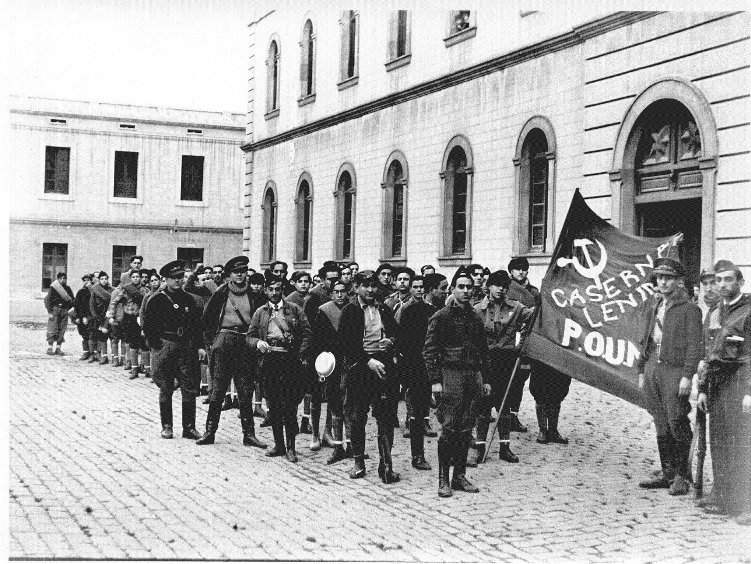
El
triángulo orwelliano de Barcelona :
- Hotel Continental (La Rambla, 138)
- Hotel Rivoli (La Rambla, 128) - sede del Comité Ejecutivo del POUM, frente al Teatro Poliorama
- plaza de George Orwell, entre Escudellers i Avinyó - "plaza del Tripi" : primer espacio público de Barcelona controlado por cámaras de videovigilancia municipales
Capote - Music for Chameleons (1980)
Wiki,
read it
here [/],
no "Copy And Paste";
or
Google books,
neither "Copy And Paste"
He was born as Truman Streckfus Persons to a salesman Archulus Persons and young Lillie Mae (September 30, 1924).
His parents divorced when he was four and he went to live with his mother's relatives in Monroeville, Alabama.
He was a lonely child who learned to read and write by himself before entering school.
In 1933, he moved to New York City to live with his mother and her new husband, Joseph Capote, a Cuban-born businessman.
Mr. Capote adopted Truman, legally changing his last name to Capote and enrolling him in private school.
After graduating from high school in 1942, Truman Capote began his regular job as a copy boy at The New Yorker.
During this time, he also began his career as a writer, publishing many short stories which introduced him into a circle of literary critics.
His first novel, Other Voices, Other Rooms, published in 1948, stayed on The New York Times bestseller list for nine weeks
and became controversial because of the photograph of Capote used to promote the novel, posing seductively and gazing into the camera.
Capote began writing as a young child and had won an award for his short story, Old Mrs. Busybody when he was only twelve.
While living in Monroeville, Alabama with relatives, he formed a lifelong friendship with Harper Lee, who would later help him on his novel In Cold Blood.
Truman's mother had remarried to Joseph Capote, and Truman adopted the surname in 1933, after moving to New York.
His formal education was first at Trinity School and then St. Joseph Military Academy.
After moving to Greenwich, Connecticut in 1939, Capote attended Greenwich High School and began to write for the school newspaper.
In 1942, the family moved to New York City and Truman attended the Franklin School, graduating the following year.
During that year, he also worked for The New Yorker as a copyboy.
In 1945, after a conflict with Robert Frost, Capote was fired and returned to Alabama.
He was a prolific writer and contributed numerous stories and articles to all of the major magazines of the day, including Harper's Bazaar, The Atlantic Monthly, etc.
His first novel, Other Voices, Other Rooms, appeared in 1948 and helped Capote's rise to fame.
Success followed success and Capote began working on screenplays with equal triumph.
In 1958, he produced Breakfast at Tiffany's, an iconic work that received rave reviews.
Some years later, in 1965, he wrote In Cold Blood, the story of the brutal murder of a farming family in Kansas.
He labelled it a non-fiction novel, and the critics labelled it a masterpiece.
In 1975, Capote published La Cote Basque 1965, which revealed the secrets of many of his friends and led to his cultural downfall.
Nevertheless, Capote continued to produce successes such as the best-seller Music for Chameleons in 1980.
A drug and alcohol abuser for years, Capote died of liver cancer and drug intoxication (August 25, 1984, aged 59).
His other works include A Tree of Night and Other Stories (1949), House of Flowers (1950),
The Grass Harp (1951), Beat the Devil (1953), The Muses Are Heard (1956), The Thanksgiving Visitor (1968),
The Dogs Bark (1973), One Christmas (1983) and Answered Prayers (1986 Posthumous).
By the late 1970s, Truman Capote’s life had turned into the kind of gossipy drama he relished.
He was stuck in a strained, celibate relationship. His pill-popping, binge-drinking, coke-snorting ways had soared to new heights,
leading not only to a number of stints in rehab, but also to a series of embarrassing episodes on television,
including one talk-show appearance when he raised the possibility of killing himself.
Esquire’s publication of chapters from his long-awaited novel Answered Prayers, with its insider’s view into high society,
cost him his standing among his fellow elites.
His anxiety—or as Holly Golightly referred to it, “the mean reds”—was through the roof. And still worse, he wasn’t writing.
Capote ultimately put together a collection of essays and stories that effectively captured all of his interests as a writer, and,
more importantly, revealed more about him as a person than anything else he ever wrote.
Though less remembered than the popular Breakfast at Tiffany’s or the stunning In Cold Blood,
Music for Chameleons is a richer experience, not least because of its startling candor.
In its pages, Capote emerges as a complex figure wrestling with many, many demons, a man who mocks his own saintly aspirations without quite giving them up.
Music for Chameleons is Capote’s most idiosyncratic book, his flat-out weirdest,
but it’s also his most honest, and, in many ways, his best.
It’s a shaky testament to a complex figure, and the battle with himself that he would never quite win.
Capote’s plan for Music for Chameleons is deceptively simple: “I set myself center stage.”
The first part, eponymously titled, features the kind of smooth-as-butter prose for which Capote first became famous
The story “Mojave” contains lines like,
“He had not been of much help as an analyst, and as a lover—well,
once she had watched him running to catch a bus,
two hundred and twenty pounds of shortish, fiftyish, frizzly-haired, hip-heavy,
myopic Manhattan Intellectual, and she had laughed:
how was it possible that she could love a man so ill-humored, so ill-favored as Ezra Bensten?”
It’s a reminder that Capote still retained the consummate skills of a stylist
whose earlier stories in Mademoiselle and Harper’s Bazaar had won over the literary world decades earlier.
If part one speaks to Capote’s earlier fiction, second part, named “Handcarved Coffins”, functions as a companion piece
to the true-crime story In Cold Blood— it’s a fascinating yarn (cuento, historia) filled with mysteries and human detail.
In part three, the real project of the book becomes clear:
It’s an elaborate self-portrait, told through autobiographical fiction, fictionalized journalism, and the lenses of other characters.
Some opinions
Amazon
In these gems of reportage Truman Capote takes true stories and real people
and renders them with the stylistic brio we expect from great fiction.
Here we encounter an exquisitely preserved Creole aristocrat sipping absinthe in her Martinique salon;
an enigmatic killer who sends his victims announcements of their forthcoming demise;
and a proper Connecticut householder with a ruinous obsession for a twelve-year-old he has never met.
And we meet Capote himself, who, whether he is smoking with his cleaning lady or trading sexual gossip with Marilyn Monroe,
remains one of the most elegant, malicious, yet compassionate writers to train his eye on the social fauna of his time.
blog
The biggest attraction to this collection is "Handcarved Coffins", an excellent account of serial killing in a small town.
By turns mysterious, frustrating, tense, and bizarre, the accounting details Capote's relationship with the FBI agent assigned to the case,
who has in turn romantically assigned himself to one of the potential victims.
The modus operandi of the killer is original and very upsetting.
The identity of the killer does not appear to be in question;
what arises over the course of the piece is a dual portrait of a haunted agent and an arrogant, infuriatingly entitled potential serial killer.
The real jewel in this collection, the reason why it's getting three-stars, is A Beautiful Child.
The transcript of the day Capote spent with Marilyn Monroe is absolutely fantastic.
It portrays a side of Monroe that we never really got to see, we see her as a human being.
It is utterly wonderful and strangely poetic.
Composed of 14 short stories, Capote made himself a character in each.
In the last one, in fact, he appeared as 2 characters conversing with each other.
Some avaluation
Music for the Chameleons. 3 STARS
The narrator is a guest in a lovely house in Martinique. There is an aristocratic lady in the house and she takes care of chameleons. She plays music for them to emit different colors. I am not sure what Capote's exact message is but I thought that the colors of the chameleons symbolize the ever-changing opinion of the aristocrats with regards to the aboriginals in the island.
Mr. Jones. 2 STARS
So, who was Mr. Jones and why did he disappear so suddenly? What was Capote's motive in telling his reader that the narrator saw him in the train again? I just did not get it. I know there is a point there somewhere but sorry.
A Lamp in the Window. 4 STARS
I liked the ending. It was unexpected. I like it when Capote shows his quirkiness, i.e., his fun side. We know he was gay and gays are fun people. So, this story comes off as sincere and fun too. But don't get me wrong, this is not funny. Know what I mean?
Mojave. 3 STARS
An old masseur who is left all alone in a desert by his prostitute wife while he is urinating. In their trailer is the wife's lover whose hair is full of smelly pomade. Despite what the wife did, the elderly man says that he still loves his wife. This reminded me of gay men who knew all along that they were being fooled by their lovers and yet they were blind. So pathetic yet we all know this happens, gay or straight.
Hospitality. 3 STARS
Seems like this one is a true-to-life experience of Capote while growing up during the Depression. I just wondered where they got all those food while many Americans go hungry like what I read in Out of the Dust and of course book:The Grapes of Wrath|4395].
Dazzle. 4 STARS
Very funny childhood story of a gay boy Capote. He teased the reader on what he would ask the witch for. I thought I knew and then Capote made a twist but still I got it right. This is a breakthrough story because in here, Capote made known to the world that when he was young, (view spoiler)
A Nonfiction Account of an American Crime. 4 STARS
A well-loved politician in an small town in the South has been discovered to be the mastermind for the killing of members of the committee. The said committee denied his huge track of land the proper irrigation since the river was diverted. I liked the story telling and the playfulness of Capote's character (yes, he is in the story just like the other stories in this book) especially the references to Jane Austen and Edith Wharton's male characters. I should read a Wharton and resume my reading of Austen books.
A Day's Work. 3 STARS
Capote joins and observes a girl Friday cleaning the houses of the rich and famous in Italy. Not all of them are rich and famous but with juicy stories. There is a reality TV show like this, I think.
Hello Stranger. 4 STARS
"Shades of Humbert Humbert," says Capote but George Claxton doesn't read books because he hates literature. When they were young, Capote did all the book reports of George while the later did all his assignments in Algebra. Capote flunked first year Algebra thrice even with the help of a tutor! I think I can relate to this. Not in my case, but someone dear.
Hidden Gardens. 2 STARS
I got distracted by the shift in narratives. All I understood was a guy with a huge prick and he put it on the girl who inquired about it and the girl's hair turned white overnight (because of intense pressure). Maybe Capote meant this to be a joke and I took it seriously?
Derring-do. 2 STARS
Maybe I was just too tired while reading this part late last night. It seemed like another In Cold Blood criminal case this time with a serial killer facing execution soon. Other than that, this one did not leave anything in my mind.
Then It All Came Down. 3 STARS
This one also has similarities with some scenes in Capote's In Cold Blood. Well, this book was his follow up to that best-selling novel of him, right? In here, Capote is conversing with an inmate in the maximum-security cell block. The inmate, Robert Beausoleil, was charged of multiple murder. In the conversation, Capote or CP is namedropping; claiming to have met Lee Harvey Oswald, Priscilla Johnson, etc. Based on Wiki, party-boy Capote hobnobbed with the rich and famous.
A Beautiful Child. 4 STARS
Ha! This is the cutest story here. Marilyn Monroe, the sex goddess during Capote's time, appears as herself talking with our genius writer. It reminds me of beautiful girls in the campus with gay man as sidekick or bestfriend. This made me want to read a book about Marilyn Monroe. The way she expresses herself here is... cute!
Nocturnal Turnings, or How Siamese Twins Have Sex. 5 STARS
Don't be misled by the title. There is nothing obscene here. They slept in the end. "They" means Capote and Capote. Two personas in one body. They talk to each other and unlike the angel and the demon, the ying and yang, they are not completely opposites. So, you have to really take time to read their banters. Brilliant and funny. Very Capote.
Capote - short stories
You can read all these 20 histories
The Walls Are Cold,
A Mink of One’s Own,
The Shape of Things,
Jug of Silver,
Miriam,
My Side of the Matter,
Preacher’s Legend,
A Tree of Night,
The Headless Hawk,
Shut a Final Door,
Children on Their Birthdays,
Master Misery,
The Bargain,
A Diamond Guitar,
House of Flowers,
A Christmas Memory,
Among the Paths to Eden,
The Thanksgiving Visitor,
Mojave,
One Christmas
Here {sagpdf}
Music for chameleons
- she is tall and slender, perhaps seventy, silver-haired, soigné,
neither black nor white, a pale golden rum color.
- we are drinking iced mint tea slightly flavored with absinthe
- the women - I've seen some amazingly beautiful women.
Supple, suave, such beautifully haughty postures;
bone structure as fine as cats.
Also, thy have a certain alluring aggressiveness.
- {black mirror} What did they use them for? To refresh their vision.
Renew their reaction to color, the tonal variations.
- {lobsters} it was tasless as chalk, and so tough to chew that I lost a filling.
- virtually naked women parading themselves
- {french} Ce soir, ce soir nous danserons sans chemise, sans pantalons
Absinthe? Un peu? A mite.
- Marc Blitzstein, killed by two portuguese sailors
Mr Jones
- slender, black-haired, and with a distincive face;
a pale, lean face, high cheekbones, and with a birthmark on his left cheek,
a small scarlet defect shaped like a star.
He wore gold-rimmed glasses with pitch-black lenses;
he was blind, and crippled too - the use of his legs had been denied him by a childhood accident.
- he has bright eyes, blue as a peacock's.
A lamp in a window
- if our situations had been revesed, I doubt that I would have had the courage,
to say nothing of the generosity.
- I guess you think I'm a bit dotty
Mojave
'Imagine that,' he said. 'Leaving a seventy-years-old blind man stranded alone in the desert.
Teh dollars in my pocket, and no another rag to my name.
Women are like flies: they settle on sugar or shit.
I'm not saying I'm sugar, but she's sure settled for shit now.
My name is George Schmidt.'
- Jaime Sanches and Carlos and Angelita
- Hulga and Freddy Feo and Ivory Hunter and mr Schmidt
- dr Bentsen and George, George and Sarah (she), dr Bentsen and Mary Rhinelander
Hospitality
Mary Ida Carter and uncle Jennings
- missionary
- convict, mr Bancroft
- Zilla Ryland and Jed and mr Smith
Dazzle
- Mrs Ferguson fascinated everyone, she fascinated me
- I don't want to be a boy. I want to be a girl.
Handcarved coffins
A nonfiction account of an american crime
- Prairie Motel
- Jake Pepper - he was partial to Dickens, Melville, Trollope, Mark Twain
- coffin with a picture of George and Amelia Roberts [1st and 2nd victims]
- Baxters and Hogans burned to ashes [3nd and 4th victims]
- Clem Anderson [5th victim]
- dr Parsons [6th victim]
- Robert Hawley Quinn - assassí
- miss Adelaide Mason [7th victim - accidental death by drowning]
- special comitee members (judge Hatfield) :
- Addie
- Clem Anderson
- George and Amelia Roberts
- dr Parsons
- the Baxters
- Tom Henry - filling station - voted against
- Oliver Jaeger - postmaster
- In Venice one is always in costume and wearing a mask;
that is, you are not yourself, and not responsibl for your behavior.
It wasn't the real me who arrived in Venice at five in the afternoon
and before midnight boarded a train bound for Istanbul.
It all began in Harry's Bar, as so many Venetian escapades do.
- Now, in October, the landscape was gloriosly different:
the macadam highway was like a skinny black sea dividing the golden continent;
on either side, the sun-bleached stubble of threshed wheat flamed,
rippled with yellow colors, sable shadows under a cloudless sky.
Bulls pranced about theses pastures; and cows, among them mothers with new calves, grazed, dozed.
- The way I look at it is: it was the hand of God. God's work. His will.
Addie
The sway of her hips,
the loose movements of her fruity breasts,
her contralto voice,
the fragility of her hand-gestures:
all ultra seductive, ultra feminine without being effeminate.
Her power resided in her attitude: she behaved as though she belived she was irresistible;
and whatever her opportunities may have been,
the style of the woman implied an erotic history complete with footnotes.
Her eyes were brown, but the various illumination - firelight, candles on the table - colored them,
made them cat-yellow.
In the distance the caged canaries sang, and snow, fluttering at the windows like torn lace curtains,
emphasized the conforts of the room,
the warmth of the fire, the redness of the wine.
She winked at Jak, and tilting her head back,
swallowed all her wine in one swoop;
she did this with astonishing grace,
an agility that revealed a lovely throat.
Jake, winking back, directed a smoke ring toward her,
and the empty oval, floating through the air,
seemed to carry with it an erotic message.
mr Quinn
He sported extensive high-heel boots,
but even without them the man measured over six feet,
and if he had stood straight,
instead of assuming a stooped, slope-shouldered posture,
he would have presented a fine tall figure.
He had long simianlike arms;
the hands dangled to his knees,
and the fingers were long, capable, oddly aristocratic.
I recalled a Rachmaninoff concert; Rachmaninoff's hands were like Quinn's.
Quinn's face was broad but gaunt, hollow-cheeked,
weather-coarsened - the face of a medieval peasant,
the man behind the plow with all the woes of the world lashed to his back.
But Quinn was no dumb, sadly burdened peasant.
He wore thin wire-rimmed glasses, and these professional spectacles,
and the grey eyes looming behind their thick lenses, betrayed him;
his eyes were alert, suspicious, intelligent, merry with malice, complacently superior.
He had a hospitable, fraudulently genial laugh and voice.
But he was not a fraud.
He was an idealist, an achiever;
he set himself tasks, abd his tasks were his cross, his religion, his identity;
no, not a fraud - a fanatic; and presentl, while we were still gathered on the veranda,
my sunken memory surfaced:
I remembered where and in what form I had met Mr. Quinn before.
Bobby Joe Snow, evangelist - 50 years earlier
mr Quinn's wife - Juanita
Her hair, center-parted and too black to be true, was slicked to her narrow skull.
Her face was like a fist: tiny features tightly bunched together.
Her head was too big for her body - she wasn't fat, but she weiged more that she should,
and most of her overweight was distributed between her bossom and her belly.
But she had slender, nicely shaped legs, and she was weering a pair of very prettily beaded Indian moccasins.
Travel to Europe
- so, early in August, I flew Swissair to Switzerland, and lolled away several weeks in an Alpine village,
sunbathing among eternal snows.
- Anyway, pne day when one of these black moods descended,
I hired a car and drove via the Grand St. Bernard pass into Italy and on to Velice.
- I had just ordered a martini when who should slam through the swinging doors but Gianni Paoli,
an energetic journalist whom I had known in Moscow when he had been a correspondent for an Italian newspaper;
together, aided by vodka, we had enlivened many a morose Russian restaurant.
Gianni was in Venice en route to Istanbul; he was catching the orien Express at midnight.
- but I didn't go home; things happened. I encountered an old friend in Istanbul,
an archaelogist who was working on a "dig" on the Anatolia coast in southern Turkey;
he invited me to join him, he said I would enjoy it, and he was right, I did.
I swam enery day, leraned to dance Turkish folk dances,
drank ouzo and danced outdoors all night every night at the local bito; I stayed two weeks.
- afteward I traveled by boat to Athens, and from there took a plane to London,
where I had a suit fitted.
It was Ocober, almost autumn, before I turned the key that opened the door of my New York apartment.
Quotations, books
- Edith Wharton - The House of Mirth
-
Of all the creatures that were made, man is the most detestable.
Of the entire brood he is the only one--the solitary one--that possesses malice.
That is the basest of all instincts, passions, vices--the most hateful.
He is the only creature that has pain for sport, knowing it to be pain.
Also--in all the list he is the only creature that has a nasty mind.
- Mark Twain's Autobiography
-
A Coffin for Dimitros, a book by Eric Ambler
- Graham Greene was a first-class writer. Until the Vatican grabbed him.
After that, he never wrote anything as good as Brighton Rock
[Conversational Portraits] 1.- A Day's Work
1979, April - Second Av, New York City.
Mary Sanchez is a professional cleaning woman, 57-years old.
- Mr Andrew Trask, East 73rd Street
- Miss Edith Shaw - magazine editorial staff
- Mr and Mrs Berkowitz
- Mrs Kronkite
Then she sighs and perches on the edge of the bed
and from her satchel takes out a small tin box containing an assortment of roaches;
selecting one, she fits it into a roach-holder and lights up,
dragging deeply, holding the smoke down in her lungs and closing her eyes.
But after smoking the whole of one of Mary's roaches,
and while halfway thrugh another,
I felt as though seized by a delicious demon,
embraced by a mad marvelous merriment:
the demon tickled my toes, scratched my itchy head,
kissed me hotly with his red sugary lips, shoved his fiery tongue down my throat.
Everything sparkled; my eyes were like zoom lenses;
[Conversational Portraits] 2.- Hello, Stranger
December 1977, NY restaurant, The Four Seasons.
George Claxton and Gertrude.
Linda Reilly and message in a bottle, living with Mr and Mrs Henry Wilson.
George removed his dark glasses and polished them with a napkin.
Now I understood why he wore them.
It wasn't because of the yellowed whites engraved with swollen red veins.
It was because his eyes were like a pair of shattered prisms.
I have never seen pain, a suffering, so permanently implanted,
as if the slip of a surgeon's knife had left him forever disfigured.
[Conversational Portraits] 3.- Hidden gardens
Jackson Square, New Orleans; 26 March 1979.
Big Junebug Johnson - Oh, don't let me commence, married to Jim O'Reilly.
One of my girl friends told me that her brother had told her Ed Jenkins had the biggest peter anybody evew saw.
He was nice-looking, but a scrawny fellow, not much taller than you,
and I didn't believe it, so one day, joking him, I said 'Ed Jenkins, I hear you have one helluva peter',
and he said, 'Yeah, I'll show you', and he did, and I screamed;
he said 'And now I'm gonna put it in you', and I said "Oh, no you ain't" - it was big as a babys arm holding an apple.
Lord's mercy! But he did. Put it in me. After a terrific tussle.
As for this "Jockey" business, it was a nickname I owed to Ginger Brennan.
A piano is playing. I can't decide where it's comming from:
strong fingers playing a striding, riding-it-on-out piano:
"I want, I want..." That's a black man singing; he's good -
"I want, I want a mamma, a big fat mamaa, I want a big fat mama with the meat shakin' on her, yeah!"
How you doin'? Just taking it easy.
You're cute. Everybody's entitled to their opinion.
I'll show you a good time. We'll have fun. I don't think so.
[Conversational Portraits] 4.- Derring-do
Late 16th century: from late Middle English dorryng do 'daring to do'
November, 1970; LA International Airport.
The cause of my predicament had its roots in a series of conversations I'd conducted a year earlier
with Robert M., a slender, slight, harmless-looking young man
who was then a prisoner on Death Row at San Quentin,
where he was awaiting execution, having been convicted of thress slayings:
his mother, a sister, both of whom he had beaten to death,
and a fellow prisoner, a man he had strangled while he was in jail awaiting trial for the two original homicides.
Why were they so interested in my acquaintance with Robert M.?
One of the detectives handed me a slim but exceedingly legal-looking document.
It was a subpoena ordering me to appear ar Robert M.'s trial, presumably as a witness for the prosecution.
Still, I had a destination in mind, and a plan.
High in the San Jacinto moutains, midway between Palm Springs and San Diego,
there's a grim little vilage named Idylwyld.
There, striding past my tiny glass-doored prison, is a haughty, beautiful Amazon
wearing a zillion dollars' worth of diamonds and golden sable,
a start surrounded by a giddy, chattering entourage of gaudily dressed chorus boys.
And who is this dazzling apparition whose plumage and presence are creating such a commotion among the passers-by ?
A friend ! An old, old friend!
Pearl Bailey, married to Louis Bellson.
Let's make a wish.
I wish I could always be as happy as I am at this very moment.
[Conversational Portraits] 5.- Then It All Came Down
Place : San Quentin prison, California.
Occupant : Robert Beausoleil.
It all began with the murder of Gary Hinman,
a middle-aged professional musician who had befriended various members of the Manson brethren (correligionarios)
and who, unofrtunately for him, lived alone in a small isolated house in Topanga Canyon.
It was then that Manson and his chums (amigotes), in the hopes of freeing Beausoleil,
conceived the notion of commiting a series of homicides similar to the Hinman affair.
[Conversational Portraits] 6.- Beautiful Child
Time: 28 April 1955. Scene: the chapel of the Universal Funeral Home at Lexington Avenue and Fifty-second Street, NYC.
An interesting galaxy packs the pews:
celebrities, for the most part, from an intenational arena of theater, films, literature,
all present in tribute to
Constance Collier,
the English-born actress who had died the previous day
at the age of seventy-five.
I dont think she's an actress at all, not in any traditional sense.
What she has - this presence, this luminosity, this flickering intelligence - could never surface on the stage.
Where's the john ?
And pop a pill ?
What do you want to smoke ? A reefer (porro)?
Did I ever tell you about the time I saw Errol Flynn whip out his prick and play the piano with it ?
Everybody says Milton Berle has the biggest schlong (as opposed to a schlort) in Hollywood.
So we moseyed toward Third Avenue.
As we neared P.J.Clarke's saloon, I sugested P.J.'s might be a good place to refresh ourselves.
I like to dance naked in front of mirrors and watch my titties jump around.
There's nothing wrong with them.
But I wish my hands weren't so fat.
I've never had a home. Not a real home with all my own furniture.
Who's the most attractive woman you know ?
No contest. Barbara Paley. Hands down.
"Babe Paley had only one fault," commented her one-time friend Truman Capote.
"She was perfect. Otherwise, she was perfect."
I'va always known Errol zigzagged.
Our route carried us through the Bowery.
Tiny pawn-shops and blood-donor stations and dormitories with fifty-cent cots and tiny grim hotels with dollar beds
and bars for whites, bars for blacks, everywhere bums (vagabundo), bums, young, far from young, ancient,
bums squatting curbside, squatting amid shattered glass and pukey debris,
bums slanting in doorways and huddled like penguins at street corners.
Once, when we paused for a red light, a purple-nosed scarecrow weaved toward us
and began swabbing the taxi's windshield with a wet rag clutched in a shaking hand.
Our protesting driver shouted Italian obscenities.
I bet you'd tell them I was a slob. A banana split.
Of course. But I'd also say ... you are a beautiful child.
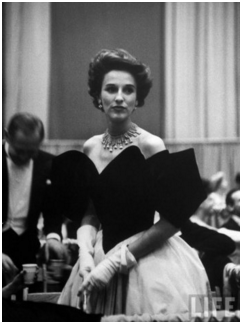
[Conversational Portraits] 7.- Nocturnal Turnings, or How Siamese Twins Have Sex
We tried to go to sleep around midnight, but we were too tense.
So you said why don't we jack off, and I said yes, that ought to relax us, it usualy does, so we jacked off and went right to sleep.
Sometimes I wonder : Whatever would we do without Mother Fist and her Five Daughters ?
They've certainly been a friendly bunch to us through the years. Real pals.
Billy Grahm, Werner Erhard, Masters and Johnson, Princess Z - they're all full of horse manure.
But the Reverend Billy is just so full of it.
Bitch List / Strong Dislike List - Strongly Like List
She said : "Los Angeles is the perfect place to live - if you're Mexican."
Self interviev:
-
I was affraid to breathe. I felt if I moved my foot one scintilla, the beasts would spring forward to rip me apart.
-
Those are instances of specific terror.
Still, our real fears are the sounds of footsteps walking in the corridors of our minds,
and the anxieties, the phantom floatings, they create.
-
A conversation is a dialogue, not a monologue.
That's why there are so few good conversations: due to scarcity, two intelligent talkers seldom meet.
Conversationists:
- Gore Vidal
- Cecil Beaton
- Baroness Blixen - Isak Dinesen : Out of Africa
- Christopher Isherwood
- Colette
- Marilyn Monroe, when she felt sufficiently relaxed and had had enough to drink, as Harry Kurnitz
- Diana Vreeland
When I was eighteen I met the person whose conversation has impressed me the most,
perhaps because the person in question is the one who has most impressed me :
Willa Cather.
Like all authentic conversationists, she was an excellent listener, and when it was her turn to talk,
she was never garrulous (charlatán, parlanchín), but crisply pointed.
Some questions
- do you have any favorite spectator sport ?
- do you have many sexual fantasies ?
- have you ever considered suicide ?
- do you believe in God, or at any rate, some higher power ?
- if you could be granted one wish, what would it be ?
But I'm not a saint yet. I'm an alcoholic. I'm a drug addict. I'm homosexual. I'm a genius.
Now I lay me down to sleep, I pray the Lord my soul to keep.
And if I should die before I wake, I pray the Lord my soul to take.
New words
- stark = rígid
- cherless = trist
- periwinkle = bígaro, azul pálido
- lanky = llargarut
- forlorn = triste, desolado
- he shifted the chessmen about
- hinged (lid) = frontisses, bisagra, goznes (tapa)
- sizzler = dia muy caluroso
- when I'd had a snootfull = to be drunk
- fireflies = cuques de llum
- better pour yourself a stiff one = rígid, fuerte, cargado
- prankster = bromista
- jagged gash = ferida irregular
- it was around dusk = era al voltant del vespre
- I am losing my marbles =
- chuckle = reírse entre los dientes
- lozenge = rombo, píldora
- rambling = disperso
- stew = estofado, guisado
- the tension between them was as taut as the steel wire that had severed Clem's head
- sprained an ankle = esquinç en un turmell
- a man had whittled that coffin = tallar
- quarrel = pelea, disputa
- simmering = hervir/cocerse a fuego lento
- I lit out of here like a bear with a bumblebee up his ass = borinot, abejorro
- britches = patalon bombacho
- riding crop = fusta
- limber as a willow wand = àgil com una vareta de salze
- affidavit = declaració jurada
- they fingers mingled = barrejar-se
- what they got was a load of buckshot = el que van aconseguir va ser una càrrega de perdigons
- I hear you're a chess player. I don't find too many games. How about us getting together?
We'll have a drink and play a couple of games.
- he jutted his jaw
- so she is a stakeout = vigilancia
- eerily = deathly quiet, siniestramente, de forma espeluznante/escalofriante, bizarramente
- veranda = porche
- this granite cavelike wall hused a fireplace big enough to roast a brace of oxen = un parell de bous
- badinage = broma
- doodad = cosa, cosita
- hefty = pesado, obusto
- rinsed = enjuagar
- you couldn't swat a fly with the evidence they've got = matar una mosca
- I gotta blow my honker = sonarme la nariz
- the gist of it was = el quid de la questión, punto esencial
- she was splashed with freckles from top to bottom = peca
- Wow, did those guys scoot = largarse, correr rapidamente
Hanif Kureishi - The body and seven stories (2002)
The centrepiece of Hanif Kureishi's brilliant new collection of fiction
delves into the fascinating concept of personal identity,
and the extent to which this is rooted in our physical being.
Alien wiki :
The main character's exclusive focus on the materiality of human existence raises questions of identity, the burden of old age, and the promise of eternal youth.
"After a bit you realize there's only one invaluable commodity. Not gold or love, but time."
Book review :
"You're as young as you feel".
Wikibio.
- "What people want is to be known"
Hullabaloo in the tree
- he could only bring up his kids, as people seemed to do most things in the end, as an example and guide
Face to face with you
- supose that a couple moved in upstairs who were very similar to you. Not only similar, but were exactly the same
- what do we do in the evenings but watch TV and bicker ?
Goodbye, mother
- if you think the living are difficult to deal with, the dead can be worse
- "There's no cure for living"
Straight
- for days he had been fearful of this night but wanted to believe he was ready
Remember this moment, remember us
- girls were holding trays of champagne, mulled wine and mince pies - bandejas de champán, vino caliente y pasteles de carne picada
- video tape
The real father
- Wallace was not only what was commonly described as an 'accident', there had been no necessity for his birth at all
- you need charm to get by in this world
- it was long before they ran out of ideal moments
- how did you learn to be a parent ?
Touched
- Mrs Blake (blind) and Ali
Jerome K Jerome - Three Men in a Boat
Wiki.
Study guide :
a summary, themes, quotes, essay questions, quizzes.
Full
movie 1975
(1:05), subs -
Movie specially for class 9 CBSE, with Tim Curry and Michael Palin.
pdf,
{sagpdf}
New words, nice sentences
- it was so rough that the passengers had to be tied into their berths (litera)
- giddiness = vahído, mareo, vértigo
- they used to give me a clump on the side of the head
- meals : steak and onions, and rhubarb pie
- seek out some quaint, forgotten nook (recoveco)
- the optimist of the party kept dwindling with Harris
- I'm quite willing to let you scull (remar) for a bit if you want to
- not at all; good egg
- blazer = chaqueta
- Slowly the golden memory of the dead sun fades from the hearts of the cold, sad clouds.
Silent, like sorrowing children, the birds have ceased their song,
and only the moorhen's plaintive cry and the harsh croak of the corncrake stirs the awed hush around the couch of waters
where the dying day breathed out her last.
From the dim woods on either bank, Night's ghosty army, the grey shadows, creep out with noisless tread to chase away the lingering rearguard of the light,
and pass, with noisless, unseen feet, above the waving river-grass, and through the sighing rushes;
And Night, upon her sombre throne, folds her black wings above the darkening world,
and from her phantom palace, lit by the pale stars, reigns (holds sway) in stillness.
- And we sit there, by its margin, while the moon, who loves it too, stoops down to kiss it with a sister's kiss,
and throws her silver arms aroind it clingingly; and we watch it as it flows, ever singing, ever whispering, out to meet its king, the sea.
- After supper, you find your tobacco is damp, and you cannot smoke.
Luckily you have a bottle of the stuff that cheers and inebriates, if taken in properly quantity,
and this restores to you sufficient interest in life to induce you to go to bed.
- We therefore decided that we would sleep out on fine nights, and hotel it, and inn it, and pub it, like respectable folks,
when it was wet, or when we felt inclined for a change.
- Harris said he'd had enough oratory for one night, and proposed that we should go out
and have a smile, saying that he had found a place, round by the square, where you could really get a drp of Irish worth drinking.
- You know we are on the wrong track altogether.
We must not think of the things we could do with,
but only of the things that we can't do without.
- Cheese, like oil, makes too much of itself. It wants the whole boat to itself.
You can't tell whether you are eating apple pie, or German sausage, or strawberries and cream.
It all seems cheese. There is too much odour about cheese.
A few moments passed, and then the old gentleman began to fidget (?)
-
I'll have half-a-crown's worth of brandy, neat, if you please (12 ½p)
A
crown
was worth five shillings (25 p). There were four crowns to the pound.
Sovereign: gold coin of the same valu as the pound.
A guinea was worth £ 1.05
- I decline to live any longer in the same house with them.
- Then Harris packed the strawberry jam on top of a tomato and squashed it, and they had to pick out th e tomato with a teaspoon.
And then it was George's turn, and he trod on the butter.
- we snarled at one another in this strain for the next few minutes
- I don't know why it should be, I am sure, but the sight of another man asleep in bed when I am up maddens me.
It seems to e so shoking to see the precious hours of a man's life
- the priceless moments that will never come back to him again -
being wasted in mere brutish sleep.
There was George, throwing away in hideous sloth the inestimable gift of time;
his valuable life, every second of which he would have to account for hereafter, passing away from him, unused.
He might have been up stuffing himself with eggs and bacon, irritating the dog, or flirting with the slavery,
instead of sprawling here, sunk in soul-clogging oblivion (olvido).
- What a lark (broma) !
- we would dress ourselves in flimsy (delgado) things
- the Boots stopped as he was passing - man-servant employed in hotels and inns to clean customer's boots and shoes.
The best-known fictional boots is Sam Weller in Dicken's The Pickwick Papers
- prow = proa
- (pg 80, 99/392) Give us a hand here, can’t you, you cuckoo; standing there like a stuffed mummy,
when you see we are both being suffocated, you dummy!
- It is very strange, this domination of our intellect by our digestive organs.
We cannot work, we cannot think, unless our stomach wills so.
It dictates to us our emotions, our passions.
After eggs and bacon, it says, “Work!” After beefsteak and porter, it says, “Sleep!”
After a cup of tea (two spoonsful for each cup, and don’t let it stand more than three minutes),
it says to the brain, “Now, rise, and show your strength. Be eloquent, and deep, and tender;
see, with a clear eye, into Nature and into life; spread your white wings of quivering thought,
and soar, a god-like spirit, over the whirling world beneath you, up through long lanes of flaming stars to the gates of eternity!
After hot muffins, it says, “Be dull and soulless, like a beast of the field — a brainless animal, with listless eye,
unlit by any ray of fancy, or of hope, or fear, or love, or life.”
And after brandy, taken in sufficient quantity, it says, “Now, come, fool, grin and tumble,
that your fellow-men may laugh — drivel in folly, and splutter in senseless sounds,
and show what a helpless ninny is poor man whose wit and will are drowned, like kittens, side by side, in half an inch of alcohol.”
We are but the veriest, sorriest slaves of our stomach.
- dreaming that I had swallowed a sovereign, and that they were cutting a hole in my back with a gimlet, so as to try and get it out.
- The day has been so full of fret and care, and our hearts have been so full of evil and of bitter thoughts,
and the world has seemed so hard and wrong to us.
Then Night, like some great loving mother, gently lays her hand upon our fevered head,
and turns our little tear-stained faces up to hers, and smiles; and, though she does not speak,
we know what she would say, and lay our hot flushed cheek against her bosom, and the pain is gone.
- (end of chapter 9)
Once upon a time, through a strange country, there rode some goodly knights, and their path lay by a deep wood,
where tangled briars grew very thick and strong, and tore the flesh of them that lost their way therein.
And the leaves of the trees that grew in the wood were very dark and thick, so that no ray of light came through the branches to lighten the gloom and sadness.
And, as they passed by that dark wood, one knight of those that rode, missing his comrades, wandered far away, and returned to them no more;
and they, sorely grieving, rode on without him, mourning him as one dead.
Now, when they reached the fair castle towards which they had been journeying, they stayed there many days, and made merry;
and one night, as they sat in cheerful ease around the logs that burned in the great hall, and drank a loving measure, there came the comrade they had lost, and greeted them.
His clothes were ragged, like a beggar’s, and many sad wounds were on his sweet flesh, but upon his face there shone a great radiance of deep joy.
And they questioned him, asking him what had befallen him: and he told them how in the dark wood he had lost his way, and had wandered many days and nights,
till, torn and bleeding, he had lain him down to die. Then, when he was nigh unto death, lo! through the savage gloom there came to him a stately maiden,
and took him by the hand and led him on through devious paths, unknown to any man,
until upon the darkness of the wood there dawned a light such as the light of day was unto but as a little lamp unto the sun;
and, in that wondrous light, our way-worn knight saw as in a dream a vision, and so glorious, so fair the vision seemed,
that of his bleeding wounds he thought no more, but stood as one entranced, whose joy is deep as is the sea, whereof no man can tell the depth.
And the vision faded, and the knight, kneeling upon the ground, thanked the good saint who into that sad wood had strayed his steps,
so he had seen the vision that lay there hid.
And the name of the dark forest was Sorrow (luto, arrepentimiento, tristeza);
but of the vision that the good knight saw therein we may not speak nor tell.
- “Well, who’s going to be first in?” said Harris at last. There was no rush for precedence.
- I did not altogether like to give in, though I did not relish the plunge.
There might be snags about, or weeds, I thought. I meant to compromise matters by going down to the edge and just throwing the water over myself;
so I took a towel and crept out on the bank and wormed my way along on to the branch of a tree that dipped down into the water.
It was bitterly cold. The wind cut like a knife. I thought I would not throw the water over myself after all.
I would go back into the boat and dress; and I turned to do so; and, as I turned, the silly branch gave way,
and I and the towel went in together with a tremendous splash, and I was out mid-stream with a gallon of Thames water inside me before I knew what had happened.
- The sun had got more powerful by the time we had finished breakfast, and the wind had dropped, and it was as lovely a morning as one could desire.
It is a fine summer morning — sunny, soft, and still. But through the air there runs a thrill of coming stir.
- Round the camp-fire in the market-place gather still more of the Barons’ troops,
and eat and drink deep, and bellow forth roystering drinking songs,
and gamble and quarrel as the evening grows and deepens into night.
The firelight sheds quaint shadows on their piled-up arms and on their uncouth forms.
The children of the town steal round to watch them, wondering;
and brawny country wenches, laughing, draw near to bandy ale-house jest and jibe with the swaggering troopers,
so unlike the village swains, who, now despised, stand apart behind, with vacant grins upon their broad, peering faces.
And out from the fields around, glitter the faint lights of more distant camps,
as here some great lord’s followers lie mustered,
and there false John’s French mercenaries hover like crouching wolves without the town.
And so, with sentinel in each dark street, and twinkling watch-fires on each height around, the night has worn away,
and over this fair valley of old Thame has broken the morning of the great day that is to close so big with the fate of ages yet unborn.
- Slowly the heavy, bright-decked barges leave the shore of Runningmede.
Slowly against the swift current they work their ponderous way, till, with a low grumble,
they grate against the bank of the little island that from this day will bear the name of Magna Charta Island.
And King John has stepped upon the shore, and we wait in breathless silence till a great shout cleaves the air,
and the great cornerstone in England’s temple of liberty has, now we know, been firmly laid.
- CHAPTER XII. Henry VIII and Anne Boleyn
- Have you ever been in a house where there are a couple courting? It is most trying.
- “Oh, well, we can’t help it. We must rough it. You must give us a shake-down in the billiard-room.”
“Very sorry, sir. Three gentlemen sleeping on the billiardtable already, and two in the coffee-room. Can’t possibly take you in to-night.”
- The landlady met us on the doorstep with the greeting that we were the fourteenth party she had turned away within the last hour and a half.
As for our meek suggestions of stables, billiard-room, or coal-cellars,
she laughed them all to scorn: all these nooks had been snatched up long ago.
Did she know of any place in the whole village where we could get shelter for the night?
“Well, if we didn’t mind roughing it — she did not recommend it, mind — but there was a little beershop half a mile down the Eton road ”.
We waited to hear no more; we caught up the hamper and the bags, and the coats and rugs, and parcels, and ran.
The distance seemed more like a mile than half a mile, but we reached the place at last, and rushed, panting, into the bar.
The people at the beershop were rude. They merely laughed at us.
There were only three beds in the whole house, and they had seven single gentlemen and two married couples sleeping there already.
A kind-hearted bargeman, however, who happened to be in the tap-room,
thought we might try the grocer’s, next door to the Stag, and we went back.
The grocer’s was full. An old woman we met in the shop then kindly took us along with her for a quarter of a mile,
to a lady friend of hers, who occasionally let rooms to gentlemen.
This old woman walked very slowly, and we were twenty minutes getting to her lady friend’s.
She enlivened the journey by describing to us, as we trailed along, the various pains she had in her back.
Her lady friend’s rooms were let. From there we were recommended to No. 27.
No. 27 was full, and sent us to No. 32, and 32 was full.
Then we went back into the high road, and Harris sat down on the hamper and said he would go no further.
He said it seemed a quiet spot, and he would like to die there.
He requested George and me to kiss his mother for him, and to tell all his relations that he forgave them and died happy.
We asked this heavenly messenger (as we discovered him afterwards to be) if he knew of any lonely house,
whose occupants were few and feeble (old ladies or paralysed gentlemen preferred),
who could be easily frightened into giving up their beds for the night to three desperate men;
or, if not this, could he recommend us to an empty pigstye, or a disused limekiln, or anything of that sort.
He did not know of any such place — at least, not one handy;
but he said that, if we liked to come with him, his mother had a room to spare, and could put us up for the night.
- We tackled the cold beef for lunch, and then we found that we had forgotten to bring any mustard.
- lumber ?
- was yours the steam launch or the houseboat ? No, it was the double sculling skiff.
- {Shelley} No longer where the woods to frame a bower, with interlaced mix and meet, or where with sound like many voices sweet,
waterfalls leap among wild islands green, which frames for my lone boat a low retreat of moss-grown trees and weeds,
shall I be seen, but beside thee, where my heart has ever been.
- you can always tell an old river hand by the way he likes to give others a chance
- meals : whitebait, cutlet, piece of Stilton, pate, sole with white sauce, smoked trout, mutton with capers,
- it was the dead body of a woman. It lay lightly on the water. And the face was sweet and calm.
Of course it was the old, old vulgar tragedy. She had loved and been deceived, or deceived herself.
She had wandered about the woods by the river's bank
and finally stretched out her arms to the silent stream that had known her sorrow and her joy.
And the old river had taken her into its gentle arms and had laid her weary (fatigado) head upon its bosom, and had hushed (acallar) away the pain.
Histories que explica
- cheese
- (43) have / want
- (48) maze
- (51) boat girls dress
- (55) tombs
- (60) Harris comic song
- (62) towed - by girls - "there is never a dull moment in the boat while girls are towing (remolcar) it"
- (79) canvas
- (82) stomach
- (e-pg 119) courting
- (124) room rent
- (126) pine aple tin
Llocs per on passen
- (121) Old Windsor
- Boveney
- (125) Monkey Island
- (127) Maidenhead
- (131) Marlow
Conrad
wiki
In Conrad's haunting tale, Marlow, a seaman and wanderer, recounts his physical and psychological journey in earch of the enigmatic Kurtz.
Traveling to the heart of the African continent, he discovers how Kurtz has gained hi sposition of power and influence over the local people.
Marlow's struggle to understand what has happened involves him in a radical quetioning of not only his own nature and values but the nature and values of his society.
A masterpiece of twentieth-century writing, "Heart Of Darkness" explores the workings of consciouness as well as the grim realities of imperialism.
pdf
{sagpdf}
From Matadi to Nselemba, near
Stanley Pool.
Pool Malebo és el començament de la part navegable del Riu Congo, ja que just una mica més avall el riu descendeix en una sèrie de ràpids coneguts com les
cascades Livingstone (32 ràpids, 260 metres en 150 Km).
Marlow is the most important of Conrad's transtextual characters
Conrad intentionally made Heart of Darkness hard to read.
He wanted the language of his novella to make the reader feel like they were fighting through the jungle,
just like Marlow fought through the jungle in search of Kurtz.
New words
- yawl or yole (clinker built boat) :
yola, embarcación de 2 palos
- surf - onatge
-
scow - gabarra : flat-bottomed boat with a blunt bow = vaixell de fons pla amb una proa arrodonida
- helmsman = timoner
-
sounding-pole : pal/sonda per mesurar la profunditat; "poleman"
- Starboard = estribor, derecha. Babor, izquierda = port side.
- Proa = bow. Popa = stern.
Aft = (adjective or adverb meaning) towards the stern (rear) of the ship.
The difference between aft and stern is that aft is the inside (onboard) rearmost part of the vessel,
while stern refers to the outside (offboard) rearmost part of the vessel.
Afore = proa.
- tusk = colmillo
- beckon = hacer señas a alguien para que se acerque
- screech = a loud and very high sound
-
Martini-Henry : a
breech-action (retrocarrega) military rifle.
Early firearms were almost entirely muzzle-loading (boca).
- scoundrel - canalla, patán
Carvel versus clinker
Carvel built or carvel planking is a method of boat building
where hull planks are fastened edge to edge, gaining support from the frame and forming a smooth surface.
Carvel construction enables greater length and breadth of hull and superior sail rigs.
The smoother surface of a carvel boat gives the impression at first sight that it is hydrodynamically more efficient.
The lands of the planking are not there to disturb the streamline.
This distribution of relative efficiency between the two forms of construction is an illusion:
For given hull strength, the clinker boat is lighter, because it has far less heavy timber framing.
It, therefore, displaces less water, so it has less to push aside while moving.
The reduced displacement could be used to make the lines finer so as to make the passage through the water easier still.
Nice sentences
- (9) They were men enough to face the darkness.
- (10) He broke off.
Flames glided in the river, small green flames, red flames, white flames,
pursuing, overtaking, joining, crossing each other— then separating slowly or hastily.
That is, ship's lights and their reflections.
Sailing vessels carried a green light on the starboard side
and a red one on the port side;
streamers carried, in addition, a white light on or in front of the foremast (palo de trinquete).
- They were all there. The supernatural being had not been touched after he fell. { white men as God }
- red ... blue ... green ... oange ... purple ... yellow
Late nineteenth-century maps of the world tended to use a colour code to indicate colonial possessions ;
red for British territories, blue for French, orange for Portuguese, green for Italian, purple for German and yellow for Belgian.
- (18) Two youths with foolish and cheery countenances were being piloted over, and she threw at them the same quick glance of unconcerned wisdom
as the poor devils went in and out unsuspecting on their way to pit of perdition (la fossa de perdició).
She seemed to know all about them and about me, too.
An eerie feeling came over me. She seemed uncanny and fateful.
Often far away there I thought of these two, guarding the door of Darkness, knitting black wool as for a warm pall,
one introducing, introducing continuously to the unknown, the other scrutinizing the cheery and foolish faces with unconcerned old eyes.
AVE! Old knitter of black wool. MORITURI TE SALUTANT. Not many of those she looked at ever saw her again—not half, by a long way.
- ‘I am not such a fool as I look, quoth Plato to his disciples’
(facetious tag)
he said sententiously, emptied his glass with great resolution, and we rose
- (21) Good heavens! and I was going to take charge of a two-penny-half-penny river-steamboat with a penny whistle attached!
- (22) The labourer is worthy of his hire [Lucas 10:7] - Porque el obrero es digno de su salario
- (22 ) It’s queer how out of touch with truth women are
- (22) I left in a French steamer, and she called in every blamed port they have out there
Conrad traveled from Bourdeaux and made its first stop at Tenerife. The boat subsequently called at
Dakar, Conacry, Freetown, Grand Bassam on the Ivory Coast, Grand Popo in Dahomey, Libreville and, finally, Banana, before moving up Banana Creek to Boma.
- the sun was fierce, the land seemed to glisten and drip with steam - el sol era ferotge, la terra semblava brillar i degotar amb vapor
- once we came upon a man-of-war anchored off the coast (vaixell de guerra).
There wasn’t even a shed there, and she was shelling the bush.
Her ensign dropped limp like a rag; the muzzles of the long six-inch guns stuck out all over the low hull;
the greasy, slimy swell swung her up lazily and let her down, swaying her thin masts.
- We called at some more places with farcical names,
where the merry dance of death and trade goes on in a still and earthy atmosphere as of an overheated catacomb;
all along the formless coast bordered by dangerous surf, as if Nature herself had tried to ward off intruders;
in and out of rivers, streams of death in life,
whose banks were rotting into mud, whose waters, thickened into slime, invaded the contorted mangroves,
that seemed to writhe at us in the extremity of an impotent despair.
Nowhere did we stop long enough to get a particularized impression, but the general sense of vague and oppressive wonder grew upon me.
It was like a weary pilgrimage amongst hints for nightmares - Era com un cansat pelegrinatge entre inicis de malsons
- He was a young man, lean, fair, and morose, with lanky hair and a shuffling gait = Era un home jove, prim, just i de mal humor, amb el cabell desgarbat i un caminar arrossegant els peus.
- Marlow departs with a caravan to travel on foot some two hundred miles into the wilderness to the Central Station,
where the steamboat that he is to captain is based.
When he arrives, he is shocked to learn that his steamboat had been wrecked two days earlier.
After fishing his boat out of the river, Marlow is frustrated by the months it takes to perform the necessary repairs,
made all the slower by the lack of proper tools and replacement parts at the station.
- But as I stood on this hillside, I foresaw that in the blinding sunshine of that land I would become acquainted (llegar a conocer)
with a flabby, pretending, weak-eyed devil of a rapacious and pitiless folly.
- The rapids were near, and an uninterrupted, uniform, headlong, rushing noise filled the mournful stillness of the grove,
where not a breath stirred, not a leaf moved, with a mysterious sound—as though the tearing pace of the launched earth had suddenly become audible.
- I respected the fellow. Yes; I respected his collars, his vast cuffs, his brushed hair.
His appearance was certainly that of a hairdresser’s dummy; but in the great demoralization of the land he kept up his appearance. That’s backbone.
His starched collars and got-up shirt-fronts were achievements of character.
He had been out nearly three years; and, later, I could not help asking him how he managed to sport such linen (ropa del hogar).
And he was devoted to his books, which were in
apple-pie order.
{ It is generally believed to be an English corruption of the French nappes pliées, “neatly folded linen” }
- big flies buzzed fiendishly, and did not sting (picar), but stabbed (puñalada)
- As he weighed sixteen stone I had no end of rows with the carriers.
In the UK, a stone is a unit of weight that equals 14 pounds (0,45 Kg, 16 ounces [28,3 grams]).
Therefore, sixteen stone means 224 pounds or about 102 kilograms.
- The next morning I started the hammock off in front all right.
An hour afterwards I came upon the whole concern wrecked in a bush—man, hammock, groans, blankets, horrors.
The heavy pole had skinned his poor nose.
He was very anxious for me to kill somebody, but there wasn’t the shadow of a carrier near.
- A neglected gap was all the gate it had, and the first glance at the place was enough to let you see the flabby devil was running that show.
- One of them, a stout, excitable chap with black moustaches, informed me with great volubility and many digressions, as soon as I told him who I was,
that my steamer was at the bottom of the river.
- The steamer was sunk. They had started two days before in a sudden hurry up the river with the manager on board, in charge of some volunteer skipper,
and before they had been out three hours they tore the bottom out of her on stones, and she sank near the south bank.
- He inspired uneasiness (malestar)
- I don’t like work — no man does — but I like what is in the work — the chance to find yourself.
Your own reality — for yourself, not for others — what no other man can ever know.
- Their talk, however, was the talk of sordid buccaneers: it was reckless without hardihood, greedy without audacity, and cruel without courage.
- Going up that river was like traveling back to the earliest beginnings of the world, when vegetation rioted on the earth and the big trees were kings.
An empty stream, a great silence, an impenetrable forest.
The air was warm, thick, heavy, sluggish.
There was no joy in the brilliance of sunshine.
The long stretches of the waterway ran on, deserted, into the gloom of overshadowed distances.
On silvery sand-banks hippos and alligators sunned themselves side by side.
- (94/162) But my feet felt so very warm and wet that I had to look down.
The man had rolled on his back and stared straight up at me; both his hands clutched that cane.
It was the shaft of a spear that, either thrown or lunged through the opening, had caught him in the side, just below the ribs;
the blade had gone in out of sight, after making a frightful gash;
my shoes were full; a pool of blood lay very still, gleaming dark-red under the wheel; his eyes shone with an amazing lustre.
- (102/162) The opening paragraph, however, in the light of later information, strikes me now as ominous.
He began with the argument that we whites, from the point of development we had arrived at,
‘must necessarily appear to them [savages] in the nature of supernatural beings— we approach them with the might of a deity,’ and so on, and so on.
‘By the simple exercise of our will we can exert a power for good practically unbounded,’ etc., etc.
From that point he soared and took me with him.
The peroration was magnificent, though difficult to remember, you know.
It gave me the notion of an exotic Immensity ruled by an august Benevolence.
It made me tingle with enthusiasm. This was the unbounded power of eloquence—of words—of burning noble words.
There were no practical hints to interrupt the magic current of phrases, unless a kind of note at the foot of the last page,
scrawled evidently much later, in an unsteady hand, may be regarded as the exposition of a method.
It was very simple, and at the end of that moving appeal to every altruistic sentiment it blazed at you, luminous and terrifying,
like a flash of lightning in a serene sky: ‘Exterminate all the brutes!’
The curious part was that he had apparently forgotten all about that valuable postscriptum,
because, later on, when he in a sense came to himself, he repeatedly entreated me to take good care of ‘my pamphlet’ (he called it),
as it was sure to have in the future a good influence upon his career.
- (110/162) One good screech will do more for you than all your rifles. They are simple people.
- (126/162) She walked with measured steps, draped in striped and fringed cloths,
treading the earth proudly, with a slight jingle and flash of barbarous ornaments.
She carried her head high; her hair was done in the shape of a helmet;
she had brass leggings to the knee, brass wire gauntlets to the elbow, a crimson spot on her tawny cheek, innumerable necklaces of glass beads on her neck;
bizarre things, charms, gifts of witch-men, that hung about her, glittered and trembled at every step.
She must have had the value of several elephant tusks upon her.
She was savage and superb, wild-eyed and magnificent; there was something ominous and stately in her deliberate progress.
And in the hush that had fallen suddenly upon the whole sorrowful land, the immense wilderness,
the colossal body of the fecund and mysterious life seemed to look at her, pensive, as though it had been looking at the image of its own tenebrous and passionate soul.
- Her face had a tragic and fierce aspect of wild sorrow and of dumb pain mingled with the fear of some struggling, half-shaped resolve.
She stood looking at us without a stir, and like the wilderness itself, with an air of brooding over an inscrutable purpose.
A whole minute passed, and then she made a step forward.
There was a low jingle, a glint of yellow metal, a sway of fringed draperies, and she stopped as if her heart had failed her.
The young fellow by my side growled. The pilgrims murmured at my back.
She looked at us all as if her life had depended upon the unswerving steadiness of her glance.
Suddenly she opened her bared arms and threw them up rigid above her head, as though in an uncontrollable desire to touch the sky,
and at the same time the swift shadows darted out on the earth, swept around on the river, gathering the steamer into a shadowy embrace.
A formidable silence hung over the scene.
- He rose, unsteady, long, pale, indistinct, like a vapour exhaled by the earth, and swayed slightly, misty and silent before me;
while at my back the fires loomed between the trees, and the murmur of many voices issued from the forest.
- In front of the first rank, along the river, three men, plastered with bright red earth from head to foot, strutted to and fro restlessly.
When we came abreast again, they faced the river, stamped their feet, nodded their horned heads, swayed their scarlet bodies;
they shook towards the fierce river-demon a bunch of black feathers, a mangy skin with a pendent tail—something that looked a dried gourd;
they shouted periodically together strings of amazing words that resembled no sounds of human language;
and the deep murmurs of the crowd, interrupted suddenly, were like the responses of some satanic litany.
- (145/162) One evening coming in with a candle I was startled to hear him say a little tremulously,
"I am lying here in the dark waiting for death". The light was within a foot of his eyes.
I forced myself to murmur, ‘Oh, nonsense!’ and stood over him as if transfixed.
Anything approaching the change that came over his features I have never seen before, and hope never to see again.
Oh, I wasn’t touched. I was fascinated.
It was as though a veil had been rent.
I saw on that ivory face the expression of sombre pride, of ruthless power, of craven terror—of an intense and hopeless despair.
Did he live his life again in every detail of desire, temptation, and surrender during that supreme moment of complete knowledge?
He cried in a whisper at some image, at some vision—he cried out twice, a cry that was no more than a breath:
‘The horror! The horror!’
- (146/162) Destiny. My destiny! Droll thing life is— that mysterious arrangement of merciless logic for a futile purpose.
The most you can hope from it is some knowledge of yourself—that comes too late—a crop of unextinguishable regrets.
I have wrestled with death.
It is the most unexciting contest you can imagine.
It takes place in an impalpable greyness, with nothing underfoot, with nothing around,
without spectators, without clamour, without glory, without the great desire of victory, without the great fear of defeat,
in a sickly atmosphere of tepid scepticism, without much belief in your own right, and still less in that of your adversary.
If such is the form of ultimate wisdom, then life is a greater riddle than some of us think it to be.
I was within a hair’s breadth of the last opportunity for pronouncement, and I found with humiliation that probably I would have nothing to say.
This is the reason why I affirm that Kurtz was a remarkable man.
He had something to say. He said it.
Since I had peeped over the edge myself, I understand better the meaning of his stare,
that could not see the flame of the candle, but was wide enough to embrace the whole universe,
piercing enough to penetrate all the hearts that beat in the darkness.
- (147) And perhaps in this is the whole difference; perhaps all the wisdom, and all truth, and all sincerity,
are just compressed into that inappreciable moment of time in which we step over the threshold of the invisible.
- (148) I found myself back in the sepulchral city
resenting the sight of people hurrying through the streets to filch a little money from each other,
to devour their infamous cookery, to gulp their unwholesome beer, to dream their insignificant and silly dreams.
They trespassed upon my thoughts.
They were intruders whose knowledge of life was to me an irritating pretence, because I felt so sure they could not possibly know the things I knew.
- (149) His mother had died lately, watched over, as I was told, by his Intended (promesa).
- (152) She seemed ready to listen without mental reservation, without suspicion, without a thought for herself.
- (155) But while we were still shaking hands,
such a look of awful desolation came upon her face that I perceived she was one of those creatures that are not the playthings of Time.
For her he had died only yesterday.
And, by Jove! the impression was so powerful that for me, too, he seemed to have died only yesterday—nay, this very minute.
I saw her and him in the same instant of time—his death and her sorrow—I saw her sorrow in the very moment of his death.
Do you understand? I saw them together—I heard them together.
- (157) But with every word spoken the room was growing darker, and only her forehead, smooth and white,
remained illumined by the inextinguishable light of belief and love.
- (159) "I have been very happy—very fortunate—very proud", she went on.
"Too fortunate. Too happy for a little while. And now I am unhappy for—for life".
- (161) 'I heard his very last words’ I stopped in a fright.
"Repeat them", she murmured in a heart-broken tone. "I want—I want—something—something—to—to live with".
"His last word—to live with", she insisted. "Don’t you understand I loved him—I loved him—I loved him!""
I pulled myself together and spoke slowly. "The last word he pronounced was—your name".
mr Kurtz
- the chief of the Inner Station
- Kurtz — that means short in German
- He was an insoluble problem
Themes, symbols
- "whited sepulchre" of Brussels
- knitting women in Company offices
- french warship
- man trying to fill bucket (cubo) with hole in it
- Marlow vs Kurtz
- "The Horror ! The Horror !"
Cedric Watts observes this exclamation is probably the most famous Conradian crux.
Not only have different critics offered different readings of it, but Marlow himself offers a range of interprtations.
- Kurtz is passing a moral judgement on his own actions and this judgement upon the adventures of his soul is an affirmation, a moral victory
- Kurtz judgement of his actions is more ambivalent, condemning his actions but also registering the temptation
- Kurtz is passing judgement on human nature
No eloquence could have been so wthering to one’s belief in mankind as his final burst of sincerity
- Kurtz is passing judgement on all existence
That wide and immense stare embracing, condemning, loathing all the universe
- Accurate recounting of the horror arising from the methods and effects of colonialism in the Congo Free State.
- [***] This line is often said to refer to the atrocities Conrad himself witnessed in Congo as it suffered under the colonial administration of the Belgians (Leopold II)
- who is Arlequin ?
Darkness
- (71/162) We penetrated deeper and deeper into the heart of darkness.
- (141/162) The brown current ran swiftly out of the heart of darkness,
bearing us down towards the sea with twice the speed of our upward progress;
and Kurtz’s life was running swiftly, too, ebbing, ebbing out of his heart into the sea of inexorable time. . . .
I saw the time approaching when I would be left alone of the party of ‘unsound method.’
- The offing was barred by a black bank of clouds, and the tranquil waterway leading to the uttermost ends of the earth
flowed sombre under an overcast sky— seemed to lead into the heart of an immense darkness.
- the potential darkness that lies in all human hearts
- Conrad's exploration of the darkness potentially inherent in all human hearts
- Marlow's initial point: "Civilized" Europe was once a "dark place,"
and it has only become more morally dark through the activities of institutions like the Company.
Quiz-es
1
- Heart of Darkness opens in what setting?
(A) A boat on the Congo River
(B) A boat on the Thames River
(C) The Company’s offices in Brussels
(D) The Outer Station
- Where does Kurtz die?
(A) At the Inner Station
(B) In Brussels
(C) Aboard Marlow’s steamer
(D) In the jungle
- What does Marlow discover atop the fence posts at the Inner Station?
(A) Human heads
(B) Monkey skulls
(C) Dead infants
(D) The Company flag
- The Company trades primarily in
(A) Gold
(B) Slaves
(C) Bananas
(D) Ivory
- Which of the following receives Kurtz’s “Report” after his death?
(A) Marlow’s aunt
(B) Kurtz’s “Intended”
(C) A representative of the Company
(D) A journalist
- Most of Marlow’s adventures take place in
(A) Kenya
(B) Rhodesia
(C) The Congo
(D) England
- Which of the following is not something that Marlow gives to the Russian trader?
(A) Food
(B) Gun cartridges
(C) Tobacco
(D) Shoes
- What do the men at the Central Station hear about the fate of the Eldorado Exploring Expedition?
(A) That they have been successful and are returning with lots of ivory
(B) That the expedition’s pack animals are dead
(C) That the men have been ambushed and killed by natives
(D) That the expedition has found Kurtz
- At the end of his “Report” on the natives, Kurtz writes:
(A) “Exterminate all the brutes!”
(B) “God help us!”
(C) “No more death!”
(D) “God save the King!”
- What one thing does Marlow need to repair his wrecked steamer?
(A) Steel plates
(B) A new boiler
(C) Tools
(D) Rivets
- Which of the following does not accompany Marlow on his journey up the river from the Central Station?
(A) The chief accountant
(B) The general manager
(C) The cannibals
(D) The pilgrims
- How does Marlow’s helmsman die?
(A) He is killed and eaten by the cannibals.
(B) He is shot by an angry pilgrim.
(C) He is impaled on a spear thrown from the riverbank.
(D) He falls overboard and drowns.
- The Company is
(A) English
(B) French
(C) Dutch
(D) Belgian
- At the Company’s offices Marlow encounters
(A) Kurtz
(B) Kurtz’s fiancée
(C) Two old women knitting
(D) A Russian trader
- Why are the cannibals aboard the steamer hungry?
(A) The pilgrims threw their rotting meat overboard.
(B) There are no humans for them to eat.
(C) They have no way to make a fire to cook their food.
(D) They are fasting for religious reasons.
- Who is ultimately responsible for the attack on the steamer?
(A) The Russian trader
(B) The general manager
(C) Kurtz
(D) Marlow
- Marlow’s predecessor with the Company dies as a result of a quarrel over
(A) Ivory
(B) Hens
(C) A card game
(D) A woman
- The last person Marlow sees in Brussels is
(A) The president of the Company
(B) His aunt
(C) Kurtz’s cousin
(D) Kurtz’s fiancée
- Who helps Marlow to get a job with the Company?
(A) Kurtz
(B) The Director of Companies
(C) His father
(D) His aunt
- What does the Russian trader leave downriver for the approaching steamer?
(A) Firewood
(B) Water
(C) A map
(D) Food
- Before he goes to Africa, Marlow has been on a voyage through
(A) The South Pacific
(B) Asia
(C) Central America
(D) Alaska
- Where does Marlow encounter the “grove of death”?
(A) Brussels
(B) The Outer Station
(C) The Central Station
(D) The Inner Station
- The chief accountant’s most notable characteristic is
(A) His bald head
(B) His spotless white clothing
(C) His shining black shoes
(D) His unusual hat
- At the Central Station the native laborers burn
(A) A hut full of trade goods
(B) Marlow’s steamer
(C) The chief accountant’s quarters
(D) The surrounding forest
- What are Kurtz’s last words?
(A) “Exterminate all the brutes!”
(B) “The horror! The horror!”
(C) His fiancée’s name
(D) “God help me!”
Spark Notes
2
- The character of the Manager is based upon what real person? Camille Delcommune
- What appears to be the main function of the Brickmaker at Central Station? Managing the exportation of ivory
- Who said the following: “We were wanderers on a prehistoric earth, on an earth that wore the aspect of an unknown planet. The Harlequin
- Who said the following: “This man has enlarged my mind.” The Accountant
Cliffs Notes
3
- Marlow's adventures take place in
+ The African Congo
The European Congo
The South American Congo
The Asian Congo
- The direct audience narrator is
Director
+ Passenger on Thames ship
Lawyer
Marlow
- Marlow's connection to the Company is brought about under the influence of his
Fiancee
+ Aunt
Sister
Mother
- The natives in the story are constantly described in terms of
+ Animals
Insects
Laborers
None of the above
- The main reason Marlow admires the Chief Accountant is because of his
+ Impeccable dress
Kindly disposition
Good work ethic
Revolutionary ideas
- Who is Marlow's direct supervisor?
+ Manager
Kurtz
Chief Accountant
Brickmaker
- Marlow can be seen as the ________ of this story.
+ Protagonist
Observer
Narrator
Antagonist
- most valuable commodity in the Congo is
Sandstone
Silver
+ Ivory
Gold
- What negative term does Marlow use to describe the Manager?
Insecure
Arrogant
Cruel
+ Hollow (hueco)
- The Russian, Kurtz's devoted companion, arrived in the Congo on a ________ ship.
French
Spanish
+ Dutch
English
- When he was young Marlow had an obsession with
Travel books
Microscopes
Balls
+ Maps
- The best words to describe the first glimpse of the Congo shore are
+ Dark and desolate
Warm and inviting
Confusing and misty
Strange and unpredictable
- When Marlow receives his Company physical, he is asked if he has a family history of
Depression
Chicken pox
Polio
+ Insanity
- The Congo experience has caused Marlow to become a
+ Fresh water sailor
Storekeeper
Salt water sailor
None of the above
- Kurtz's frightening consumption with the Congo is a negative side effect of excessive
+ Colonization
Slavery
Greed
Curiosity
- Marlow's appearance on the Thames ship can best be described as
Unsure and pale
Red and healthy
+ Emaciated and sallow
Bright and jovial
- The transience of Marlow mainly refers to his ability to move between
Bosses
Ships
+ Classes
Countries
- Marlow is given the position of __________ with the Company.
+ Skipper
Helmsman
Manager
Accountant
- When the young boy with vacant eyes approaches Marlow, he is offered
+ A ship biscuit
A piece of white string
A piece of cake
A sip of brandy
- The blind-folded woman in Kurtz's sketch carries a
Scale
+ Torch
Candle
Purse
- During the journey into the interior, Marlow's excitement is related to
The wilderness around him
+ The upcoming meeting with Kurtz
His new friendships
His enviable ship
- The Manager can be defined as Kurtz's
+ Archenemy
Disciple
Best friend
Colleague
- The Manager's main interests lie in
Saving Kurtz from the natives
+ Amassing wealth
Expelling Marlow from the Congo
Stopping slavery
- In the eyes of Marlow, what does his journey down the river symbolize?
Movement into the future
Lack of movement
Movement in the present
+ Movement in the past
- The crew of the ship is composed of
Natives
+ Cannibals
Pilgrims
None of the above
- In the deserted dwelling Marlow finds
A book
It is never identified
A ring
Paintings
- The less desirable ivory is known as
Spikes
Fossil
Beige
Dud
- When Marlow throws the dead steerman overboard, the pilgrims are appalled by his
Callousness
Strength of religion
Waste of good food
Brute strength
Grade Saver
1
2
Facts
- Conrad's first and second languages were Polish and French, with his third language, English, not acquired until he was 20.
-
Léon Rom - some have argued served as the inspiration for Kurtz
- The character of the Manager is based upon what real person? Camille Delcommune
- King Leopold's Ghost - Adam Hochschild -
book and film documentary
-
Apocalypse Now - Coppola's film is based on this book
Alice Munro
Bio ;
book details.
Read
it.
Also,
Jason Coleman's opinion.
She was awared
2013 Nobel in Literature.
Munro's work has been described as having revolutionized the architecture of short stories, especially in its tendency to move forward and backward in time.
Her stories have been said to "embed more than announce, reveal more than parade".
Her stories explore human complexities in an uncomplicated prose style.
Alice Munro has taught us to find literary pleasure in leaping over time, in the odd swerves life takes,
in the unexpected sources of comfort and sustenance, and in the idiosyncratic arrangements made for human happiness.
Novel.les
Hateship, Friendship, Curtship, Loveship, Marrige
Johanna, a plain, poor, unmarried woman, works as a housekeeper for Mr. McCauley and his granddaughter Sabitha.
Sabitha's mother is dead, and her father, Ken Boudreau, lives elsewhere in poverty, frequently pleading with his father-in-law for money.
She is friends with Edith, a blacksmith's daughter who feels bored with her constricting blue-collar lifestyle.
Edith devises a hoax in which she and Sabitha forge love letters from Sabitha's father to Johanna.
Johanna, convinced by the letters that Ken will marry her, uses her substantial savings to travel to his remote location in rural Canada.
She discovers that Ken has fallen ill, and, lovingly, she nurses him back to health.
Having realized that Ken cannot control his own life, Johanna takes charge and arranges for them to start a new life.
Ken, impressed by Johanna's resolve and by her savings, does not question her decisions.
Several years later, Edith learns that Ken and Johanna have married and had a child.
She is confused by the consequences of her hoax, but soon focuses once more on her desire to escape her parents' lifestyle and show everyone who she really is.
The title story is a masterpiece, a miracle of structure, character and plot,
in which two teenage girls write prank letters to a housekeeper and thus set off a chain of events that changes and creates lives.
She goes to Gdynia, Saskatchewan.
Floating Bridge
Jinny, a middle-aged woman with cancer, travels with her husband Neal from a medical appointment.
She has received startling news, but her husband does not appear concerned.
Instead, Neal flirts with Helen, the young woman whom they have hired to help around the house while Jinny undergoes chemotherapy.
He insists that they pick up Helen's shoes from the home of her friends even though Jinny wants to return home immediately.
Jinny refuses to leave the car when they arrive at the friends' trailer home, but Neal decides to join them for a meal.
She thinks over what she learned from the doctor: her cancer, which she had assumed to be fatal, is receding.
Eventually, the friends' teenage son Ricky approaches Jinny in the car.
Jinny allows him to drive her away into the fields, where they kiss on a floating bridge.
This small act of retaliation against Neal rejuvenates Jinny, who now feels able to face the possibility of her survival.
Family Furnishings
The narrator reminisces about Alfrida, her father's nonconformist cousin who worked as an advice columnist in the city.
Alfrida seems urbane and sophisticated to the young narrator, who views her with admiration.
Once the narrator attends college, however, she distances herself from Alfrida and avoids her frequent dinner invitations.
The narrator's only visit to Alfrida is marked by the narrator's condescension toward Alfrida's poverty and lack of cultivation.
The dinner, however, does make one lasting impression.
Alfrida recalls how her mother died of severe burns caused by an exploding lamp.
She had wanted to see her mother but was denied by relatives;
Alfrida responded by saying that her mother would have wanted to see her if their places were reversed.
Later in life, the narrator transforms this incident into a short story that offends the elderly Alfrida.
She receives no more information about Alfrida until Alfrida's illegitimate daughter appears at the funeral of the narrator's father.
The daughter tells the narrator that Alfrida grudgingly admired the narrator's writing,
although Alfrida thought that the narrator wasn't as smart as she thought she was.
This revelation causes the narrator to return to the evening of her last dinner with her father's cousin.
Afterward she had gone to a coffee shop where, drinking the coffee and watching the middle-class men and women around her,
the narrator had thought that this was what she truly wanted out of life.
-
Alfrida gave a great, approving laugh, showing her festive teeth.
-
And in order not to have to do that,
I would pretty well have to stay clear of the people I used to know.
-
Particularly when it was somebody like Alfrida - somebody who had lost all importance in my life.
- I must've thought I was a pretty big cheese, musn't I ?
She would want to see me.
This was a part of the story I had never heard.
And the minute I heard it, something happened.
- She said you were kind of a cold fish.
- This was what I wanted, this was what I thought I had to pay attention to, this was how I wanted my life to be.
Comfort
Nina returns home to discover that her husband Lewis, a retired science teacher, has committed suicide.
He had developed a neurological disorder, and he and Nina had planned the suicide to avoid unnecessary suffering.
Nina, however, did not expect him to die while she was away, and unsuccessfully searches the room for a suicide note.
She notifies medical authorities, but eliminates any evidence of suicide.
Lewis, an aggressive atheist, had been forced to resign for refusing to teach creationism,
and he did not want his enemies to think he killed himself as a result.
Nina entrusts the funeral arrangements to Ed, a local undertaker whom she once kissed at a party.
While embalming the body, Ed discovers a small note in Lewis's pocket that he gives to Nina.
Instead of the expected farewell, it contains satirical verse that ridicules Lewis's creationist adversaries.
Nina spreads Lewis's ashes outside of town, where she experiences a sense of newfound comfort as she rids herself of her deceased husband's remains.
Lewis, the former high school teacher who commits suicide in "Comfort," is another of Munro’s escapees—only it’s oblivion he escapes into.
The dead in Munro’s work often have a vaguely sinister quality to them, death rendering them not only absent but different.
Finding him dead, Lewis’s wife Nina searches the bedroom for clues as if it were the cell of an escaped prisoner:
there’s the undeniable, and somewhat menacing, sense here of a clean getaway.
- How is Lewis ? Coasting - ir en punto muerto
- Just the same, it seemed impossible that he would not still have something to say to her
- And a fair wind to your arse
- Genesis is a hodgepodge of tribal self-aggrandizement and theological notions mainly borrowed from other, better cultures
- Old Codger = old man
- They were a pair of people with no middle ground
- Doing this was like wading and then throwing yourself into the lake for the very first icy swim, in June.
Nettles
- each of the trees on the place had likewise an attitude and a presence - the elm looked serene and the oak threatening,
the maples friendly and workaday, the hawthorn old and crabby.
- in my feelings for Mike the localized demon was transformed into a diffuse excitement and tenderness spread everywhere under the skin,
a pleasure of the eyes and ears and a tingling contentment, in the presence of the other person.
I woke up every morning hungry for the sight of him,
for the sound of the well driller's truck as it came bumping and rattling down the lane.
I worshipped, without any show of it, the back of his neck and the shape of his head,
the frown of his eyebrows, his long, bare toes and his dirty elbows, his loud and confident voice, his smell.
I accepted readily, even devoutly, the roles that did not have to be explaned or worked out between us - that I would aid and admire him,
he would direct and stand ready to protect me.
- our pregnancies had dovetailed nicely, so that we could manage with one set of maternity clothes.
- we looked for the Pilot Star, close beside the second star in the handle of the Big Dipper (Osa Mayor)
Post and Beam
- they reminded her of those faint impressions you can sometimes make out on the sideways in spring -
shadows, left by wet leaves plastered there the year before
What is Remembered
Pierre and Meriel go to Jonas's burial.
Meriel visits Aunt Muriel, her mother's friend.
Goes to Stanley Park with doctor Eric Asher.
- how to kowtow to bosses and how to manage wives
- the rhododendron hedge was in bloom
Quennie
- is that a dress or a frill around your bum ?
- her laugh was sweet and rough like brown suger
The Bear Came Over the Mountain
Grant, a retired university professor, and his wife, Fiona, have been together for decades.
Their marriage has been mostly happy, although Grant's frequent affairs have deeply hurt his wife.
But Fiona develops Alzheimer's disease, forcing Grant to commit her to a nursing home.
After a thirty-day waiting period, Grant visits Fiona and discovers that she has forgotten him and initiated a relationship with another patient, Aubrey.
He wonders whether this affair might not be revenge for his former affairs, but Grant accepts it as unavoidable.
Eventually, however, Aubrey's wife Marian withdraws Aubrey from the home.
Fiona's condition quickly deteriorates, and Grant confronts Marian, pleading with her to let Aubrey see Fiona.
Marian refuses, citing the difficulty of handling Aubrey and her own scant financial resources;
Grant also perceives that Marian feels alone without her husband.
Disappointed, Grant returns home, but finds that Marian has since invited him to a singles' dance.
He realizes that a relationship with Marian will enable him to reunite Aubrey and Fiona, and he accepts.
Grant soon visits Fiona to inform her that Aubrey will see her again.
Fiona, however, has briefly recovered her memory and recognizes her husband.
She accuses him of leaving her behind, to which he responds, "Not a chance."
New words
- staunch - devoto, acérrimo
- bereft - despojado, privado
- flummox - despistat
- wanton reasons - sin sentido
- stagger - tambalearse
- stubborn as sludge - terco como el barro/lodo
- shrub - arbusto
- duvet - edredón
- shin - espinilla (parte del pié)
- undertaker - director de funeraria
- whiff - olorcillo
- stoop - encorvarse
- gaudy - ostentoso, chabacano, ordinario, cridaner
- tawdry - chabacano, de mal gusto, cursi, bajo, sordido, despreciable
- old twaddle - necedad, chorrada
- ruckus - embolic
- bridge abutment - pilar d'un pont
- smitten - enamorado, afectado
- creed - credo, fe
- their children balked at going there - oponerse
- mink - visón
- skunk - mofeta
- smell of carrion - carroña
- we got shingles and smashed them dead
- veer - girar bruscamente
- rampage - desmadrarse, devastar
- sump - carter
- gumption - agallas
- shroud - sudario
- unspoiled - virgen
- lump - masa (de un cuerpo)
- linen - ropa blanca
- pang - calambre, pinchazo, espasmo
- vapid - soso, insípido
- teat - pezón, tetilla
- remnant - resto, remanente, retal
- snip - cortar (el pelo)
- boisterous - bullicioso, ruidoso
- dill pickle - pepinillo escabechado
- bangle - pulsera
- purse - cartera
J. M. Coetzee
J. M. Coetzee - Age Of Iron
wiki
Since Mrs Curren addresses her daughter in her letters as "you", the reader feels directly addressed
Mrs Curren, Florence, Bheki, Hope and Beauty, mr Vercueil.
- A visitor, visiting himself on me on this of all days
- They were not so many of these homeless people in your time.
But now they are part of life here.
Do they frighten me ?
On the whole, no.
A little beginning, a little thieving; dirt, noise, drunkenness; no worse.
It is the roaming gangs I fear, the sullen-mouthed boys, rapacious as sharks, on whom the first shade of the prison house is already beginning to close.
Children scorning (despreciar) childhood, the time of wonder, the growing time of the soul.
Their souls, their organs of wonder, stunted, petrified.
And on the other side of the great divide their white cousins soul-stunted too, spinning themselves tighter and tighter into their sleepy cocoons.
Swimming lessons, riding lessons, ballet lessons; cricket on the lawn; lives passed within walled gardens guarded by bulldogs;
children of paradise, blond, innocent, shining with angelic light, soft as putti.
Their residence the limbo of the unborn, their innocence the innocence of bee grubs, plump and white, dreched in honey,
absorbing sweetness through their soft skins.
Slumbrous their souls, bliss-filled, abstracted.
- He did something that shocked me.
With a straight look, the first direct look he has given me, he spat a gob of spit, thick, yellow, streaked with brown from the coffee,
onto the concrete beside my foot.
Then he thrust the mug at me and sauntered off.
- We sicken before we die so that we will be weaned from our body.
- Hours later I woke befuddled and cold, fumbled my way upstaris, got into bed without undressig.
- The gutters sag where screws have rusted away or pulled loose from the rtten wood.
The roof tiles are heavy with moss.
A house built solidly but without love, cold, inert now, ready to die.
Whose walls the sun, even the African sun, has never succeeded in warming, as though the very brick, made by the hands of convicts, radiate an intractable sullenness.
- I hid my chagrin (disgusto)
- Do you know how to prune (podar) ?
- The bones prized above all by archacologists, I remember, are those gnarled with disease or splintered by an arrowhead:
bones marked with a history from a time before history.
- So I played Bach for him, as well as I could.
When the last bar was played I closed the music and sat with my hands in my lap contemplating the oval portrait on the cover with its heavy jowls, its sleek smile, its puffy eyes.
Pure spirit, I thought, yet in how unlikely a temple !
Where does that spirit find itseld now ?
In the echoes of my fumbling performance receding through the ether ?
In my heart, where the music still dances ?
Has it made its way into the heart too of the man in the sagging trousers eavesdropping at the window ?
Have our two hearts, our organs of love, been tied for a brief while by a cord of sound ?
- I'll post your parcel for you
- I would sink into the indifferent squalor of old age
- His job was to pounce on a chicken, swing it upside down, grip the struggling body between his knees, twist a wire band around its legs,
and pass it on to a second, younger man, who would hang it, squawking and flapping, on a hook on a clattering overhead conveyor
that took it deeper into the shed, where a third man in oilskins splashed with blood gripped its head,
drew its neck taut, and cut it through with a knife so small it seemed part of his hand,
tossing the head in the same movement into a bin full of other dead heads.
- But my mind would not leave the farm, the factory, the enterprise where the husband of the woman who lived side by side with me worked,
where day after day he bestrode his pen, left and right, back and forth, around and around, in a smell of blood and feathers,
in an uproar of outraged squawking, reaching down, scooping up, gripping, binding, hanging.
I thought of all the men across the breadth of South Africa who, while I sat gazing out of the window,
were killing chickens, moving earth, barrowful upon barrowful; of all the women sorting oranges, sewing buttonholes.
Who would ever count them, the spadefuls, the oranges, the buttonholes, the chickens ?
A universe of labor, a universe of counting; like sitting in front of a clock all day, killing the seconds as they emerged, counting one's life away.
- "Stop it!" I shouted down at them. They paid me no heed.
- Children of iron, I thought. Florence herself, too, not unlike iron. The age of iron. After which comes the age of bronze.
How long, how long before the softer ages return in their cycle, tha age of clay, the age of earth ?
- When Florence saw Vercueil waiting, she bridled.
- In silence we waited in the car, Vercueil and I, like a couple married too long, talked out, grumpy.
- I say to myself : I have brought a child into the world, I have seen her to womanhood, I have seen her safely to a new life: that I have done, that can never be taken from me.
- The confort, the love should flow forward, not backward. That is a rule, another of the iron rules.
When an old person begins to plead for love everything turns squalid.
- But when you bear a child from your own body you give life to that child.
Above all to the first child, the firstborn.
Your life is no longer with you, it is no longer yours, it is with the child.
That is why we do not realy die: we simply pass on our life, the life that was for a while in us, and are left behind.
- It was not a clasp, not a long touch; it was the merest brush, the merest lingering of my fingertips on the back of his hand.
But I felt him stiffen, felt an angry electric recoil.
For your mother, who is not here, I said within myself.
Aloud I said: "Be slow to judge"
- not a flock: a herd [flock = rebaño] [herd = manada, rebaño]
- Thucydides : what can happen to our humanity in time of war
- The feet worst of all: the horny, caked toenails.
- For that is, after all, what one wants in the end: someone to be there, to call to in the dark.
- Die ou kruppel dame met die kaffertjies = l'anciana lesionada amb kaffertjies
- Hope and Beauty - it was like living in an allegory
- balaclava hat = "verdugo"
- The crab had stopped gnawing
- Living, said Marcus Aurelius, calls for the art of the wrestler, not the dancer.
Staying on your feet is all; there is no need for pretty steps.
- Ugliness: what is it but the soul showing through the flesh ?
- I am still casting around for something to do with it.
- I am not by myself. You are the one who is by himself.
- From the side of her shadow husband your mother writre.
Forgive me if the icture offends you.
One must love what is nearest.
One must love what is to hand, as a dog loves.
- nec ripas datur horrendas et rauca fluenta
transportare prius quam sedibus ossa quierunt.
centum errant annos volitantque haec litora circum;
tum demum admissi stagna exoptata revisunt.
- Decency: the inexplicable: the ground of all ethics. Things we do not do.
We do not stare when the soul leaves the body, but veil our eyes with tears or cover thm with our hands.
We do not stare at scars, which are places where the soul has struggled to leave and been forced back, closed up, sewn in.
- He took me in his arms and held me with mighty force, so that the breath went out of me in a rush.
From that embrace there was no warmth to be had.
J. M. Coetzee - The Childhood of Jesus
Wiki book
Descripcions
- richly enigmatic, with regular flashes of Coetzee's piercing intelligence
- it ultimately falls prey to the emptiness it describes
- may best be interpreted as "postmodern allegory",
in which the deconstruction of suspicion is embodied, paradoxically, in a reconstruction of purpose
- in the final pages, the boy, decked out in an adult-sized magician’s cape and prescription sunglasses after partially blinding himself,
invites strangers to join him in a new life
Links
- Literateur : Nietzsche, Socrates, Heraclito, Platon
- LA Times :
I don't read J.M. Coetzee for pleasure. To be fair, I'm not sure anyone does.
The 2003 Nobel laureate writes from his head more than his heart, framing novels that are philosophical and austere,
books that break down the world in highly rational ways.
Over the course of his career, he's been compared to Beckett and Kafka, although despite the occasional nod in their direction.
He lacks their appreciation of humor, of life as essentially absurd.
- FT
Questions for discussion
- What is the significance of the title?
Are there any parallels with the very little we know about the childhood of Jesus, or any of his life?
Or is the novel providing a new rendering of his childhood? Or are we to take a less literal interpretation of the title?
- What kind of place is the country that Simón and David find themselves in?
For example, is it a utopia or dystopia? Would you want to live there?
- After Marciano dies in the fire,
Simón tries to comfort David by telling him that Marciano has found peace and is ‘looking forward to the next life.
It will be a great adventure for him, to start anew, washed clean’ (185–6).
Is this what has happened to Simón and David? Are we then to think that this new country is an afterlife? How heavenly is it?
- Why don’t we find out the characters’ back-stories, especially what happened to David’s mother?
Are we to agree with Ana who tells Simón that they should be
"wash[ing] themselves clean of old ties, letting go of old attachments, not pursuing them"
(29). Does Simón do this in the end?
- "I am not the kind of person who suffers from memories," (73) Elena tells Simón.
Later he responds that he holds onto the shadows of his memories, and would not use the word "suffer".
Do you think that humans "suffer" from their memories?
- Simón often finds the new world and its inhabitants anodyne, and lacking in weight.
What is not anodyne about this new place? Which characters have more passion and substance? How do such people affect Simón and David?
- In this "bloodless" world, Daga literally draws blood when he stabs Álvaro.
What do you make of his character? Why is David drawn to him?
url
J. M. Coetzee - Desgracia
- pg 3, Soraya
- pg 11, Melanie Isaacs, alumna
- pg 50, sa filla, Lucy
- pg 65, Bev Shaw, veterinaria
- pg 75, asalt
- pg 132, Desirée, germana ; Doreen, mare ;
- pg 141, Cape Town
- pg 144, Elaine Winter, jefa de su antiguo departamento
- pg 151, Rosalind
Alguna bona frase :
- Cuanto más cambian las cosas, más idénticas permanecen.
- No puedo evitar la sensación de que, en comparación con la maternidad, la paternidad es un asunto un tanto abstracto.
- El amor sáfico: una excusa para ganar peso.
Chinua Achebe - Things Fall Apart
Okonkwo seeks to overpower his mediocre chi by working hard.
He is profoundly afraid of failure.
As a result, he is unable to balance the feminine energy of love with the masculine energy of material success.
Okonkwo often suppresses his feminine side as he pursues his goals and angers the Earth goddess Ani.
Oscar Wilde
Labourchere criticized Wilde as an "effeminate phrasemaker"
Bio
- 1854, October 16 - born in Dublin.
- 1874 - graduation
- 1884, May 29 - married Constance Lloyd and had 2 sons : Cyril (born in 1885) and Vyvyan (born in 1886).
- His conversion to homosexuality probably came about in 1886/7 with a young man who was to remain a lifelong friend, Robert Ross.
- 1895, May 25 - Wilde and Alfred Taylor convicted of gross indecency sentenced for two years' hard labour
The "hard labour" consisted of many hours of walking a
treadmill
- 1900, November 30 - dies in Paris, at age of 46 of cerebral meningitis (infection of the lining of the brain) caused by syphilis.
L'Hôtel (then "Hôtel d'Alsace") - 13, Rue Des Beaux Arts, 75006 Paris. Métro: Saint-Germain-des-Prés
- legendary last words are "Either this wallpaper goes, or I do"
- buried in Père Lachaise cemetery
Obres
- 1878 - Ravenna
- 1881 - Poems
- 1888 - The happy prince and other tales
- 1889 - The decay of lying
- 1891 - The picture of Dorian Gray
- 1891 - Lord Arthur Savile's crime and other stories
- 1891 - Intentions
- 1891 - Salome
- 1892 - The house of Pomegranates
- 1892 - Lady Windermere's fan
- 1893 - A woman of no importance
- 1893 - the Duchess of Padua
- 1894 - The sphinx
- 1895 - An ideal husband
- 1895 - The importance of being Earnest
- 1898 - The ballad of Reading Gaol
Frases :
- women are meant to be loved, not to be understood.
- it takes a thoroughly good woman to do a thoroughly stupid thing.
- my dear young lady - there was a great deal of truth, I dare say, in what you said, and you looked very pretty while you said it,
which is much more important.
- women give to men the very gold of their lives. But they invariably want it back in such very small change.
- nothing spoils a romance so much as a sense of humour in the woman, or the want of it in the man.
- a kiss may ruin a human life.
The Picture Of Dorian Gray
pdf
Characters
- Basil Hallward (killed by Dorian)
- Dorian Gray
- Lord Henry "Harry" Wotton
- Sibil Vane
- James Vane (killed by Dorian)
- Alan Campbell (shoots himself dead)
- lord Fermor
- Adrian Singleton
Interesting points :
- In the following eighteen years, Dorian experiments with every vice, influenced by a morally poisonous French novel
The narrative does not reveal the title of the French novel, but, at trial,
Wilde said that the novel Dorian Gray read was À Rebours ('Against Nature', 1884), by Joris-Karl Huysmans.
- Oscar Wilde said that, in the novel three of the characters were reflections of himself:
- Basil Hallward is what I think I am
- Lord Henry is what the world thinks of me
- Dorian is what I would like to be—in other ages, perhaps
- Dorian makes no deal, but, who is the Devil in this novel ? Lord Henry I'd say
- the only way to get rid of a temptation is to yield to it. Resist it, and your soul grows sick with longing.
- pre-publication deletions that Stoddart and his editors made to the text of Wilde's original manuscript were:
- (i) passages alluding to homosexuality and to homosexual desire;
- (ii) all references to the fictional book title Le Secret de Raoul and its author, Catulle Sarrazin; and
- (iii) all "mistress" references to Gray's lovers, Sibyl Vane and Hetty Merton.
wiki
Quiz
Salome
Oscar Wilde's Salome, composed in French in 1891,
represents both an episode in the history of celebrity and a dramatization of celebrity's theatrical structure.
The play first entered the orbit of stardom when Sarah Bernhardt, internationally hailed as the world's greatest actress,
agreed to play the title role in 1892;
its author had long been a celebrity, known as much for his artfully crafted persona as for his published writings.
Bernhardt, Wilde, and Salome, a play in which almost every character is both fan and idol,
were all defined by the volatile conjunctions shared by theatricality and celebrity:
the asymmetrical interdependence of actors and audiences,
stars and acolytes,
exhibition and attention,
distance and proximity,
absolutism and democracy,
exemplarity and impudence,
worship and desecration,
and presence and representation.
jstor,
El cuadre es de Gustave Moreau :
hammer ucla {2 videos}
Paula Hawkins
wiki author
The girl on the train (2016)
wiki
- the novel follows the lives of three women – Rachel, Anna (Boyd), and Megan
- Rachel Watson takes the train to work in London, heading past the town of Witney. There, she can see her old house, where her ex-husband, Tom, and his new wife, Anna
- she can also see the home of another married couple a few houses down, whom Rachel nicknames Jess (Megan Hipwell) and Jason (Scott Hipwell)
- Jess/Megan goes missing
- Megan was babysitting for Tom and Anna – and had an affair with Tom
- when Scott reacted violently to news of Megan’s affair, Megan left home, only to meet up with, and reveal to Tom that she was pregnant with Tom’s child – and have Tom kill her for it
Quiz - how well you know the book
- what color shirt was Megan wearing the night she was murdered ?
Mrs. Hipwell was wearing jeans and a red T-shirt
- what was the name of Megan's baby daughter ?
- Lara
- Libby, Elisabeth [+]
- Lola
- Laura
- what is the name of Libby's father ?
"Mac", Craig Mc Kenzie
- where does he die ?
he died of a heroin overdose in Spain four years ago
- how does Anna realize Tom is lying to her ?
- she finds a phone
- Rachel says Tom is a liar
- what does Megan hear screamed from down the road ?
- "Now I know why he left you! You're worthless!"
- "Come back here you psycho!"
- "If you come near me, I'll kill you."
- "What are you doing with her? Give her to me." [+]
- what is the name of Megan's brother ?
- how does Ben die ?
He died on the A10, his skull crushed beneath the wheels of an articulated lorry
- what is Tom's nickname for Rachel ?
- Rochelle
- Flower Girl
- Rach [+]
- Ray
- who is the woman of the Golden Couple that Rachel talks about throughout the novel ?
- Rachel
- Anna
- Megan
- Elizabeth
- why does the redhaired man on the train smile to Rachel ?
- he is sneering (mofarse)
- he is flirting
- he is laughing
- he is hissing
- what is the name of the red-haired man ?
- why does Rachel ride the train every day ?
- she's on her way to work
- she lives out of town
- so her roommate won't know she's jobless [+]
- all but which of the following characters lies ?
- What is the name of Cathy's boyfriend ?
- Jacob
- Edward
- Ross
- Damien [+]
- A poem by which poet is referenced
- E. E. Cummings [+] - "Life is not a paragraph, and death is no parenthesis"
- W. B. Yeats
- Alfred Lord Tennyson
- W. H. Auden
- What train does Rachel catch in the mornings ?
- 8:46 from Aylesbury to Marylebone
- 8:04 from Ashbury to Euston
- What incident leads Megan into having an affair with Tom ?
Megan gets the idea to babysit for Anna in order to find out more about her life
- What is the name of the town that Rachel passes everyday when on the train ?
- How old is Rachel ?
- What is Megan and Scott's surname ? Hipwell
- How does Tom kill Megan ?
Given you're the one who smashed her skull
- he hits her with a rock
- he strangles her
- What is the date of Rachel's first entry in the book ?
-
What sentence does Tom repeat to Anna and Rachel ?
Don’t expect me to be sane
A slow fire burning
Wiki author -
Her novel "A Slow Fire Burning" was published on 31 August 2021
Goodreads -
large summary
Personatges
William Faulkner - Intruder in the dust
Peli, 1949.
pdf.
Wiki
autor,
llibre
Intruder in the dust
The novel focuses on Lucas Beauchamp, a black farmer accused of murdering a white man.
He is exonerated through the efforts of black and white teenagers and a spinster from a long-established southern family.
Intruder in the Dust is notable for its use of
stream of consciousness style of narration.
Analysis
- In her contemporary review of the novel, Eudora Welty noted its humor.
- In a 1949 contemporary analysis of Faulkner's work, Dayton Kohler noted the particular feature of Intruder in the Dust
of its dramatization of the hope of regeneration of the American Southern conscience,
with respect to the position of black Americans in Southern American society.
- John E. Bassett has commented that this novel represents
a "serious attempt to explore contemporary Southern racism through Gavin and Chick".
- Jean E. Graham has discussed the contrasting rhetorical styles of Gavin and Chick throughout the course of the novel.
- Ticien Marie Sassoubre has examined the novel
in the context of the social issues related to lynching in the American South, and then-recent American federal law with respect to black Americans.
- D. Hutchinson has elucidated the unifying literary devices of the novel.
- Peter J. Rabinowitz has specifically looked at Faulkner's treatment of the form of the detective story,
in the context of the genre of the "discovery novel", in Intruder in the Dust.
Summary
Intruder in the Dust by William Faulkner is a classic novel that is part mystery and part social commentary on the racial situation in the southern United States of the late 1940's.
It begins with our narrator, Charles Mallison, watching a black man being escorted from the sheriff's car into the city jail.
From here, the reader learns how Charles met this man, Lucas Beauchamp, 4 years earlier.
Charles is rabbit hunting with his family servant, Aleck Sander and another young black boy when he falls into the creek.
A stranger comes along, helps him from the water and takes him home.
Charles eventually remembers a story about this man and figures out that he is Lucas Beauchamp, a local landowner.
Charles accepts a warm meal from Lucas and the chance to dry his clothes by the fire.
Charles tries to pay Lucas after the meal, but Lucas refuses to take the money.
Charles becomes obsessed by this debt he feels he owes Lucas Beauchamp.
He sends gifts to Lucas and his wife only to have Lucas send him one in return.
Charles runs into Lucas in town and Lucas reminds him not to fall into any more creeks.
It is only when Lucas walks past him without acknowledging him that Charles feels as though his debt is no longer owed.
That is, until Lucas is arrested for killing a white man and calls out to Charles in a crowd.
Charles's uncle is a lawyer.
Charles takes Uncle Gavin to the jail to meet Lucas.
Uncle Gavin assumes Lucas is guilty and already has a legal plan in mind that will, with luck, send Lucas to jail, but not to the gallows.
Lucas, however, knows more about the murder than he is willing to tell the lawyer.
He asks Charles to go to the cemetery and dig up the body of Vinson Gowrie, the man he supposedly killed.
Charles immediately goes to his uncle for help, but Uncle Gavin does not believe that Lucas is telling the truth.
"What else would an accused murderer say?" he reasons.
Yet, waiting in Uncle Gavin's office at the time Charles arrives is an old woman by the name of Miss Eunice Habersham, who happens to be a good friend of Lucas's deceased wife.
She believes Charles and is willing to go with him to the cemetery.
At the cemetery, Charles and Aleck Sander dig up the grave of Vinson Gowrie to see whether the bullet that killed him was really fired from a Colt .41.
When they open the pine coffin, however, they find another man inside.
Charles goes back to his uncle and this time he convinces him.
Charles, Uncle Gavin, Miss Habersham and Aleck Sander go to Sheriff Hampton and tell him what they have found.
The sheriff obtains a legal order to exhume Vinson's body.
Then the men leave Miss Habersham and Charles's mother at the jail and they go back to the cemetery.
Vinson Gowrie's father meets them at the cemetery and has his two boys dig up the grave.
Inside, they discover an empty coffin.
After some hypothesizing, the group searches the woods that run alongside the road.
First, they find a man named Jake Montgomery buried in a ditch deep in the woods.
Then, they find Vinson Gowrie buried in the quicksand under a bridge.
The sheriff takes one look at Vinson and he knows Lucas's gun did not kill him.
The man who killed Vinson Gowrie is his own brother.
Both the sheriff and Uncle Gavin go to Lucas and little by little, Lucas tells them what really happened.
Apparently, the two brothers had a scheme with their uncle to sell lumber cut from their uncle's land,
but the older Gowrie brother began stealing the lumber under the cover of darkness.
When he learned that Lucas knew what was going on, he shot Vinson in the back and made it look like Lucas did it.
Later, before Charles and Miss Habersham get to the cemetery to exhume Vinson's body, Crawford Gowrie catches his business partner doing that exact thing.
He kills Jake Montgomery and puts his body in the grave.
When he realizes what Charles and Miss Habersham are up to, he goes back and steals Jake's body, too.
After developing a scheme to catch Crawford, the sheriff releases Lucas.
Crawford then kills himself in his jail cell shortly after his arrest.
Everything returns to normal, including Lucas, who shows up at Uncle Gavin's office to gloat in his own way.
He pays Uncle Gavin what he owes him, only he pays him in pennies.
url
Stylistic analysis
The language of this passage is forceful and poetic.
The sentences are super long, as if the Civil War is rushing down on us from the past.
Well, according to the narrator, that's exactly what it's doing.
The language is powerful here because Faulkner is trying to convey something of the power and magnitude of the Civil War in the Southern imagination.
We readers can't escape the onrush of those long sentences, just like the South can't escape the onrush of the War.
url
Palmeras salvajes
"Entre el dolor y la nada, prefiero el dolor"
"Absolute Friends" de J Le Carré
David Cornwell, alias John le Carré, is the master of the political and psychological crime novel.
Wiki :
book,
(es) -
get
PDF
Los amigos que dan título a la novela son Ted Mundy, hijo de un militar británico,
nacido en 1947 en Pakistán —el mismo día en que el país declaró su independencia—,
y Sasha, hijo de un pastor luterano de la República Democrática Alemana refugiado en la República Federal.
Guardian
Protagonistes
- Ted Mundy, Edward Arthur - tour guide at the Linderhof, close to the Hennenkopf ; hero of the Helmstedt
- Zara -
- Mustapha - fill de la Zara
- mr Mallory - spiritual ally, dr Hugo Mandelbaum
- Amory - UK intelligence officer
Parts
- ch 1 - Mundy i Zara
- ch 2 - Mundy i Ilse
- ch 3 - Berlin, Sasha
- ch 4 - legal Judith, batalla
- ch 5 - India, cartes Sasha, British Council, marriage to Kate.
- ch 6 - Sweet Dole theatre Company, Sasha (137/380)
- ch 7 - preparing Prague, burglars
- ch 8 - becomes double-agent and deception terms, Wool Fatory
- ch 9 - Jake, move to Doncaster ; Rourke
- ch 10 (227/378) - 49-th mission, divorce
- ch 11 - Dimitri, Heidelberg language school, Counter-University
- ch 12 - 500.000 $, segrest, Jay Rourke Orville (CIA)
- ch 13 - recruited by Rourke
- ch 14 - Zara to Ankara, tf and meet Amory, shooting and death
Frases
- study and God will make you wise
- It is wise to sit down before you start a journey, preferably on your luggage - the superstition is russian
- perhaps only those who have had no mother can understand the emptiness he has to fill
- rain shades the blue pines in the neglected garden,
seeps down the rusted frames of the french windows
and pings onto the cracked tile floor
- father and son in silent haste load their last few life posessions into leather suitcases with brass corners
- relationships must deepen or die
- the great decision taken, everything else, as so often in life, slots into place
- when ..., he knows that his cup of happiness is full
- costumes are the work of Sally the Needle, who is minute and Portuguese
- with double agents one never knows whether one is getting the fat or the lean
- why does everything have to be so bloody hand to mouth ? (with barely enough money or food to satisfy immediate needs)
- don't gild the lily too much and she'll believe you (dorar el lirio)
- (mr Amory) ... while I powder my nose
- a doughty second-row rugby forward who went a bit pink in his undergraduate days - and what good man doesn't ?
- in spying, there is always a second version
Can schizophrenia be induced ?
- we get no visible promotion, normal life goes for a burton (al traste)
- ... he can't help feeling there are better ways to spend a summer's evening in the prime of his confusing life
- what's money beside a great ideal ?
- not for the first time in his life by any means, Ted Mundy has lost touch with who he is
- ... proposing they get the hell out of here and go somewhere foully expensive for lunch
Goethe
Wanderer's Nightsong II ("Über allen Gipfeln")
is often considered the perhaps most perfect lyric in the German language.
Über allen Gipfeln
Ist Ruh,
In allen Wipfeln
Spürest du
Kaum einen Hauch;
Die Vögelein schweigen im Walde.
Warte nur, balde
Ruhest du auch.
|
Above all summits
it is calm.
In all the tree-tops
you feel
scarcely a breath;
The birds in the forest are silent,
just wait, soon
you will rest as well.
|
Over all of the hills
Peace comes anew,
The woodland stills
All through;
The birds make no sound on the bough.
Wait a while,
Soon now
Peace comes to you.
|
The accomplished poem unites landscape, creation and beings in evening silence,
while man may still be restless but will expect sleep, death and eternal peace.
In one small piece of poetry, Goethe wanders the whole cosmos.
Vocabulari nou
"The Casual Vacancy" by J K Rowling
wiki
her,
book;
PDF
She has lived a
rags to riches life story ...
The novel is set in a suburban West Country town called Pagford and begins with the death of beloved Parish Councillor Barry Fairbrother.
Subsequently, a seat on the council is vacant and a conflict ensues before the election for his successor takes place.
Factions develop, particularly concerning whether to dissociate with a local council estate, "the Fields", with which Barry supported an alliance.
However, those running for a place soon find their darkest secrets revealed on the Parish Council online forum,
ruining their campaign and leaving the election in turmoil.
When released, The Casual Vacancy received mixed reviews.
Do you know what "Parish Councillor" is ?
Parish_councils_in_England :
A parish council is a civil local authority found in England and is the lowest, or first, tier of local government.
They are elected corporate bodies and have variable tax raising powers.
Local councils work to improve community well-being and provide better services at a local level.
Local councils can provide and maintain a variety of important and visible local services
including allotments, bridleways, burial grounds, bus shelters, car parks, commons and open spaces,
community transport schemes, community safety and crime reduction measures, events and festivals, footpaths,
leisure and sports facilities, litter bins, public toilets, planning, street cleaning and lighting, tourism activities,
traffic calming measures, village greens and youth projects.
A "parish" (in the Christian Church) is a small administrative district typically having its own church and a priest or pastor.
Some xcelent lines
- He tried to give his wife pleasures in little ways, because he had come to realize,
after nearly two decades together, how often he disappointed her in the big things.
- Often what's needed is a bit of common sense.
Which is the name people usually give to their prejudices.
- The light of God shone from every soul.
- I did love laughing. I really miss laughing.
Struct
<Pagford> <-> <Yarvil>
.
. Barry Fairbrother (*)
. Mary
. +++ Fergus
. +++ Sidbhan
. +++ Niamh
. +++ Declan
.
. Howard Mollison -> delicatessen
. Shirley
. +++ Pat
. +++ Miles Mollison (1)
. Samantha
. +++ Lexie
. +++ Libby
.
. Colin "Cubby" Wall
. Tessa
. +++ Stuart "Fats" Wall [SQL 362]
.
. Simon Price (2)
. Ruth
. +++ Andrew "Arf" [SQL 240]
. +++ Pat
.
. Vikram
. dra Parminder (*)
. +++ Jaswant
. +++ Sukhvinder [SQL 320]
. +++ Rajpal
.
. Gavin Hughes (-> Lisa)
. Kay Bawden
. +++ Gaia
.
. Cath
. +++ Terri
. +++ +++ Krystal Weedon
. +++ +++ Robbie
. +++ Danielle
Ending lines
- 454 - Gavin in love with Mary
- 458 - Robbie falls into river
- 461 - Sukhvinder jumps into river
- 463 - Howard has a heart attack
- 480 - Krystal shots up heroin
"The Blindfold" by Siri Hustvedt
Wiki bio,
book review
Iris Vegan, a young, impoverished graduate student from the Midwest,
finds herself entangled with four powerful but threatening characters as she tries to adjust to life in New York City.
Mr. Morning, an inscrutable urban recluse, employs Iris (Davidsen) to tape-record verbal descriptions of objects that belonged to a murder victim.
George, a photographer, takes an eerie portrait of Iris, which then acquires a strange life of its own,
appearing and disappearing without warning around the city.
After a series of blinding migraines, Iris ends up in a hospital room with Mrs. O.,
a woman who has lost her mind and memory to a stroke,
but who nevertheless retains both the strength and energy to torment her fellow patient.
And finally, there is Professor Rose, Iris's teacher and eventually her lover.
While working with him on the translation of a German novella called The Brutal Boy,
she discovers in its protagonist, Klaus, a vehicle for her own transformation and ventures out into the city again--this time dressed as a man.
Few nice sentences
- [1] If you stay, I'll make tea for you.
I'll feed you crumpets {bollos} and tell you stories.
I'll dazzle {deslumbrar} you with my impeccable manners, my wit {ingenio} and imagination.
- [2] Stephen was out of my life, and yet I would carry around his ghost for months afterward - a beautiful,
maddering {enloquecida} creature that ate me alive.
- [4] Tell me about yourself. Something that would be revealing, a idiosincrasy, a preference, a little story from your past.
- [4] All attractions are alike - they come fom an emptiness inside.
- [4] The night is a chaos of sights and smells and sounds, and the child becomes a tiny voyeur of the city's secrets,
a hidden witness to street bawls (chilidos) and soliciting prostitutes.
- The Tempest, by Giorgine.
There's a woman sitting on a riverbank in the foreground to the right.
She's nursing a child - not a tiny infant, a baby who also sits on the ground.
One of her arms rests on the child's shoulder, I think, and the other is on her knee.
She's naked, except for a cloth draped around her shoulders.
Her right breast is exposed, the one the baby sucks.
Her body is turned sideways, but she's looking up, her eyes lifted, staring straight out of the painting,
and her face, her expression is calm, remote, but you feel that she's looked up for one instant and seen you,
and that single second is forever.
The most delicate foliage grows in front of her, and it makes a pattern on the pale skin of her leg without hiding its shape.
There's a tall tree behind her, lush but narrow, and other trees to the left, also young and thin.
Behind her is a bridge and the buildings of the city, but they look dead and uninhabited for some reason.
And then there's the storn with dark clouds above and an exquisite bolt of lightning
which gives the painting its curious illumination.
It's not real light but a kind of inner light, the light of strong memories.
Virginia Woolf : Mrs Dalloway
Adeline Virginia Woolf (née Stephen; 25 January 1882 – 28 March 1941) was an English writer
who is considered one of the foremost modernists of the twentieth century,
and a pioneer in the use of stream of consciousness as a narrative device.
The novel addresses Clarissa's preparations for a party she will host that evening.
With an interior perspective, the story travels forwards and back in time and in and out of the characters' minds
to construct an image of Clarissa's life and of the inter-war social structure.
In October 2005, Mrs Dalloway was included on Time's list of the 100 best English-language novels written since 1923.
Get
pdf,
read wiki about
Virginia or the
book.
Reading group
guide - 12
questions
Mrs Dalloway also contains some of the most beautiful, complex, incisive and idiosyncratic setences ever written in English ...
Where are those sentences ?
-
She put the pad on the hall table.
She began to go slowly upstairs, with her hand on the bannisters, as if she had left a party,
where now this friend now that had flashed back her face, her voice;
had shut the door and gone out and stood alone, a single figure against the appalling night,
or rather, to be accurate, against the stare of this matter-of-fact June morning;
soft with the glow of rose petals for some, she knew, and felt it,
as she paused by the open staircase window which let in blinds flapping, dogs barking, let in, she thought,
feeling herself suddenly shrivelled, aged, breastless, the grinding, blowing, flowering of the day,
out of doors, out of the window, out of her body and brain which now failed,
since Lady Bruton, whose lunch parties were said to be extraordinarily amusing, had not asked her.
-
"Do you remember the lake?" she said, in an abrupt voice, under the pressure of an emotion which caught her heart,
made the muscles of her throat stiff, and contracted her lips in a spasm as she said "lake."
For she was a child, throwing bread to the ducks, between her parents,
and at the same time a grown woman coming to her parents who stood by the lake,
holding her life in her arms which, as she neared them, grew larger and larger in her arms,
until it became a whole life, a complete life, which she put down by them and said,
"This is what I have made of it! This!" And what had she made of it? What, indeed? sitting there sewing this morning with Peter.
- They went in and out of each other's minds without any effort
- It might be possible, Septimus thought, looking at England from the train window, as they left Newhaven;
it might be possible that the world itself is without meaning.
- But Miss Kilman did not hate Mrs. Dalloway.
Turning her large gooseberrycoloured eyes upon Clarissa, observing her small pink face, her delicate body,
her air of freshness and fashion, Miss Kilman felt, Fool! Simpleton!
You who have known neither sorrow nor pleasure; who have trifled your life away!
And there rose in her an overmastering desire to overcome her; to unmask her.
If she could have felled her it would have eased her.
But it was not the body; it was the soul and its mockery that she wished to subdue; make feel her mastery.
If only she could make her weep; could ruin her; humiliate her; bring her to her knees crying,
You are right!
But this was God's will, not Miss Kilman's. It was to be a religious victory. So she glared; so she glowered.
Themes
- Time and Secular Living
- Mental illness
- Existential issues
Clarissa love of party-throwing comes from a desire to bring people together and create happy moments.
Her charm, according to Peter Walsh who loves her, is a sense of joie de vivre.
- Feminism
- Ambiguity in sexuality
Clarissa Dalloway is strongly attracted to Sally Seton at Bourton.
Thirty four years later, Clarissa still considers the kiss they shared to be the happiest moment of her life.
Jo Nesbo
Wiki bio
2 films : Headhunters (2011) and The Snowman (2017)
The Harry Hole novels
Get [es] - pdf, epub, mobi
- Flaggermusmannen (1997) (English: The Bat, 2012)
- Kakerlakkene (1998) (English: Cockroaches, 2013)
- Rødstrupe (2000) (English: The Redbreast, 2006)
- Sorgenfri (2002) (English: Nemesis, 2008)
- Marekors (2003) (English: The Devil's Star, 2005)
- Frelseren (2005) (English: The Redeemer, 2009)
- Snømannen (2007) (English: The Snowman, 2010)
- Panserhjerte (2009) (English: The Leopard, 2011)
- Gjenferd (2011) (English: Phantom, 2012)
- Politi (2013) (English: Police, 2013)
- Tørst (2017) (English: The Thirst, 2017)
Headhunters
Very good film (2011) :
92% :
Grisly, twisty, and darkly comic, Headhunters is an exhilaratingly oddball take on familiar thriller elements.
- Roger Brown - busca talents a "Alpha"
- Diana Stro-Eliassen - his wife
- Jeremias Lander - 1st candidate
- Ove Kjikerud - colega de l'empresa de seguretat "Tripolis", amic de Natasha
- Clas Greve - main candidate (from HOTE to Pathfinder)
- Lotte Madsen - ex amant
- Sindre Aa - granger
Frases, situacions
- we all drink according to how thirsty we are
- Peter Paul Rubens :
- the lion hunt
- the hippopotamus and crocodile hunt
- the tiger hunt
- the calydonian boar hunt
- It was a magical moment. A moment of triumph. A moment of metamorphosis.
- It is the fear, not the pain, that makes you malleable.
Diferencies entre el llibre i la peli
Al llibre ...
- metode interrogacio del FBI
- abortament, sindrome de Down
- veu castracio d'en Clas
- Lotte es filla del cap de la droga
- beu San Miguel 1516
- el granjer mor per garrot :
Strangulation from behind with a garrotte: thin nylon rope or steel wire.
- el cotxe fa 3 tombarelles, "somersault"
Blood on Snow
Olav has just found the woman of his dreams.
The only problem is that she's his boss's wife and that his boss has hired him to kill her.
Siri Hustvedt - The Summer Without Men
wiki (bio) :
Siri Hustvedt is a scholar and intellectual who engages with fundamental questions of contemporary ethics and epistemology.
Epistemology : the theory of knowledge, especially with regard to its methods, validity, and scope, and the distinction between justified belief and opinion.
Protagonistes
Boris Izcovich and Mia Fredricksen.
Daisy, filla.
Beatrice, germana de la Mia.
George, germa d'en Boris, es suicida.
The Five Swans :
- Georgiana (102)
- Regina (88)
- Peg (84)
- Abigail (94)
- sa mare (Flora ?)
Bonden 7 poetic flowers :
- Peyton Berg
- Jessica Lorquat {*}
- Ashley Larsen {*}
- Emma Hartley
- Nikky Borud {*}
- Joan Kavacek {*}
- Alice Wright
Frases interessants
- The Pause was french with limp but shiny brown hair.
- The Five lived in a feriocious present because unlike the young,
who entertain their finalty in a remote, philosophical way, these women knew that death was not abstract.
- As soon as I felt her fingers squeeze my arms,
the hoking dryness of the antipsychotic cocoon I had been living in broke to pieces, and I sobbed loudly.
- What mattered was that an alliance had been established between us,
a felt camaraderie that we both hoped would continue.
- I had fallen into the ugly depths of self-pity,
a terrain just above the even more hideous lowlands of despair.
- It may have been the general emptiness of the view - corn and sky.
It may have been the heat or my own quiet desperation or simply a need to fill the irremediably dull present with bluster and blabber,
but when Lola asked me about life in New York,
I regaled her with one story after another and listened to her laugh.
I emphasized the crass, the prurient, and the outlandish.
I turned the city into a nonstop carnival of poseurs, hucksters, and clowns whose pratfalls and escapades made for high entertainment.
- Lola's eyes gleamed with pleasure and interest as she listened to my tales of the cosmopolitans,
all of them true but all fictions nevertheless.
Shorn of intimacy and seen from a considerable distance, we are all comic characters, farcical buffoons who bumble through our lives,
making fine messes as we go, but when you get close, the ridiculous quickly fades into the sordid or the tragic or the merely sad.
- I leave you with the immmortal words of Jane Sharp, a seventeenth-century Englishwoman and practicing midwife,
who wrote of the clitolis, "It will stand and fall as a yard doth and makes women lustful and take delight in copulation".
- Such is the common process of marriage ...
- Around the same time, give or take a few days, even weeks, backward or forward,
the folowing events were taking place beyond my immediate phenomenal consciousness,
not necesarily in the order presented.
They cannot be unscrambled by me or perhaps by anyone, hence in media res. [pg 118]
- Mom reads Persuasion
- Pete and Lola are fighting, a lot.
- Simon laughs for the first time
- XX = ovaries, XY = testes.
- Boris and the Pause split
- mr Nobody stops writing [pg 145]
- we women have the gift of gab
- Mia introduces the proceedings of Rolling Meadows Book Club on Jane Austen's "Persuasion"
- Song and proverbs, all talk of woman's fickleness.
But perhaps you will say, these were all written by men.
- Stanford 1971
- She's an affectionate little devil, too, always has been, a hugger and a kisser and a nose rubber and a stroker,
and when we got our arms around each other on the doorstep, we hugged,
kissed, nose-rubbed, and stroked for a couple of minutes before we let go.
- la vomitada final :
“Some of us are fated to live in a box from which there is only temporary release.
We of the damned-up spirits, of the thwarted feelings, of the blocked hearts, and the pent-up thoughts,
we who long to blast out, flood forth in a torrent of rage or joy or even madness,
but there is nowhere for us to go, nowhere in the world because no one will have us as we are,
and there is nothing to do except to embrace the secret pleasures of our sublimations,
the arc of a sentence, the kiss of a rhyme, the image that forms on paper or canvas,
the inner cantata, the cloistered embroidery, the dark and dreaming needlepoint from hell or heaven or purgatory or none of those three,
but there must be some sound and fury from us, some clashing cymbals in the void.”
Quadre(s) de Goya
-
1
El “Maragato” amenaza con un fusil a fray Pedro de Zaldivia
-
2
Fray Pedro de Zaldivia desvía el arma del “Maragato”
-
3
Fray Pedro de Zaldivia arrebata el fusil al “Maragato"
-
4
Fray Pedro de Zaldivia golpea al “Maragato” con la culata del fusil
-
5
Fray Pedro de Zaldivia dispara contra el “Maragato”
-
6
Fray Pedro de Zaldivia ata al “Maragato”
Donna Leon & comissario Brunetti
Wiki
Donna.
Leon's Commissario Brunetti novels are all situated in or around Venice.
- 1 - Death at La Fenice (1992)
- 9 - Friends in High Places (2000) - won the Crime Writers' Association Silver Dagger in 2000.
- 16 - Suffer the Little Children (2007)
- 24 - Falling in Love (2015)
The Brunetti series isn't about crime as much as it is about more subtle human failings, and there are plenty of those here.
Suffer the little children
One night, a group of men break into the apartment of a pediatrician and his wife, violently assaulting the doctor and terrifying his wife and baby.
They claim to be carabinieri.
Brunetti investigates and is drawn into a murky world of unethical medical practice, corruption, and babies for sale to those with the money.
A recent bureaucratic innovation which permitted pharmacists access to the central computer of the city health service
so as to enable them to schedule specialist appointements for their patients
when these visits were recommended by their regular doctors.
Elenco
- dr Gustavo Pedroli
- sra Bianca Marcolini
- Alfredo
- Giuliano
- Guido Brunetti
- Paola
- Chiara
Lines
- Was this the greatest delusion (engany), he wondered, our belief in the honesty of our children ?
- Paola is reading Saint Luke's New Testament, "all that stuff about doing to others what you would have them do unto you"
"And what particular reflections did that text encourage in you ?" diu el comisari
"I love it when you try to sweet-talk me with sarcasm."
- Maybe we shouldn't read it as some sort of moral imperative always to do good to people,
but more as an observation about what happens when we don't.
- "What is it that you always assume I have nothing better to do with my time but to cook dinner ?"
He picked up her sentence at the bounce and continue it "... and I ought not to be relegated to the position of kitchen slave
by a husband who, in typical male fashion, assumes that it's my job to cook,
while it's his to carry the slaughtered beast home on his back"
- Vianello knew a small trattoria on Via garibaldi,
where they had penne with sauce of peppers, grilled melanzane, and pecorino affumicato,
followed by a baked roll of turkey breast filled with herbs and pancetta.
- The man at the desk knew him and waved aside his attempt to pay for a ticket
[Palazzo Querini Stampalia]
- Dottor Pedroli
- fraud
- pharmacy customer
- son
- I heard you coming up the stairs and it sounded like the tread of a weary (cansat) man,
so I thought it might help if I opened the door and told you how if lifts my heart that you are here.
Questions
- What could have motivated an assault by the forces of the state so violent it has left the doctor mute?
- Who would have authorized such an alarming operation?
- Desacribe the money-making scam between pharmacists and doctors in the city
- One of the pharmacists is after more than money - what is it ?
Alan Bennett
Wiki
Alan,
book :
[en] {sagpdf},
on line
The Uncommon Reader
When her corgis stray into a mobile library parked near Buckingham Palace,
the Queen feels duty-bound to borrow a book. Discovering the joy of reading widely
(from J. R. Ackerley, Jean Genet, and Ivy Compton-Burnett to the classics)
and intelligently, she finds that her view of the world changes dramatically.
Abetted in her newfound obsession by Norman, a young man from the royal kitchens,
the Queen comes to question the prescribed order of the world and loses patience with the routines of her role as monarch.
Her new passion for reading initially alarms the palace staff and soon leads to surprising and very funny consequences for the country at large.
Personatges
- mr Hutchings - librarian
- Norman Seakins - from the kitchens, her amanuensis, a literary assistant
- Summers - chauffeur
- sir Kelvin Scatchard - private secretar
- sir Claude Pollington - I've served three queens
Llibres
- Jean Genet (?)
- Ivy Compton-Burnett -
- Nancy Mitford - The Pursuit of Love
- Nancy Mitford - Love in a Cold Climate
- J. R. Ackerley - My Dog Tulip
- Anita Brookner
-
James Tait Black Memorial Prize Ian McEwan -
"Saturday"
- A.S. Byatt
- Dylan Thomas
- John Cowper Powys
- Jan Morris
- Kilvert
- Vikram Seth
- Lauren Bacall memoirs
- Thomas Hardy - "The Convergence of the Twain"
- Philip Larkin - "The Trees"
- Philip Roth - "Portnoy's Complaint"
- Mary Renault
- Denton Welch
Frases
- One had no preferences.
Her job was to take an interest, not to be interested herself.
And besides, reading wasn't doing.
She was a doer.
- She was a genuine democrat, perhaps the only one in the country.
- The appeal of reading, she thought, lay in its indifference: there was something undeferring about literature.
Books did not care who was reading them or whether one read them or not.
All readers are equal, herself included.
Literature, sho thought, is a commonwealth; letters a republic.
- She'd got quite good at reading and waving,
the trick being to keep the book below the level of the window and to keep focused on it and not on the crowds.
- The Queen had embraced on a new conversational gambit, namely, "What are you reading at the moment ?"
- Often she had two or three on the go at the same time
- ... simply transcribing passages that struck her
- I've discovered what I am. I am an opsimath.
- It would show, wouldn't it, that fate is something to which we are all subject.
- It was her life she was calling upon, the new beginning hers.
- After all, novels are not necessary written as th crow flies.
- The essence of Jane Austen lies in minute social distinctions,
distinctions which the Queen's unique position made it dfficult for her to gasp.
- This was a trul human side to the monarch which (unlike its counterfeit versions) he did not altogether welcome.
- I cannot heave my heart into my mouth.
- The Queen gave her wide smile. The interview was over.
How the Queen conveyed this information had always been a mistery to Sir Claude,
but it was as plain as if a bll had rung.
- In the darkness it came to the Queen that, dead, she would exist only in the memories of people.
She who had never been subject to anyone would now be on a par with everybody else.
Reading could not change that - though writing might.
- You don't put your life into your books. You find it there.
- "Books are wonderful, arn't they ?" she said to the vice-chancelor, who concurred.
"At the risk of sounding like a piece of steak", she said, "they tnderise one."
- Do try the trifle. It's wicked.
- One has at least achieved an age at which one can die without people being shocked.
- At eighty things do not occur; they recur.
- Tell all the truth but tell it slant
Dubtes
- what is the
VE Day ?
- "Is this bloke Norman a nancy ?"
The Houses
- The House of the Commons
- The House of the Lords, or "House of Peers"
Unlike the elected House of Commons,
all members of the House of Lords (excluding 90 hereditary peers elected among themselves and two peers who are ex officio members)
are appointed (designado).
While the House of Commons has a defined 650-seat membership,
the number of members in the House of Lords is not fixed.
There are currently 799 sitting Lords.
The House of Lords scrutinises bills that have been approved by the House of Commons.
It regularly reviews and amends Bills from the Commons.
While it is unable to prevent Bills passing into law, except in certain limited circumstances,
it can delay Bills and force the Commons to reconsider their decisions.
In this capacity, the House of Lords acts as a check on the House of Commons that is independent from the electoral process.
Legislation, with the exception of
money bills, may be introduced in either House.
Like the Lords, the Commons meets in the Palace of Westminster in London.
The distance across the floor of the House
between the government and opposition benches is 3.96 metres (13.0 ft), said to be equivalent to two swords’ length.
However, perhaps the most famous disruption of the House of Commons was caused by King Charles I,
who entered the Commons Chamber in 1642 with an armed force to arrest five members for high treason.
This action was deemed a breach of the privilege of the House, and has given rise to the tradition that the monarch does not set foot in the House of Commons.
Amy Tan
the Joy Luck club
This book details a whopping (colosal, enorme)
eight perspectives on living a life that’s rich with both Chinese history and traditions and American life and traditions.
The novel is comprised of sixteen chapters,
with each woman (with the exception of Suyuan) getting two chapters with which to tell her story.
Wiki :
Amy,
book :
Amy Tan is an American writer whose works explore mother-daughter relationships and the Chinese American experience.
The book is structured somewhat like a mahjong game, with four parts divided into four sections to create sixteen chapters.
The three mothers and four daughters (one mother, Suyuan Woo, dies before the novel opens)
share stories about their lives in the form of vignettes.
Each part is preceded by a parable relating to the game.
Quiz's : gradesaver
1 &
2,
bookrags,
sparknotes
the bonesetter's daughter
Wiki
author,
book
PDF
txt ;
audiobook : online or
uTube (11 h 52 min)
Study guide :
plot summary, analysis, themes, quotes, characters, symbols, theme wheel -> visualizes all of The Bonesetter’s Daughter's themes and plot points
chapters
- one : Ruth and Wendy speak about Mrs Scott and Patrick, her beach boy
- two : auntie Gal and uncle Edmund come for dinner
Harper Lee - go set a watchman
Wiki Lee,
book.
Go Set a Watchman was later confirmed to be To Kill a Mockingbird's first draft.
... has become a classic of modern American literature
Get pdf
The story-line, interplay of characters, and fall of emphasis grew clearer ...
Atticus argues that the blacks of the South are not ready for full civil rights
4 comentaris :
- though Watchman has a few stunning passages, it reads, for the most part,
like a sluggishly-paced first draft, replete with incongruities, bad dialogue, and underdeveloped characters
- haltingly confected, the novel plods along in search of a plot, tranquilizes you with vast fallow patches,
with deadening dead zones, with onslaughts of cliché and dialogue made of pamphleteering monologue or else eye-rolling chitchat
- an interesting document and a pretty bad novel, as well as a "piece of confused juvenilia"
- is not a horrible book, but it's not a very good one, either
- for the first 100 pages it lacks anything that could even charitably be described as a plot
- this should not have been published - it’s 280 pages in desperate need of an editor
Which hardboiled classic opens with the sentence:
"From the way her buttocks looked under the black silk dress, I knew she'd be good in bed.
The silk was tight and under it the muscles worked slow and easy.
I saw weight there, and control, and, brother, those are things I like in a woman."
url,
wiki
Dashiell Hammett - Red Harvest
Wiki :
Dashiell Hammett,
Red Harvest
PDF et al
Hammett wrote this novel with a goal of seeing just how many murders he could cram into a story
I first heard Personville called Poisonville by a red-haired mucker named Hickey Dewey in the Big Ship in Butte
Level
Time magazine included Red Harvest in its 100 Best English-Language Novels from 1923 to 2005.
The Nobel Prize-winning author André Gide called the book "a remarkable achievement, the last word in atrocity, cynicism, and horror."
Plot
The Continental Op is called to Personville (known as "Poisonville" to the locals) by the newspaper publisher Donald Willsson,
who is murdered before the Op has a chance to meet with him
For 40 years old Elihu Willsson had owned Personville, heart, soul, skin and guts
Colegues : Mickey Linehan and Dick Foley
Title
Poisonville is ripe for the harvest, pg 67 of 215
url
Events
- Max Thaler goes into Donald's house
- $5.000 check to Dinah Brand
- Noonan tries to kill him
- EliHu want city clean
- Ike Bush vs Kid Cooper box fight
- Noonan's brother Tim
- Max Thaler jailed and escapes
- Reno fire-fight at Silver Arrow
Frases
- when she smiled her blue eyes didn't lose their stoniness
- I let her get whatever she could out of a grin (sonrisa)
- There were men from mines and smelters still in their working clothes, gaudy boys from pool rooms and dance halls,
sleek men with slick pale faces, men with the dull look of respectable husbands, a few just as respectable and dull women,
and some ladies of the night
- she was jealous and domineering, and spoiled, and suspicious, and greedy, and mean, and unscrupulous, and deceitful, and damned bad - altogether damned bad !
- she is a soiled dove, a de luxe hustler, a big-league gold-digger
- she's so thoroughly mercenary, so frankly greedy, than there's nothing disagreeable about it
- I went up to my room for a shot of Scotch.
I would rather have been cold sober, but I wasn't.
If the night help more work for me I didn't want to go to it with alcohol dying in me.
The snifter revived me a lot.
- A short thick-set man in brown lay on his back with dead eyes staring at the ceiling from under the visor of a gray cap.
A piece of his jaw had been knocked off.
His chin was tilted to show where another bullet had gone through tie and collar to make a hole in his neck.
One arm was bent under him.
The other hand held a blackjack (cachiporra) as big as a milk bottle.
There was a lot of blood.
- I wondered if he meant pick him up or pick him off
- he's guessed I'm going to make a nuisance of myself
- give me your slant on it and I'm ready to make the pinch
- a bullet kissed a hole in the door-frame close to my noodle
- let bygones be bygones (deja pasar lo pasado)
- anyway, they're slated for the chutes
- I did my spreading in pool rooms, cigar stores, speakeasies, soft drink joints, and on street corners - wherever I found a man or two loafing
- a black knife-handle stuck out of the ape of Bush's neck
- he and I never seemed to have much to say to one another
- presently the girl brought in some gin, lemon juice, seltzer and ice
- it's just too bad that a gentleman of your purity, even if he is a bit consumptive, has to associate with a filthy bum like me
- he was laudanumed to the scalp (fins el clatell ?)
- but he was too shaky for either speed or accuracy
- if stirring things up is your system, I've got a swell spoon for you
- I poured out a couple of hookers of gin
- it braced me a lot, and I needed bracing
- you want to stool-pigeon for me ?
- take me out tonight - I've got a new outfit that'l knock them cockeyed
- your bastard of a brother needed killing, but I didn't kill him
- that dam gun-work is out
- a swell lot of help I've got from you
- play with murder enough and it gets you one of two ways. It makes you sick, or you get to like it
- I'm going blood-simple
Thugs
- Pete the Finn
- Lew Yard
- Max Thaler "Whisper"
- Noonam (police chief)
Dinah Brand
She was an inch or two taller than I, which made her about five feet eight.
She had a broad-shouldered, full-breasted, round-hipped body and big muscular legs.
The hand she gave me was soft, warm, strong.
Her face was the face of a girl of twenty-five already showing signs of wear.
Little lines crossed the corners of her big ripe mouth.
Fainter lines were beginning to make nets around her thick-lashed eyes.
They were large eyes, blue and a bit blood-shot.
Her coarse hair - brown - needed trimming and was parted crookedly.
One side of her upper lip had been rouged higher than the other.
Her dress was of a particularly unbecoming wine color, and it gaped here and there down one side,
where she had neglected to snap the fasteners or they had popped open.
There was a run down the front of her left stocking.
This was the Dinah Brand who took her pick of Poisonville's men, according to what I had been told.
- Dan Rolff
- Bill Quint, Dinah's radical ex-boyfriend {pg 118}
Morts
- Donald Willsson, fill Elihu
- Yakima Shorty, assassí Elihu
- Jerry Hooper, atracador
- .
Dubtes
- qui es Myrtle Jennison ?
- qui es MacSwain ? assassí del Tim
- qui es Peak Murry ?
Quiz
- What is the name of the central character?
- Chief of Police Noonan
- Mickey Linehan
- No name is given
- Max Thaler
- There is a public entertainment event that many of the principal characters attend or have much interest in. Identify the event.
- Drag race
- Casino gambling
- Wrestling
- Boxing match
- Give the name of the first murder victim.
- Elihu Willsson
- Ned Beaumont
- Dan Rolff
- Donald Willsson
- The predominant female character is an openly mercenary lady of the evening, week or month (depending on how much $ the gent has to spend),
but with an ongoing relationship with Max Thaler. Name her.
- Gabrielle Leggett
- Helen Albury
- Dinah Brand
- Myrtle Jennison
- Who is responsible for Dinah's death?
- Thaler
- Reno Starkey
- Noonan
- The Continental Op
- What is Max Thaler's major personal distinction?
- He speaks in a whisper
- Switchblade
- Diamond jewelry
- Uses laudanum
- Who did Noonan forgive for killing Noonan's brother Tim?
- Max Thaler
- Myrtle Jennison
- Pete the Finn
- Robert Parker
- When Thaler breaks out of jail, where does he hide out?
- Elihu's mansion
- Dinah's place
- The Silver Arrow
- Paul Madvig's bar
- Having chosen to experience an evening of drinking and drugs with Dinah, what does the central character fear he may have done?
- Killed Dinah
- Killed Dan Rolff
- Been in a hit-and-run accident
- Voted Republican
- The job having been finished, so to speak, and the reports filed on this $10,000 job for the Agency, what does the Opget from his boss?
- Fired
- Cash bonus
- Merry hell
- Promotion
url
John Grisham - The Brethen
The perfect scam : the wrong victim
- Aaron Lake - runs for President pushed by Teddy Maynard
- Teddy Maynard - director CIA. Ajudants : Deville i York.
- The Inferior Court of North Florida, better known as the Brethen - 3 judges empresonats :
- Joe Roy Spicer (vife : Rita)
- Finn Yarber (Carmen Topolski) - alias "Percy"
- Hatlee Beech - federal judge, drinking problem - alias "Ricky"
- Trevor, their attorney, lawyer
- Quince Garbe - banquer homosexual
- Buster - new inmate - runs away with letter
- Brat - new (reverse) scam
- Wilson Argrow - CIA inmate
Keep your message simple : our security is at risk and world is not as safe as it seems
The Angel Esmeralda, by Don DeLillo
wiki
Donald Richard DeLillo,
book
- The Guardian,
Nearly all these stories, indeed, are in one way or another about looking
- NY Times :
is a dazzlingly told tale of despair and ruination, the dream of redemption and the testing of faith
9 stories :
- Creation
- Human moments in WW III
- The Runner
- The Ivory Acrobat
- The Angel Esmeralda
- Baader-Meinhof
- Midnight in Dostoevsky
- Hammer and Sickle
- The Starveling
A Room with a View, by E. M. Forster
wiki book
Ebook online
Ionna : carrincló :
- Que sempre fa el mateix so o que repeteix les mateixes coses ;
- Feixuc en el caminar, en el ball o en altres moviments ;
- Beneitot, curt d'enteniment ;
- Rarot, que dóna mala vida ;
- Murri, cap esterlocat, massa alegre, poca solta ;
- Enamorat, currutaco ;
- Doneta, efeminat ;
Dolores Corpas Sierra
Feina ben feta !
Plot
Initial Situation
Charlotte and Lucy arrive in Italy — the stage ends when George and Lucy witness a murder
Conflict
George kisses Lucy for the first time
Complication
Lucy agrees to marry Cecil
Climax
George kisses Lucy a second time; he finally tells her he loves her
Suspense
Lucy dumps Cecil and deals with the subsequent consequences
Denouement
Mr. Emerson helps Lucy realize that she really loves George, despite the social complications
Conclusion
George and Lucy are in Florence together, after "eloping" from England
Characters
- Lucy
- George
- Mr Emerson
- Charlotte:
- Mr Beebs
- Mrs Lavish
- Mr Eager
- Cecil
- Mrs Vyse
- Mrs Honeychurch
- Freddy
- Mrs Alans
Topics
- views
- music
- sociaty, social classes
- love
- identity
- youth
- women and feminity
- change
- art and culture
- lies and secrets
Quote
It isn't possible to love and to part.
You will wish that it was.
You can transmute love, ignore it, muddle it,
but you can never pull it out of you by experience that the poets are right: love is eternal
The Stone Diaries, by Carol Shields (1993)
wiki
Carol,
llibre
pdf ?
Critiques
The Stone Diaries won the 1995 Pulitzer Prize for Fiction and the Governor General's Award, the only book to have ever received both awards.
It won the U.S. National Book Critics Circle Award in 1994, and was nominated in 1993 for the Booker Prize.
The Stone Diaries was named one of the best books of the year by Publishers Weekly.
It was also chosen as a "Notable Book" by The New York Times Book Review,
which wrote "The Stone Diaries reminds us again why literature matters."
After a youth marked by sudden death and loss, Daisy escapes into conventionality as a middle-class wife and mother.
Years later she becomes a successful garden columnist and experiences the kind of awakening
that thousands of her contemporaries in mid-century yearned for but missed in alcoholism, marital infidelity and bridge clubs.
The events of Daisy's life, however, are less compelling than her rich, vividly described inner life,
from her memories of her adoptive mother to her awareness of impending death.
Shield's sensuous prose and her deft characterizations make this, her sixth novel, her most successful yet.
... reviewers love this book.
The novel’s experimental disassembling of the genre of autobiography,
its focus on an average and usually forgotten middle-aged woman,
and the existential questions about the nature of identity and the definition of the self that lie at the heart of the work,
all come in for praise.
At the same time, Shields is highly lauded for her
“attuned ear for the nuances of language and the way they attach to feelings and probe the most delicate layers of human consciousness"
Un llibre sobre el llibre
The Work of Ambiguity: Writerly and Readerly Labor in Carol Shields’s The Stone Diaries
Winner of the Pulitzer Prize for Fiction in 1995, Carol Shields’s The Stone Diaries
has fascinated and frustrated critics of the novel for nearly twenty years.
The fictional autobiography of Daisy Goodwill—which includes a detailed family tree as well as, in the original edition,
an eight-page section of "family" photographs—Shields’s novel in its very form blurs the lines
between truth and falsehood, documentation and invention;
it raises productive questions about the empowering possibilities of women’s autobiography while,
at the same time, cutting those questions short in its status as fiction.
And though it is deceptively linear in structure and chronology, following Daisy’s life from birth to death,
The Stone Diaries is also disrupted by major formal shifts: the text oscillates from straightforward recounting of events,
to collections of letters, to sections listing the various "Things People Had to Say" and multiple “Theories” about Daisy’s actions,
to the final chapter’s disintegration into lists and fragmented [End Page 354] conversations.
These generic and formal complexities are also mirrored on the level of narrative voice.
Shifting constantly from first- to third-person, from omniscient to limited, from confiding to withholding, the narrative voice,
like everything else in The Stone Diaries, prompts a seemingly endless series of interpretive questions.
Where do we locate Daisy in her narration? Why is she both “I” and “she”?
From what temporal and spatial location(s) is she speaking? How much is she inventing or imagining what can’t possibly be known?
Conversely, why does she leave out such large chunks of her life?
Why does she seem to be perpetually deferring meaning and resolution?
What, finally, do these unstable representations and elusive inconsistencies
have to do with Shields’s writerly project in The Stone Diaries, and where do we as readers fit into that project?
Because it raises these and so many other maddening questions,
Shields’s novel can be placed in the tradition of what H. Porter Abbott has called
"narrative difficulty" or "textual resistance": writing that consistently challenges our interpretive faculties,
evading explanatory resolution and instead seeming to push back against efforts to fully understand or make sense of the text.
Abbott articulates two distinct “conditions” of textual difficulty:
"the defamiliarized and the veiled" (131).
The former is characterized by a writer’s “conscious management of narrative as a craft,
not as an end in itself but as an instrument with insightful rewards for the hard-working reader,”
a way of “yielding insight by ... slowing the reader down and increasing reflexive awareness” (131).
In the latter, on the other hand, “the yield for hard-working readers is perplexity” itself,
so that “[t]he insight acquired is a lack of sight, the revelation of an inescapable condition of unknowing” (132).
In his own concept of the “egregious gap” as well as James Phelan’s concept of “the stubborn”
—defined by Phelan as textual “recalcitrance that will not yield” (Narrative 178)—
Abbott argues that the defamiliarized and the veiled can be mutually incorporated; in these models,
intentional textual unknowns can
"paradoxically enrich both the immediate experience of the text and the effort of interpretation,
even as they undermine interpretive closure" by remaining unknown (132).
In other words, the crafted difficulties of a text can be central to how we understand it,
to what insight is gleaned and what interpretations we develop, and yet at the same time those difficulties can,
and perhaps must, stay ultimately unresolved.
This irresolution, in fact, is itself a crucial part of how we are to try to make sense of what the text is doing and why,
as Phelan demonstrates in his work on Toni Morrison’s Beloved:
with her creation of a “stubborn” character who “escapes any comprehensive, coherent account” (Narrative 178)
—a character, in other words, that forever refuses a singular and settled interpretation—
Morrison paradoxically allows her readers to arrive at a more...
url
Nabokov - Lolita
Влади́мир Влади́мирович Набо́ков - wiki
Nabokov,
llibre
pdf ?
txt
The novel was adapted into a film by Stanley Kubrick in 1962, and again in 1997 by Adrian Lyne.
"Lolita, or the Confession of a White Widowed Male" such were the two titles
under which the writer of the present note received the strange pages it preambulates.
"Humbert Humbert," their author, had died in legal captivity, of coronary thrombosis, on November 16, 1952,
a few days before his trial was scheduled to start.
Prota : Jean-Jacques Humbert
Critiques
Nabokov is noted for his complex plots, clever word play, daring metaphors,
and prose style capable of both parody and intense lyricism.
Nabokov es famoso por sus argumentos complejos, sus inteligentes juegos de palabras y su uso de la aliteración.
Reiteración o repetición de sonidos -fonema- semejantes en un texto o fragmento literario,
como por ejemplo en el verso de Rubén Darío “con el ala aleve del leve abanico”.
Ada or Ardor
But Ada is “about” incest only in the way that Lolita is “about” pedophilia, or Moby-Dick is “about” fishing. Which is to say, it isn’t.
Noies
- Annabel
- Valeria
- Lolita
- Charlotte
Frases
- aunt Sybil had pink-rimmed azure eyes and a waxen complexion
- these incomplete contacts drove our healthy and inexperienced young bodies to such a state of exasperation
that not even the cold blue water, under which we still clawed at each other, could bring reliefs
- I leaf again and again through these miserable memories,
and keep asking myself, was it then, in the glitter of that remote summer,
that the rift in my life began;
or was my excessive desire for that child only the first evidence of an inherent singularity ?
- she would try to relieve the pain of love by first roughly rubbing her dry lips against mine;
then my darling would draw away with a nervous toss of her hair, and then again come darkly near and let me feed on her open mouth,
while with a generosity that was ready to offer her everything, my heart, my throat, my entrails,
I gave her to hold in her awkward fist the scepter of my passion.
- But that mimosa grove — the haze of stars, the tingle, the flame, the honeydew, and the ache remained with me,
and that little girl' with her seaside limbs and ardent tongue haunted me ever since — until at last,
twenty-four years later, I broke her spell by incarnating her in another.
- I, on my part, was as naïve as only a pervert can be.
- It occurred to me that Tegular hours, home-cooked meals, all the conventions of marriage,
the prophylactic routine of its bedroom activities and, who knows, the eventual flowering of certain moral values,
of certain spiritual substitutes, might help me, if not to purge myself of my degrading and dangerous desires,
at least to keep them under pacific control.
- Let me repeat with quiet force: I was, and still am, despite mes malheurs, an exceptionally handsome male;
slow-moving, tall, with soft dark hair and a gloomy but all the more seductive cast of demeanor.
Exceptional virility often reflects in the subject’s displayable features a sullen and
congested something that pertains to what he has to conceal. And this was my case.
Well did I know, alas, that I could obtain at the snap of my fingers any adult female I chose;
in fact, it had become quite a habit with me of not being too attentive to women lest they come toppling, bloodripe, into my cold lap.
Had I been a franpa is moyen with a taste for flashy ladies, I might have easily found,
among the many crazed beauties that lashed my grim rock, creatures far more fascinating than Valeria.
- But reality soon asserted itself.
The bleached curl revealed its melanic root; the down turned to prickles on a shaved shin;
the mobile moist mouth, no matter how I stuffed it with love,
disclosed ignomimously its resemblance to the corresponding part in a treasured portrait of her toadlike dead mama;
and presently, instead of a pale little gutter girl,
Humbert Humbert had on his hands a large, puffy, short-legged, big-breasted and practically brainless baba.
- mr Taxovich & Valeria
- On the other hand, I was urged by a war-time university in New York
to complete my comparative history of French literature for English-speaking students.
The first volume took me a couple of years during which I put in seldom less than fifteen hours of work daily.
As I look back on those days, I see them divided tidily into ample light and narrow shade:
the light pertaining to the solace of research in palatial libraries,
the shade to my excruciating desires and insomnias of which enough has been said.
- Nymphets do not occur in polar regions.
- It was the same child — the same frail, honey-hued shoulders, the same silk supple bare back,
the same chestnut head of hair. A polka-dotted black kerchief tied around her chest hid from my aging ape eyes,
but not from the gaze of young memory, the juvenile breasts I had fondled one immortal day.
And, as if I were the fairy-tale nurse of some little princess
(lost, kidnaped, discovered in gypsy rags through which her nakedness smiled at the king and his hounds),
I recognized the tiny dark-brown mole on her side.
With awe and delight
(the king crying for joy, the trumpets blaring, the nurse drunk)
I saw again her lovely indrawn abdomen where my southbound mouth had briefly paused;
and those puerile hips on which I had kissed the crenulated imprint left by the band of her shorts—
that last triad immortal day behind the “Roches Roses.”
The twenty-five years I had lived since then, tapered to a palpitating point, and vanished.
- By this time I was in a state of excitement bordering on insanity; but I also had the cunning of the insane.
- What had begun as a delicious distension of my innermost roots became a glowing tingle
which now had reached that state of absolute security, confidence and reliance not found elsewhere in conscious life.
With the deep hot sweetness thus established and well on its way to the ultimate convulsion,
I felt I could slow down in order to prolong the glow. Lolita had been safely solipsized.
The implied sun pulsated in the supplied poplars; we were fantastically and divinely alone;
I watched her, rosy, gold-dusted, beyond the veil of my controlled delight, unaware of it, alien to it,
and the sun was on her lips, and her lips were apparently still forming
the words of the Carmen-barmen ditty' that no longer reached my consciousness.
Everything was now ready. The nerves of pleasure had been laid bare.
The corpuscles of Krauze were entering the phase of frenzy. The least pressure would suffice to set all paradise loose.
I had ceased to be Humbert the Hound, the sad-eyed degenerate cur clasping the boot that would presently kick him away.
I was above the tribulations of ridicule, beyond the possibilities of retribution.
In my self-made seraglio, I was a radiant and robust Turk, deliberately, in the full consciousness of his freedom,
postponing the moment of actually enjoying the youngest and frailest of his slaves.
- “Oh it’s nothing at all,” she cried with a sudden shrill note in her voice,
and she wriggled, and squirmed, and threw her head back and her teeth rested on her glistening underlip as she half-turned away,
and my moaning mouth, gentlemen of the jury, almost reached her bare neck,
while I crushed out against her left buttock the last throb of the longest ecstasy man or monster had ever known.
- I felt proud of myself. I had stolen the honey of a spasm, without impairing the morals of a minor.
Absolutely no harm done. The conjurer had poured milk, molasses, foaming champagne into a young lady’s new white purse;
and lo, the purse was intact.
Thus had I delicately constructed my ignoble, ardent sinful dream;
and still Lolita was safe — and I was safe.
What I had madly possessed was' not she, but my own creation, another fanciful Lolita — perhaps, more real than Lolita;
overlapping, encasing her; floating between me and her, and having no will, no consciousness — indeed, no life of her own.
- A moment later I heard my sweetheart running up the stairs. My heart expanded with such force that it almost blotted me out.
- Suddenly, gentlemen of the jury, I felt a Dostoeyskian grin dawning (through the very grimace that twisted my lips)
like a distant and terrible sun.
- I saw myself administering a powerful sleeping potion to both mother and daughter
so as to fondle the latter through the night with perfect impunity.
- After Louise had gone, I inspected the icebox, and finding it much too puritanic,
walked to town and bought the richest foods available.
I also bought some good liquor and two or three kinds of vitamins.
I was pretty sure that with the aid of these stimulants and my natural resources,
I would avert any embarrassment that my indifference might incur when called upon to display a strong and impatient flame.
- Gin and pineapple juice, my favorite mixture, always double my energy.
- We are unhappy, mild, dog-eyed gentlemen, sufficiently well integrated to control our urge in the presence of adults,
but ready to give years and years of life for one chance to touch a nymphet.
- Jurors! If my happiness could have talked, it would have filled that genteel hotel with a deafening roar.
- In the course of the evocations and schemes to which I had dedicated so many insomnias,
I had gradually eliminated all the superfluous blur, and by stacking level upon level of translucent vision,
had evolved a final picture.
Naked, except for one sock and her charm bracelet, spread-eagled on the bed where my philter had felled her — so I foreglimpsed her;
a velvet hair ribbon was still clutched in her hand; her honey-brown body,
with the white negative image of a rudimentary swimsuit patterned against her tan, presented to me its pale breastbuds;
in the row lamplight, a little pubic fio«s glistened on its plump hillock.
- I wandered through various public rooms, glory below, gloom above:
for the look of lust always is gloomy; lust is never quite sure.
- All I would do — all I would dare to do — would amount to such a trifle ...
- “Who’s the lassie?” “My daughter." “You lie — she’s not”
- She even laid aside her magazine to eat, bnt a queer dullness had replaced her usual cheerfulness.
Jay Asher - 13 reasons why
wiki book : Hannah Baker commits suicide
tv series,
netflix site,
pdf
Why Is a Baker’s Dozen 13?
Tapes
- 1 - Justin Foley - started a rumor at school that Hannah was a "slut" after they kissed once in the park
- 2 - Alex Standall - reinforced the rumor by awarding Hannah "Best Ass" on a "hot or not" list
- 3 - Jessica Davis - spread rumors that Hannah was the reason she and Alex broke up
- 4 - Tyler Down - stalked her and took photographs of her while spying in her window
- 5 - Courtney Crimsen - spread stories about sexual "toys" she "found" in Hannah's room and later ditched her at a party.
- 6 - Marcus Cooley - tried to take advantage of Hannah during a date
- 7 - Zach Dempsey - made unwanted advances toward her
- 8 - Ryan Shaver - published one of her poems in the school paper without her knowledge
- 9 - Clay Jensen (narrator)
- 10 - Justin Foley - starts rumors that she is a slut, and she blames him for allowing Bryce to rape Jessica
- 11 - Jenny Kurtz - crashed her car into a stop sign and chose not to report it
- 12 - Bryce Walker - rapes her when she does not actively resist him
- 13 - Mr. Porter - fails to help Hannah when she admits to him that she is suicidal
Critica
- makes Hannah's death seem like the result of "stressors or coping challenges"
- how the novel's subjects of bullying and suicide impact young adult readers
- does it glorify suicide ?
Angela Carter - The Bloody Chamber And Other Stories
wiki
Angela,
book,
pdf
pdf
My intention was to extract the latent content from the traditional stories and to use it as the beginning of new stories.
List :
- The Bloody Chamber {Bluebeard}
- The Courtship of Mr Lyon {Beauty and the Beast}
- The Tiger's Bride {Beauty and the Beast}
- Puss-in-Boots (similar to The Barber of Seville)
- The Erl-King (an adaptation of the Erlking in folklore)
- The Snow Child (The Snow-child)
- The Lady of the House of Love {Sleeping Beauty} [vampire, zombie]
- The Werewolf {Little Red Riding Hood}
- The Company of Wolves {Little Red Riding Hood}
- Wolf-Alice {Through the Looking-Glass, and What Alice Found There} [vampire, zombie]
study guide (tons of links),
story summaries
Plot
- Bluebeard :
The heroine, a young pianist, marries a rich Marquis who had three earlier wives.
She moves to the Marquis’ castle, where she loses her virginity and finds a collection of sadistic pornography.
The Marquis then gets a business call and leaves, entrusting his keys to the heroine and only forbidding her from one room.
He leaves and the heroine uses the forbidden key,
which leads to a torture chamber containing the bodies of the Marquis’ three previous wives.
Good link :
The Marquis is the paradigmatic Western man whose attitudes to sexuality are feudal and who believes that a woman is his slave.
Another :
‘black silk’ – the dress the Marquis buys for the protagonist’s mother foreshadows his intention to kill her daughter
and thus make her wear black in mourning.
The Adventures of Eulalie at the Harem of the Grand Turk, invented by Carter.
Possibly reminiscent of the "The Lustful Turk", or "Lascivious Scenes from a Harem", an erotic novel of 1828.
Read it
Out of the Night We Come, Into the Night We Go
It is only a private study, a hideaway, a "den", as the English say, where I can go, sometimes,
on those infrequent yet inevitable occasions when the yoke of marriage seems to weigh too heavily on my shoulders.
There I can go, you understand, to savour the rare pleasure of imagining myself wifeless.
"the supreme and unique pleasure of love is the certainty that one is doing evil" {pg 24}
- Beauty and the Beast :
The door behind him closed as silently as it had opened, yet, this time,
he felt no fear although he knew by the pervasive atmosphere of a suspension of reality
that he had entered a place of privilege where all the laws of the world he knew need not necessarily apply,
for the very rich are often very eccentric and the house was plainly that of an exceedingly wealthy man.
Great wreaths of snow now precariously curded the rose trees and, when he brushed against a stem on his way to the gate,
a chill armful softly thudded to the ground to reveal, as if miraculously preserved beneath it, one last, single,
perfect rose that might have been the last rose left living in all the white winter,
and of so intense and yet delicate a fragrance it seemed to ring like a dulcimer on the frozen air.
Although her father had told her of the nature of the one who waited for her,
she could not control an instinctual shudder of fear when she saw him, for a lion is a lion and a man is a man and,
though lions are more beautiful by far than we are, yet they belong to a different order of beauty and,
besides, they have no respect for us: why should they?
For she knew with a pang of dread, as soon as he spoke, that it would be so and her visit to the Beast must be,
on some magically reciprocal scale, the price of her father's good fortune.
Bones frases
- And, for the first time in my innocent and confined life, I sensed in myself a potentiality for corruption that took my breath away.
- Her face was acquiring, instead of beauty,
a lacquer of the invincible prettiness that characterizes certain pampered, exquisite, expensive cats.
- There was an air of exhaustion, of despair in the house and, worse, a kind of physical disillusion,
as if its glamour had been sustained by a cheap conjuring trick and now the conjurer,
having failed to pull the crowds, had departed to try his luck elsewhere.
- raïm Muscat :
- A Mexican dish of pheasant with hazelnuts and chocolate; salad; white, voluptuous cheese; a sorbet of muscat grapes and Asti spumante.
- Then she pulled a sprig of muscat grapes from a fat bunch for her dessert and found herself yawning; she discovered she was bored.
Critiques
Q & A
Interesting Q&A ;
- Theme of "The Werewolf"?
In The Werewolf important themes include virginity, metamorphosis, power and objectification
- What is the moral of The Werewolf?
The moral of this story is that women have to fear each other, as much. if not more, than they fear man
Aravind Adiga - The White Tiger
Novela epistolar d'en Balram Halwai a en Wen Jiabao
Get epub,
pdf {sagpdf}
Chapters
- the first night (1..42)
- 4 landlords :
- the Buffalo
- the Stork - 2 fills : Mukesh Sir (or the Mongose) i Ashok
- the Wild Boar
- the Raven
- white tiger : the creature that comes along only once in a generation
- 4 poets : Rumi, Iqbal, Mirza Ghalib, and a fourth fellow whose name I forget.
- paan
- the second night (43..92) [30]
- the fourth morning (93..114) [51]
- the fourth night (115..170) [61]
- atropellament :
when the small black thing jumped into our path, and we hit it and knocked it over and rolled the wheels of the car over it
- the fifth night (171..194) [85]
- The greatest thing to come out of this country in the ten thousand years of its history is the Rooster Coop
- divorci
- the sixth morning (195..222) [96]
- the sixth night (223..288) [109]
- Kim Bassinger
- I was looking for the key for years
But the door was always open.
- the seventh night (289..321) [138/156]
- White Tiger Drivers
- Ashok Sharna
Knowledge is knowing that a tomato is a fruit.
Wisdom is knowing not to put it in a fruit salad.
Tom Sharpe
Wiki
Tom Sharpe
Riotous Assembly
Wiki
Riotous Assembly,
[en] {sagpdf}
Personatges
- Kommandant van Heerden
- Konstabel Els
- Luitenant Verkramp
- Miss Hazelstone
- Jonathan Hazelstone, Bishop of Barotseland
Puntets
- In spite of the treatment the British had meted out to his grandfather,
in spite of the brutality the British had shown to the Boer women and children in the concentration camps,
in spite of the sentimentality the British wasted on their black servants,
in spite of everything, Kommandant van Heerden admired the British.
There was something about their blundering stupidity that appealed to him.
- The same could not be said of the Kommandant’s second-in-command, Luitenant Verkramp, nor of Konstabel Els.
Luitenant Verkramp hated the English.
- If Piemburg was the garden of Kommandant van Heerden’s soul
where he could wander happily dreaming of great men and great deeds done,
Miss Hazelstone of Jacaranda Park was the key plant, the corner tree of this interior landscape.
With Luitenant Verkramp she was even ruder,
and when the Kommandant could endure the Security Branch man’s insolence
no longer he would invent reasons for him to call at Jacaranda House.
Luitenant Verkramp had made the mistake on his first visit of addressing Miss Hazelstone in Afrikaans
and ever since she had spoken to him in Kitchen Kaffir,
a pidgin Zulu reserved only for the most menial and mentally retarded black servants.
Miss Hazelstone was the only daughter of the late Judge Hazelstone of the Supreme Court
who was known in the legal world as Breakneck Bill and who,
in a Minority Report of the Commission on Traffic Congestion,
had advocated that flogging be made mandatory for parking offences.
- bon troç :
“You wish to report the death of a kaffir,” he began.
“I have just murdered my Zulu cook,” snapped Miss Hazelstone.
Els was placatory. “That’s what I said. You wish to report the death of a coon.”
“I wish to do nothing of the sort. I told you I have just murdered Fivepence.”
Els tried again. “The loss of a few coins doesn’t count as murder.”
“Fivepence was my cook.”
“Killing a cook doesn’t count as murder either.”
“What does it count as, then?”
“Killing a black cook comes under self-defence, justifiable homicide or garbage disposal.”
- The State Attorney was known to have referred to Konstabel Els in the witness box as the Instant Alibi.
- Seizing both the opportunity provided by the back of the Kommandant’s head,
and the brass paperweight, she brought the two together with as much strength as she could muster.
- One can see you’re no great shakes as a ladies’ man
Paraules, expressions
- kaffir
- coon
- it wasn’t going to help him to escape scot-free
- Habeas corpus - medieval Latin meaning
"[we, a Court, command] that you have the body [of the detainee brought before us]"
a recourse in law through which a person can report an unlawful detention or imprisonment
to a court and request that the court order the custodian of the person, usually a prison official,
to bring the prisoner to court, to determine whether the detention is lawful
- never look a gift horse in the mouth
- the policemen guarding the gate discovered the haha and its inhabitants living and dead
- .. forced Miss Hazelstone to the realization that her plans were not running true to form
- It was immediately apparent to her that here too something had gone astray
- “I want you in here at the double”
Fases
- (63/153) Fivepence, poor dear, was a transvestite
The Midden
PDF
GoodReads
Isaac Asimov - The Gods Themselves
Isaac Asimov -
The Gods Themselves.
[es],
[en] {sagpdf}
Summary
In the first part of the book, we’re introduced to a radiochemist called Frederick Hallam. Earth is recovering from ecological collapse, and scientists like Frederick are looking for ways to kickstart the planet again. One day, Frederick stumbles across a compound called plutonium 186. Plutonium 186 doesn’t exist on Earth, and so he doesn’t understand how it got there.
Frederick tests the compound and discovers that it generates cost-effective energy. If scientists harvest plutonium 186, they can generate limitless energy at a very low cost. He establishes an energy system, known as the “Pump,” between Earth and another universe which produces the compound. This universe, running parallel to our own, uses different physical laws and produces energy differently. Humans will never have an energy problem again, so long as they maintain the Pump.
Some scientists, however, doubt the Pump. They worry that aliens planted plutonium 186 into our universe for their own ends, to trick us into working with them. One such scientist is Peter Lamont. Peter spends years researching the Pump and arrives at a startling conclusion—the Pump is killing our universe. It generates unstable levels of nuclear forces around the sun and the entire Milky Way. If humans keep exploiting the Pump, they’ll destroy the sun and everything around it.
The problem is that, in the parallel universe, things aren’t much better. The aliens know that their own sun is dying, and streaming energy through the Pump keeps the atmosphere stable. Although they know that Earth might explode because of the energy exchange, they don’t care so long as their own universe stays intact.
Peter tells Earth-based governments to sever all ties with the Pump because it’s so dangerous, but no one listens to him. He then reaches out to the aliens in the parallel universe and asks them for help, but they tell him that he must end the Pump from his side. Peter, of course, doesn’t know the real reason why the aliens won’t shut down the Pump. Part one ends with Peter pondering Earth’s collapse.
Meanwhile, in part two, there’s at least one alien who feels bad for Earth. This alien is a female called Dua. She loves studying the different physical laws between the universes. During her studies, she discovers the problem with the Pump, and she’s outraged. She confronts her elders about it, but they tell her that they need the Pump more than they need Earth. Without the Pump, the alien species will fail, and they’ll lose their ability to procreate.
Dua doesn’t want her species to die out, but she knows that humans deserve to live. She finds two other aliens, Odeen and Tritt, who reluctantly agree to help her stop the Pump. They form a triad, which is an irreversible union between three alien bodies. They “merge” and form an entirely new body. They choose a scientist’s body, because they know that humans will listen to a scientist. They call the scientist Estwald, and they head for Earth.
When part two ends, part three begins on the Moon. The protagonist in this section is a scientist called Denison. He worked with Frederick, but he fled to the Moon when Frederick developed the Pump. He secretly prays that the Pump fails, because he’s a jealous character. In the meantime, while the Pump remains functional, he’s devising his own energy system to replace it.
One day, Denison discovers what’s happening to the sun. He realizes that the Pump will kill everyone on Earth. This is his one golden opportunity to destroy Frederick, and he knows he must find an alterative energy solution fast. He communicates with a second parallel universe, which has its own unique set of physical laws, and he makes a discovery—this universe will stabilize the Pump.
Denison shows everyone that he can harness this second parallel universe to take excess energy from the Pump and convert it into a harmless force. These actions won’t harm the second parallel universe. The aliens, Estwald, and the scientists on Earth are thrilled, and Frederick is discredited. It’s a happy ending for everyone.
Good books / characters
Una selecció ben personal:
D'altre gent recomana :
Umberto Eco : The Name of the Rose
Read it online,
pdf
Much attention has been paid to the mystery the book's title refers to
The book's last line, "Stat rosa pristina nomine, nomina nuda tenemus"
translates as: "the rose of old remains only in its name; we possess naked names"
The general sense, as Eco pointed out, was that from the beauty of the past, now disappeared, we hold only the name
In this novel, the lost "rose" could be seen as Aristotle's book on comedy (now forever lost),
the exquisite library now destroyed, or the beautiful peasant girl now dead
Thomas Harris -> Hannibal
Thomas Harris
bio
Wiki,
sentences,
film,
PDF,
{sagpdf},
{sagpdf },
ext
The Silence of the Lambs
wiki :
- Dr. Lecter has six fingers on his left hand
He stopped her with his upraised hand. The hand was shapely, she noted, and the middle finger perfectly replicated.
It is the rarest form of polydactyly.
- "My name is Clarice Starling. May I talk with you?" Courtesy was implicit in her distance and her tone
- Raspail's lover. Raspail, of the gluey flute
- I got sick and tired of his whining
- "Did you suggest to him that he swallow his tongue?"
"Your interrogative case often has that proper subjunctive in it. With your accent, it stinks of the lamp."
- Dr. Hannibal Lecter was catnip to the media
- Wait until he scalps one and see how you like it. Ummmm...
I'll tell you one thing about Buffalo Bill without ever seeing the case, and years from now when they catch him,
if they ever do, you'll see that I was right and I could have helped. (...) Buffalo Bill has a two-story house.
- Both were about thirty, one black-haired and lean, the other pudgy with wiry red hair.
- Out of the cosmic hangover the Smithsonian leaves came her last thought and a coda for her day:
Over this odd world, this half the world that's dark now, I have to hunt a thing that lives on tears.
- She thought the word surreal and blamed the bong
-
Laurie Lee - Cider with Rosie
wiki
Laurie,
book,
film
Anthony Burgess - Clockwork Orange
wiki
Get it
epub ,
pdf
{sagpdf}
Taken from an old cockney expression, "as queer as a clockwork orange",
alludes to the prevention of the main character's exercise of his free will through the use of a classical conditioning technique.
wiktionary :
something bizarre internally, but appearing natural and normal on the surface
Did you know Michael Caine was told ...
"I know you're not, but you gotta face the fact that you look like a queer on screen"
wiki
In the film it is the name of the novel the man in the house is writing ...
Marguerite Yourcenar - Œuvre au Noir
wiki
L'expression "œuvre au noir" désigne en alchimie la première des trois phases
dont l'accomplissement est nécessaire pour achever le magnum opus.
En effet, selon la tradition, l'alchimiste doit successivement mener à bien l'œuvre au noir, au blanc, et enfin au rouge
afin de pouvoir accomplir la transmutation du plomb en or, d'obtenir la pierre philosophale ou de produire la panacée.
Certains épisodes du roman sont devenus célèbres :
les événements précédant la naissance de Zénon,
le siège de la ville de Münster et le "munzerisme" (dissidence de l'anabaptisme),
la "conversation à Innsbruck" entre Zénon et son cousin Henri-Maximilien,
les dialogues avec le prieur des Cordeliers, les dunes de la mer du Nord, la prison, la fin de Zénon.
Citations
- Qui serait assez insensé pour mourir sans avoir fait au moins le tour de sa prison ?
- Plus j'y pensais, plus nos idées, nos idoles, nos coutumes dites saintes,
et celles de nos visions qui passent pour ineffables me paraissaient engendrées sans plus par les agitations de la machine humaine
Quite an experience to live in fear, isn’t it? That’s what it is to be a slave.
Deborah Levy - Hot Milk
For discussion
- How does the use of different modes of time affect your reading experience?
- Deborah Levy makes use of many cultural facts and anecdotes to heighten Sofia’s voice.
Did this help immerse you in Sofia’s character? Did it engage you or distract you?
- How did you interpret the outside observations of Sofia that were given between the chapters?
- How do Sofia’s observations about women and their bodies help your understanding of who Sofia is and what she is struggling with?
- How does the thread of transportation/movement/freedom work through the novel?
- What is the real effect that Gómez has on the family?
- Periodically, Sofia mistakes women for men. What role does gender play through the novel?
- There are variations in how characters are named and identify themselves.
What are some examples? How does this enhance the themes in the story?
- How did you feel about Sofia’s mother and her illness?
Did you find yourself frustrated with her?
- What does the story say about alternative methods of treatment vs. big pharm
url
Ian McEwan - Nutshell
Wiki
Ian,
novel
It retells William Shakespeare's play Hamlet from the point of view of an unborn child, and is set in 2015.
Opinions :
- A classic tale of murder and deceit from one of the world’s best storytellers
- An astonishing act of literary ventriloquism unlike any in recent literature.
A bravura performance, it is the finest recent work from a true master
Trudy has betrayed her husband, John.
Shes still in the marital home – a dilapidated, priceless London townhouse – but not with John.
Instead, shes with his brother, the profoundly banal Claude, and the two of them have a plan.
But there is a witness to their plot: the inquisitive, nine-month-old resident of Trudys womb.
Open Library borrow
Philip Kerr
Wiki Philip
Detalls a palabras
March Violets
Wiki
March violets
llibre
lectulandia,
epdf.pub
If The Dead Rise Not
Wiki
llibre
pdf, epub : epdf.pub
Personatges
- Max Reles - a corrupt American businessman colluding with Nazis building the 1936 Olympics facilities, Saratoga owner
- Rolf Kuhnast - Excelsior house detective
- Noreen Eisner - Havana
- Carlos Hausner - Havana
- Avery Brundage - AOC
- Meyer Lansky -
Hotels, Casinos, Restaurants
- casa Marina
- barri Marianao
- Cadillac Eldorado
- hotel National
- restaurant La Zaragozana
- casino Montmartre
- Chevrolet Styline
Nice sentences
- That I have fought with beasts at Ephesus after the manner of men, what advantageth it me, if the deadrise not again?
Let us eat and drink, for tomorrow we shall die.
- It might have been God who invented the devil, but it was Austria that gave us the Leader.
- There's nothing like knocking out a policeman to give you a thirst.
- His face was as square as a doormat but somehow less welcoming.
- A Germans worst problems always start when he starts to think of what it means to be a German.
- Its funny how categorically wrong you can be about a lot of stuff you think just has to be true.
- He had one of those startled animal faces that makes you think God has a wicked sense of humor.
- Running a good hotel is about predicting the future, and then preventing it from happening.
- Staying in a hotel is a bit like life - at some stage you have to check out.
- Hedda Adlon was the only person who ever pronounced my first name as if it really meant what it means: brave bear.
- A German is a man who manages to overcome his worst prejudices. A Nazi is a man who turns them into laws.
- The one thing I know for sure about women is that they walk along the street with their arms folded. Men dont do that. Not unless they're queer.
- Budapester Strasse. Thats better. I want to remember where it was you first kissed me.
- Looking at Noreen, you wondered why anyone ever bothered to draw or paint anything else but a womans naked body.
- Our bare limbs still entwined, Noreen and Gunther lay side by sweating side,
like Eros and Psyche fallen from some other,
more heavenlike ceiling although it was hard to imagine anything much more heavenly than what had just occurred.
- Emperor Charles V said he spoke Spanish to God, Italian to women, French to men, and German to his horse.
- These are ugly times and you will have to go to ugly places and deal with people who have made themselves ugly,
but you are my knight of heaven,
my Galahad,
and I feel certain you can endure all these tests without becoming ugly yourself.
- You can stare at my mouse all you want, polyp, but you wont see me blushing.
- Yes. I had a lump in my throat as big as my fist.
- Most women have a vulnerability dial.
They can turn it up pretty much whenever they want, and it works on men like catnip. Noreen was turning the dial now.
First the catch in her voice and then a big, unsteady sigh. It was working, too, and she was operating only at level three or four.
There was plenty of what makes the weaker sex seem like the weaker sex still in the tank.
A moment later her shoulders dropped and she turned away. Please, she said. Please dont go. Level five.
I threw away the cigar and went back inside. Noreen met me halfway, which was generous, and we embraced fondly.
Her body still felt good in my arms and reminded me of everything it was supposed to remind me of. Level six.
- All right. I cant promise to hear anything. But I'll listen.
- Besides, Ive never been all that interested in politics. Especially not interested in talking about them.
It always seems to me that by browbeating others we hope to be able to convince ourselves.
- The fascination I once felt at the contemplation of my own physical excellence is now matched by the horror I find in the evidence of my own advancing middle age.
- I never knew a guy who was so interested in money as
F.B.
He was the chairman of a Spanish life insurance company that invested in property and mortgages on the Andalusian Costa del Sol.
He died of a heart attack on August 6, 1973, at Guadalmina, near Marbella, Málaga.
Enterrado en el cementerio de San Isidro, Madrid
- I could hear the water dripping off her naked body. If I had licked her from top to bottom, she wouldnt have sounded any different.
- You're not making a pass at me, are you? If I was going to do that, Id be in the swimming pool.
- The loose shirt was probably supposed to conceal the holstered weapon on the back of his hip,
except that the hem had got caught under the polished-wood grip of a .38 Colt Detective Special, probably the finest snubbie ever made.
- Bernie, say hello to Meyer Lansky; his brother, Jake; Moe Dalitz; Norman Rothman; Morris Kleinman; and Eddie Levinson.
I bet you didnt know there were so many heebs on this island. Naturally, were the brains of the outfit.
For everything else we got wops and micks.
So say hello to Santo Trafficante, Vincent Alo, Tom McGinty, Sam Tucker, the Cellini brothers, and Wilbur Clark.
- POW - prisoners of war
- With a rabbi and the whole broken wineglass, everything
details
- The Tropicanas garden was a jungle paradise of royal palms and towering mamoncillo trees.
According to Caribbean wisdom, girls learn the art of kissing by eating the sweet flesh of the mamoncillo fruit.
- Seeing her, I was filled with a dull ache of longing, as if the scent of the mamoncillos greenish-white flowers
contained some sort of magical juice that made fools like me fall in love with queens like her.
A poem
Battlefield, by August Stramm
Yielding clod lulls iron off to sleep
bloods clot the patches where they oozed
rusts crumble
fleshes slime
sucking lusts around decay.
Murder on murder blinks
in childish eyes.
Dinah
Carlos, this is my daughter, Dinah.
She was taller than her mother, and not just because of the stiletto heels on her feet.
She wore a polkadot halter dress that only just covered her knees and left most of her back and a bit beyond exposed,
which made the little net gloves look unnecessary.
Over her muscular, sunburned forearm was a mohair handbag that was the shape, size, and color of Karl Marxs best beard.
Her own hair was almost blond, but not quite, which suited her better, and all shallow layers and soft waves,
and the string of pearls around her slender young neck must have been hung there as tribute from some admiring sea god.
Certainly her figure was worth a whole basketful of golden apples.
Her mouth was as full as a sail on an oceangoing schooner and lipsticked signal red by a skilled and steady hand that might have been school of Rubens.
The eyes were large and blue and twinkling with an intelligence made to look more determined by her square and slightly dimpled chin.
There are beautiful girls and there are beautiful girls who know it;
Dinah Charalambides was a beautiful girl who knew how to solve a quadratic equation.
History Will Absolve Me
The title of a four-hour speech made by Fidel Castro on 16 October 1953.
Castro made the speech in his own defense in court against the charges brought against him after he led an attack on the Moncada Barracks.
wiki
Misc on Bernie in Havana
Prague Fatal
- By the time we reached my apartment, the half bottle of Johnnie Walker was only a third,
which is probably why we took off our clothes and,
it being wartime when these things seemed to happen a little more quickly than of old,
we went straight to bed, and after a few minutes of animal magic
to remind us both of happier times before God got angry with the people who stole the fruit of his favorite tree,
we resumed our earlier conversation with small glasses in our hands and, perhaps, a little less front.
- "Come to think of it, he had nice, fruity breath. Like he'd been eating Haribos."
- "It's not much to go on."
"That all depends on where you were thinking of going."
Prague Fatal
Misc onmr Kerr :
Ali Wong
A book by stand-up comedian, actress, and writer
Ali Wong.
wiki,
from GoodReads
Netflix
Netflix :
- (2016) Baby Cobra
- (2018) Hard Knock Wife
- (2019) Always Be My Maybe
Misc
- I got a 1200 on my SATs
- I thin I have PTSD
- Liane Moriarty’s juicy novels
- “Write down all of your goals”
- Ayahuasca is a psychedelic plant mixture that helps you heal and find answers to the questions that have been burning inside of you
Margaret Atwood
Wikipedia Margaret Atwood
Alias Grace
Wiki book
As Margaret Atwood says, "The true character of the historical Grace Marks remains an enigma"
Margaret Atwood - The Handmaid's Tale
Wiki book
pdf
Moral disorder
Wiki book
It chronicles the hidden pains of a troubled Canadian family over a 60-year span.
epub
- The Bad News
- The Art of Cooking and Serving
- The Headless Horseman
- My Last Duchess
- The Other Place
- Monopoly
- Moral Disorder
- White Horse
- The Entities
- The Labrador Fiasco
- The Boys at the Lab
Roald Dahl - Someone like you
Someone Like You {sagpdf}
First published by Martin Secker & Warburg Ltd 1954
Toni Morrison - Beloved
Toni - wiki -
she was awarded the Nobel Prize in Literature in 1993.
Beloved - wiki (novel) ,
film (1998) - a "box office bomb"
Patricia Highsmith
Strangers on a Train
Wiki novel
Small G : A Summer Idyll
The novel begins with a brutal murder, but is not, in essence, a thriller. Above all, this is a love story.
Wiki book
The principal characters are
- 46-year-old gay Rickie Markwelder, who lives and works nearby as a graphic designer
- 19-year-old Luisa Zimmermann, an apprentice seamstress
- Teddie Stevenson, a young aspiring journalist whom both Rickie and Luisa find attractive
- Dorrie, an attractive lesbian drawn to Luisa
- Freddie Schimmelmann, a married police officer interested in Rickie
- Renate Hagnauer, a club-footed older woman who owns the nearby design shop where Luisa is apprenticed.
Renate's shop is also her home, and Luisa boards there.
In unmistakable Highsmithian fashion, the novel opens in a seedy Zurich bar with the brutal murder of Peter Ritter.
Unraveling the vagaries of love, sexuality, jealousy, and death,
Highsmith weaves a mystery both hilarious and astonishing,
a classic tale executed with her characteristic penchant for darkness.
Small g is at once an exorcism of Highsmith's literary demons and a revelatory capstone to a wholly remarkable career.
It is a delightfully incantatory work that, in the tradition of Shakespeare's A Midsummer Night's Dream,
shows us how bizarre and unpredictable love can be.
epub ->
convertio
John Grisham - The Guardians
pdf ,
The Guardians {sagpdf}
Personatges :
- Cullen Post (casat amb la Brooke, associate priest per culpa de'n Bernie Drake)
- Vicki Gourley (jefa del despatx, casada amb en Boyd)
- Frankie Tatum (investigador invisible, 1er alliberat)
- Mazy Ruffin (del despatx)
- Duke Russel (acusat de violacio)
- Mark Carter (el violador)
- Terrence Lattimore (noi del gang pel que deix la abogacia)
- Quincy Miller (passa 22 anys al Garvin correctional, casat amb la June)
- Marvis Miller (germa de'n Quincy)
- Otis Walker (3er marit de la June)
- James Rhoad (2n marit de la June)
- Valery Cooper (amiga de'n Quincy, estava amb ella)
- Keith Russo (advocat mort, casat amb la Diana)
- Diana Russo (es casa despres amb em Ramon Vasquez)
- Carrie Holland (testimoni fals contra Quincy)
- Tyler Townsend (advocat de'n Quincy)
- Zeke Huffey (snitch)
- Paul Norwood (blood stain expert)
- Bradley Pfitzner (sherif de'n Quincy, mana en Chip i en Dip)
- Forrest Burkhead (prosecutor de'n Quincy)
- Kenny Taft (poli mort, casat amb Sybil, s'emporta material abans del incendi de la habitacio de proves)
- Brace Gilmer (company de'n Taft q sobreviu)
- Chad Falwright (prosecutor)
- Glenn Colacurci (lawyer in Seabrook)
- Jerry Plank (jutge "post-conviction relief de'n Quincy")
- Nash Cooley (home del Mercedes)
- Mickey Mercado (home del BMW)
- Len Duckworth (retirat de la DEA)
- Robert Earl Lane (presoner que ataca en Quincy)
- Jon Drummik (presoner que ataca en Quincy)
- Adam Stone (guarda que vigila el atac al Quincy)
- Agnes Nolton (FBI)
- Mayhall o Skip DiLuca (proporciona droga i telefons via Adam)
- Ramon Vasquez (cap del Saltillo Cartel, mana en Mercado matar en Quincy, es troben a Martinica, boyfriend of Diana Russo)
- Riley Taft (cosí de'n Kenny)
Bones frases :
- I suppose that in America everything, including education and corrections, is fair game for profiteers.
Paul Torday - The Girl On The Landing
.
Matt Haig - The Midnight Library
wiki Matt ,
book
Under the net / Iris Murdoch
Iris Murdoch was an Irish-born British author and philosopher,
best known for her novels about sexual relationships, morality, and the power of the unconscious.
Her first published novel, Under the Net, was selected in 2001 by the editorial board of the American Modern Library
as one of the 100 best English-language novels of the 20th century
Jake Donaghue, garrulous artist, meets Hugo Belfounder, silent philosopher.
Jake, hack writer and sponger, now penniless flat-hunter, seeks out an old girlfriend, Anna Quentin,
and her glamorous actress sister, Sadie.
He resumes acquaintance with formidable Hugo, whose ‘philosophy’ he once presumptuously dared to interpret.
These meetings involve Jake and his eccentric servant-companion, Finn,
in a series of adventures that include the kidnapping of a film-star dog,
and a political riot in a film-set of ancient Rome.
Jake, fascinated, longs to learn Hugo’s secret.
Perhaps Hugo’s secret is Hugo himself?
Admonished, enlightened, Jake hopes at last to become a real writer.
Penelope Fitzgerald - The Bookshop
Wiki :
book :
The novel, set mainly in 1959, follows Florence Green, a middle-aged widow,
who decides to open a bookshop in the small coastal town of Hardborough, Suffolk.
The location she chooses is the Old House, an abandoned, damp property said to be haunted by a "rapper" (poltergeist).
After many sacrifices, Florence manages to start her business, which grows for about a year, after which sales slump.
She is opposed by the influential and ambitious Mrs Gamart,
who wants to acquire the Old House to set up an arts centre.
Mrs Gamart's nephew, a member of parliament, sponsors a bill
that empowers local councils to buy any historic building that has been left uninhabited for five years.
The bill is passed, the Old House is compulsorily purchased, and Florence is evicted.
The Times called it "a harmless, conventional little anecdote, well-tailored but uninvolving";
The Guardian a "disquieting" novel about "really nasty people living in a really nice little coastal town";
and The Times Literary Supplement, while calling it "marvellously piercing",
pigeonholed it as an example of "the Beryl Bainbridge school of anguished women's fiction".
Goodreads :
In 1959 Florence Green, a kindhearted widow with a small inheritance, risks everything to open a bookshop,
- the only bookshop - in the seaside town of Hardborough.
By making a success of a business so impractical, she invites the hostility of the town's less prosperous shopkeepers.
By daring to enlarge her neighbors' lives, she crosses Mrs. Gamart, the local arts doyenne.
Florence's warehouse leaks, her cellar seeps, and the shop is apparently haunted.
Only too late does she begin to suspect the truth: a town that lacks a bookshop isn't always a town that wants one.
doyenne : woman who is the most respected or prominent person in a particular field.
2017 film, by Isabel Coixet
Evelyn Waugh - The loved one
Wiki :
autor,
book ;
goodreads
One of the funniest and most significant books of the century
Book : HTML,
PDF
The project collapsed, but Waugh used his time in Hollywood to visit the Forest Lawn cemetery,
which provided the basis for his satire of American perspectives on death, The Loved One.
Sequencia resum
- Dennis Barlow i Sir Francis Hinsley esperen en Ambrose Abercrombie.
Dennis treballa a "Happier Hunting Ground" ; his colleague is Miss Myra Poski ; Mr. Schultz n'es el cap
Dennis has a call to pick up a dog, Arthur, own by Mr. Heinkel and Theodora Heinkel ;
- Sir Francis Hinsley was losing his equanimity.
(...) After that Sir Francis remained at home and for several days his secretary came out daily to take dictation.
(...) Then there came a day when his secretary failed to arrive.
(...) Miss Mavrocordato has been transferred to the Catering Department.
(...) No, Sir Francis, I’m sorry, we don’t have a studio automobile right here right now.
But in the slot which had borne his name for twelve years—ever since he came to this department from the scriptwriters’—there was now a card typewritten with the name "Lorenzo Medici". (...) “I am that Britisher and I have not kicked off.” (...) his long service with Megalopolitan Pictures Inc. had come to an end.
There on the day following Sir Francis Hinsley’s unexpected death the expatriates repaired as though summoned by tocsin.
He (Sir Francis) had taken in a young Englishman named Dennis Barlow ... (Dennis) took a job at the pets’ cemetery.
- Dennis troba en Sir Francis "strung to the rafters".
He goes to "Whispering Glades" to arrange about a funeral.
El propietari de la funeraria és el Dr. Kenworthy.
El reb una noia (Aimée Thanatogenos) i Mr. Joyboy es qui prepara els cadavers = embalmer.
- Dennis finds a stained old copy of the Apollo preserved, Heaven knew why, in Sir Francis’s handkerchief drawer.
It comprised chiefly poems by women.
There was, however, at the end a book review signed F.H.
It dealt, Dennis noticed, with a poetess whose sonnets appeared on an earlier page.
The name was now forgotten, but perhaps here, Dennis reflected, was something “near the heart of the man,”
Mr Joyboy i Aimée preparen en Francis.
- Aimée i Dennis revisen tot.
Dennis goes to Church of St. Peter-without-the-walls, then to the park to write a poem, where he finds Aimée again.
- Aimée writes to Guru Brahmin : Joyboy vs Dennis
Joyboy li diu a la Aimée : "the Dreamer intends to train a female embalmer and his choice, his very wise choice, has fallen on you."
I la convida a sopar a casa seva amb sa mare : "Would you do me the honor of taking supper with me this evening?"
Aimée es troba amb en Dennis i li diu del sopar i de la nova feina : "We could get married on that”.
Ell ho rebutja i ella : “I think you’re entirely contemptible.”
Joyboy la recull en cotxe, sopen fatal i fa que torni en bus : "The street car passes the corner."
- The Guru Brahmin was two gloomy men and a bright young secretary.
One gloomy man wrote the column, the other, a Mr. Slump, dealt with the letters which required private answers.
Aimée receives a poem from Dennis.
Dennis to Mr. Schultz : “I want to improve my position.”
Reverend Errol Bartholomew reads the service at a funeral of an Alsatian.
Later in the office as he gave Mr. Bartholomew his check, Dennis asks him “Tell me, how does one become a non-sectarian clergyman?”
Aimée leds Dennis to "the lovers’ seat", where they kiss through the hole.
At night, She writes to Mr. Slump :
“Send her our usual letter of congratulation and advice.”
“But, Mr. Slump, she’s marrying the wrong one.”
“Don’t mention that side of it.”
- Joyboy convida la Aimée al enterro del lloro de sa mare.
- En descobrir que els poemes no son seus, Aimée deix en Dennis i decideix casar-se amb en Joyboy.
Es troba amb en Dennis, que la porta a casa.
Ella truca en Joyboy en trobar-se malament, pero ell no hi va.
Ella truca en Slump per demanar-li consell, però ell li diu
"Just take the elevator to the top floor. Find a nice window and jump out."
Ella decideix suicidarse amb cianur al despatx de'n Joyboy.
- En Joyboy demana ajuda en Dennis - ha trobat la seva promesa morta al seu despatx.
Dennis la vol fer desapareixer, fent veure que se'n ha anat a Anglaterra amb ell.
Some new words
- mortician
- limey
- house of mourning
- lozenge = pastilla
- apotheosis of the “dickey"
- interment
- poker - "... and finally crushed the horned skull with a poker"
- casket = ataud
- christening = bateig
Some funny lines
- ‘Luscious, languid and lustful’?
Those are not the correct epithets. She is—or rather was— ‘Surly, lustrous and sadistic.’
- You never find an Englishman among the underdogs—except in England of course.
- Surely not so often? Once or twice when I was in liquor.
- “I wither slowly in thine arms,” he read. “Here at the quiet limit of the world”
- Were you thinking of interment or incineration?” “Pardon me?” “Buried or burned?”
- Dennis was a young man of sensibility rather than of sentiment.
He had lived his twenty-eight years at arm’s length from violence, but he came of a generation which enjoys a vicarious intimacy with death.
Never, it so happened, had he seen a human corpse until that morning when, returning tired from night duty, he found his host strung to the rafters.
The spectacle had been rude and momentarily unnerving; but his reason accepted the event as part of the established order.
- Normal disposal is by inhumement, entombment, inurnment or immurement, but many people just lately prefer insarcophagusment.
- But remember love comes late to many.
- Aimée Thanatogenos spoke the tongue of Los Angeles;
the sparse furniture of her mind—the objects which barked the intruder’s shins—had been acquired at the local High School and University;
she presented herself to the world dressed and scented in obedience to the advertisements;
brain and body were scarcely distinguishable from the standard product.
- That's the phoney poem.
Questions and topics for discussion
- 1. Dennis is many things—poet, screenwriter, undertaker, lover, aspiring nonsectarian pastor—but does not seem to be particularly good at any of them.
Is there one thing he is good at? What drives Dennis?
- 2. The social group that Dennis and Sir Francis share in Los Angeles is insular and deeply defined by the care they take to preserve their Englishness.
Is this a trait particular to the British, or something common in expatriate communities?
- 3. While he is trying to persuade Dennis away from the funeral business, Sir Ambrose says to him that it’s below his dignity as an Englishman living in America:
“It’s only the finest type of Englishman you meet out here…. We can’t all be at the top of the tree but we are all men of responsibility.
You never find an Englishman among the underdogs—except in England, of course” (here).
Do you think this is true? How, and why, do you think Dennis’s perspective on his employment differs from Sir Ambrose’s?
- 4. In Old French, Aimée means “beloved” or “the loved one.” Is the title a specific reference to Aimée, or are “loved ones” a recurring theme?
- 5. Dennis is fascinated by Whispering Glades even before he meets Aimée—why do you think that is?
Is Dennis drawn to the funeral business, or is he merely comfortable with death?
- 6. Both Aimée and Mr. Joyboy consider Dennis’s workplace, Happier Hunting Ground, to be crude and tasteless.
Why do they believe their work is more meaningful? Are they right?
- 7. The great poets are a recurring theme in Dennis’s life—he is brought to California to “write the life of Shelley for the films,”
and as he woos Aimée he cribs their poetry instead of using his own, even going so far as to borrow some of Shakespeare’s most famous sonnets.
The only poetry of Dennis’s that we see is made up in jest.
Do you think Dennis has any poetic talent? Or is he, like Sir Francis describes himself, “the most defatigable of hacks”?
- 8. Aimée is constantly asking for advice from the newspaper columnist Guru Brahmin.
Though this plot is very much in line with Waugh’s ongoing satirization of the newspaper business, it also shines a light on Aimée’s internal dialogue.
What do we learn about her through her letters to the Guru?
- 9. In conversation with his boss, Mr. Schultz, Dennis claims that he has become the protagonist of “a Jamesian problem,”
and that all of Henry James’s stories are about the same thing, “American innocence and European experience.”
Do you think that is what Aimée and Dennis’s relationship is about? Or is there more to it than that?
- 10. Joyboy and Dennis care about Aimée in very different ways.
Do you think either of them truly loved her? Were you surprised at how the love triangle resolved itself?
- 11. Despite his admiration for Los Angeles, Dennis ultimately decides to leave (and take advantage of those willing to pay his way back to England).
Were you surprised by this? What do you think Dennis will do next?
- 12. When The Loved One was made into a movie in 1965, its tagline was “The motion picture with something to offend everyone!”
Can the same be said of the book?
Some curiosities about the book
James Baldwin - I am not your negro
James Balwin was born August 2, 1924, New York City, New York, U.S.
Died December 1, 1987 (aged 63) Saint-Paul-de-Vence, Provence-Alpes-Côte d'Azur, France
Lived in Paris (1948–1957), and set sail for New York in July 1957, and settled in Saint-Paul-de-Vence in the south of France in 1970.
Wiki
author,
book,
llibre ;
FilmAffinity
-
Medgar Evers died on June 12, 1963.
Malcolm X died on February 21, 1965.
Martin Luther King, Jr., died on April 4, 1968.
- Lumumba, film by Raoul Peck,
about the assassination of the first prime minister of Congo in 1961.
- Not only do we have the right to be free, we have a duty to be free.
... you are sitting down because you have a duty to sit down not merely because you have a right.
- That’s what segregation means. You don’t know what’s happening on the other side of the wall, because you don’t want to know.
- The industry is compelled to present to the American people a self-perpetuating fantasy of American life.
Their concept of entertainment is difficult to distinguish from the use of narcotics.
- To watch the TV screen is to learn some really frightening things about the American sense of reality.
- The years I lived in Paris did one thing for me: they released me from that particular social terror,
a real social danger visible in the face of every cop, every boss, everybody.
- the most segregated hour in American life is high noon on Sunday.
- In this country there have been two levels of experience : Gary Cooper and Doris Day vs Ray Charles.
- You cannot lynch me and keep me in ghettos without becoming something monstrous yourselves.
- White is a metaphor for power, and that is simply a way of describing Chase Manhattan Bank.
URLs:
Virginia Woolf : Mrs Dalloway
Sally Rooney - "Normal People"
Wiki author,
book
Synopsis
The novel follows the complex friendship and relationship between two teenagers, Connell and Marianne,
who both attend the same secondary school in County Sligo, Ireland, and, later, Trinity College Dublin (TCD).
The pair weave in and out of each other's lives across their university years,
developing an intense bond that brings to light the traumas and insecurities that make them both who they are.
Nice sentences
- He had thought that being with her would make him feel less lonely,
but it only gave his loneliness a new stubborn quality, like it was planted down inside him and impossible to kill.
Joyce Carol Oates : A Fair Maiden
Joyce Carol Oates
A Fair Maiden
Chris : ‘Four Dreams of Man’ by Dr. John Furbay.
There exists an old Persian legend about a bug who spent his entire life in the world’s most beautifully designed Persian rug.
All the bug ever saw in his lifetime were his problems.
They stood up all around him.
He couldn’t see over the top of them, and he had to fight his way through these tufts of wool in the rug
to find the crumbs that people had spilled on the rug.
And the tragedy of the story of the bug in the rug was this:
that he lived and he died in the world’s most beautifully designed rug,
but he never once knew that he spent his life inside something which had a pattern.
Even if he, this bug, had even once gotten above the rug so that he could have seen all of it,
he would have discovered something – that the very things he called his problems were a part of the pattern.
Have you ever felt like that bug in the rug?
That you are so surrounded by your problems that you can’t see any pattern to the world in which you live?
Have you heard anybody say lately that the world is a total mess?
That, my friends, is the Bug’s Eye View, and seeing only a little of the world, we might be inclined to think that this is true.«
Mitch Albom : For one more day
Wiki :
Mitch,
book
The book's theme is mortality {false}
It analyzes how people might react to the chance to have a dead relative back for a day {true}
Listening to the audio
while you read the book can be a great help with pronunciation - 4 h 14 min
El accident de cotxe
I must have tranced out thinking, "Exit 1 Mile,”
because after a while I saw a sign for another town and realized I had missed my turnoff altogether.
I banged on the dashboard.
Then I spun the car around, right there, in the middle of the highway, and drove back in the wrong direction.
There was no traffic and I wouldn't have cared anyhow. I was getting to that exit. I slammed the accelerator.
Quickly enough, a ramp came into view–the on-ramp, not the exit ramp–and I screeched toward it.
It was one of those long twisting things, and I held the wheel in a locked turn, going fast, around and down.
Suddenly, two huge lights blinded me, like two giant suns.
Then a truck horn blasted, then a jolting smash, then my car flew over an embankment and landed hard, thumping downhill.
There was glass everywhere and beer cans bouncing around and I grabbed wildly at the steering wheel and the car jerked backward,
flipping me onto my stomach.
I somehow found the door handle and yanked it hard, and I remember flashes of black sky and green weeds
and a sound like thunder and something high and solid crashing down.
Water tower
The sky was lightening.
The crickets grew louder.
I had a sudden memory flash of little Maria asleep on my chest when she was small enough to cradle in one arm, her skin smelling of talcum powder.
Then I had a vision of me, wet and filthy as I was now, bursting into her wedding,
the music stopping, everyone looking up horrified, Maria the most horrified of all.
I lowered my head. I would not be missed.
I took two running steps, grabbed the railing, and hurled myself over.
The rest is inexplicable. What I hit, how I survived, I cannot tell you.
All I recall is twisting and snapping and brushing and flipping and scraping and a final thud.
These scars on my face? I figured they came from that. It seemed as if I fell for a very long time.
Mom and dad
If my mother said it, I believed it.
She had a bottomless well of love for me.
Her only flaw was that she didn't make me work for it.
You see, here's my theory: Kids chase the love that eludes them, and for me, that was my father's love.
He kept it tucked away, like papers in a briefcase. And I kept trying to get in there.
It had been a long time since anyone wanted to be that close to me,
to show the tenderness it took to roll up a shirtsleeve.
She cared. She gave a crap.
When I lacked even the self-respect to keep myself alive, she dabbed my cuts and I fell back into being a son;
I fell as easily as you fall into your pillow at night.
Times I Did Not Stand Up for My Mother
Times My Mother Stood Up for Me
End of baseball
The following March, in spring training, I blew out my knee.
I was sliding into third base, and my foot jammed and the fielder tripped over me and I felt a snap like I'd never felt before.
The doctor said I tore the anterior, posterior, and medial collateral ligaments–the trifecta of knee injuries.
El retorn
To the arriving crowd, I suppose it looked like baseball.
Eight fielders, one pitcher, one batter, one umpire dressed in black.
But we were far from the fluid, powerful dance of our younger days.
We were slow now. Clunky.
Our swings were leaden, and our throws were high and loping, too much air beneath them.
La mort de sa mare
Do you ever think while something is happening, about what's happening someplace else?
My mother, after the divorce, would stand on the back porch at sunset, smoking a cigarette, and she'd say,
"Charley, right now, as the sun is going down here, it's coming up someplace else in the world. Australia or China or someplace.
She was right about that. Something is always happening somewhere.
So when I stood at the plate in that Old Timers game, staring at a pitcher whose hair was gray,
and when he threw what used to be his fastball but what was just a pitch that floated in toward my chest,
and when I swung and made contact and heard the familiar thwock and I dropped my bat and began to run,
convinced that I had done something fabulous, forgetting my old gauges,
forgetting that my arms and legs lacked the power they once had, forgetting that as you age, the walls get farther away,
and when I looked up and saw what I had first thought to be a solid hit, maybe a home run,
now coming down just beyond the infield toward the waiting glove of the second baseman, no more than a pop-up,
a wet firecracker, a dud, and avoice in my head yelled,
"Drop it! Drop it! " as that second baseman squeezed his glove around my final offering to this maddening game just as all that was happening,
my mother, as she once noted, had something else happening back in Pepperville Beach.
Her clock radio was playing big band music. Her pillows had been freshly plumped.
And her body was crumpled like a broken doll on the floor of her bedroom,
where she had come looking for her new red glasses and collapsed.
A massive heart attack. She was taking her last breaths.
... And I realized when you look at your mother, you are looking at the purest love you will ever know.
"Secrets, Charley," my mother whispered. "They'll tear you apart."
Mark Haddon - The curious incident of the dog in the night-time
goodreads,
wiki book and
author
Listen on YouTube - 6 h
PDF : books-library
Prota : Christopher Boone
a joke
His face was drawn but the curtains were real
another joke
There are three men on a train.
One of them is an economist and one of them is a logician and one of them is a mathematician.
And they have just crossed the border into Scotland (I don’t know why they are going to Scotland)
and they see a brown cow standing in a field from the window of the train (and the cow is standing parallel to the train).
And the economist says, “Look, the cows in Scotland are brown.”
And the logician says, “No. There are cows in Scotland of which one at least is brown.”
And the mathematician says, “No. There is at least one cow in Scotland, of which one side appears to be brown.”
frases q no entenc
Mrs Shears :
- “I’m going to hit the hay”
- “It’s brass monkeys out there”
- “Let’s rustle up some tucker”
Special Needs nasty words
ombra ...
father vs Mr. Shears : Father says that he is an evil man
Mrs. Alexander said, “Your mother, before she died, was very good friends with Mr. Shears.”
“Do you mean that they were doing sex ?”
The Monty Hall Problem
You are on a game show on television.
On this game show the idea is to win a car as a prize.
The game show host shows you three doors.
He says that there is a car behind one of the doors and there are goats behind the other two doors.
He asks you to pick a door.
You pick a door but the door is not opened.
Then the game show host opens one of the doors you didn’t pick to show a goat (because he knows what is behind the doors).
Then he says that you have one final chance to change your mind before the doors are opened and you get a car or a goat.
So he asks you if you want to change your mind and pick the other unopened door instead.
What should you do?
So if you change, 2 times out of 3 you get a car. And if you stick, you only get a car 1 time out of 3.
And this shows that intuition can sometimes get things wrong.
The letter
- Christopher Boone
- 36 Randolph Street
- Swindon
- Wiltshire
Mom <-> Roger Shears & Eileen
events
- 1 - Mrs Shears dog is dead
- 9 - hit the policeman
- 103 - Father hits him
- 105 - why I hate yellow
- 118 - Mother letters
- 151 - red mist
- 159 - cotxes dels veins
- 174 - train station
- 192 - train to London
- 233 - found Mother
Kazuo Ishiguro - The remains of the day
Wiki
author,
book
A writer who, in novels of great emotional force, has uncovered the abyss beneath our illusory sense of connection with the world
Lloc
Darlington Hall : Lord Darlington's place -> mr John Faraday
Personatges
- lord Darlington
- M Dupont
- mr Lewis
- miss Kenton
Dies de la ruta
- Chapter 1 - Day One · Evening: Salisbury
- Chapter 2 - Day Two · Morning: Salisbury
- Chapter 3 - Day Two · Afternoon: Mortimer’s Pond, Dorset
- Chapter 4 - Day Three · Morning: Taunton, Somerset
- Chapter 5 - Day Three · Evening: Moscombe, near Tavistock, Devon
- Chapter 6 - Day Four · Afternoon: Little Compton, Cornwall
- Chapter 7 - Day Six · Evening: Weymouth
Moments interessants
- what is a good butler ? (pg 29 a 45)
‘As far as I am concerned, Miss Kenton, my vocation will not be fulfilled
until I have done all I can to see his lordship through the great tasks he has set himself.
The day his lordship’s work is complete, the day he is able to rest on his laurels,
content in the knowledge that he has done all anyone could ever reasonably ask of him,
only on that day, Miss Kenton, will I be able to call myself, as you put it, a well-contented man.’
- other butlers
- Mr Marshall of Charleville House
- Mr Lane of Bridewood
- Mr Graham, valet-butler to Sir James Chambers (pg 179)
- only english ?
It is sometimes said that butlers only truly exist in England.
Other countries, whatever title is actually used, have only manservants.
I tend to believe this is true. Continentals are unable to be butlers
because they are as a breed incapable of the emotional restraint which only the English race are capable of.
Continentals – and by and large the Celts, as you will no doubt agree – are as a rule
unable to control themselves in moments of strong emotion,
and are thus unable to maintain a professional demeanour other than in the least challenging of situations.
- Curiosa la "Hayes Society" ...
- reunio aristocrates, conferencia internacional (pg 95)
- viatge en cotxe
- miss Kenton relationship change (pg 173)
Frases enrevessades, carregades
- On that second and final dinner of the conference – most guests were expected to disperse after lunch the following day –
the company had lost much of the reserve that had been noticeable throughout the previous days.
Not only was the conversation flowing more freely and loudly,
we found ourselves serving out wine at a conspicuously increased rate.
- ‘Now I got it. Couldn’t make you out for a while, see, ‘cause you talk almost like a gentleman.
And what with you driving an old beauty like this’ – he gestured to the Ford – ‘I thought at first,
here’s a really posh geezer. And so you are, guv. Really posh, I mean.
I never learnt any of that myself, you see. I’m just a plain old batman gone civvy.’
- I was a little disconcerted then by what eventually greeted my eyes.
- It’s not often we get the likes of yourself passing through Moscombe.
- Indeed, it might even be said that this small decision of mine constituted something of a key turning point;
that that decision set things on an inevitable course towards what eventually happened.
- ‘I was so fond of that view from the second-floor bedrooms overlooking the lawn with the downs visible in the distance.
Is it still like that?
On summer evenings there was a sort of magical quality to that view and I will confess to you now
I used to waste many precious minutes standing at one of those windows just enchanted by it.’
- But the fact is, once I had sat down to supper at their table, once a number of their neighbours had come calling,
a most discomforting set of events began to unfold around me.
Julian Barnes - The Only Story
Wiki :
Julian Barnes,
The Only Story (2018)
goodreads
ePUB
The Only Story - characters
- Casey Paul Roberts, the protagonist, 18 old
- Mrs. Susan Macleod, a married woman of the parish (Mr. E.P., Miss G amd Miss NS), the older woman who later becomes an alcoholic
- Gordon MacLeod, Susan's husband who she nicknames "Elephant pants"
- Martha and Clara MacLeod, Susan's daughters. Paul refers to them, respectively, as "Miss G." (Miss Grumpy) and "Miss N.S." (Miss Not So Grumpy)
Miss Grumpy said things like, ‘Haven’t you got a home of your own to go to?’
- Joan, Susan's former tennis partner, a forlorn and cynical character
whose ambition in life has been reduced to finding the cheapest bottle of gin within driving distance
- Eric, Paul's best friend from university
- Anna, a later girlfriend
Flashes, moments especials
Helen Fielding - Bridget Jones's diary
Wikipedia
Helen Fielding,
novel (1996)
Audiobook,
PDF
New Year's Day Turkey Curry Buffet
- Colin and Pam, Bridget's parents
- Una and Geoffrey Alconbury
- Malcom and Elaine Darcy -> Mark (barrister)
Bridget's world
However, during the course of the year she becomes involved in two romantic relationships.
The first is with her charming and handsome boss Daniel Cleaver.
Bridget's second relationship is with the stuffy human-rights barrister Mark Darcy.
.--- [boss, Perpetua ]
|
|
[ pa, Colin] ----> ----> [ boss, Daniel ]
[ Bridget ]
[ ma, Pam ] -----> ----> [ barrister, Mark ]
|
|
.--- Tom
|
.--- Sharon
.--- Jude & Shazzer
|
.--- Magda & Jeremy
|
.--- Rebecca
Bridget's weight
Reviewing Bridget Jones's Diary, Roger Ebert notes that Bridget measures her weight in stones, where a stone equals 14 pounds.
"The British," he explains, "not only have pounds instead of kilos but stones on top of pounds,
although the other day a London street vendor was arrested for selling bananas by the pound in defiance of the new European marching orders;
the next step is obviously for Brussels to impound Bridget's diary."
There are 453,592 grams in a pound .... so ... a stone is 6.350 grams ...
Moments interessants
- 'Once you get the feeling that there's a woman your husband prefers to you,
it becomes rather miserable being at home, imagining all the versions of that type of woman he might run into out in the world.
You do feel rather powerless.'
- As Tom never tires of telling me, in a sepulchral voice,
laying his hand on my arm and staring into my eyes with an alarming look, 'Only Women Bleed.'
- 'Well, Magda's lucky. She's got really good skin.'
I felt the blood draining from my brain as the horrible truth of what Rebecca was saying hit me.
'I mean, she doesn't smile as much as you do. That's probably why she hasn't got so many lines.'
I grasped the table for support, trying to get my breath.
- Realize, as the long hot days freakishly repeat themselves, one after the other,
that whatever I am doing I really think I ought to be doing something else.
- There, spread out on a sunlounger, was a bronzed, long-limbed, blonde-haired stark-naked woman.
- Eventually we gave up on conversation and Gav, with tremendous excitement
(this, I recall, the fabulous thing about twenty-two-year-olds)
began to kiss me and simultaneously try to find entrances to my clothes.
Eventually he managed to slide his hand over my stomach at which point he said — it was so humiliating — 'Mmm. You're all squashy.'
Expressions curioses
- Elaine thinks she's desperate to get her feet under the table.
- Actually, though, once we all got a few drinks down us conversation was by no means stilted.
- 'Not in your bunny girl outfit today, then,' and then gave a little laugh to disguise her bitchy comment as an amusing joke.
- ... did all manner of things which mean whenever I see a diamond-patterned V-neck sweater in future, I am going to spontaneously combust with shame.
André Aciman
Wiki André Aciman
Call me by your name
Audiobook
Find Me
Wiki Find Me
PDF
Sami and Miranda and Elio
Some nice lines
Tempo :
- I was so taken aback by the gentle, almost rueful tone of her reply that I was left more speechless than if she had told me to fuck off.
- “Are you excited about seeing your son ?“
- “Is it that you don’t like people, or that you just grow tired of them and can’t for the life of you remember why you ever found them interesting?”
- How do we do this ?
With that one sentence I knew my life was being pushed out of its familiar orbit. No one I knew had ever directed such frank, almost feral words at me.
- ‘Let’s have lunch’ I said. ‘Because dinner is difficult, right?’ she asked. I loved the bold, implicit irony in what she’d said.
- ”But what’s also sad is that, in these past few moments, I may have shared more with you than in a whole week with him.”
- ”Jealous without being the slightest bit in love—you are difficult”, I finally said.
- Then one day it just hits me: I don’t want to be with this guy, don’t want him near me, need to get away.
- A shadow hovered over her features. I wished I could touch her face, gently. She caught the glance, I lowered my eyes.
- Everything about her suggested something gritty, rugged, unfinished. And then I caught a sliver of skin between her socks and the cuff of her jeans—she had the smoothest ankles.
- A bit later, with my book still open, I started looking out at the rolling Tuscan landscape and my mind began to drift.
An odd and shapeless thought about how she’d changed seats and was now sitting next to me began to settle on my mind. I knew I was dozing off.
- We stared at each other.
I liked her warm and trusting smile; it suggested something frail and genuine, perhaps even vulnerable.
No wonder the men in her life closed in on her.
They knew what they were losing the moment she turned her eyes away.
Out went the smile, or the languor when she asked heart-to-heart questions while staring with those piercing green eyes that never let up,
out the disquieting need for intimacy that her glance tore out of every man when your eyes happened to lock on her in a public space and you knew there went your life.
She was doing it right now.
She made intimacy want to happen, made it easy, as if you’d always had it in you to give,
and were craving to share it but realized you’d never find it in yourself unless it was with her.
I wanted to hold her, touch her hand, let a finger drift along her forehead.
- His vision of life is one that an adolescent can immediately grasp:
tormented, filled with contradictions, and lots of bile, venom, shame, love, pity, sorrow, and spite,
and the most disarming acts of kindness and self-sacrifice—all of it so unevenly thrust together.
To the adolescent I was, Dostoyevsky was my introduction to complex psychology.
- This woman was brilliant. And she was beautiful. And she thought along the same twisted, meandering paths I took sometimes.
- We were exceptionally cordial and kind, but even when we were in the same room we felt so alone together.
- I stared at her more intensely than I’d done during our entire trip,
partly because I was busy with someone else on the phone,
which gave my glance a vaguely inattentive, guileless, roaming air,
but also because it allowed me to keep staring at those eyes that were so used to being stared at and that liked being stared at,
and might never have guessed that if I found the courage to return her gaze as fiercely as hers was at that moment it was also because, in staring,
I’d begun to nurse the impression that in her eyes mine were just as beautiful.
- “Listen” — it suddenly occurred to me — “and I don’t even know your name” — “Miranda.”
- As she leaned over to inspect the scallops, I caught sight of her back.
I had an impulse to put an arm around her waist, her shoulders, and kiss her on her neck and face.
- This, I presumed, was how she loved: fiercely, no holds barred.
- “I get it, I get it,” replied the father, who rested a palm on his daughter’s face in a gesture that spoke all the love in the world.
- How I managed to put such a prickly urchin on the face of our planet is simply beyond me.
- He’s been pouting ever since I got on the train in Florence.
- How strong and invulnerable she suddenly seemed.
(...) Men were like matches: they caught fire and were shaken off and dropped in the first ashtray that came her way.
- I still turn around when I see a beautiful pair of legs. But to tell you the truth, I forget why.
- Mémoires d'Outre-Tombe -
François-René de Chateaubriand
- “I think the love I once had has run its course.
What remains is just placebo love, easy to mistake for real love.
Aging, sickness, maybe the start of dementia will do this.
Taking care of him and worrying for him and calling him all the time when I’m away
to make sure he lacks for nothing—all these have worn out everything I had in me to give.
You wouldn’t call this love.
- I tried to withdraw but caressed her forehead one last time. Then kissed it.
This time I stared at her, she wouldn’t look away.
And in a gesture that caught me totally by surprise again and seemed to spring from who knows how many years back,
I let my fingertip touch her on the chin, softly,
the way a grown-up might hold a child’s chin between his thumb and forefinger to prevent it from crying, sensing all along,
as she did herself, that, if she didn’t move, this caress on the chin was probably a prelude to what I did next,
when I allowed my finger to travel along her lower lip—back and forth, back and forth.
- A girl who was my student heard I was sick and brought me three oranges, stayed awhile, ended up making out with me, then left.
- When was the last time you were with a girl my age who’s not exactly ugly
and who is desperately trying to tell you something that should have been quite obvious by now ?
- “Well, you fed me fish and walnuts, and you love statues, so I’ll show you the most beautiful bas-relief you’ll see in your life.
It’s of Antinoüs, Emperor Hadrian’s lover.
Then I’ll show you my favorite—a statue of Apollo killing a lizard, attributed to Praxiteles, possibly the greatest sculptor of all time.”
It’s called the Sauroktonos, killer of snakes.
- “I know you, Sami, that’s why. I look at you now, and it’s as if I’ve known you forever.
And here’s one more thing, since we’re on the subject and I’m the one doing all the talking.
I don’t want to stop knowing you. So there’s the long and the short of it.
- We were staring at each other, and yet neither of us was saying anything.
I knew that if I uttered another word I would break the spell, so we sat there, silent and staring, silent and staring,
as if she too did not want to lift the spell. I wanted to ask,
What are you doing in my life ? And do people so young and beautiful really exist ? Are they even real outside films and magazines ?
- “Why is it that I never notice these things?”
“Maybe because you’re not a present-tense kind of person.
This, for instance, is the present tense,” she said, reaching over and kissing me on the lips.
It was not a full kiss, but it lingered and she let her tongue touch my lips. “And you smell good,” she said.
- The whole thing was a fantasy. I’d made it all up.
(...) all, all of it unreal. What an idiot !
- “I could have missed our train and never known how dead I’ve been all my life.”
- Instead, I quoted words by Goethe:
“Everything in my life was merely prologue until now, merely delay, merely pastime, merely waste of time until I came to know you.”
- And because I wasn’t reacting fast enough, she pulled me toward her and, without holding back,
kissed me with her mouth so open that I felt dazed. Her hands were pressed against both sides of my face
until totally unexpectedly one of her hands cupped where I was getting hard. “I knew he’d like me.”
- But now comes the part I’ll never live down.
It seemed such a silly game that I told my brother it was his turn, and even shamed him for hesitating,
which was when I realized—and not before—that the whole thing with his friend was simply a ruse on my part,
because I wanted my brother, and I wanted him to make love to me, not just fuck me,
because it would have been the most natural thing between us, and perhaps this is what lovemaking is.
Even his friend urged him on.
- I wanted to hold her, then I came up with a singular idea.
I was not going to undress just yet.
Nor was I going to tear her clothes off the way they do in the movies.
“I want to see you naked, I just want to see. Take off the T-shirt, the shirt, the jeans, the undies, the hiking boots.”
“Even the hiking boots and the socks?” she quipped.
But she listened, offered no resistance, and proceeded to undress, until she was all naked,
standing barefoot on the threadbare carpet that must have been at least twenty years old.
“You like?” she asked.
(...) And placing both hands behind the nape of her neck, she assumed a pose that showed off her breasts. They were not big but they were firm.
- And she touched my lips, my tongue, my eyelids,
and I kissed her deep in the mouth, which was a signal we both understood, for it was, from time immemorial, the gift of one human to another human.
- “Where did they invent you?” I said when we were resting.
What I meant to say was I didn’t know what life was before this. So I quoted Goethe again.
- “Do you mean what happens when we wake up from this? No idea. But I want to change so many things about myself.”
- You do make me love who I am. I hope the day never comes when you make me hate myself.
- And suddenly I saw it:
I’d been alone for ever so long, even when I thought I wasn’t alone — and the taste of something as real as blood was far,
far better than the taste of just nothing, of wasted and barren years, so many years.
- “I also want to take her to see the Archaeological Museum in Naples.
The statue of Dirce
being tied to a bull by two brothers needs an expert’s camera.”
- I had never read Chateaubriand, but on hearing her, determined that this was what I wanted for the rest of my life.
- Then when I go to meet my Maker and am asked to get naked and expose myself
and he sees this fig tattoo to the right of my junk, what do you think he’ll say ?
‘Professor, what’s this next to your flibbertigibbet ?’
- We had spoken of going on foot to the Protestant Cemetery
- I was drunk out of my mind one night,
I had just vomited by the statue of the Pasquino and couldn’t have been more dazed in my life yet here as I leaned against this very wall,
I knew, drunk as I was, that this, with Oliver holding me, was my life,
that everything that had come beforehand with others was not even a rough sketch or the shadow of a draft of what was happening to me.
If I stood for an hour staring at this wall, I’d be with him for an hour. If I spoke to this wall, it would speak back.”
“What would it say?” asked Miranda, totally taken in by the thought of Elio and the wall.
“What would it say? Simple: ‘Look for me, find me.’”
Cadenza :
Se centra en Elio Perlman, ja de més edat, ara a París, treballant com a pianista o professor de música.
Hi té un intercanvi i relació amb un home anomenat Michel, considerablement més gran que ell.
Elio recorda el seu passat amb Oliver.
- He (Michel) was tall, slim, elegantly put together, with a gray mane of hair that fringed the collar of his blue blazer.
- Was there ever a he in your life ?
- “Don’t let me go home tonight, Michel”
- I wouldn’t have minded had he gone lower, but he didn’t, though I knew it had crossed his mind, because I sensed a millisecond of hesitation.
- Léon was having fun.
All he’d done was to compose the parts that the pianist Adrien was probably meant to improvise at the end of the first movement,
that glorious moment when the orchestra stops and lets the pianist play at will,
which is where imagination, boldness, love, freedom, prowess, talent,
and a profound understanding of what lies at the very heart of Mozart’s concerto
can finally shout their love of music and invention in a cadenza.
Capriccio :
narrada per Oliver, professor a la Nova Anglaterra (EUA)
Da capo :
Elio i Oliver es reuneixen a Itàlia (la casa familiar, el mar) després de molts anys.
Sherman Alexie - the absolutely true diary of a part-time indian
uTube, audio & text !
resum - summary
- poverty = empty refrigerator + emtry stomach
- Oscfar, a dog, dies
- best friend, Rowdy, toughest kid on the rez, hit by his father
- Andruss triplets, 30 years old, hit him and Rowdy shaves their eyebrows
- his sister, Mary
- Agnes Adams, ma, geometry book, mr P, hit by a book, apologies to him
You're going to find more and more hope the farther and farther you waklk away from this sad, sad, sad reservation
- I want to go to Reardan (22 miles away)
- he meets Penelope + he has 2 names - Junior and Arnold Spirit - he punches Roger in the face
- he goes to school on Eugene's bike
- Halloween dresses - collect spare change instead of candy - he is robbed
- mr Didge and petrified wood - Gordy support
- sister moves to Montana, married - sends e-mail
- Penelope is not an anorexic but a bulimic
So she was all white on white on white, like the most perfect kind of vanilla desert cake you've ever seen
- Winter Formal - pretending you're not poor
- sign up for basketball - he's a good shooter
- tolerant grandmother dies, struck by a drunk driver
- Ted, the billionaire - powpow dance outfit
- Bobby kills Eugene, both drunk
- Tolstoi - all indian families are unhappy for the same exact reason : the fricking booze
- sister dies
-
I realized that I might be a lonely Indian boy,
but I was not alone in my loneliness.
There were millions of other Americans who had left their birthplaces in search of a dream
Martin Amis
wikipedia : not a single line about being in Russia
House of Meetings
wikipedia -
modern-day (2004) recollections of the unnamed narrator/protagonist of his time spent in an Arctic gulag
epub
Plot
There were conjugal visits in the slave camps of the USSR.
Valiant women would travel continental distances, over weeks and months,
in the hope of spending a night with their particular enemy of the people, in the House of Meetings.
The consequences of these liaisons were almost invariably tragic.
House of Meetings is about one such liaison.
It is a triangular romance: two brothers fall in love with the same girl, a 19-year-old Jewess, in Moscow,
which is poised for massacre in the gap between the war and the death of Stalin.
Both brothers are arrested, and their rivalry slowly complicates itself over a decade in the slave camp above the Arctic Circle.
Personatges
- narrator/protagonist
- Lev, his younger half-brother
- Zoya, a sultry 19-year-old Jewess
- Venus - narrator's stepdaughter (hijastra)
grups
- brutes
- bitches
- locusts
- leeches
- shiteaters
- politicals
- informers
- fascists
- snakes
Robin Cook
Shock
PDF
- Paul's first goal was to introduce the trocar of the insufflation unit to fill the patient's abdominal cavity with gas.
It was the creation of a gas-filled space that made the laparoscopic surgery possible.
A trocar is a surgical device that can access the abdomen or peritoneal cavity with a small incision. It has a cannula, a seal, and an obturator.
- Her body was racked by a full-blown grand mal seizure
30 personatges - characters or names
- dr Paul Saunders
- Kristin Overmeyer - 1st victim
- dr Sheila Donaldson
- dr Carl Smith - anesthesiologist -> profonol and minacurium
- Constance Bartolo - scrub nurse
- Marjorie Hickam - circulator
- Kurt Hermann - chief of security
- Spencer Wingate - founder & head of clinic
- Rebeca Corey - Kristin's friend, 2nd victim
- .
- Joanna Meissner -> Prudence Heatherly
- Carlton Williams - Joanna's fiancé
- Deborah Cochrane -> Georgina Marks - Joanna's roommate ; gets local anestesia
- David Curtis - Debora's ex boyfriend
- Jessica Detrick - Kristin's roommate
- .
- Helen Masterson - head of personnel
- Cynthia Carson - nurse
- Dorothy Stevens - clinic client
- Claire Harlow - public relations
- Myron Hanna - dr when Joanna wakes up
- Rochelle Millard - receptionist
- David Washburn - computer savvy
- Greg Lynch - veterinarian
- Randy Porter - network administrator
- Megan Finningan - laboratory supervisor
- Christine Parham - office manager
- Maureen Jefferson - nuclear transfer
- Gale Overlook - south of Joanna's cubicle
- dr Shirley Oaks - radiology resident
- Bruno Debianco - Kurt's #2 man
- Cindy Drexler - culture room
Nicholas Sparks - Dear John
wiki book
John, a high school dropout, enlists in the Army not knowing what else to do with his life.
While in the Army he meets Savannah, they fall in love and she awaits his return from the Army.
After 9/11 John feels it's his duty to re-enlist.
During their long separation Savannah falls in love and marries someone else.
PDF
empty sentences
- shouldn't you save things like that for someone you love ?
- my love would last forever
- i would like to spend every morning for the rest of my life waking up beside her
- i knew i wanted nothing more than to hold her this way forever
- if u break your promise, you'll break my heart
- i dream of the day that you'll take me in your arms again
- this is my first time that i've ever slept with a man
- Even I, who was expecting my honorable discharge in December and had been countingthe daysuntil I could go home to Savannah,
caught the fever and found myself reenlisting
new words
- (45) gooseflesh
- (69) valedictorian
Chimamanda Ngozi Adichie - Americanah
wikipedia
get PDF
Personatges
- Ifemelu {Igbo from Nigeria}
Blain
- Obinze
Kozi - wife
Buchi - daughter
Gabriel - driver
Mohammed - gateman
Christiana - nanny
Mavie - house girl
Chioma - Kosi's sister
Nneoma - cousin
Big Boys : Kayode, Obinze, Ahmed, Emenike and Osahon
- Aunty Uju "Obianuju" & The General
Dike
- Ginika, Ifemelu's friend
-
Frases
- He was high on pepper soup
- He became exacting
- Chief Omenka is a 419 and everybody knows it
- Aunty Uju is lucky o!
- “Fact,” Obinze said, with a grin.
- His kiss was enjoyable, almost heady
resum dels capitols
Chapter
1 Ifemelu goes to Trenton to braid her hair -> Mariama African Hair Braiding. Mariama and Halima from Mali. Aisha is from Senegal
(to Blaine) I have to go back to Lagos
2 Obinze gets her email (and answers it)
(about Kozi) all she wanted was to make sure the conditions of their life remained the same
(with Nneoma) Chief's party
(about Kozi) she always chose peace over truth, was always eager to conform.
3 Aisha has 2 men : Emeka and Chijioke - "Igbo can mary not Igbo"
(Ifemelu's mother) On Sunday we will start going to Revival Saints.
Aunty Uju and The General
4 Kayode was throwing a hasty party in their guest quarters
She remembered, instead, feeling adrift.
She rested her head against his and felt, for the rst time, what she would often feel with him: a self-a ection.
He made her like herself. With him, she was at ease; her skin felt as though it was her right size.
“You know it was love at first sight for both of us,” he said.
5 (Ginika) My popsie said we are going to America next month
Visit to Obinze's mother
Mummy, you’re just trying to force me to like this book - Graham Greene’s The Heart of the Matter.
Obinze’s mother walked in and glanced at the TV. “You were watching this scene when I left,” she said quietly.
An act is done by two people, but if there are any consequences, one person carries it alone.
6 Aunty Uju handed Ifemelu’s father a plastic bag swollen with cash. “It’s rent for two years, Brother”
Aunty Uju’s pregnancy came like a sudden sound in a still night.
For Dike’s first birthday party, The General brought a live band.
The General died the next week, in a military plane crash.
7 Obinze to Nsukka, Ifemelu to Ibadan university
(Ifemelu in Nsukka) Odein - She still imagined kissing him, sloe-eyed and thick-lipped Odein.
“I’ll come out,” he said. “You know it doesn’t always work.” “If it doesn’t work, then we’ll welcome Junior.”
Dr. Achufusi, an avuncular and pleasant man, pressed at Ifemelu’s side and announced,
“It’s your appendix, very in amed. We should get it out quickly.”
(Obinze's mother) You must always use a condom.
8 Aunty Uju (in USA) was working three jobs, not yet qualified to practice medicine in America
Ifemelu applies for a visa
she would sometimes remember his mother’s words—make sure you and Obinze have a plan—and feel comforted.
9 Ifemelu arrives to America to Aunty Uju’s and works using another documents (from Ngozi Okonkwo)
Aunty fails the last exam
10 Jane and Marlon - Elizabeth and Junior to private schools
11 Bartholomew visits Aunty Uju
Aunty Uju passes United States Medical Licensing Examination
12 Ifemelu meets Ginika - "You know you have the kind of body they like here. You’re thin with big breasts."
Ifemelu rent a room with Jackie, Elena, and Allison
When it comes to dressing well, American culture is so self-fulfilled
that it has not only disregarded this courtesy of self-presentation, but has turned that disregard into a virtue.
“We are too superior/busy/cool/not-uptight to bother about how we look to other people"
13 Ifemelu looking for a job - Strong Home Health Aide ; talking to Dike
14 Christina Tomas -> Ifemelu began to practice an American accent.
school in America : They never said “I don’t know.” They said, instead, “I’m not sure,”
which did not give any information but still suggested the possibility of knowledge.
She woke up every day worrying about money.
“Why was ‘nigger’ bleeped out?” Wambui was the president of the African Students Association.
Interview at the restaurant where Dorothy worked - fail
15 Female personal assistant for busy sports coach in Ardmore, communication and interpersonal skills required.
Now what I need is help to relax
Ginika to Ifemelu - Kimberly (and Don) needs a babysitter (Taylor [m] and Morgan [f]) ; Laura, her sister - fail
Late with rent check -> calls the tennis coach in Ardmore
Kimberly wants to hire you. She wants you to start on Monday.
16 Obinze goes to see Ifemelu's mother ; Ifemelu deletes his e-mails. A letter arrives. She would never read it
Morgan cares about Kimberly's cousin, Curt
Ifemelu to live with them - no
Party, Aunty Uju's and Dike phone
17 Ifemelu decided to stop faking an American accent - decision prompted by a telemarketer’s call
Apartment on Spring Garden Street
Meets Blaine on Amtrak
My research interests include social movements, the political economy of dictatorships,
American voting rights and representation, race and ethnicity in politics, and campaign funance.
... she realized that she could like beer. The grainy fullness of beer.
The whole weekend she called and called and he never picked up the phone.
She gave sunscreen to everyone but she wouldn’t give me any. She said I didn’t need it.
In America, tribalism is alive and well. There are four kinds—class, ideology, region, and race.
18
19 ...
Cecelia Ahern - In a thousand different ways (2022)
wiki author,
Goodreads :
Finding your way is never a simple journey…
Alice sees the worst in people.
She also sees the best.
She sees a thousand different emotions and knows exactly what everyone around her is feeling.
Every. Single. Day.
But it’s the dark thoughts.
The sadness. The rage.
These are the things she can’t get out of her head. The things that overwhelm her.
Where will the journey to find herself begin?
Protagonistes :
- Lily Kelly, sa mare
- Ian, Lily's brother
- Hugh, son - Poh, his wife
- Alice Kelly, la prota
- Ollie, germa petit
- Gospel
- Andy
Moments sensibles a la novela :
- (179) There's panic ove climate change.
Earth is in crisis, but it seems to me that no one is paying any attention to the crisi of our souls.
No units to easure all the holesthat are appearing in each of us.
- (191) I don't know why, with my unique vision, why I can't see that
while from far away they shine, close up they're tarnished.
- (220) Everyone needs time to find their place, and that's also true of plants.
- (220) Sad orchy teaches me.
- (237) He is the only man, the only person who can make me feel so ... human.
- (251) And I know that if you don't feel your own pain, you cannot recognise it in others.
Only own suffering can cultivate the ability to help others.
- (277) You are the one who ... make me feel real, human.
- (296) I sit back in my sun chair, with a glass of ice water and a fresh squeeze of lime,
listening to to their shrieks and watching their colours shoot across to each other like water from water pistols,
feeling like I'm a queen on her throne and I'm so very lucky to be so very happy.
To have people to give love to,
to be in love,
to feel loved,
to be surrounded by love.
I love life, I love my family, I love me.
I love, I love, I love.
Mary Ann Shaffer and Annie Barrows
The guernsey literary and potato peel pie society
wiki :
Mary Ann and
Annie,
book,
film
It's terrible to lose a friend when you don't have many
Personatges - cast
- Juliet Ashton - writer
- Sidney Stark - publisher
- Sophie Strachan - Sidney's wife and also Juliet's publisher
- Dawsey Adams - farmer
- Markham V. Reynolds, Jr., often just called Mark - american publisher, courting Juliet
He represents everything polished, ambitious, and convenient — he’s successful, good-looking, and seems like an ideal match on paper.
- Elisabeth McKenna - founding member of the Guernsey Literary and Potato Peel Pie Society.
Helps Christian Hellman, a starving prisoner of war, with whom she eventually falls in love and has a daughter, Kit.
Philip Roth
wiki author
Exit Ghost
wiki book
PDFdrive
"Exit Ghost" explores themes of aging, mortality, memory, desire, and the nature of literary legacy.
Ultimately, the book is a poignant reflection on facing the end of life and coming to terms with one's personal and artistic journey.
Zuckerman's journey unfolds as he makes three significant connections that pull him back into the complexities of life:
- Jamie Logan: he encounters a young, attractive writer, Jamie Logan, and her husband, Billy Davidoff, who are looking to swap their Manhattan apartment for a quiet country retreat.
- Amy Bellette: he re-encounters Amy Bellette, a woman he knew from his youth and who was the muse and companion of his literary hero,
E.I. Lonoff (a character from Roth's earlier novel, "The Ghost Writer").
Amy, now also elderly and diminished by illness and a brain tumor, represents a connection to his past and the literary world he once inhabited.
- Richard Kliman: a brash young biographer
Meaning of the title
The title "Exit Ghost" by Philip Roth is rich with multiple layers of meaning, drawing on literary allusions and reflecting the novel's central themes:
- Shakespearean Allusion:
The most direct and frequently cited meaning comes from William Shakespeare's plays, specifically the stage direction "Exit Ghost."
This direction appears in Macbeth (referring to Banquo's ghost) and also in Hamlet and Julius Caesar.
In "Exit Ghost," Nathan Zuckerman, Roth's alter ego, is himself a kind of "ghost" haunting the world he once actively inhabited.
He's an aging, diminished figure, a remnant of a past literary era, contemplating his own eventual departure from life.
The title thus suggests a final exit, a fading away.
- A "Ghost" of His Former Self:
Nathan Zuckerman, once a vital and prolific writer, is now grappling with the physical and mental decline of old age.
He is impotent, incontinent, and his memory is beginning to fail. In this sense,
he is a "ghost" of his younger, more vibrant self – a specter of the desires, ambitions, and physical capabilities he once possessed.
The "exit" refers to the gradual departure of these attributes.
- The Literary Ghost:
The title also alludes to Roth's earlier novel, "The Ghost Writer," which introduced Nathan Zuckerman as a young, aspiring writer encountering his literary idol, E.I. Lonoff.
In "Exit Ghost," Lonoff is long dead, but his "ghost" still looms large, particularly through Amy Bellette and the intrusive biographer, Richard Kliman.
The novel explores the idea of literary legacy and how writers, even after death, continue to "haunt" the literary landscape and the imaginations of those who read them.
Kliman's pursuit of Lonoff's secret could be seen as an attempt to exhume a ghost.
- Leaving the Literary Stage:
"Exit Ghost" marks the final novel in Roth's Zuckerman series.
In this context, the title signifies Nathan Zuckerman's final departure from the literary stage,
a valedictory statement from both the character and, implicitly, from Roth himself regarding this significant alter ego.
It's an acknowledgement that the "ghost" of Zuckerman will no longer be appearing in new works.
Some nice sentences
- From then on, everything undertaken was deliberately causal
- That’s what happened: in adversity it was strangely rapturous, and when there was no obstacle we were miserable.
- Look, old men hate young men. That goes without saying.
So offhand, the cryptic flash of wisdom he suddenly displays.
Is this generational dispute something he read about or something someone told him about
or something that he knows from his own prior experience, or did the awareness of it arrive out of the blue ?
Some "large" sentences
- {pg 26}
Though Tony’s hair had gone the same steel gray as his grandfather Pierluigi’s
— as revealed in the oil painting of the restaurant’s immigrant founder, handsome as an actor in his chef’s apron, that still hung just beside the coat-check room —
and though Tony’s frame had grown big and soft since I’d last seen him, in his early thirties, back when he was the only lean and bony member remaining in his well-fed restaurant clan,
back some hundred thousand bowls of pasta ago, the menu itself hadn’t changed, the specialties hadn’t changed, the bread in the bread basket hadn’t changed,
and when the dessert cart was navigated past my table by the head waiter, I saw that the head waiter hadn’t changed nor had the desserts.
- {pg 38} “I hope this doesn’t have to do with your health,” Rob said.
{pg 40} "My health’s fine"
The Human Stain
The Human Stain ->
film with Anthony Hopkins, Nicole Kidman, Gary Sinise, and Ed Harris.
"Catch 22" by Joseph Heller
a satire on war and bureaucracy
wiki bio,
book
Don Winslow - the cártel
Wiki Don Winslow
Cartel trilogy :
S E Hinton - the outsiders
wiki book,
author (Susan Eloise)
get PDF
plot
novel about 14-year-old Ponyboy Curtis navigating rivalry between two gangs:
the working-class "Greasers" and the wealthy "Socs" in Oklahoma.
After a fatal altercation, Ponyboy and his friend Johnny hide out, facing themes of violence, loyalty, and loss of innocence.
the story follows the conflict between the East Side Greasers and the West Side Socs (short for Socials).
After the Socs attack Ponyboy and his friend Johnny Cade, Johnny kills a Soc named Bob to save Ponyboy, forcing the boys into hiding.
Linda's recommendations
Llibres que deixen que pensar
“Creo recordar que Miguel Delibes consideraba imprescindibles en cualquier relato tres elementos: un personaje, un paisaje, una pasión.
- El abuelo que saltó por la ventana y se largó, de Jonas Jonasson
- Vida y destino - Vasili Grossman -
Жизнь и судьба
- El olvido de sí, de Pablo D’Ors
- Un hombre enamorado, de Karl Ove Knausgard
- El siguiente paso en el baile, de Tim Gautreaux
Hilario Mendo
- Meditaciones, de Marco Aurelio - reflexiones del famoso emperador en la búsqueda de su yo interno y su necesidad de comprenderse a sí mismo.
- Crimen y castigo, de Fedor Dostoievski - debate entre la culpa, el castigo y la redención de sus errores a través de la fuerza del sufrimiento humano.
- Cyrano de Bergerac, de Edmond Rostand - caballerosidad, valentía y el espíritu del amor.
- Ensayo sobre la ceguera, de José Saramago - inquietante parábola sobre las miserias que encierra el ser humano.
5 noticias
- El principito, de Antoine de Saint-Exupéry.
Lo esencial es invisible a los ojos.
- El lobo estepario, de Hermann Hesse
encuentra a Hermine y Pablo durmiendo y desnudos.
Creyendo que este es el momento de cumplir el último deseo de Hermine, la apuñala.
En ese momento aparece Mozart, el gran ídolo y mentor de Harry.
Mozart invita a Harry a criticar menos, escuchar más y a aprender a reírse de la vida.
Genres
List of "Genre" and "Primary Goal"
- Mystery - to solve a puzzle
- Thriller - to create excitement/tension
- Romance - to explore emotional connection
- Sci-Fi - to explore "What if?"
- Horror - to evoke fear
Books pending to read
Proposats per Lit.Love
It leaves one feeling like waking up and finding last night's used condom -- sure,
the ride was fun while it lasted, but what remains is just plain icky.
Good books / authors
- detective : Philipp Kerr -
(9 llibres) {sagpdf}
- sci-fi : Frank Herbert
Dune -
pdf -
get it {sagpdf}
- historical : V Hugo - Les Miserables
- Rafik Schami : a hand full of stars, el honesto mentiroso
- un autor que escribe el ingles de maravilla es John Steinbeck :
"the long valey" ; "the grapes of wrath ... and five collections of short stories" ; "Of Mice and Men" ; "Travels with Charley" ;
- Huxley : the perennial philosophy
- Marguerite Yourcenar - mémoires d'Hadrien
- Jonas Jonason -
(2 llibres) {sagpdf}
Gràcies, Lluisa !
- Margaret Atwood {Ewa Kasp} :
- Bukowski - love is a dog from hell
Linda
- Kate Atkinson - detectiu
- Dick Francis - Proof
- Guy Kennaway - Bird Brain -
whatever one makes of the mixture, this is a bloody brilliant book
- Tana French - In The Woods.
(3 llibres) {sagpdf}
- Declan Hughes - ( detective Ed Loy ) The Wrong Kind Of Blood
- Ken Bruen - ( Jack Taylor series ) The Guards
- The Wimblendon Trilogy by Nigel Williams :
- The Wimbledon Poisoner (1990)
- They Came from SW19 (1992)
- East of Wimbledon (1993)
Nigel Williams
Henry Farr did not, precisely, decide to murder his wife.
It was simply that he could think of no other way of prolonging her absence from him indefinitely.
He had quite often, in the past, when she was being more than usually irritating, had fantasies about her death.
She hurtled over cliffs in flaming cars or was brutally murdered on her way to the dry cleaners.
But Henry was never actually responsible for the event.
He was at the graveside looking mournful and interesting.
Or he was coping with his daughter as she roamed the now deserted house, trying not to look as if he was glad to have the extra space.
But he was never actually the instigator.
Once he had got the idea of killing her
(and at first this fantasy did not seem very different from the reveries in which he wept by her open grave,
comforted by young, fashionably dressed women)
it took some time to appreciate that this scenario was of quite a different type from the others.
It was a dream that could, if he so wished, become reality.
One Friday afternoon in September, he thought about strangling her.
The Wimbledon Strangler.
He liked that idea.
He could see Edgar Lustgarten narrowing his eyes threateningly at the camera, as he paced out the length of Maple Drive.
Papua New Guinea flag
The flag of Papua New Guinea was adopted on July 1, 1971.
In the hoist, it depicts the Southern Cross;
in the fly, a bird of paradise is silhouetted.
The designer of the flag was 15 year old schoolgirl Susan Huhume
who won a nationwide competition for a new flag design in 1971.
url
Àliga bicèfala

|
The double-headed eagle was adopted by Ivan III
after his marriage with the Byzantine princess Sophia Paleologue,
whose uncle Constantine was the last Byzantine Emperor.
The double-headed eagle was the official state symbol
of the late Byzantine Empire, spanning both East and West.
It, amongst other aspects,
symbolized the unity of Church and State.
After the Fall of Constantinople to the Turks in 1453,
Ivan III and his heirs
considered Moscovy (Moscow)
to be the last stronghold of the true, orthodox, Christian faith,
and in effect,
the last Roman Empire
(hence the expression "Third Rome" for Moscow and - by extension - for the whole of Imperial Russia).
From 1497 on the double-headed eagle proclaimed a Russian sovereignty equal to that of the Holy Roman Empire of the German Nation.
The first remained evidence of the double-headed eagle officialised as an emblem of Russia is on the great prince's seal,
stamped in 1497 on a Charter of share and allotment of independent princes' possessions.
At the same time the image of gilded double-headed eagle on red background appeared on the walls of the Palace of Facets in the Kremlin.
url
Paisos que la tenen a l'escut ...
Serbia,
Albania,
|
English language and english newspapers
Funeral director, 83, fondled a woman's breasts before service
Charles Ashton, 83, could face jail for the assault in which he made a series of inappropriate comments about the woman's figure before grabbing her.
There was a funeral about to take place and they were in a room when the complainant asked the defendant to sit down.
As she did that he put his arm around her, kissed her on two occasions and fondled her breasts.
He had also made inappropriate remarks about the size of her breasts.
Gerard Depardieu shot two lions and ate them, he has admitted.
we nailed it ! (ho vam fer perfecte)
I have seen Chelsea a couple of times this season where they have not played great but have nicked a win as well.
What is the bedroom tax?
The
bedroom tax restricts the amount of housing benefit that council and housing association tenants can claim.
Last year Moe - a zero hours cleaner - was forced to give up her family home when she couldn't afford £15 a week Bedroom Tax for her dead son's room.
zero-hours work
The employer typically asserts that they have no obligation to provide work for the employee.
The employee may sign an to be available for work as and when required, so that no particular number of hours or times of work are specified.
http://www.independent.ie/
A new service called "Cuddlr", which is set to launch in Ireland next month, professes to allow people meet up to offer each other "hugs".
"On Cuddlr, you get together straight away, have a little cuddle, and the part ways", said Cuddlr founder Charlie Williams.
"It is possible to report someone who cuddles inappropriately and we encourage first-time pairs to do their cuddling in a public place."
"Users can give information about their cuddling preferences, such as they favour being the little or big spoon."
Another garda suffered cuts and bruises after they were ambushed while on patrol on Cork.
Lynn said he had no intention of returning to Ireland, claiming: "I will not be made a scapegoat for corrupt bankers."
Like regulators everywhere, they are fascinated by investment banking and they know very little about retail banking, but most of the property banking was in retail banking.
Ms Y baby was delivered, against her initial wishes, at around 26 weeks by Caesarean section and the infant is now in state care.
A high-flying UK executive who paid back nearly £43.000 after he was caught dodging rail fares has been banned from the financial industry.
Mr Jonathan Burrows left his job as a managing director of BlackRock Asset Management Investor Services earlier this year.
He was yesterday banned by the Financial Conduct Authority (FCA) from performing any function in the industry it regulates "for not being fit and proper" after the fare dodging,
which was believed to have taken place over a five-year period.
Tracey McDermott, FCA director of enforcement and financial crime, said: "Burrows held a senior position within the financial services industry.
His actions fell short of the standards we expect."
A city executive is believed to have dodged paying £42,550 in train fares
by exploiting a loophole which meant he only paid a third of the journey cost.
The hedge fund manager from Stonegate, in East Sussex, who has not been named, had an Oyster Travelcard and regularly travelled to and from London.
Southeastern said he commuted from Stonegate to London Bridge, where he caught another train to Cannon Street.
His Oyster was only used at Cannon Street so he paid a maximum £7.20 fare.
'Tapped out' -
The rural station at Stonegate has no ticket barriers, so the man was able to avoid "tapping in" with his Oyster card, and only "tapped out" through the barriers once he reached Cannon Street.
He also managed to avoid ticket inspectors on the train, Southeastern said.
The then maximum fare of £7.20 was incurred when a passenger "tapped out" through a barrier without having "tapped in", a Southeastern spokesman said.
The executive was eventually caught in November last year by a ticket inspector standing next to the barriers.
He paid back the £42,550 in dodged fares, plus £450 in legal costs, within three days as part of an out-of-court settlement.
Southeastern said it believed he had been dodging the fare for five years as his last annual season ticket from Stonegate expired in 2008 and within five days of being challenged he renewed his lapsed ticket.
The spokesman for the company said: "We recognise that this issue is important to customers who pay their way and expect the system to treat them with fairness by acting against people who don't buy tickets."
Families sue gun firm -
The negligence and wrongful death lawsuit asserts that the Bushmaster AR-15 rifle sholud not have been made publicly available
because it is a military weapon unsuited for civilian use.
The study focused on strategies known to boost the lifespan of the tiny laboratory worm Caenorhabditis elegans,
including calorie restriction and use of the drug rapamycin.
He said that some of the acts may seem "exotic" and others "deeply unappetising",
but it was not for politicians to decide how people "get their kicks."
"It is not the role of politicians to cast moral judgements on that."
"It seems to me to be a classic liberal assertion."
Police said they were treating the fires as arson
Roland McKoy is acused of slitting the throat of 22-month old R.
If you don't live or work in the city centre, it must be great to export your local junkies into town for the day.
For those of us who have the dubious honour of spending most of our time in the city centre, however,
the result of neighbourhood Nimbyism has been an influx of muggers, shapers, thugs, drug dealers and the social detritus that goes with such delights.
If you are one of those self-righteous types who has suddenly discovered an abiding interest in the lives of homeless people,
invite one home with you and give them a meal and maybe a few quid when they leave.
NIMBY : acronym for the phrase "Not In My Back Yard"
Would you dress your tot like
Prince George?
The pictures show the 16-month-old wearing a white cotton, long-sleeved polo under a blue knitted sleeveless jumper decorated with guardsmen in red tunics,
light blue trousers, gold belts and bearskin hats.
He has navy blue knickerbocker corduroy trousers, elasticated above the knees,
with long navy socks and T-bar navy shoes with silver buckles.
"At the end, we will remember not the words of our enemies, but the silence of our friends"
Sci-Fi
Best books/movies :
- Blade Runner
- Neal Stephenson - snow crash
- Neal Stephenson - cryptonomicon
- Frank Herbert - Dune
- Paolo Bacgalupi - the windup girl
- Ursula K. Le Guin - The Left Hand Of Darkness
Forget "male" and "female."
No, seriously, forget them.
Everyone on the planet Winter has.
That's what the Ursula K. Le Guin's Winter series is about—what happens when no one has gender,
and what happens when someone new shows up.
It's weirder and wilder than you think.
- Helene Wecker - The Golem and the Jinni
- Ray Bradbury - The Martian Chronicles
Jokes
- Lenny :
It was precisely at the moment when he sank to the bottom of the barrel and started working the places
that were the lowest of the low that he suddenly broke free of all the restraints and inhibitions and disabilities
that formerly had kept him just mediocre
and began to blow with a spontaneous freedom and resourcefulness
that resembled the style and inspiration of his new friends and admirers, the jazz musicians of the modernist school
- Robert De Niro - Raging Bull - wikiQuote
That reminds me of two friends of mines.
One was married, one was single.
The married guy tells the single guy:
'Oh, what's the matter with you?
What's the matter with you?
Look at me. And look at you.
And look at me. And look at you.
Let me get on with it.
When I come home at night, my wife's at the door with a tall drink in her hand.
And she gives me a nice hot bath.
Then she gives me a nice rub-down.
Then she makes passionate love to me.
Then she makes me a nice dinner.
What more could you ask for?
You oughta try that.'
The other friend says: 'Hey, that sounds great. When does your wife get home?'
- Bill Hicks -
uTube
Breaking Bad
Few nice
quotes
- hay 2 tipos de hombres en este mundo : los que toman y los que sirven
- name one thing in this world that is not negotiable
- never make the same mistake twice
- chick's got an ass like a onion - makes me want to cry
The British Council is a British organisation specialising in international cultural and educational opportunities.
El British Council és un institut cultural, una institució publica
la missió de la qual és difondre el coneixement de la llengua anglesa i la seva cultura
mitjançant la formació i altres activitats educatives.
Tortures medievals
He trobat
Chicken, hen et al
In the UK and Ireland adult male chickens over the age of 12 months are primarily known as cocks,
whereas in America, Australia and Canada they are more commonly called roosters.
Males less than 1 year old are cockerels.
Castrated roosters are called capons (surgical and chemical castration are now illegal in some parts of the world).
Females over a year old are known as hens and younger females as pullets,
although in the egg-laying industry, a pullet becomes a hen when she begins to lay eggs at 16 to 20 weeks of age.
In Australia and New Zealand (also sometimes in Britain), there is a generic term chook to describe all ages and both sexes.
The young are called chicks and the meat is called chicken.
If you are not paying for it, you're not the customer; you're the product being sold
'Tis the time's plague when madmen lead the blind.
Do as I bid thee. Or rather, do thy pleasure.
Above the rest, be gone.
Dubtes
- what's the difference between "fog" and "mist" ?
- the harbor was teeming with pearl-producing oysters until the late 1800s.
- EMI, however, wished to keep the band on their roster.
- do you agree to abide by these rules (yes) ?
- It's amazing that it took the virus community so long to leverage the feature
- Cleaned a lot of plates in Memphis
Pumped a lot of tane down in New Orleans ...
- entre pitos y flautas
- lunatico
- carne de cañońn
- no me jodas !
- "mola" (G. House) = "cool" ?
- "paso" (Lisa) = "shove it!" ?
- that would be the last straw
- pork projects, pork money, ...
url
- barrigón
- dunderhead = el tonto de la clase
- nightcap = a drink (usually whisky/whiskey) taken at bedtime to aid a better sleep.
urban dict
- gusty wind
- sore eyes
- flying debris
- soar
- weat
- laces = cordones de zapatos
- nugget
- Britons often get boisterous when drunk, but rarely violent.
url
- wharf = embarcadero, muelle
- sycamore
- belive / trust / faith
- pattern = patró
- flaying
- enfadado ?
- grasping at straws =
trying to find reasons to feel hopeful about a bad situation
url
- Caine was raised in his Protestant mother's religion, but claims to be lapsed religiously.
- The 1990s were a lean time for Caine, as he found good parts harder to come by.
Expressions I dont know
- It takes two to tango
- I had a bird that night
- Terence is on a rampage
- It takes two to tango
- we immediately did a quick couple of toots
- el continente está incomunicado
- when we asked her whether or not Leo's ever made a move on her, Nina said, "No"
- (lo vi) por el rabillo del ojo
- it was touch and go for a while
- pasar lista
- flequillo
- cómplice
- cantar en playback
- no seas tan bruto !
- eres un pelota
- tienes legañas en los ojos = you have some sleep in your eyes
- manga por hombro
- shoot for the head
- hacer puente
- you might want to get rid of this crusty (seven)
- it's raining cats and dogs - plou a bots i barrals
- I'm after upsetting you
- tener agujetas
- suck mah wully
- no me toques los cojones
- eres el amor de mi vida
- me estás haciendo una putada
- le dieron una patada en los huevos
- me sacas de quicio
- no me tomes el pelo
- hacer la zancadilla
- dame un abrazo
- mas limpio que una patena
- eres muy amable
- no se movió ni un ápice
- (seguir unas instrucciones) al pié de la letra
- ya estoy harto (de esto)
- no os hagais los remolones [little miss sunshine]
- vas a dejarlos boquiabiertos [little miss sunshine]
- ojala eso sea suficiente !
- el fin no justifica los medios
- ni corto ni perezoso
- eran las 8 y pico; valia 20 euros y pico ...
- restroom breaks are frowned upon
- the turkish troops were allowed to loot for three days
- gag order
- as well as an amusing moment of Reed verbally sparring with a heckler
- everybody seems to be very laid back = relaxed, too relaxed
- he is a bastard, a squabbler, a trimmer and a toady
- You can walk it (the city) top to bottom in less than an hour, allowing time enough to stone the dogs
- We are stumbling upon situations where ...
- such bluntness is rare mong your breed ...
- and despite the arctic air a bead or two ran down his ribs
- a horse kick to the groin could not have hit harder
- (AD) scares the shit out of me
- his follow-your-bliss management style ...
- ... management style could be called a "roll up your sleeves" style
- that is a red-herring ( = smoke curtain ?)
Similiar meanings
- cry / weep
'weep' is related to reasons of grief and sadness, it is more intense than 'cry'.
'weep' is used more to describe a state rather than a momentary burst of tears, where it is more appropriate to use 'cry' then.
- mirror / "looking glass"
- cradle (old) / crib (usa) / cot (uk)
- lawyer / attorney
Expressions I do know
- echar una cana al aire = to let one's hair down
- after falling into abeyance = després de caure en desús
- fruncir el ceño = to frown
- hacer novillos = fer campana = wagging
- hacer trampas = to cheat
- loose apples = manzanas a granel
- miedo a volar = fear of flying
- pensar en tí = thinking of you
- recitar una poesia de memoria = tell a poem by heart
- resaca = hangover
- tener un golpe de suerte = to have a struck of luck
- tomar un giro trágico = to take a tragic turn
- to make ends meet = llegar a fin de mes
- to run an errand = hacer un recado
- smoke and mirrors = cortina de humo
- and here I thought that was the fates = y yo que pensaba que era el destino
Special sentences
-
I'm selfish, impatient and a little insecure.
I make mistakes, I am out of control and at times hard to handle.
But if you can't handle me at my worst, then you sure as hell don't deserve me at my best
― Marilyn Monroe
-
People will forget what you said, people will forget what you did, but people will never forget how you made them feel.
-
"We accept the love we think we deserve” ― Stephen Chbosky
- Bob Marley
Only once in your life, I truly believe, you find someone who can completely turn your world around.
You tell them things that you’ve never shared with another soul and they absorb everything you say and actually want to hear more.
You share hopes for the future, dreams that will never come true, goals that were never achieved and the many disappointments life has thrown at you.
When something wonderful happens, you can’t wait to tell them about it, knowing they will share in your excitement.
They are not embarrassed to cry with you when you are hurting or laugh with you when you make a fool of yourself.
Never do they hurt your feelings or make you feel like you are not good enough,
but rather they build you up and show you the things about yourself that make you special and even beautiful.
There is never any pressure, jealousy or competition but only a quiet calmness when they are around.
You can be yourself and not worry about what they will think of you because they love you for who you are.
The things that seem insignificant to most people such as a note, song or walk become invaluable treasures kept safe in your heart to cherish forever.
Memories of your childhood come back and are so clear and vivid it’s like being young again.
Colours seem brighter and more brilliant. Laughter seems part of daily life where before it was infrequent or didn’t exist at all.
A phone call or two during the day helps to get you through a long day’s work and always brings a smile to your face.
In their presence, there’s no need for continuous conversation, but you find you’re quite content in just having them nearby.
Things that never interested you before become fascinating because you know they are important to this person who is so special to you.
You think of this person on every occasion and in everything you do.
Simple things bring them to mind like a pale blue sky, gentle wind or even a storm cloud on the horizon.
You open your heart knowing that there’s a chance it may be broken one day and in opening your heart, you experience a love and joy that you never dreamed possible.
You find that being vulnerable is the only way to allow your heart to feel true pleasure that’s so real it scares you.
You find strength in knowing you have a true friend and possibly a soul mate who will remain loyal to the end.
Life seems completely different, exciting and worthwhile. Your only hope and security is in knowing that they are a part of your life.
Deal with the evil that is within yourself; not the evil that is within others
Ziggurat
The Daily Vitamin
Matthew Ray,
Olga :
eMail, or 654 08 59 76 or 93 363 54 78.
- Essential Daily Vitamin (for beginners)
- One Joke a Day (English & Spanish)
- Dec 08
Zig News
- Jan 09 - listen the Vitamin !
My Vitamins were :
- (to keep) a stiff upper lip = to hide your emotions.
[/]
The history of April Fool's Day, sometimes called All Fool's Day,
is not totally clear.
Some believe it evolved simultaneously in several cultures at the same time,
from celebrations involving the first day of spring.
The closest point in time that can be identified
as the beginning of this tradition was in 1582, in France.
Prior to that year, the new year was celebrated for eight days,
beginning on March 25.
The celebration culminated on April 1st.
With the reform of the calendar under Charles IX,
the Gregorian calendar was introduced
and New Year's Day was moved to January 1.
However, communications were not so good then and, consequently,
many people did not receive the news for several years.
Others refused to accept the new calendar
and continued to celebrate the New Year on April 1st.
The general population labelled these people as "fools."
People laughed at them and played practical jokes on them.
This eventually evolved into a tradition of joke-playing on the first day of April,
and the tradition spread to England and Scotland in the eighteenth century.
It was later introduced to the American colonies
of both the English and the French.
Jokes performed on April Fool's Day are usually ended
by shouting "April Fool!" to the victim.
The first of April is the day we remember what we are the other 364 days of the year.
--Mark Twain
If you would like to read more,
this information for this Vitamin comes from the web page
wilstar.com/
An interesting idea : the Word Bank.
One of my favourite tools for learning and organising new vocabulary is a word bank.
This is a document, notebook or folder
where you record new words into different meaning categories.
Neuro-linguistic studies have shown that our brain remembers words in semantic groups
(or meaning categories).
In other words, we remember similar words together.
For example, the word "apple" is stored near "orange" and "banana" and other fruits,
not with "bicycle."
Relating new words with already-known words will help you to pass them to long-term memory.
Uns amics : http://www.englishoptions.net/
Website for practicing listening comprehension : http://www.ted.com
Venus In Furs
Venus in Furs
describes the obsessions of Severin von Kusiemski, a European nobleman who desires to be enslaved to a woman.
Severin finds his ideal of voluptuous cruelty in the merciless Wanda von Dunajew.
This is a passionate and powerful portrayal of one man's struggle to enlighten and instruct himself and others in the realm of desire.
Published in 1870, the novel gained notoriety and a degree of immortality
for its author when the word "masochism" - derived from his name - entered the vocabulary of psychiatry.
This remains a classic literary statement on sexual submission and control.
Because I could not stop for Death,
He kindly stopped for me;
The carriage held but just ourselves
And Immortality.
shall / will
The traditional rules state that you use shall to show what happens in the future
only when I or we is the subject:
I shall (not will) call you tomorrow.
We shall (not will) be sure to keep in touch.
Will, on the other hand,
is used with subjects in the second and third persons:
The comet will (not shall) return in 87 years.
You will (not shall) probably encounter some heavy seas
when you round the point.
However, you can use will with a subject in the first person
and shall with a subject in the second or third person
to express determination, promise, obligation, or permission,
depending on the context.
Thus I will leave tomorrow indicates
that the speaker is determined to leave.
You shall leave tomorrow has the ring of a command.
The sentence You shall have your money
expresses a promise
("I will see that you get your money"),
whereas You will have your money makes a simple prediction.
url
They are people just like any other people, some good, some bad and others lukewarm.
Semicolon :
Here's how to tell whether this one is appropriate:
if you can use a period and begin a new sentence, you can use a semicolon.
In other words,
this kind of semicolon can always be replaced
by a period and a capital letter.
Isn't my heart holy, more full of life's beauty,
since I fell in love? Why did you like me more
when I was prouder and wilder, more full
of words, yet emptier?
Estudis i convalidacions
Spanish Heritage - [n/t]
EEUU :
programa en el Col.legi públic i convivència en família:
7.370 €
Col.legi privat :
en família des de 13.500 €, en un internat des de 25.500 €
Sue Magan de Brieva :
International Educational Consultants S.L.
Paseo de la Castellana, 151 - 10 b
28046 Madrid
915 713 686 - 690 850 480
email,
email,
url.
Sunshine Coast Grammar School
Australia
(La tasa del cambio es 1 AUD = 0,61 euro, 1 € = 1,71679 AUD)
URL
1. The Hutchins School.
Este colegio privado, que me encanta, se ubica en Tasmania.
El web es
www.hutchins.tas.edu.au
y es un colegio de gran prestigio.
2. St. Paul's School.
St. Paul's, otro colegio privado, está al lado de Brisbane.
Llevamos enviando estudiantes a St. Paul's desde hace seis años
para realizar el año académico.
El web es
www.stpauls.qld.edu.au
y te envío un presupuesto estimado.
3. Shafston International College Summer Camp.
Te envío esta opción simplemente para darte otras opciones.
No es un colegio sino un centro de inglés con clase de inglés por las mañanas y actividades por las tardes,
tipo campamento de verano con fechas que van del 30 de junio al 23 de agosto.
Te envío en anexo una descripción del programa
y si te interesa esta opción,
te enviaré información adicional.
Sale en aproximadamente 750 dolares australianos la semana (430 euros).
Nueva Zelanda.
4. Whangarei Boys' High School.
Whangarei está en la Isla Norte de Nueva Zelanda
(la parte más cálida).
Creo que puede ser una opción muy bonita para Arcadi.
www.wbhs.school.nz
Colegios públicos de Australia del Sur.
Para un trimestre, el precio sale en 6.356 dolares australianos y pico
que al cambio viene a ser unos 4.000 euros.
We don't forget, thought Mma Ramotswe.
Our heads may be small, but they are as full of memories as the sky may sometimes be full of swarming bees,
thousands and thousands of memories, of smells, of places,
of little things that happened to us and which come back, unexpectedly, to remind us who we are.
De The Hollow Men, hi han uns versos
Between the desire
And the spasm
Between the potency
And the existence
Between the essence
And the descent
Falls the Shadow
For Thine is the Kingdom
Which famous chess player was Paul Kollar talking about when he said:
"He has been labelled:
brash, arrogant, selfish, self-centered, boorish, loutish, cruel,
unreasonable, difficult, impossible, inconsiderate, ungrateful,
petty, petulant, sulking, crass, insensitive, irrational,
contentious, argumentative, aggravating, insulting,
crazy, wicked and mad.
I would tend to agree."
Embaras, mort, cap d'any ...
- I hope 2011 will be a year full of success, inspiration, luck,
happiness and fulfilment for you on a personal and professional level
- She's got a baby on the way
- When she was pregnant with you
- I'm going in labour
(20150101, Daily Mail)
Katie Amos, 30, and fiancé Lee Johnston, 29, from Burgh-le-Marsh, Lincolnshire,
welcomed son Dax unexpectedly after she went into labour 11 weeks early while sightseeing in New York.
The pair, whose son weighed just 3lbs after being born 11 weeks before his due date, have been told by doctors ...
- Layton had a miscarriage (aborto) upon returning home
- Mary turned her attention to finding a husband and producing an heir
{url}
Condol
Com es dona el pesam en anglès, en rus ?
"He passed away" - "ho sento molt, reb el meu condol"
I'm sorry to tell you she's passed on
he's passed away 2 months ago
I am sorry for your loss / i am sorry for your lose
Phyllis became, after her employer's demise, the companion of Katharine.
Cyril has started the eulogy.
Healey is survived by his wife, Cristie, and two children = Jeff deja esposa y dos hijos
Received some sad news this morning that my good friend James Herbert has passed away.
Am in no mood for music, that's for sure. RIP Jim.
We were saddened to learn earlier today that Stan Lee has passed away at age 95.
"Deeply saddened to hear today that my dear friend, writer James Herbert, died last night.
Will miss you lots, Jim - you were a diamond."
D.B. died peacefully today surrounded by his family after a courageous 18 month battle...
Goering was judged, getting sentenced to death to hang.
Que es un
bier ?
Catafalco !
Motholeli
My name is Motholeli and I am thirteen years old, almost fourteen.
I have a brother, who is seven.
My mother and father are late.
I am very sad about this, but I am happy that I am not late too and that I have my brother.
And so I set out to minimize the loss by struggling to pretend that the desire had naturally abated,
until I came in contact for barely an hour with a beautiful, privileged, intelligent, self-possessed,
languid-looking thirty-year-old made enticingly vulnerable by her fears
and I experienced the bitter helplessness of a taunted old man dying to be whole again.
[Philip Roth]
BlancaNeus i els 7 nans
Wiki :
- Sabio (Doc)
- Gruñon (Grumpy)
- Feliz (Happy)
- Dormilón (Sleepy)
- Tímido (Bashful)
- Estornudo (Sneezy)
- Tontin/Mudito (Dopey)
Only one english word ends in/with "MT" ..... 'dreamt'.
Shakespeare
King Lear
When we’re born, we cry because we’ve arrived on the stage of life, like all the other fools.
king lear
La fierecilla domada
(King Lear) Who is it that can tell me who I am? (Fool) Lear's shadow
Antonio y Cleopatra
{Cleopatra} Dame el vestido; colócame la corona; siento en mi la sed de la inmortalidad.
url
The Tempest
We are such stuff as dreams are made on
Richard III
Now is the winter of our discontent
Made glorious summer by this sun of York;
And all the clouds that lour'd upon our house
In the deep bosom of the ocean buried.
Macbeth, Act 5, Scene 5, ll.19-28 (English, 1564-1616)
Tomorrow, and tomorrow, and tomorrow,
Creeps in this petty pace from day to day,
To the last syllable of recorded time;
And all our yesterdays have lighted fools
The way to dusty death. Out, out, brief candle!
Life's but a walking shadow, a poor player
That struts and frets his hour upon the stage
And then is heard no more. It is a tale
Told by an idiot, full of sound and fury
Signifying nothing.
Sonetos
O me!
What eyes hath love put in my head
Which have no correspondence
With true sight
Or if they have
Where is my Judgment fled
That censures falsely
What they see aright?
Un altre :
The sun itself sees not
Till heaven clears
The Bard - Ofelia - Hamlet
“This royal throne of kings,
This sceptered Isle, This earth of majesty, This seat of Mars, This other Eden, demi Paradise....
This blessed plot, This earth, This England!”
Film Stars Don't Die in Liverpool
In peace may you leave the shore.
In love may you find the next.
Safe passage on your travels until our final journey on the ground.
May we meet again.
How dumb they are
The U.S. citizenship test is composed of 100 questions across five categories:
American government, systems of government, rights and responsibilities, American history, and integrated civics.
Ten questions from the 100 are chosen randomly for the test-taker.
To pass, one must get at least six right.
- 1) When was the Declaration of Independence adopted?
July 4, 1776.
- 2) What happened at the Constitutional Convention?
The Constitution was written, or the Founding Fathers wrote the Constitution.
- 3) The Federalist Papers supported the passage of the U.S. Constitution. Name one of the writers.
James Madison, Alexander Hamilton, John Jay, or Publius.
- 4) Who was president during World War I?
Woodrow Wilson.
- 5) Who did the United States fight in World War II?
Japan, Germany, and Italy.
- 6) During the Cold War, what was the main concern of the United States?
Communism.
- 7) What did Susan B. Anthony do?
Fought for women's rights or fought for civil rights.
- 8) What did Martin Luther King, Jr. do?
Fought for civil rights or worked for equality for all Americans.
- 9) Who is in charge of the executive branch?
The president.
- 10) We elect a U.S. senator for how many years?
Six.
- 11) The House of Representatives has how many voting members?
435.
- 12) If both the president and the vice president can no longer serve, who becomes president?
The speaker of the House.
- 13) Under our Constitution, some powers belong to the federal government. What is one power of the federal government?
To print money, to declare war, to create an army, or to make treaties.
- 14) How many justices are on the Supreme Court?
Nine.
- 15) What do we call the first 10 amendments to the Constitution?
The Bill of Rights.
- 16) What is the supreme law of the land?
The Constitution.
- 17) How many amendments does the Constitution have?
27.
- 18) What is the name of the vice president of the United States now?
Joe Biden.
- 19) What is the name of the speaker of the House of Representatives now?
John Boehner.
- 20) What is the economic system in the United States?
Capitalist or market economy.
dumb
quiz
She is clothed with strength and dignity; she can laugh at the days to come (Proverbs, 31:25)
Nice sentences
- [The Guard]
Like the fat man said, if you have to be careful not to drink too much, it's because you're not to be trusted when you do.
English proverbs
Many
proverbs, as
- A picture paints a thousand words
Adam Smith, The Theory of Moral Sentiments
The great source of both the misery and disorders of human life,
seems to arise from over-rating the difference between one permanent situation and another.
Avarice over-rates the difference between poverty and riches:
ambition, that between a private and a public station:
vain-glory, that between obscurity and extensive reputation.
The person under the influence of any of those extravagant passions,
is not only miserable in his actual situation,
but is often disposed to disturb the peace of society, in order to arrive at that which he so foolishly admires.
The slightest observation, however, might satisfy him, that, in all the ordinary situations of human life,
a well-disposed mind may be equally calm, equally cheerful, and equally contented.
Some of those situations may, no doubt, deserve to be preferred to others:
but none of them can deserve to be pursued with that passionate ardour
which drives us to violate the rules either of prudence or of justice;
or to corrupt the future tranquillity of our minds, either by shame from the remembrance of our own folly,
or by remorse from the horror of our own injustice.
frases de series
- Very few things that are worthwhile in life come without a cost
- Deal with your crap before this is who you really become
- People risk things to make their dreams come true
- If we consider him an asset, we shouldn't threat him like a liability
- there's only so many turtleneck days in a year ...
- we are the decisions we make
- find someone who loves you the way you are
- shouldn't we be with someone who makes us a better version on ourselves ?
- I'll look forward to that scotch
T S Eliot
The Waste Land
quotes on regeneration :
- April is the cruellest month, breeding
Lilacs out of the dead land, mixing
Memory and desire, stirring
Dull roots with spring rain.
- What are the roots that clutch, what branches grow ... Out of this stony rubbish?
Experimental thrillers
- "Fountain in the Forest" by Tony White
- "Cities of the Red Night" by William S Burroughs
- "Off Duty" by Victor Headley
- "Rip-off Red, Girl Detective" by Kathy Acker
url
V for Vendetta
wiki quote
- minut 5:40 - first act of Macbeth
The multiplying villainies of nature
Do swarm upon him,
stack exchange
- minut 6 - Hamlet
“We are oft to blame in this, -
'tis too much proved, - that with devotion's visage,
and pios action we do sugar o'er
the devil himself.”
goodreads
- minut 31 - Macbeth: Act 1 Scene 7 Page 2
I dare do all that may become a man;
Who dares do more is none.
spark notes
Best (?)
script
The Well Below The Valley - The Magdalene Sisters
Am G Cm/Csus2 Am7
A gentleman was passing by
Cadd9 Am7
He stopped for a drink as he got dry
F * Am7 E7
At the well below the valley-o
Am7 E7
Green grows the lily-o (bodhrán starts playing)
Am7 E7
Down in the bushes-o
Am G Cm/Csus2 Am7
Me cup was full up to the brim
Cadd9 Am7
If I were to stoop I might fall in
F * Am7 E7
the well below the valley-o
Am7 E7
Green grows the lily-o
Am7 E7
Right among the bushes-o
Am G Cm/Csus2 Am7
He said to her you're swearing wrong
Cadd9 Am7
for six fine children you've had born
F * Am7 E7
At the well below the valley-o
Am7 E7
Green grows the lily-o
Am7 E7
Right among the bushes-o
Am G Cm/Csus2 Am7
If you be a man of noble 'steem
Cadd9 Am7
You'll tell to me what happened to them
F * Am7 E7
At the well below the valley-o
Am7 E7
Green grows the lily-o
Am7 E7
Right among the bushes-o
Am G Cm/Csus2 Am7
Two burried beneath the stable door
F * Am7 E7
At the well below the valley-o
Am7 E7
Green grows the lily-o
Am7 E7
Right among the bushes-o
Am G Cm/Csus2 Am7
You'll be seven years a-ringing a bell
Cadd9 Am7
But the Lord above, he save me soul
Am7
From all this hell
F * Am7 E7
At the well below the valley-o
Am7 E7
Green grows the lily-o
Am7 E7
Right among the bushes-o
Pell de gallina : Pol McAdam and Sean Mackin
Punt semblant :
Magdelen laundries
Most of the major roads we shall use will be tarmac (asfaltado).
Maestra by L.S. Hilton - thriller eròtic i psicològic
wikipedia
Lisa Hilton,
book;
audiobook
It is a trilogy consisting of Maestra (2016), Domina (2017) and Ultima (2018)
(es)
“John Doe” and “Jane Doe” - anonymous people -
why
A marriage made in heaven
Talking of piano concertos, Thursday was the anniversary of the death of the master of the genre, Wolfgang Amadeus Mozart.
He's not quite my favourite composer, but I can't bear the posing of music-lovers who declare themselves to be Mozart-haters.
How can anyone listen to the end of the Second Act of The Marriage of Figaro and not rub their eyes in wonder?
At his greatest, Mozart says more in 10 seconds than the entire oeuvre of other composers.
Pope Francis would agree: he's declared the fragile Romanian pianist Clara Haskil (1895-1960) to be Mozart's finest interpreter.
He's not speaking infallibly, but it's the choice of a true connoisseur.
Come on, Holy Father, how about a plenary indulgence for anyone who listens to Haskil play the D minor concerto K466 ?
Clara Haskil: Mozart - Piano Concerto No. 20 in D minor, K. 466 [Complete]
wikipedia :
Presumably the pedal-board was used to reinforce the left-hand part, or add lower notes than the standard keyboard could play.
'We were given a hiding like never before' says Ferguson
Altres idiomes
French
excuse à mes lèvres - ils trouvent satisfaire dans les lieux les plus inattendus
Tenen paraules molt maques, els gabatxos :
- ailleurs - indique un autre lieu que celui où on est ou dont il s'agit :
Nulle part ailleurs vous ne trouverez des prix aussi bas.i>
- bizarre
- bourgeois
- charme
- chauviniste [3]
- coupage [2]
- cul de sac
- deja vu
- fiancé
- glamour
- liason
- naïve
- rendezvous [4]
- valet
- vintage [1]
[1] añejo
[2] producto de la mezcla de vinos de diferentes características
con el fin de conseguir otro que participe de las virtudes de los que intervienen en la mezcla.
[3] machista ; preferencia por lo nacional frente a lo extranjero
[4] encuentro
Alemany
- wohl wahr = quite true
- BOBO = Burgues Bohemio
- Tabu, cuentos de Ferdinand von Schirach
- luft = air
+ waffe = weapon, arm : luftwaffe
+ hansa = swan : lufthansa
Japo
Xines
- crisis -
2 characters : "danger" + "a point where things happen, change" (res de "oportunitat")
- Feng Shui
Ells tenen "phrasal verbs" i nosaltres tenim subjuntius ...
Level tests
If you’re not sure of your level, here’re some good places to start.
Can any one tell the difference between 'Completed' and 'Finished'?
No dictionary has ever been able to define the difference between 'Complete' and 'Finished.'
However, in a linguistic conference, held in London England, Sun Sherman an Indian American,
was the clever winner.
His final challenge was this. His response was:
When you marry the right woman, you are 'Complete.'
If you marry the wrong woman, you are 'Finished.'
And, when the right woman catches you with the wrong woman, you are 'Completely Finished.'
His answer received a five minute standing ovation.
Reading practice
Online newspapers
Some "quality" papers and magazines online:
And for something completely different:
Free books & e-books
I appreciate the irony, but when it is deranged and poisoned, it is a train of its force, and it reveals something else - frustration.
So, I've gown old without understanding how I got here.
{Youth, 2015}
English politeness
- I miss you => without you there is a hollow space inside me that will never be filled
- I still love you => I cannot find a way to untangle my heart from yours
- I'm sorry => I bleed from the pain I caused you as if your wounds were my own
- can we fix this ? => how do I glue back together everything I broke ?
- I'm not sure this can be fixed => it only takes one hole to sink a ship
- goodbye => I'll keep you tucked away in my heart for the rest of my life
Plase accept our apologies for any inconvenience this may have caused you
Internet speaking resources
Unfortunately, there are few free resources for learners who wish to practice speaking
Pronunciation dictionaries
Free Online speaking
Supervised Chat groups
http://www.learnenglish.de/englishchat.htm
Language exchange
Find a language exchange partner and talk to them:
Practice with other learners
http://www.speaking24.com
Visit your language exchange partner’s country (?)
http://www.languageforexchange.com
Listening practice
Free radio & video & audio :
(english) Audio books, MP3 files
Other listening activities
This is the last time I make my living on my back (Sin City 2)
I wish you that this new year bring you the warmth of love and the light of wisdom in your life
my links on english culture
- Jitsi for virtual meetings, as 20200501
As Zoom or
WebEx (Cisco)
- our blog (many many thanks to Ramón) :
http://litlovetorrelles.wordpress.com/ - do
login first
In order to facilitate communication between you, invigorate the group and enrich the readings,
I want to introduce a new feature of the bookclub: a discussion forum online.
You will receive an email from different issues and you just need to "Reply All" like any other email.
To start a new topic please send an email to
litlove-torrelles-bookclub-in-english@googlegroups.com
indicating the topic title in the subject line, or click the link below each post.
Also, if you have a Google account,
you could visit retrospectives emails in the website of the
group
- bmpf
litlove,
litlove,
clubs de lectura
- RFI (fr)
- read Isaac Asimov's lecture on
the future of humanity, 1974 Nov 8th
- dare to listen to
The 20 Best Monty Python's Flying Circus Sketches
- BBC
learning english.
- High time we went ... is not about past at all !
- Phrase Finder : "Head Over Heels" ;
- sx bases
- Bupkis : english words of yiddish origin.
- can you play craps ?
- gramma check
- a la xarxa :
Vaughan,
Ziggurat
- good author, a bit old-fashioned :
Jane Austen
- A Good year :
Max becomes enamored with the beautiful, feisty café owner Fanny, who is rumored to have sworn off men
- Dewey classification -
Asimov was so prolific and diverse in his writing that his books span all major categories of the Dewey Decimal Classification except for category 100, philosophy and psychology.
- llibreria
anglesa, c Balmes, 129 bis, 93.453.12.04
- llibreria francesa
Jaimes, c Valencia 318 (entre Bruc i R de Lluria)
- exemplars disponibles a la xarxa - consultar el catàleg de la DIBA :
Aladí - carnet SAG := 2400746434 ; Biblioteca "Pompeu Fabra" ; PIN = "ddmmyyyy" ;
- Old (Tom) Parr
- Untranslability
- Colbert report
- daily Dilbert
- Marx Bros - A Night At The Opera:
hard boiled eggs,
crowded cabin scene
- sonetos Shakespeare
- Goodreads
- Amazon psychological/suspense/thrillers best sellers
- what shall we do with a
- drunken sailor
- Gene Kerrigan
His book "The Rage" won the 2012 Gold Dagger for the best crime novel of the year.
- Glasgow smile
- cocobolo wood {let's call Saul}
- grammarchecker.net - IA tool
- Ode by Arthur O'Shaughnessy - Chris favourite poem
- Chris games :
- WORDLE - a daily word game,
guess the hidden word in 6 ties, new puzzle each day.
- Connections
- Chris pankake day
- Life of Brian script
- "Call me", by Laia Sales Merino - ISBN/Ean : 1917264070 / 9781917264075
English AudioBooks
Sometimes you only have the PDF - use this tool to listen to the book :
Voice Aloud Reader for Xiaomi {gracies Josefina}
English eBooks