The Hebrew text of Oham's slogan is, as you know, the following:
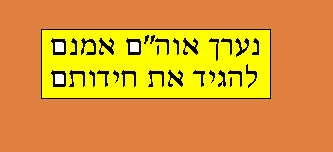


Do you understand each and every one of these six Hebrew words?

Yes? Our congratulations! Please, close the window.

No? Then here is some help for you... Pay attention!

The first word, נערך, is a form --a niph'al form-- of the verb עָרַךְ, that means 'to arrange': see it in Job 32:14.

נערך is vowellized this way: נֶעֱרַךְ.

This word does not appear in the Bible. But we find in the Bible some words which are very near to it. Look for instance at Num 27:13 (word last but two in the verse) or at Dan 8:26 (5th word from the beginning)

So our word means: (It) has been (or was) arranged, composed.

Now, would it not be easier to say: The word נערך is a word that belongs to pattern P-t359, would it?


The second word is, of course, the Hebrew name for 'Oham". Look at What is it?


The 3rd word, אמנם, is an adverb we find in the dictionary. It appears in the Bible (see Rut 3:12) and means 'truly', 'really'.

But we could say as well: אמנם is a word matching ptr P-t057


And what about our 4th word, להגיד?

It appears in the Bible as well: see Job 1:15 (last but one)

It means: 'to tell', 'to make (me, you, him...) know', 'to report'

But we could say too: Putting the lamed aside, it matches ptr PI-dxx


The 5th word, את, is a very common word, a preposition that often introduces the direct object. It is normally an empty word in English and it is usually not translated. It appears in the Bible more than 3,000 times.


Finally, our last word, חידותם, is a word of which we find in the Bible a so called short form (preceded by a וְ): look at Pro 1:6, last word: וְחִידֹתָם.

חִידוֹת is the plural of a feminine word that means "perplexing question"

Look at 1Ki 10:1.

The final ם means their, of them (males).

So, their perplexing questions.
Not riddles, conundrums and enigmatic sayings they are telling to others, as Samson told, but just the contrary: riddles, conundrums and perplexing questions that are told to them...


So we're reaching the last step to get a good translation of the purpose of Oham:

Translation:

Oham has been really composed to explain their perplexing questions, to get out of them, to cast light on them.

Read, please, Jdg 14:12:

...אָחוּדָה־נָּא לָכֶם חִידָה אִם־הַגֵּד תַּגִּדוּ אוֹתָהּ לִי

Oham purpose:


Indeed, Oham has been created, written and composed to give a trustful, practical, true and right answer to the huge amount of perplexing questions people face when dealing with the Hebrew language, either niqud (with vowels) or hasar haniqud (without vowels).


Do you want
to comment anything
on this page?

If yes

Send mail

[Oham does not pledge
giving an answer
to your comment/s]